What is SMETA Compliance Audit and Why It’s Crucial in Dubai?
Introduction
What is SMETA Compliance Audit and Why It’s Crucial in Dubai?
Introduction
In today’s highly interconnected global economy, businesses are no longer evaluated solely on product quality or pricing, they are also judged on how ethically and responsibly they operate. This is where SMETA Compliance Audit In Dubai plays a vital role. As one of the most widely recognized ethical audit frameworks in the world, SMETA (Sedex Members Ethical Trade Audit) helps organizations assess and improve their labor standards, workplace safety, environmental impact, and overall business ethics.
Dubai, being a major international trade hub, connects suppliers, manufacturers, and global brands across diverse industries. With increasing pressure from international buyers and stakeholders, companies operating in the region must meet strict compliance and ethical sourcing requirements. A SMETA Compliance Audit In Dubai is not just a regulatory formality, it has become a strategic necessity for businesses aiming to build trust, enter global markets, and maintain long-term partnerships.
As global supply chains continue to prioritize transparency and sustainability, companies in Dubai are adopting SMETA audits to align with international expectations and ESG (Environmental, Social, and Governance) standards. With expert support from trusted providers like URS Middle East, businesses can navigate the audit process efficiently, identify compliance gaps, and strengthen their operational integrity.
Understanding the fundamentals of SMETA is the first step toward achieving compliance and unlocking new business opportunities.
What is a SMETA Compliance Audit?
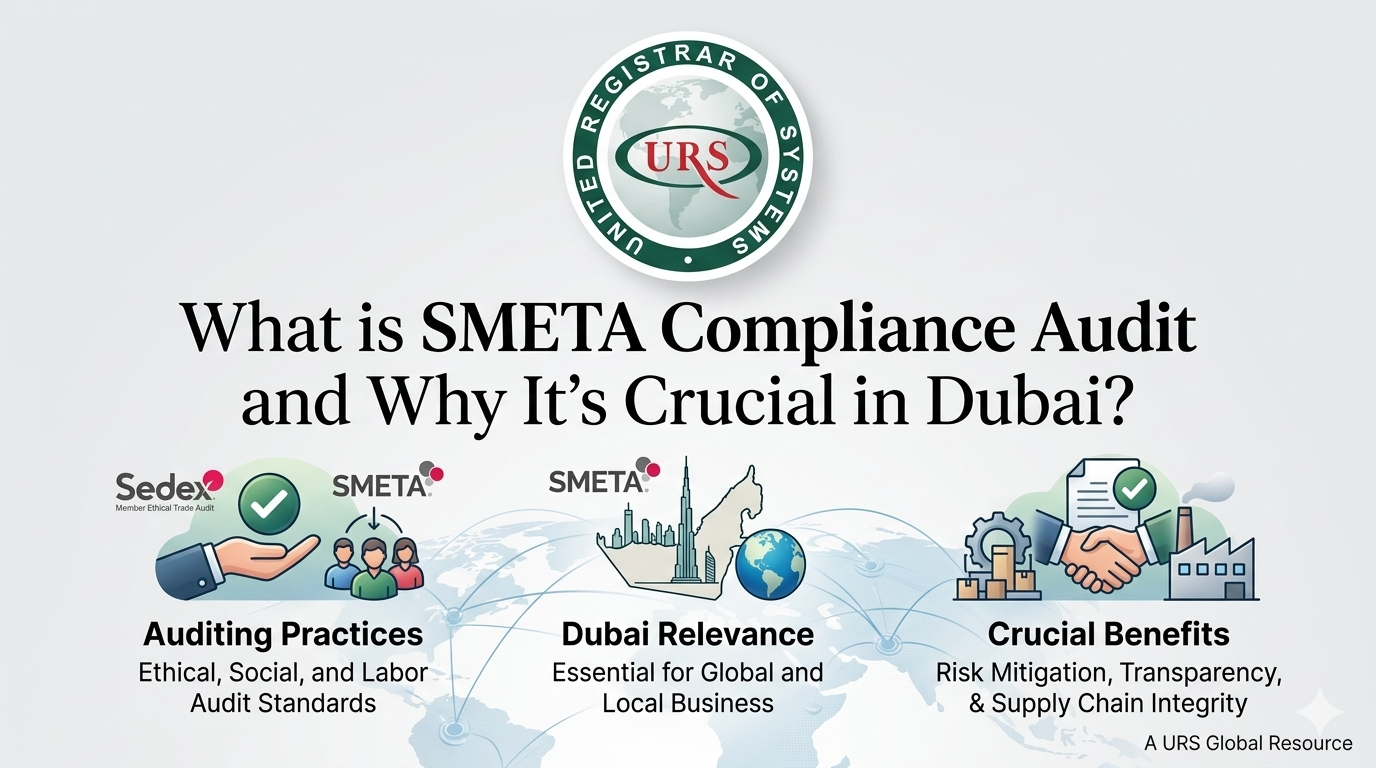
A SMETA Compliance Audit is a globally recognized ethical auditing methodology developed by Sedex (Supplier Ethical Data Exchange). It is designed to help businesses evaluate and improve their working conditions, environmental performance, and ethical practices across the supply chain. As companies in Dubai increasingly collaborate with international brands, undergoing a SMETA Compliance Audit In Dubai has become essential to demonstrate transparency and responsible business conduct.
Definition and Purpose
The primary purpose of a SMETA audit is to provide a clear and standardized assessment of a company’s operations based on ethical trade principles. It enables businesses to identify risks, ensure compliance with international labor laws, and align with global buyer expectations. Rather than being a certification, SMETA is an audit report that highlights areas of improvement and supports continuous development.
For organizations in Dubai, this means meeting the growing demand for ethical sourcing and proving their commitment to fair labor practices and safe working environments.
Key Pillars of SMETA Audit
A SMETA Compliance Audit focuses on four core pillars that define responsible business operations:
- Labour Standards — Evaluates fair wages, working hours, and employee rights
- Health & Safety — Assesses workplace conditions and safety measures
- Environment — Reviews environmental management systems and impact
- Business Ethics — Examines anti-corruption policies and ethical conduct
These pillars ensure that businesses are not only compliant but also aligned with global sustainability and ethical standards.
Types of SMETA Audits
Depending on business requirements and client expectations, companies can choose between two main types of SMETA audits:
- 2-Pillar Audit Covers Labour Standards and Health & Safety. This is the most commonly required audit for many industries.
- 4-Pillar Audit Includes all four areas: Labour Standards, Health & Safety, Environment, and Business Ethics. This is typically required by organizations with stricter compliance and ESG requirements.
Understanding these fundamentals sets the foundation for recognizing why a SMETA Compliance Audit In Dubai is increasingly important for businesses operating in a competitive global market.
Why SMETA Compliance Audit In Dubai is Important
As global business expectations continue to evolve, companies in Dubai are under increasing pressure to demonstrate ethical, transparent, and sustainable operations. A SMETA Compliance Audit In Dubai is no longer just a compliance requirement, it is a strategic tool that enables businesses to stay competitive in international markets.
Dubai as a Global Trade and Supply Chain Hub
Dubai has established itself as a central gateway for international trade, connecting businesses across Europe, Asia, and Africa. With thousands of multinational companies operating in the region, suppliers and manufacturers are expected to meet global compliance standards. Many international buyers now require SMETA audits as a prerequisite for partnerships, making it essential for businesses in Dubai to align with these expectations.
Rising Demand for Ethical Sourcing
Ethical sourcing has become a key decision-making factor for global brands. Companies are increasingly responsible for ensuring that their supply chains adhere to fair labor practices and safe working conditions. A SMETA Compliance Audit In Dubai helps businesses demonstrate their commitment to these principles, making them more attractive to international clients and stakeholders.
Alignment with ESG and Sustainability Goals
Environmental, Social, and Governance (ESG) considerations are rapidly shaping the future of business worldwide. Governments, investors, and consumers are prioritizing companies that operate responsibly. In Dubai, this aligns closely with national sustainability initiatives and long-term economic goals. SMETA audits support businesses in meeting ESG expectations by evaluating their environmental impact, ethical practices, and social responsibility.
Data-Driven Market Relevance
Recent industry insights highlight the growing importance of compliance and transparency:
- Over 70% of global buyers prioritize ethical sourcing when selecting suppliers
- Companies with strong ESG performance can attract up to 20% more investment
- Supply chain transparency is among the top priorities for procurement teams worldwide
These trends clearly show that businesses without proper compliance frameworks risk losing opportunities in the global marketplace.
Building Trust and Long-Term Partnerships
Trust is a critical factor in international business relationships. A SMETA audit provides credible, third-party validation of a company’s operations, helping build confidence among clients, partners, and investors. For businesses in Dubai, this trust translates into stronger partnerships, repeat business, and long-term growth.
Understanding why SMETA matters highlights the need to explore how the audit process works in practice.
SMETA Audit Process Explained
Understanding how a SMETA audit works is essential for businesses aiming to achieve and maintain compliance. The SMETA Compliance Audit In Dubai follows a structured and transparent methodology developed by Sedex, ensuring consistency and credibility across global supply chains. Each stage of the process is designed to evaluate real working conditions and identify areas for improvement.
Step-by-Step Audit Process
A SMETA audit typically involves the following key stages:
- Pre-Audit Preparation Businesses gather required documentation, review internal policies, and ensure readiness for the audit. This stage often includes internal assessments or gap analysis.
- Documentation Review Auditors examine records such as employee contracts, payroll, working hours, health and safety logs, and environmental policies to verify compliance.
- On-Site Inspection A physical inspection of the facility is conducted to assess workplace conditions, safety measures, and operational practices.
- Worker Interviews Confidential interviews with employees provide insights into actual working conditions, helping auditors validate documentation and identify any discrepancies.
- Audit Report Generation A detailed report is prepared outlining findings, non-compliances, and corrective action recommendations. This report is then shared on the Sedex platform for transparency with stakeholders.
Common Compliance Areas Checked
During a SMETA Compliance Audit In Dubai, auditors focus on several critical areas to ensure ethical and operational standards are met:
- Working Hours and Wages — Compliance with labor laws and fair compensation
- Health & Safety Conditions — Workplace hazards, emergency preparedness, and safety systems
- Environmental Practices — Waste management, resource usage, and environmental impact
- Business Ethics — Anti-bribery policies, transparency, and ethical conduct
The structured nature of the SMETA audit process not only identifies risks but also provides businesses with a clear roadmap for improvement. This naturally leads to understanding the tangible benefits that compliance brings to organizations operating in Dubai.
Key Benefits of SMETA Compliance Audit In Dubai
Implementing a SMETA Compliance Audit In Dubai delivers far more than regulatory alignment, it strengthens a company’s credibility, operational efficiency, and global market access. For businesses operating in a highly competitive trade environment like Dubai, SMETA compliance has become a strategic advantage rather than just a procedural requirement.
Improved Business Reputation and Trust
One of the most significant benefits of SMETA compliance is enhanced credibility. International buyers and global brands prefer working with suppliers who can demonstrate ethical and responsible business practices. A successful SMETA audit provides third-party validation that builds trust among clients, partners, and stakeholders.
Access to Global Markets and Buyers
Many multinational companies require SMETA compliance as part of their supplier approval process. By completing a SMETA Compliance Audit In Dubai, businesses can qualify for new contracts, expand into international markets, and become part of global supply chains that prioritize ethical sourcing and sustainability.
Reduced Operational and Compliance Risks
A SMETA audit helps identify potential risks related to labor practices, workplace safety, and environmental management before they become serious issues. Early detection allows businesses to implement corrective actions, reducing legal exposure and operational disruptions.
Enhanced Supply Chain Transparency
Transparency is a core expectation in modern business. SMETA audits improve visibility across operations, ensuring that ethical standards are consistently followed. This strengthens relationships with stakeholders and improves overall accountability within the organization.
Competitive Advantage in Dubai’s Market
In a fast-growing and highly competitive market like Dubai, compliance can be a key differentiator. Businesses that undergo SMETA audits demonstrate professionalism and responsibility, giving them an edge over competitors who do not meet the same standards.
Stronger Alignment with ESG Expectations
SMETA compliance also supports broader Environmental, Social, and Governance (ESG) goals. Companies that meet these standards are increasingly favored by investors and global partners who prioritize sustainability and ethical governance.
Together, these benefits make SMETA compliance a critical investment for long-term business growth and stability in Dubai’s evolving commercial landscape.
Common Challenges in SMETA Compliance
While a SMETA Compliance Audit In Dubai offers significant strategic advantages, many businesses face practical challenges when preparing for and maintaining compliance. These challenges are often not related to intent, but rather to gaps in systems, awareness, and operational maturity. Understanding these obstacles is essential for building a more effective compliance strategy.
Documentation and Record-Keeping Gaps
One of the most common issues companies encounter is incomplete or inconsistent documentation. SMETA audits require accurate records of wages, working hours, employee contracts, and safety procedures. In many organizations, especially rapidly growing ones, these records are either fragmented or not regularly updated, which can lead to non-compliance findings during the audit.
Limited Awareness of SMETA Requirements
Many businesses in Dubai, particularly small and medium-sized enterprises, are not fully familiar with the detailed expectations of SMETA audits. This lack of awareness often results in unintentional non-compliance in areas such as labor standards, environmental reporting, or workplace safety protocols.
Operational and Cultural Adjustments
Achieving compliance often requires changes in internal processes, HR policies, and workplace culture. For example, aligning working hours, improving safety measures, or implementing environmental controls may require significant operational adjustments. These changes can be challenging without proper guidance and structured implementation.
Supply Chain Complexity
For companies with multiple suppliers or outsourced operations, ensuring compliance across the entire supply chain can be difficult. SMETA audits not only assess internal operations but also evaluate supplier practices, making coordination across different entities essential.
Resource and Cost Constraints
Preparing for a SMETA audit can require time, financial investment, and dedicated resources. Businesses that do not allocate sufficient support for compliance preparation may struggle to meet audit expectations effectively.
These challenges highlight the importance of structured preparation and expert guidance. This is where professional support from experienced partners like URS Middle East becomes essential to ensure a smooth and successful audit process.
How URS Middle East Helps with SMETA Compliance Audit In Dubai
Achieving successful compliance requires more than just understanding audit requirements, it demands structured preparation, accurate implementation, and continuous improvement. This is where URS Middle East plays a critical role in supporting businesses through a complete and guided approach to the SMETA Compliance Audit In Dubai.
Expert-Led Audit Support
URS Middle East provides experienced audit professionals who understand both global SMETA standards and local business operations in Dubai. Their expertise ensures that companies are assessed accurately and guided through every compliance requirement with clarity and precision.
Pre-Audit Gap Analysis and Readiness Assessment
Before the actual audit, URS Middle East conducts a detailed gap analysis to identify areas of non-compliance. This includes reviewing documentation, workplace conditions, safety measures, and HR policies. The goal is to help businesses understand exactly what needs improvement before the official audit begins.
End-to-End Audit Assistance
From initial consultation to final reporting, URS Middle East supports organizations at every stage of the audit process. This includes preparation guidance, documentation support, on-site coordination, and corrective action planning. The structured approach ensures a smoother audit experience with minimal disruptions.
Customized Solutions for Different Industries
Every industry has unique compliance requirements. URS Middle East tailors its audit support based on the nature of the business, whether manufacturing, trading, logistics, or services, ensuring that compliance strategies are practical, relevant, and effective.
Improved Compliance Confidence and Long-Term Results
With expert guidance, businesses are better prepared to meet SMETA requirements confidently. This not only increases the likelihood of audit success but also helps establish long-term compliance systems that improve operational efficiency and ethical performance.
By partnering with URS Middle East, companies in Dubai can streamline their compliance journey and focus on building stronger, more transparent, and globally competitive operations.
How to Choose the Right SMETA Audit Company in Dubai
Selecting the right partner for a SMETA Compliance Audit In Dubai is a critical decision that directly impacts audit success, compliance accuracy, and long-term operational improvement. Since SMETA is widely recognized by global buyers and supply chain partners, the credibility and capability of the audit provider play a key role in ensuring reliable and accepted results.
Accreditation and Industry Recognition
The first factor to consider is whether the audit company is properly recognized and aligned with global SMETA standards established by Sedex. A credible audit provider should demonstrate strong knowledge of SMETA requirements and follow internationally accepted auditing practices.
Proven Experience in SMETA Audits
Experience is essential when dealing with complex compliance frameworks. A reliable audit company should have a strong track record of conducting SMETA audits across different industries such as manufacturing, logistics, trading, and services. This ensures they understand industry-specific challenges and compliance expectations.
Transparent and Structured Audit Process
A trustworthy audit partner maintains full transparency throughout the audit lifecycle. This includes clear communication of audit steps, documentation requirements, timelines, and reporting methods. Transparency helps businesses prepare effectively and reduces uncertainty during the audit process.
Industry-Specific Expertise
Different sectors face different compliance risks. For example, manufacturing companies may focus more on safety and labor standards, while service-based organizations may prioritize HR policies and ethical governance. Choosing a provider with sector-specific knowledge ensures more accurate assessment and practical recommendations.
Strong Support System and Advisory Services
Beyond conducting audits, the right company should also offer advisory support such as pre-audit assessments, corrective action planning, and compliance training. This helps businesses not only pass the audit but also build sustainable compliance systems.
Reputation and Client Trust
A strong reputation in the market reflects reliability and professionalism. Businesses should evaluate client feedback, case experience, and long-term relationships when selecting an audit partner.
By carefully evaluating these factors, companies in Dubai can ensure they choose a reliable partner for their SMETA Compliance Audit In Dubai, leading to smoother audits and stronger compliance outcomes.
Future of SMETA Compliance in Dubai
The importance of ethical sourcing and responsible business conduct is expected to grow significantly in the coming years, and the SMETA Compliance Audit In Dubai will continue to play a central role in this transformation. As global supply chains become more transparent and regulated, businesses in Dubai will need to adapt quickly to evolving compliance expectations.
Growing Focus on Sustainability and ESG Integration
Environmental, Social, and Governance (ESG) standards are becoming a core requirement for international trade and investment decisions. SMETA audits align closely with ESG principles, particularly in areas such as labor rights, workplace safety, environmental responsibility, and ethical governance. In Dubai, this alignment will become even more important as companies integrate sustainability into their long-term business strategies.
Increasing Buyer and Supply Chain Requirements
Global buyers are placing stricter demands on suppliers, requiring verified ethical practices before entering partnerships. A SMETA Compliance Audit In Dubai is increasingly being used as a baseline requirement for supplier approval, meaning businesses that fail to comply may risk losing access to key international markets.
Digital Transformation of Compliance Audits
The future of SMETA audits is also being shaped by digital tools and data-driven compliance systems. Cloud-based platforms, real-time reporting, and automated documentation processes are making audits more efficient, transparent, and traceable. This shift will help businesses in Dubai maintain continuous compliance rather than treating audits as one-time events.
Stronger Regulatory and Investor Pressure
Investors and financial institutions are now prioritizing companies with strong ESG and ethical compliance records. As this trend grows, SMETA compliance will become a key factor influencing funding decisions, partnerships, and corporate reputation in Dubai’s competitive market.
Long-Term Competitive Advantage
Businesses that adopt SMETA standards early will be better positioned to build trust, attract global clients, and secure long-term growth. In contrast, companies that delay compliance may face increasing barriers in international trade and supply chain participation.
The future clearly indicates that SMETA is no longer optional, it is becoming a foundational requirement for sustainable business success in Dubai.
FAQs on SMETA Compliance Audit In Dubai
1. What is SMETA Compliance Audit In Dubai?
A SMETA Compliance Audit In Dubai is a globally recognized ethical audit based on the Sedex methodology that evaluates a company’s labor practices, health and safety standards, environmental impact, and business ethics to ensure compliance with international supply chain requirements.
2. Who needs a SMETA audit in Dubai?
Manufacturers, exporters, suppliers, logistics companies, and service providers working with international brands or global supply chains typically require a SMETA audit to meet buyer compliance expectations and maintain business partnerships.
3. How long does a SMETA audit take?
The duration of a SMETA audit depends on the size and complexity of the organization. On average, it takes 1 to 3 days for on-site evaluation, followed by a detailed report preparation phase.
4. What is the difference between 2-pillar and 4-pillar SMETA audits?
A 2-pillar SMETA audit covers Labour Standards and Health & Safety, while a 4-pillar audit includes additional assessments of Environment and Business Ethics, offering a more comprehensive evaluation of compliance practices.
5. Why is SMETA compliance important for businesses in Dubai?
SMETA compliance is important because it helps businesses meet global buyer requirements, improve operational transparency, enhance reputation, reduce risks, and gain access to international markets that prioritize ethical sourcing.
Conclusion
A SMETA Compliance Audit In Dubai has become a critical requirement for businesses that aim to operate responsibly within global supply chains. It goes beyond a standard compliance check and serves as a comprehensive framework for evaluating labor practices, workplace safety, environmental responsibility, and business ethics. In a highly competitive and internationally connected market like Dubai, SMETA compliance is no longer optional, it is a strategic necessity for sustainable growth.
By adopting SMETA standards, businesses can strengthen trust with global buyers, improve operational transparency, reduce compliance risks, and position themselves as reliable partners in international trade. As ESG expectations and ethical sourcing requirements continue to rise, companies that invest in compliance today will be better prepared for the demands of tomorrow.
With expert guidance from URS Middle East, organizations can simplify the audit process, identify compliance gaps early, and implement effective corrective actions that ensure long-term success.
If your business is ready to enhance credibility and meet global ethical standards, now is the time to take action.
Contact URS Middle East today to get started with your SMETA Compliance Audit In Dubai.
메타데이터
- post_id
- b4f5a681c9cc
- slug
- what-is-smeta-compliance-audit-and-why-its-crucial-in-dubai-b4f5a681c9cc
- url
- https://medium.com/@urscertificationservice/what-is-smeta-compliance-audit-and-why-its-crucial-in-dubai-b4f5a681c9cc
- canonical_url
- https://medium.com/@urscertificationservice/what-is-smeta-compliance-audit-and-why-its-crucial-in-dubai-b4f5a681c9cc
- author_url
- https://medium.com/@urscertificationservice
- status
- ok
- fetched_at
- 2026-07-13 09:30:18