Knurling Explained: The CNC Surface Finishing Process Enhancing Grip & Precision in European…
In modern manufacturing, even the smallest surface detail can define a product’s performance. That’s where knurling comes in — a critical…
Knurling Explained: The CNC Surface Finishing Process Enhancing Grip & Precision in European Manufacturing
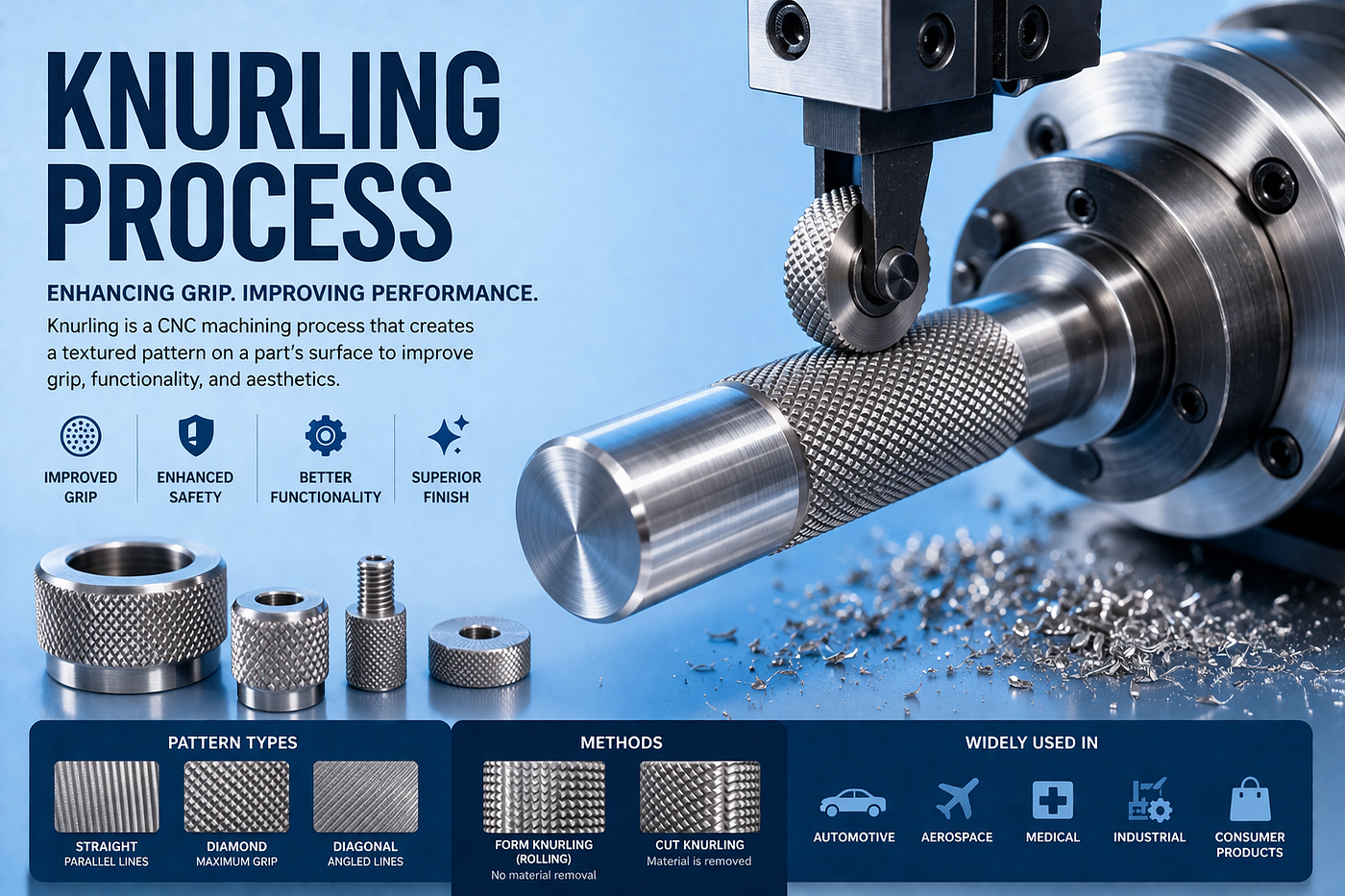
In modern manufacturing, even the smallest surface detail can define a product’s performance. That’s where knurling comes in — a critical CNC finishing process used to improve grip, functionality, and aesthetics.
From industrial components in Lithuania to high-precision parts across Europe, knurling plays a key role in ensuring usability, safety, and durability. But how does this process actually work — and why is it so widely used in CNC machining?
What Is Knurling?
Knurling is a manufacturing process that creates a patterned texture on a workpiece surface, typically metal, by pressing a specialized tool into the material.
Unlike traditional machining, knurling does not remove material — instead, it displaces it through plastic deformation, forming raised patterns such as:
- Straight lines
- Diamond patterns
- Cross-hatched textures
These patterns are most commonly found on:
- Tool handles
- Knobs and dials
- Mechanical components requiring grip
What Is the Purpose of Knurling?
Knurling serves several important functions in manufacturing:
- Improved grip — prevents slipping on handles and controls
- Enhanced assembly — supports press-fit and overmolding applications
- Aesthetic appeal — adds texture and visual quality to parts
- User guidance — indicates where to hold or interact with a component
It is especially useful in applications where manual handling, torque, or safety are critical.
How Knurling Works
Knurling is typically performed on a lathe or CNC turning machine using a hardened tool with the inverse of the desired pattern.
Process overview:
- The workpiece rotates
- A knurling tool is pressed against the surface
- The material deforms into the tool’s pattern
- A textured surface is formed without cutting material
This forming process increases friction and improves handling, making parts easier to use in real-world conditions.
Types of Knurling Patterns
Different patterns are used depending on function and design:
1. Straight Knurling
- Parallel lines
- Used for sliding or linear grip
2. Diagonal Knurling
- Angled pattern
- Mostly decorative
3. Diamond Knurling
- Crossed pattern (most common)
- Provides maximum grip and torque control
Types of Knurling Methods
There are two main knurling techniques:
Form Knurling (Rolling)
- Deforms material without cutting
- Ideal for softer metals like aluminum
Cut Knurling
- Removes material to create patterns
- Used for harder materials or high precision
Key Applications of Knurling
Knurling is widely used across industries:
- Automotive — control knobs and mechanical parts
- Aerospace — lightweight, high-grip components
- Medical tools — precision instruments for better handling
- Consumer products — electronics, razors, and premium packaging
- Industrial equipment — handles, screws, and adjustment controls
Its ability to improve grip, safety, and usability makes it essential in both functional and ergonomic design.
Advantages of Knurling
Knurling offers several benefits:
- Improves grip and safety
- Cost-effective surface enhancement
- No material removal (efficient process)
- Enhances product appearance
- Supports strong press-fit assemblies
Disadvantages of Knurling
Some limitations to consider:
- Can deform thin or brittle materials
- Requires precise setup for consistent patterns
- May affect part diameter and tolerances
- Not suitable for high-precision mating surfaces
Why Knurling Matters in European CNC Manufacturing
For manufacturers in Lithuania and across Europe, knurling is more than just a finishing process — it’s a functional design feature that improves:
- Product usability
- Operator safety
- Mechanical performance
- Assembly reliability
In competitive CNC markets, adding knurling can significantly enhance both product quality and user experience. For more relevant information consider visiting. Knurling Process Explained: Types, Patterns & CNC Applications
메타데이터
- post_id
- b4f6d8a8a8eb
- slug
- knurling-explained-the-cnc-surface-finishing-process-enhancing-grip-precision-in-european-b4f6d8a8a8eb
- url
- https://medium.com/@mk_39088/knurling-explained-the-cnc-surface-finishing-process-enhancing-grip-precision-in-european-b4f6d8a8a8eb
- canonical_url
- https://medium.com/@mk_39088/knurling-explained-the-cnc-surface-finishing-process-enhancing-grip-precision-in-european-b4f6d8a8a8eb
- author_url
- https://medium.com/@mk_39088
- status
- ok
- fetched_at
- 2026-06-22 17:31:34