How Does an Asphalt Mixing Plant Work?
Asphalt mixing plants play a crucial role in modern road construction and maintenance projects. Whether building highways, airport runways…
How Does an Asphalt Mixing Plant Work?
**Asphalt mixing plants** play a crucial role in modern road construction and maintenance projects. Whether building highways, airport runways, urban roads, or industrial pavements, high-quality asphalt mixtures are essential for ensuring durability, smoothness, and long service life.
But how exactly does an asphalt mixing plant work?
This article explains the complete working process of an **asphalt mixing plant**, from raw material feeding to the final asphalt mixture output.
What Is an Asphalt Mixing Plant?
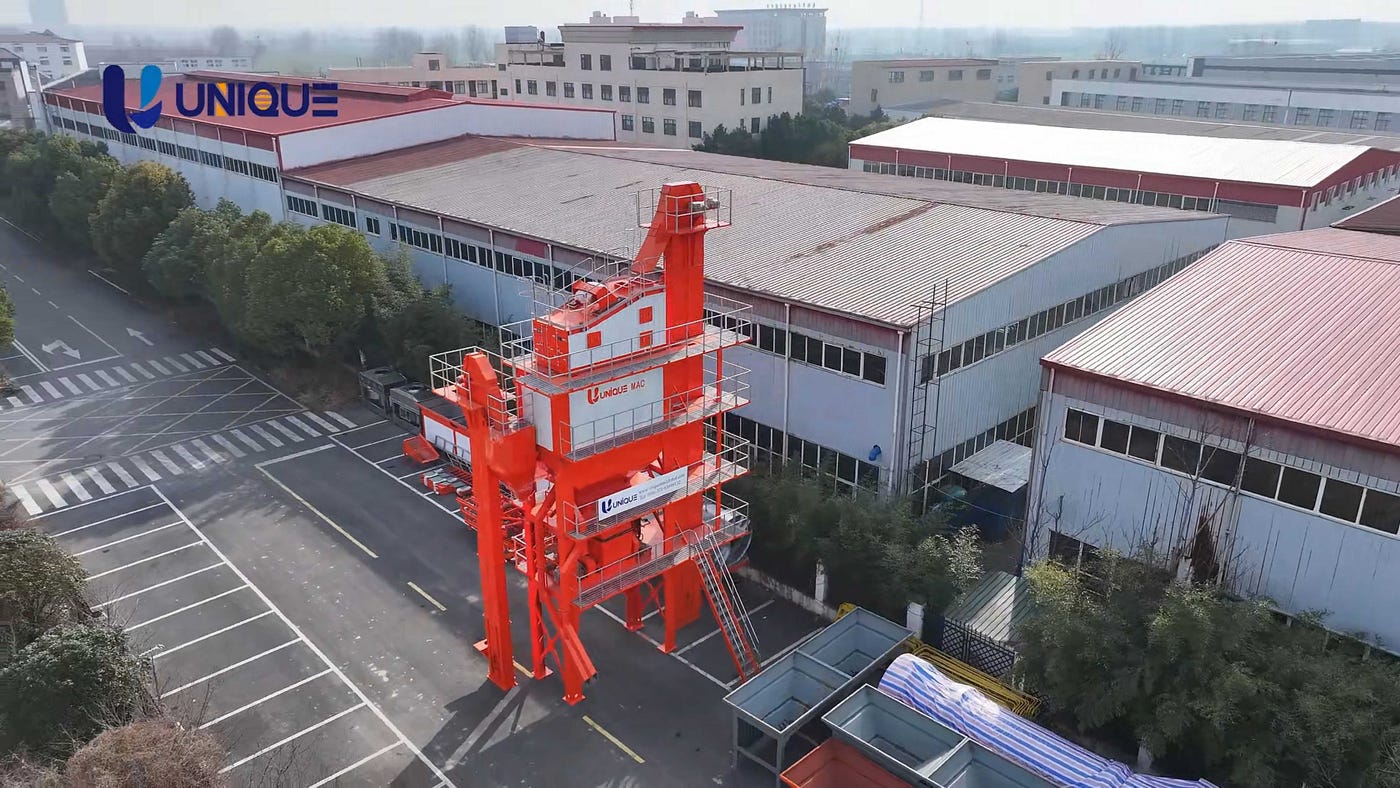
An asphalt mixing plant is a specialized facility designed to produce hot mix asphalt (HMA) by combining aggregates, filler, and bitumen at controlled temperatures and precise proportions.
Modern asphalt plants are equipped with automated control systems that ensure consistent quality, high productivity, and environmentally friendly operation.
Step 1: Cold Aggregate Feeding
The asphalt production process begins with cold aggregates.
Different sizes of aggregates such as sand, gravel, and crushed stone are stored in separate cold aggregate bins. These materials are fed onto a collecting conveyor through adjustable feeders.
The feeder speed can be adjusted according to the required mix design, ensuring accurate aggregate proportions before entering the drying system.
Key Functions: ① Store different aggregate sizes separately ② Control feeding rates accurately ③ Ensure continuous material supply

Step 2: Aggregate Drying and Heating
After leaving the cold aggregate bins, the aggregates are transported into the drying drum.
Inside the drum, a powerful burner generates high-temperature flames that remove moisture from the aggregates and heat them to the required mixing temperature.
The rotating drum continuously lifts and tumbles the aggregates to ensure uniform heating and efficient drying.
Benefits: ① Eliminates moisture content ② Improves asphalt coating quality ③ Enhances final mixture performance

Step 3: Dust Collection and Environmental Protection
During the drying process, dust and fine particles are generated.
To comply with increasingly strict environmental regulations, modern asphalt plants typically use a two-stage dust collection system:
Primary Dust Collection
Large dust particles are separated using cyclones or gravity separators.
Secondary Dust Collection
Fine dust is captured by a baghouse dust collector (bag filter system), achieving high dust removal efficiency and reducing emissions significantly.
Collected mineral fines can often be recycled back into the mixing process.
Advantages: ① Reduced environmental pollution ② Compliance with emission standards ③ Recovery of valuable mineral powder

Step 4: Hot Aggregate Screening
The heated aggregates are transported by a hot aggregate elevator to the vibrating screening system.
The vibrating screen separates aggregates into different sizes according to project requirements.
Each aggregate size is then stored in a corresponding hot aggregate bin.
Purpose: ① Improve gradation accuracy ② Ensure consistent mix quality ③ Meet specific paving specifications
Step 5: Aggregate Weighing and Batching
Before mixing begins, the control system automatically weighs the required quantities of each aggregate size.
The batching process follows the selected asphalt mix formula, ensuring that every batch meets design specifications.
At this stage, recycled filler and mineral powder may also be added according to project requirements.
Key Advantages: ① High weighing accuracy ② Consistent asphalt quality ③ Reduced material waste
Step 6: Bitumen Heating and Metering
Bitumen (asphalt binder) is stored in insulated bitumen tanks equipped with heating systems.
The bitumen is heated to maintain the proper viscosity for mixing.
Once the aggregates have been weighed, the required amount of hot bitumen is accurately measured and delivered to the mixer.
Functions: ① Maintain stable bitumen temperature ② Ensure precise dosage ③ Improve coating performance

Step 7: Asphalt Mixing
This is the core stage of the entire asphalt production process.
Inside the mixer, hot aggregates, bitumen, and mineral filler are blended thoroughly to form a homogeneous asphalt mixture.
Advanced mixing systems ensure every aggregate particle is uniformly coated with asphalt binder.
Results: ① Excellent mixture uniformity ② Strong bonding performance ③ Superior pavement durability

Step 8: Finished Asphalt Storage
After mixing, the finished hot mix asphalt is discharged into a storage silo.
The storage silo keeps the asphalt at the required temperature before loading into trucks.
This allows continuous plant operation while minimizing truck waiting times.
Benefits: ① Improved production efficiency ② Reduced heat loss ③ Flexible transportation scheduling
Step 9: Truck Loading and Transportation
Finally, the finished asphalt mixture is loaded into transport trucks and delivered to the construction site. The asphalt is then laid and compacted using paving equipment to create smooth, durable road surfaces.
The working process of an** asphalt mixing plant** involves multiple carefully controlled stages, including aggregate feeding, drying, screening, weighing, bitumen heating, mixing, storage, and truck loading.
Each step directly affects the quality of the final asphalt mixture. With advanced automation, precise batching systems, and efficient dust collection technology, modern asphalt plants can deliver high-quality asphalt while meeting strict environmental standards.
As global infrastructure development continues to grow, **asphalt mixing plants** remain essential equipment for producing durable, reliable, and sustainable road construction materials.
메타데이터
- post_id
- b4f8d140d589
- slug
- how-does-an-asphalt-mixing-plant-work-b4f8d140d589
- url
- https://medium.com/@uniqueeuips/how-does-an-asphalt-mixing-plant-work-b4f8d140d589
- canonical_url
- https://medium.com/@uniqueeuips/how-does-an-asphalt-mixing-plant-work-b4f8d140d589
- author_url
- https://medium.com/@uniqueeuips
- status
- ok
- fetched_at
- 2026-06-23 17:05:31