The Destruction of Libya
Libya’s modern story is one of profound tragedy. What was once one of Africa’s wealthiest and most stable nations has, over the past…
The Destruction of Libya
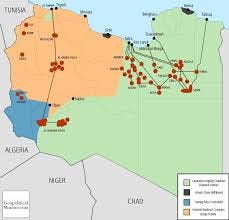
Libya’s modern story is one of profound tragedy. What was once one of Africa’s wealthiest and most stable nations has, over the past fifteen years, been transformed into a landscape of shattered infrastructure, armed anarchy, and widespread suffering. This article traces that journey from the dictatorial rule of Muammar al‑Gaddafi, through the violent upheaval of the 2011 civil war and NATO intervention, to the decade‑long cycle of civil wars and the fragile, stagnant situation that persists today. It is a calm and neutral account of a country torn apart by internal fractures and external ambitions, an example of how the collapse of a state can devastate an entire society, economy and region.
Libya Before the Storm: Gaddafi’s Jamahiriya
To understand the destruction, one must first look at the country before the 2011 uprising. Muammar al‑Gaddafi seized power in a 1969 coup and ruled Libya for 42 years with an iron fist. His regime, which he called the Jamahiriya, was built on a strange hybrid of Islamic socialism, pan‑Arab nationalism and direct popular committees, but in practice it was an authoritarian police state. There was no constitutional system, no independent civil society, no free media and no legal political opposition. Instead, the state relied on a vast security apparatus, arbitrary arrests, enforced disappearances and torture to crush any dissent. The revolutionary committees and the Internal Security Agency operated with complete impunity, and hundreds of cases of forced disappearance from the 1970s, 1980s and 1990s remained unresolved even in 2010, according to Amnesty International. Anyone who dared to criticise the government was immediately punished. A few prisoners of conscience were occasionally released, but they were often rearrested soon afterwards, as happened to several activists in the years before the revolution.
At the same time, Libya enjoyed immense oil wealth. Before the war, the country produced nearly 1.7 million barrels of oil per day, and its GDP per capita exceeded 14,000 dollars, putting Libyans among the richest people in Africa. State‑funded healthcare, education and housing were available to most citizens, and the population had a life expectancy of nearly 74 years. This created a strange duality: Libyans lived with material comfort but without any political freedom. Gaddafi had ratified many international human rights treaties and even enacted some domestic laws that appeared to protect rights, but in practice those protections were meaningless. The country had no right to peacefully change its government, and any attempt to organise a protest was a crime. The regime also continued to hold former Guantánamo Bay detainees who had been returned to Libya by the United States, and at least one of them died in custody. In short, Gaddafi’s rule kept the country stable and economically functional, but it did so through repression, and that repression ultimately set the stage for an explosion.
The 2011 Uprising and the NATO Intervention
In February 2011, the wave of Arab Spring protests that had already toppled presidents in Tunisia and Egypt finally reached Libya. On 17 February, demonstrators in Benghazi, the country’s second largest city, began calling for Gaddafi’s ouster. The regime responded with overwhelming force. Security forces and loyalist militias fired on crowds, and within days the protests had turned into an armed rebellion. Gaddafi addressed the nation on state television, vowing to hunt down the protesters “house by house” and to show “no mercy and no pity”. His son Saif al‑Islam warned that “rivers of blood” would flow if the uprising continued. By late February, the International Criminal Court, the World Health Organisation and the United Nations had all concluded that civilians were at grave risk. On 26 February, the UN Security Council unanimously adopted Resolution 1970, imposing an arms embargo on Libya, a travel ban and an asset freeze on Gaddafi and his inner circle.
This did not stop Gaddafi’s advance. By early March, his forces were pushing eastwards towards Benghazi, the main stronghold of the rebellion. The Gulf Cooperation Council and the Arab League called for a no‑fly zone over Libya, and on 17 March the Security Council adopted Resolution 1973, which for the first time in history invoked the “Responsibility to Protect” principle to authorise military action to protect civilians. Just two days later, on 19 March, French aircraft struck Gaddafi’s forces as they advanced on Benghazi. British and American warships launched cruise missiles against Libyan air‑defence sites. The intervention quickly expanded into a full‑scale NATO operation, named Operation Unified Protector, which involved more than 8,000 troops and 260 military aircraft, including fighter jets, drones and surveillance planes. The operation’s stated purpose was to protect civilians, but its effect was to tip the military balance decisively against the government. NATO aircraft pounded Gaddafi’s tank columns, artillery batteries and supply lines. French and US intelligence even helped the rebels locate Gaddafi himself as he tried to flee Sirte on 20 October 2011. A French airstrike hit his convoy, and rebel fighters soon captured and killed him.
The seven‑month war left a deep scar. At least 30,000 people were estimated to have been killed, with many more wounded. The National Transitional Council, the rebel government formed in Benghazi, claimed in September 2011 that 30,000 people had died and more than 50,000 had been injured, including 20,000 seriously. Independent verification was impossible because of the chaos, but the scale of the suffering was undeniable. Gaddafi’s forces were responsible for many of the civilian casualties, but opposition militias and NATO airstrikes also caused deaths. On 31 October 2011, NATO formally closed its mission. It turned down a request from Libya’s new interim government to keep a protective umbrella for a few more weeks, apparently eager to exit on a high note. The country was left to fend for itself.
The Immediate Aftermath: A Vacuum of Power
The fall of Gaddafi did not bring peace. It created a vacuum. As in Iraq after the fall of Saddam Hussein, militant jihadist groups quickly moved into the spaces left by the collapsed regime. The National Transitional Council, the body that had led the revolution, became the acting government, but it was incredibly weak. It designed an 18‑month transition plan, but it could barely implement any of it. Corruption and extortion by militias became rampant as people sought government jobs. On 7 July 2012, Libya held its first parliamentary elections since 1969. The General National Congress was elected, but it never effectively governed. In 2013 it passed a deeply divisive Political Isolation Law that barred anyone who had held any position under Gaddafi from working in government, effectively purging huge numbers of experienced administrators and deepening the country’s institutional paralysis.
By early 2014, the General National Congress had extended its term beyond the agreed‑upon date, infuriating many Libyans. General Khalifa Haftar, a former Gaddafi‑era officer who had lived for years in the United States, returned to Libya and began building a militia coalition called the Libyan National Army. In February 2014 he announced the dissolution of the parliament, and in May he launched Operation Dignity, a campaign to wipe out Islamist militants from Benghazi. June 2014 saw new parliamentary elections, but Islamists who had previously held power were badly defeated, and turnout was less than half of eligible voters. The newly elected House of Representatives, dominated by anti‑Islamists, was supposed to sit in Tripoli, but it never got there. In July 2014, Islamist‑led militias from Misrata formed an alliance called Libya Dawn, stormed Tripoli and reinstated the old General National Congress, setting up a rival government. The elected House of Representatives was forced to flee to the far‑eastern city of Tobruk, near the Egyptian border. By November 2014, Libya effectively had two governments and two parliaments: one internationally recognised but physically located in Tobruk, and one controlling the capital but without foreign recognition. The country had split into warring halves.
The Second Civil War (2014‑2020)
The division between east and west quickly turned into a full‑scale civil war. The internationally recognised House of Representatives allied itself with General Haftar’s Libyan National Army, while the Tripoli‑based General National Congress aligned with a coalition of Islamist militias. For the next six years, these two coalitions fought across the country, with cities like Benghazi, Derna and Tripoli itself becoming battlegrounds. Militia groups multiplied, switched allegiances and fought one another as often as they fought the other side. By 2015, the United Nations brokered a deal to create a Government of National Accord, a unity government meant to bridge the divide. The deal was signed in December 2015 in Morocco, and in March 2016 the new prime minister, Fayez al‑Sarraj, arrived in Tripoli to start work. But the eastern administration, supported by Haftar, refused to recognise the new government. The country remained paralysed.
Meanwhile, the chaos allowed the Islamic State group to seize control of the coastal city of Sirte, Gaddafi’s hometown, in early 2015. For over a year, ISIS ruled Sirte with extreme brutality, carrying out public executions and imposing its harsh version of sharia law. It was only in December 2016 that forces loyal to the Tripoli government, with the help of US airstrikes, finally expelled the group from the city. But even after ISIS was driven out, small cells continued to operate from desert hideouts, carrying out occasional attacks.
The war intensified sharply in April 2019, when General Haftar launched a surprise offensive on Tripoli, hoping to capture the capital and unite the country under his rule. For more than a year, his forces besieged the city, shelling residential neighbourhoods and civilian infrastructure. The Tripoli‑based government fought back with the help of Turkish drones, Syrian mercenaries and other international allies. The fighting in the Tripoli suburbs killed hundreds of civilians and displaced more than 150,000 people. Between April 2019 and March 2020 alone, the United Nations Support Mission in Libya (UNSMIL) documented at least 685 civilian casualties, including 356 deaths. In just the first three months of 2020, an additional 322 civilian casualties were recorded, 85 of them fatal. By the time the campaign ended in June 2020, Haftar’s offensive had failed, but not before leaving vast destruction.
Finally, on 23 October 2020, under intense international pressure, the two sides signed a countrywide, permanent ceasefire agreement in Geneva. The agreement called for the withdrawal of all military forces from front lines, the departure of foreign fighters and mercenaries, and a path towards political talks. For a brief moment, there was genuine hope that the fighting might end. But the ceasefire, while largely holding, did not resolve the underlying political divisions. The country remained split, foreign forces did not fully withdraw, and the promised elections were repeatedly delayed.
The Prolonged Stalemate: 2021 to 2026
The years after the ceasefire brought more disappointment than progress. A new interim Government of National Unity, led by Abdul Hamid Dbeibah, was installed in Tripoli in March 2021, with a mandate to lead the country to elections in December 2021. Those elections never took place. Disputes over the electoral law and the eligibility of controversial candidates, including Dbeibah himself, led to their indefinite postponement. Dbeibah simply stayed in power, and the eastern‑based House of Representatives appointed its own prime minister, Fathi Bashagha, leading to yet another paralysing power struggle. By 2026, the Government of National Unity still only controlled the western part of the country, while the Libyan Arab Armed Forces, effectively Haftar’s Libyan National Army under a different name, dominated the east and the south. The country had not held a national election since 2014. A political roadmap presented to the UN Security Council in August 2025 involved establishing a viable electoral framework and a new unified government, but as of early 2026 no concrete steps had been taken. The UN envoy, Hanna Tetteh, stated in April 2026 that the political process was completely stalled.
In early April 2026, AFRICOM, the United States Africa Command, sponsored military exercises in Libya for the first time, called Flintlock. The two rival governments both participated, which was a surprising sign of cooperation. Soon afterwards, with US help, they also reached an agreement on a unified national budget for the first time since 2013. These small steps suggested a possible thaw, but observers warned that they should not be mistaken for real reunification. Endemic corruption within each government perpetuates the status quo. Militias funded by both governments run patronage networks that help keep each administration in place. Outside powers continue to support their local clients with military and economic aid, hindering any genuine unification. At the same time, tensions remained high. On 31 March 2026, a missile apparently launched from the sea hit the residence of Prime Minister Dbeibah in an upscale neighbourhood of Tripoli. No one was killed, but the attack underlined the fragile security situation. Forces affiliated with the Libyan National Army also began moving towards southwestern Libya, an area controlled by the Tripoli government, raising fears of a new confrontation.
The UN arms embargo, first imposed by Resolution 1970 in 2011, has been repeatedly violated. The Security Council continues to extend authorisations for naval inspections to try to stop the flow of weapons, passing resolutions 2780 and 2804 in 2025 to extend the mandate for another six months. But despite these efforts, weapons still pour into Libya from various foreign backers. In May 2026, a UN envoy warned that without immediate action to stop the arms flow, Libya could descend into civil war again, potentially leading to a Hobbesian all‑against‑all state of chaos or partition of the country. He noted that the Security Council had failed to agree on a draft resolution demanding a ceasefire and a return to political talks.
The Human Toll: Death, Displacement and Impunity
The human cost of Libya’s destruction is staggering. No single authoritative death toll exists for the entire period since 2011, because the violence has been so fragmented and under‑reported. However, the International Criminal Court has been investigating crimes committed since 2011, and reports from various UN missions give a sense of the scale. The 2011 war alone is estimated to have killed between 15,000 and 30,000 people. The second civil war from 2014 to 2020 added thousands more. UNSMIL documented at least 685 civilian deaths between April 2019 and March 2020, during the battle for Tripoli, and another 322 in the first half of 2020. Hundreds of children were among the dead; some of them were as young as nine months old. The collapse of the healthcare system meant that many more died from preventable diseases or lack of medical supplies.
Almost as devastating as the loss of life has been the mass displacement. At the height of the fighting in 2019 and 2020, more than 140,000 people were forced to flee their homes in and around Tripoli alone. Many became internally displaced multiple times, as front lines shifted across the country. By 2026, hundreds of thousands of Libyans still lived in makeshift camps or overcrowded apartments, unable to return to homes that had been destroyed or were still in contested areas.
Compounding the physical destruction has been a complete breakdown of justice. Amnesty International, reporting on the 15th anniversary of the 2011 uprising in February 2026, described a country where “systemic impunity fuels crimes under international law and serious human rights violations by militias and armed groups”. Instead of being brought to justice, those suspected of murder, torture, enforced disappearances and other crimes have either been killed or remain at large. Eight Libyan nationals wanted by the ICC are still free. In a particularly striking example, Saif al‑Islam al‑Gaddafi, the dictator’s son who had been charged by the ICC with crimes against humanity, was himself murdered by unknown attackers in early February 2026. The Government of National Unity accepted the jurisdiction of the ICC in May 2025, but Amnesty International called the move hollow as long as it was not matched by concrete action to arrest and surrender suspects. By early 2026, only one suspect out of 14 wanted by the ICC had been handed over to the court: Khaled Mohamed Ali El Hishri, a former militia commander nicknamed the “Angel of Death”, who was arrested in Germany in July 2025 and surrendered to the ICC. He stands accused of 17 counts of crimes against humanity and war crimes committed at Mitiga prison in Tripoli between 2015 and 2020, including murder, rape, torture and enslavement. His case, which went to a landmark hearing in May 2026, is the first time a Libyan commander has faced ICC proceedings since 2011. But for every such case, thousands of other victims have seen no justice at all.
A report from Libya Crimes Watch, published in April 2026, documented 859 grave human rights violations during 2025 alone, a significant increase from 589 in 2024. These violations affected 617 civilians in at least 29 major cities and included arbitrary detention, enforced disappearance, torture, extrajudicial killing, sexual violence, the trafficking of persons and the targeting of human rights defenders, journalists and activists. The report concluded that many of these violations, by their systematic nature and scale, may amount to international crimes. Both the Tripoli‑based authorities and the eastern‑based Libyan Arab Armed Forces were identified as responsible for these abuses, whether through their own actions or through their failure to prevent violations by allied militias.
The Migration Tragedy: Libya as a Torture State for Refugees
Perhaps no single aspect of Libya’s destruction has drawn more international condemnation than its treatment of migrants. Before 2011, Libya was a destination country for foreign workers, particularly from sub‑Saharan Africa. Since the collapse of the state, it has become the world’s most dangerous transit route for people trying to reach Europe. The central Mediterranean route is dominated by boats leaving from Libya, and since 2017 the European Union has funded and equipped the Libyan coastguard to intercept those boats and return the passengers to Libya. The logic has been to stop migrants before they reach European waters. The reality has been far darker. Between 2017 and 2024, Libyan forces intercepted and returned more than 130,000 people attempting the crossing. Each interception was not a rescue, but a forced return to detention, extortion or disappearance. The EU’s cooperation with Libya on migration has been described by Amnesty International as “devoid of morality” and as complicity in horrific human rights violations.
Once returned, migrants are held in a network of detention centres that operate as an extortion economy. Official centres run by the Directorate for Combating Illegal Migration exist alongside semi‑official facilities run by militias, and beyond both lies a shadow network of clandestine prisons in warehouses, farms, factories, desert compounds and even abandoned zoos. A migrant caught at sea can be sold and resold multiple times through all three layers. Survivors have described being beaten, burned, mutilated, electrocuted and suffocated. Women are systematically abused, often until they become pregnant, and then subjected to forced abortions or lethal violence. Children are beaten into forced labour or trained as guards. Médecins sans Frontières (MSF) assisted 160 survivors of torture who had passed through Libya between January 2023 and February 2025, and 82 percent of them reported being abused. Tuberculosis, scabies and malnutrition spread unchecked in the camps. Humanitarian workers estimate that in some facilities one in ten detainees does not survive prolonged captivity.
In early 2025, mass graves were discovered near Jikharra and Kufra, holding at least 93 mutilated migrant bodies. The bodies were bound, burned or shot, indicating execution rather than neglect. The discovery did not reveal a hidden crime; it merely confirmed what survivors and aid workers had long known: Libya now contains killing fields directly linked to the management of migration. The EU continues to defend its cooperation, but the evidence of systematic abuse is overwhelming. By late 2025, Libyan forces had intercepted or rescued 25,286 migrants and returned them to Libya, where they faced serious risk of torture and inhumane treatment, according to Human Rights Watch’s World Report 2026. Meanwhile, at least 500 people died or went missing trying to cross from Libya to Europe in 2025 alone. In February 2026, a boat capsizing off the Libyan coast left 53 people, including two infants, missing and presumed dead.
The Economic Collapse and Loss of Livelihood
The destruction of Libya is not only measured in lives lost or human rights abused. The economy, once the engine of the country’s prosperity, has been shattered. Before 2011, Libya produced nearly 1.7 million barrels of oil per day. During the civil wars, output repeatedly crashed to below 400,000 barrels per day. Rival factions have used oil as a weapon, blockading ports and fields to pressure their opponents. The National Oil Corporation, once a well‑run state enterprise, became a battleground for competing political interests. In April 2022, nationwide protests and blockades drove production down from about 1.2 million barrels per day to just 0.5 million barrels per day in a matter of months. By 2025 and 2026, output had partially recovered to about 1.23 million barrels per day, roughly 81 percent of pre‑war levels, but this recovery is fragile. Politically‑motivated blockades remain common, and the oil infrastructure is still vulnerable to attack by militias. The vast oil revenues that should have funded reconstruction and social services have instead been siphoned off by armed groups and corrupt officials. Ordinary Libyans face frequent power cuts, shortages of cash, a collapsed healthcare system and an education system in ruins. The per capita income, once over 14,000 dollars, is now a fraction of that, and unemployment is rampant.
The legacy of war is also visible in the physical environment. Unexploded ordnance from the multiple conflicts litters the countryside and urban outskirts. In September 2025, unexploded munitions in the Khallet al‑Ferjan neighbourhood of Tripoli injured several civilians. Even where fighting has stopped, the threat of landmines and other remnants of war continues to kill and maim, especially children who play in abandoned buildings or fields.
The Wider Regional and International Context
Libya’s tragedy has never been purely domestic. From the beginning, outside powers have played a huge role in fuelling the conflict. The 2011 NATO intervention, whatever its intentions, left behind a shattered state structure and a proliferation of armed groups. After the intervention, the United States pursued a strategy of “leading from behind”, deliberately avoiding significant political or diplomatic engagement with the rebel factions on the ground. This created dangerous gaps in understanding the internal dynamics of the rebellion and set the stage for the power struggle that followed. During the second civil war, foreign powers lined up behind their preferred Libyan factions. Turkey supported the Tripoli‑based government with drones, military advisers and Syrian mercenaries. Russia, Egypt and the United Arab Emirates backed General Haftar with air power, weapons and Wagner Group mercenaries. The result was a proxy war on Libyan soil, which made the conflict far more deadly and prolonged than it would otherwise have been. Even after the 2020 ceasefire, foreign forces and mercenaries have not fully withdrawn, and their continued presence remains a major obstacle to any lasting peace.
The United Nations has maintained a support mission in Libya, UNSMIL, since 2011, with its mandate most recently renewed in October 2025 to run until October 2026. But the mission has repeatedly struggled to bridge the deep divisions between Libyan factions, and its efforts to broker elections have failed again and again. In 2025, UNSMIL established an advisory committee to try to resolve contentious electoral issues, but by April 2026 the committee’s work had produced little tangible progress. The Security Council remains divided, with Russia and China often abstaining from resolutions on Libya, and the arms embargo, as previously noted, is routinely violated. The European Union has tried to play a role, particularly on migration and economic issues, but its migration partnership with Libya has drawn fierce criticism from human rights organisations for effectively outsourcing the abuse of refugees.
Conclusion: A Destroyed Nation, an Uncertain Future
Fifteen years after the uprising that toppled Muammar al‑Gaddafi, Libya remains a destroyed nation. The vibrant, oil‑rich country that once had one of the highest standards of living in Africa has been replaced by a failed state divided between east and west, governed by armed militias, plagued by rampant human rights abuses and serving as a launching pad for a deadly migration crisis. The death toll from the various wars is likely in the tens of thousands, and the number of displaced persons runs into the hundreds of thousands. The economy is a shadow of its former self. The justice system has completely collapsed, and impunity is the norm for perpetrators of the most serious international crimes.
The current situation, as of 2026, is one of stalemate. A fragile ceasefire holds, but there is no unified government, no agreed constitution and no prospect of immediate elections. Armed groups that are nominally under state control continue to operate independently, and foreign backers continue to supply weapons to their local clients. Small steps towards cooperation, such as the unified budget agreement of April 2026, offer faint glimmers of hope, but the underlying dynamics of division, corruption and outside interference remain unchanged. The UN envoy’s warning in May 2026 that the country could again descend into civil war is a stark reminder of how fragile the current calm really is. Libya’s destruction has been long, cruel and complex. Its people have suffered more than most, and their future, like their present, remains deeply uncertain.
References and Sources
Amnesty International, “Libya: 15 years after uprising against Gaddafi’s rule impunity reigns fueling ongoing abuses”, 17 February 2026.
Amnesty International, “Socialist People’s Libyan Arab Jamahiriya: Amnesty International Report 2010”, 2010.
Arab Center Washington DC, “Libya: One Step Forward, Two Steps Back”, 5 May 2026.
Human Rights Watch, “World Report 2026: Libya”, 4 February 2026.
Libya Crimes Watch, “2025 Annual Report — Libya: Division entrenches violations and undermines accountability”, 8 April 2026.
New America, “The Conflicts in Libya 2011–2018”, 25 January 2026.
New America, “The Conflicts in Libya from 2011–2020”, 25 January 2026.
News24, “Libya in chaos since 2011 overthrow of Gaddafi”, 12 November 2018.
United Nations, “Security Council 10053rd meeting: The situation in Libya”, 17 December 2025.
United Nations Support Mission in Libya, “Report of the Secretary-General (S/2020/41)”, 15 January 2020.
United Nations Support Mission in Libya, “Civilian casualties report from 1 April — 30 June 2020”, 30 June 2020.
United Nations, “One year of destructive war in Libya, UNSMIL renews calls for immediate cessation of hostilities”, 4 April 2020.
Wikipedia, “Casualties of the Libyan civil war (2011)”, viewed May 2026.
Wikipedia, “Libyan Crisis (2011–present)”, viewed May 2026.
Al‑Jazeera, “UN says Libya sides reach ‘permanent ceasefire’ deal”, 23 October 2020.
S&P Global, “Libya oil output hits new 12-year high as Tripoli tensions flare”, 6 October 2025.
Center on Global Energy Policy, Columbia University, “Is a Libyan Oil Revival Underway?”, 8 December 2025.
Middle East Forum, “Libya’s Oil Trap: 81 Percent Recovery of Production Yet Militias Persist 15 Years After NATO”, 5 April 2026.
Dialogue Migration, “Libya-EU: Combating illegal immigration at the expense of human rights”, 3 September 2025.
Arab News, “Libya and the brutal reality of migrant ‘deterrence’”, 10 January 2026.
MSF / Dialogue Migration, testimonies on migrant torture, 2025.
The New Arab, “ICC hears torture case against Libya’s ‘Angel of Death’ militia commander”, 19 May 2026.
Africa Confidential, “Political stalemate persists as missiles target premier’s house”, 28 April 2026.
New Age, “UN envoy warns of ‘long and bloody war’ in Libya”, 6 May 2026.
LCW / Amnesty International, various reports on impunity and killings, 2026.
AVAPress, “15 years after the fall of Gaddafi; the planners of the Libyan crisis speak of the need for stability”, 30 November 2025.
메타데이터
- post_id
- b4fe073c19b8
- slug
- the-destruction-of-libya-b4fe073c19b8
- url
- https://medium.com/@abiyazmohammeddawood/the-destruction-of-libya-b4fe073c19b8
- canonical_url
- https://medium.com/@abiyazmohammeddawood/the-destruction-of-libya-b4fe073c19b8
- author_url
- https://medium.com/@abiyazmohammeddawood
- status
- ok
- fetched_at
- 2026-06-09 15:37:30