This Mess May Contain… Raye???
Pop iconoclast’s Rumspringa is a road to swell paved with hopeful intentions
This Mess May Contain… Raye???
Pop iconoclast’s Rumspringa is a road to swell paved with hopeful intentions

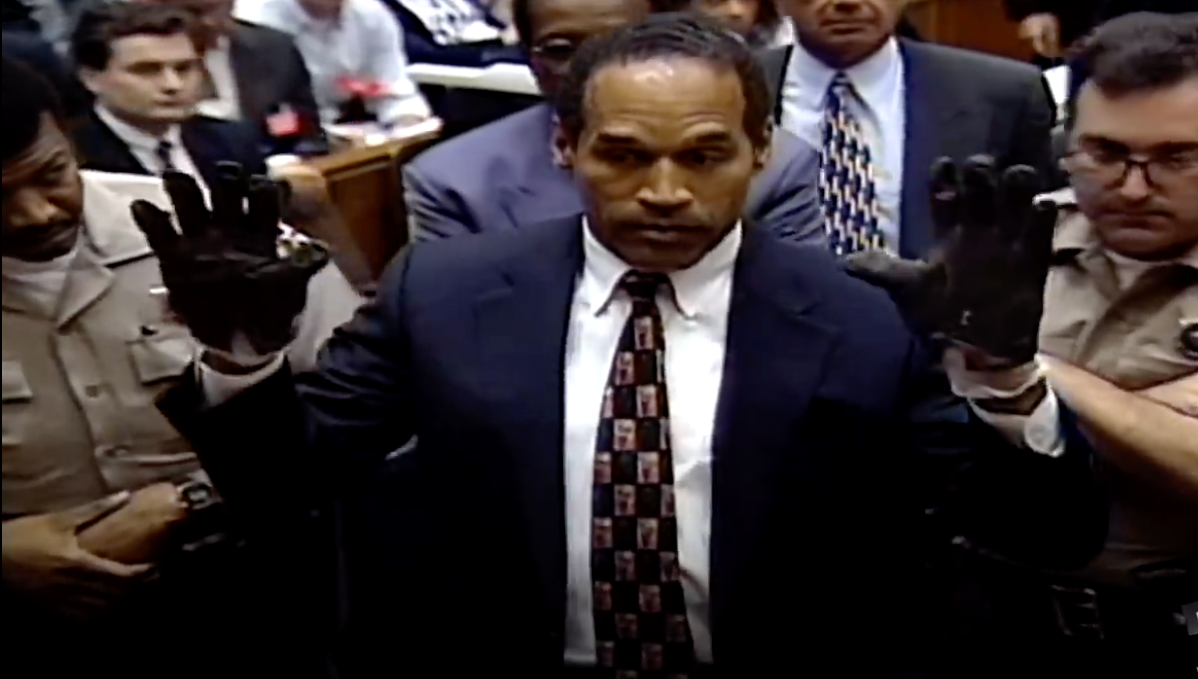
Screen capture by author. Image from RAYE on Youtube.
1:38.
That’s the precise moment in “I Know You’re Hurting” that encapsulates the entire 74 minutes of Raye’s sophomore album in all its ambition, defiance, and well-intentioned hubris.
For the song’s first 1:37, Raye reels us in with the steady hand and fluid instincts of a master fisherman. Over a stoic piano, she sings words of recognition, compassion, and empathy. Delivered in second person, they clearly represent Raye speaking to herself. But it feels like she’s talking to every set of ears, taking a few minutes out of their perpetual fight (or flight) to keep from being swallowed by an aggressively ravenous world. Her voice shield, sword, and quilt. It parries when it needs to parry, thrusts when it needs to thrust, and envelops when it needs to form a cocoon of warmth.
As it soldiers toward the inevitable chorus, we can feel the fork coming. The moment calls for the discreet, unmarked exit. The path where Raye compresses the moment. Strips back the instrumentation, scales her voice down to a cracked whisper, and forces us to lean in — to her vulnerability and our own
“I know you’re hurting.”
At 1:38, she swings the wheel in the other direction, crossing three lanes of traffic, to the obvious exit. The one with the glowing neon sign flashing “catharsis!” and the familiar McDonalds arches alight behind it. Keys throb, drums pound, guitars wail, and Raye belts out the proclamation with all the power in her generationally formidable vocal cords and all the subtlety of a Big Mac. In the time it takes her to sing the titular words, the song has leapt from intimacy to spectacle. Rather than inviting us to share a moment with her, it commands us to marvel at her. Instead of compelling us to lean in, the eruption quite literally pushes us back.
Spectacle demands distance.
That’s precisely the corner Raye paints herself into on This Music May Contain Hope, the hotly anticipated follow-up to 2023’s sleeper hit My 21st Century Blues. The 28-year-old singer/songwriter seems to authentically want to deliver an offering of hope — perhaps even healing — to a generation carrying six degrees of existential angst. She also clearly wants to deliver a definitive statement that renders her greatness undeniable on the grandest superstar scale. Both goals are understandable, especially if you know Raye’s history. Both are inherently human.
They’re also fundamentally incompatible.
That’s not to say This Music May Contain Hope is a bad album. There’s an ingenious 50-minute album lurking in the shadows of its grandiosity.
“Winter Woman” is Raye at her most disciplined, delivering an icy anti-anthem of resilient resignation. “Goodbye Henry” is a hook-heavy Memphis soul stepper that earns every note of its Al Green feature through textural warmth and the easy understatement of its vocal inversions. Raye evades the rhythmic pocket during the verses, only to lock into it too seamlessly on the chorus, suggesting the deviations were accidental.
“Nightingale Lane” is quintessential Raye — a slow-burning torch ballad that marries a staccato stream of consciousness with classically rendered theatricality. It unfolds in movements and builds to an orchestral climax. In time, it could become her “Someone Like You” — not in radio ubiquity (it’s too long and idiosyncratic), but as the post that makes her instantly legible to casual listeners by cleanly demonstrating: this is who she is, this is what she does, and this is why it matters.
But the album’s triumphs often present themselves in moments rather than sustained movements. Its most potent 1–2 punch of “Goodbye Henry” and “Nightingale Lane” is immediately slipped by a pair of flailing Rich Harrison knock-offs in “Skin & Bones” and “WHERE IS MY HUSBAND!”. What should have been a fortifying final lap of “Fields”’s folk-gospel cleansing and “Happier Times Ahead”’s groove-forward affirmation (though I’d have flipped the order) is split up by the greeting card cliche of “Joy”.
Often, the album’s ingeniousness rears its head in fragments only to be immediately undermined by a flourish of excess, indulgence, or self-awareness within the same song. Melodramatic strings surge. Digital sound effects recenter songs in technological medium rather than emotional mooring. Verbose spoken narrations impose, instructing us exactly how to process the music rather than letting us sit with our experience.
The staccato digital percussion of “Click Clack Symphony” — constructed to mirror the rhythm of stilettos pounding concrete — improbably works. However, the off-killer anthem of young women’s communal resilience (think Beyoncé’s “Formation” after 5 glasses of Rosé) stumbles out of its own stride when its musical apex is abruptly interrupted by the return of the album’s incessant voiceover, announcing “She had learned a beautiful lesson… That maybe everything was going to be alright.”
The first rule of communication in any medium is “show, don’t tell.” The TL/DR synopsis becomes superfluous if the artist trusts that the song has done its job and that the audience is sharp enough to process it. Does Raye distrust her vision or our competence? Like the orchestral swells, the recurring voiceovers create distance at precisely the moments the lyrical themes beg to collapse it.
The iPhone notification alerts that chirp like drunken jaybirds throughout “The Whats App Shakespeare” are simultaneously disruptive, persistent, coldly digital, and impossible to ignore. Conceptually, that’s right in line with the song’s portrait of a digital suitor archetype who wields his will through digital persistence. Functionally, they’re a distraction, edging the song from controlled chaos to sonic free-for-all that never quite coalesces. That’s precisely the impulse that trips the album up whenever it begins to hit a stride.
Given Raye’s backstory, the urge is understandable. After generating online buzz with a self-released EP, Raye signed a four-album contract with Polydor Records at age 17. The dream-come-true quickly turned into a nightmare. Polydor repeatedly refused to release material she turned in as a result of “artist differences.” Namely, the label envisioned her as a dance-pop star, while Raye wanted to explore the full breadth of her eclectic musical palette. Raye later accused the label of using her contract to leverage her as a songwriter for established artists while continuing to shelve the hundreds of songs that she amassed for her own releases.
Polydor eventually released Raye after her public excoriations of the label generated high-profile support from stars like Charli XCX. Raye’s 2023 debut was released independently, but consisted largely of songs written during her Polydor years. This Music May Contain Hope is essentially her first fully autonomous statement. Raye seems hellbent on making it land as both autonomous and a statement.
In Amish culture, Rumspringa is the coming-of-age tradition in which young adults are permitted to step outside the strict doctrine of Amish life to explore the world before deciding whether to fully commit to the faith. For most, the experimentation is relatively tame.
A select few, however, truly lean into the literal translation of “Rumpspringa” — “running around.” They bolt Amish country to enjoy all manner of hedonism and debauchery with the unique fervor of young adults who have lived without electricity for 16 years. This Music May Contain Hope feels like an artistic Rumpsringa, with Raye, the wildest of rebels, determined to imbibe freedom in every shape, color, and texture.
Big band brass? She’ll have three helpings. 70-piece orchestra? She’ll take two! Throw in a side of Hans Zimmer, a drizzle of Al Green, and a J.B.’s vocal sample. When the great Fred Wesley says your name, how can you not loop it when you have the complete and utter freedom to do so?
Through that lens, the excess doesn’t feel inauthentic. Quite the opposite. It feels like exactly where Raye is in the singular moment when she suddenly finds the entire world within reach after languishing in a creative and contractual box for a decade.
But authenticity doesn’t always equate to effectiveness.
Raye’s core competency has always been her voice — both as a generational vocal athlete, and as a still-raw, but palpably talented writer capable of delivering both naked vulnerability and incisive turns of phrase. Here, the voice often gets swallowed into the spectacle. Too often, the swell of the strings competes with her vocal prowess rather than augmenting it. The grandiosity of the sound makes the specificity of the themes feel trite by comparison.
There’s certainly a place for Broadway-style orchestration on a song called “I Will Overcome.” But when the tribulations being overcome are the indignity of being ignored at a bar and comparisons to an icon (Amy Winehouse), the dissonance between stakes and presentation plunges quickly into unintentional self-parody.
And that’s the opener.
The vast majority of young Amish adults return to the faith, even after the wildest of Rumspringas. In Raye’s case, that seems like the inevitable outcome, if for no other reason than she can’t possibly go bigger short of constructing a full-on pop opera (shhh… don’t give her any ideas!). Most likely, her “return to the faith” will look like a distillation of This Music May Contain Hope’s most successful elements and a re-centering of the voice.
Raye is a self-described “maximalist.” Her writing style will likely always offer opportunities for a 70-piece orchestra moment. But the completion of her artistic coming-of-age will likely be codified by the confidence to let the song demand the moment rather than using the orchestration to manufacture it.
Until then, This Music May Contain Hope delivers enough moments amidst the mayhem to keep Raye in the conversation until she comes home to deliver the masterpiece she clearly has in her.
메타데이터
- post_id
- b4ff7ddf5666
- slug
- this-mess-may-contain-raye-b4ff7ddf5666
- url
- https://medium.com/the-riff/this-mess-may-contain-raye-b4ff7ddf5666
- canonical_url
- https://medium.com/the-riff/this-mess-may-contain-raye-b4ff7ddf5666
- author_url
- https://medium.com/@mediamaven0103
- status
- ok
- fetched_at
- 2026-06-21 07:44:09