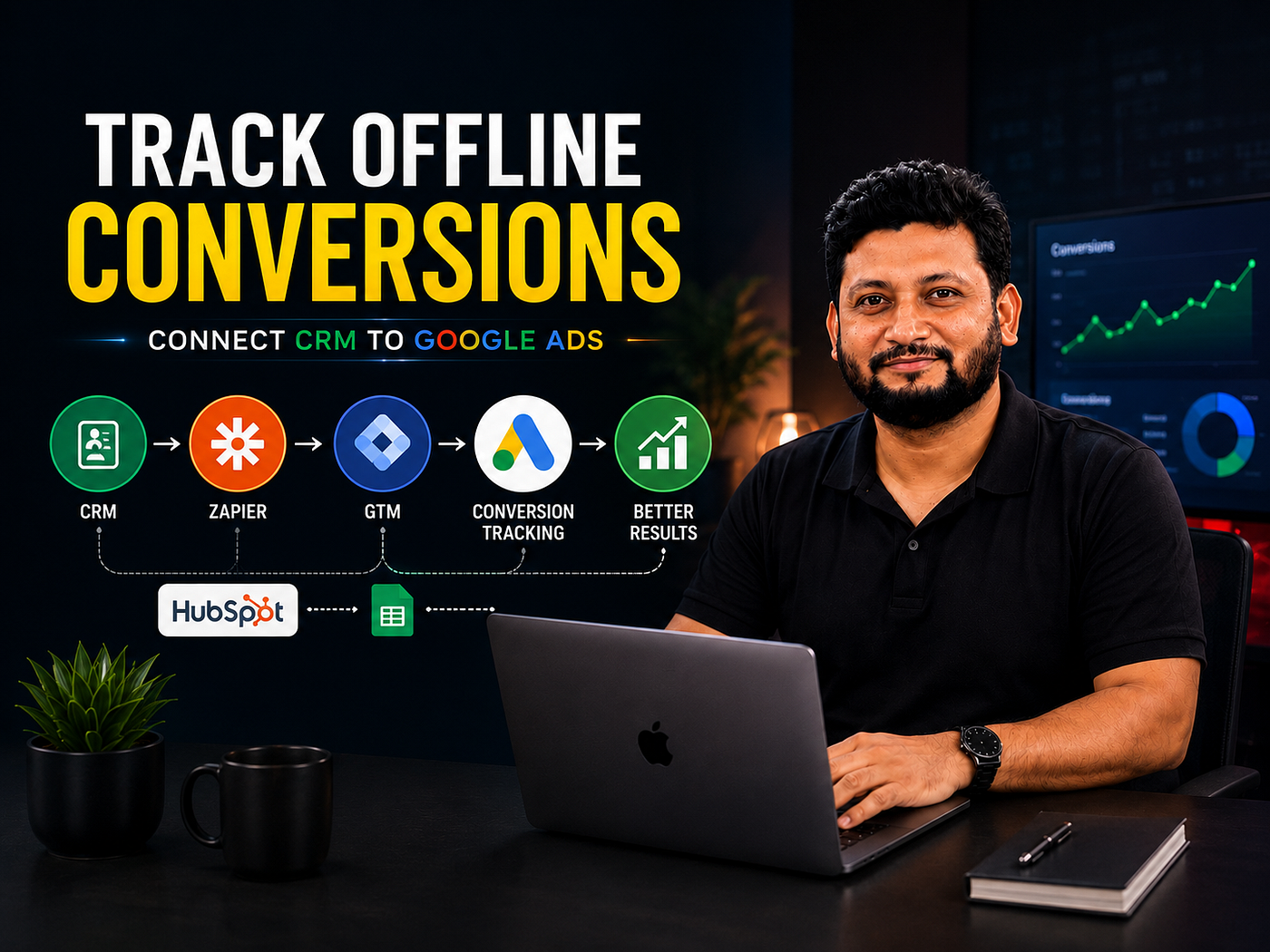
Why Most Google Ads Campaigns Don’t Fail Because of Poor Ads, They Fail Because of Poor Tracking
Every day, businesses invest thousands of dollars into Google Ads hoping to generate more leads, sales, and revenue.
Why Most Google Ads Campaigns Don’t Fail Because of Poor Ads, They Fail Because of Poor Tracking
Every day, businesses invest thousands of dollars into Google Ads hoping to generate more leads, sales, and revenue.
They test headlines. They optimize keywords. They increase budgets. They launch Performance Max campaigns. They hire agencies.
Yet many still struggle to achieve profitable results.
The question is:
Is the campaign really the problem?
In many cases, the answer is no.
The real issue lies much deeper — in the quality of the data Google Ads receives.
Google Ads Is Only as Smart as the Data You Feed It
Google Ads has evolved into one of the most sophisticated advertising platforms in the world.
Its machine learning algorithms automatically decide:
- Which users should see your ads
- How much to bid
- Which audience is most likely to convert
- Which keywords deserve more budget
- Which placements generate the highest ROI
But there’s one important condition.
Google Ads can only optimize based on the conversion data it receives.
If that data is inaccurate, incomplete, or duplicated, the algorithm learns the wrong lessons.
And when that happens, your campaigns start making expensive mistakes.
What Happens When Conversion Tracking Is Broken?
I’ve audited many Google Ads accounts where businesses believed their campaigns were underperforming.
However, after reviewing the tracking implementation, the actual problem became obvious.
Common issues included:
→ Missing purchase tracking
→ Duplicate conversions
→ Incorrect Google Tag Manager configuration
→ GA4 events not marked as conversions
→ Enhanced Conversions not implemented
→ Phone calls not being tracked
→ Lead forms firing multiple conversion events
→ Broken attribution between platforms
These issues don’t just affect reporting.
They directly impact how Google Ads optimizes your campaigns.
Bad Data Creates Bad Decisions
Imagine your campaign generated 100 real leads.
But Google Ads only records 45.
Or perhaps it records 180 because duplicate events are firing.
Either way, Google’s machine learning begins optimizing around incorrect signals.
That often results in:
- Higher Cost Per Acquisition (CPA)
- Lower Return on Ad Spend (ROAS)
- Poor Smart Bidding performance
- Incorrect keyword optimization
- Inefficient audience targeting
- Budget wasted on low-quality traffic
The campaign isn’t necessarily bad.
The data is.
Accurate Conversion Tracking Changes Everything
When conversion tracking is implemented correctly, Google Ads gains the confidence it needs to optimize effectively.
Instead of guessing, the platform begins learning from real customer actions.
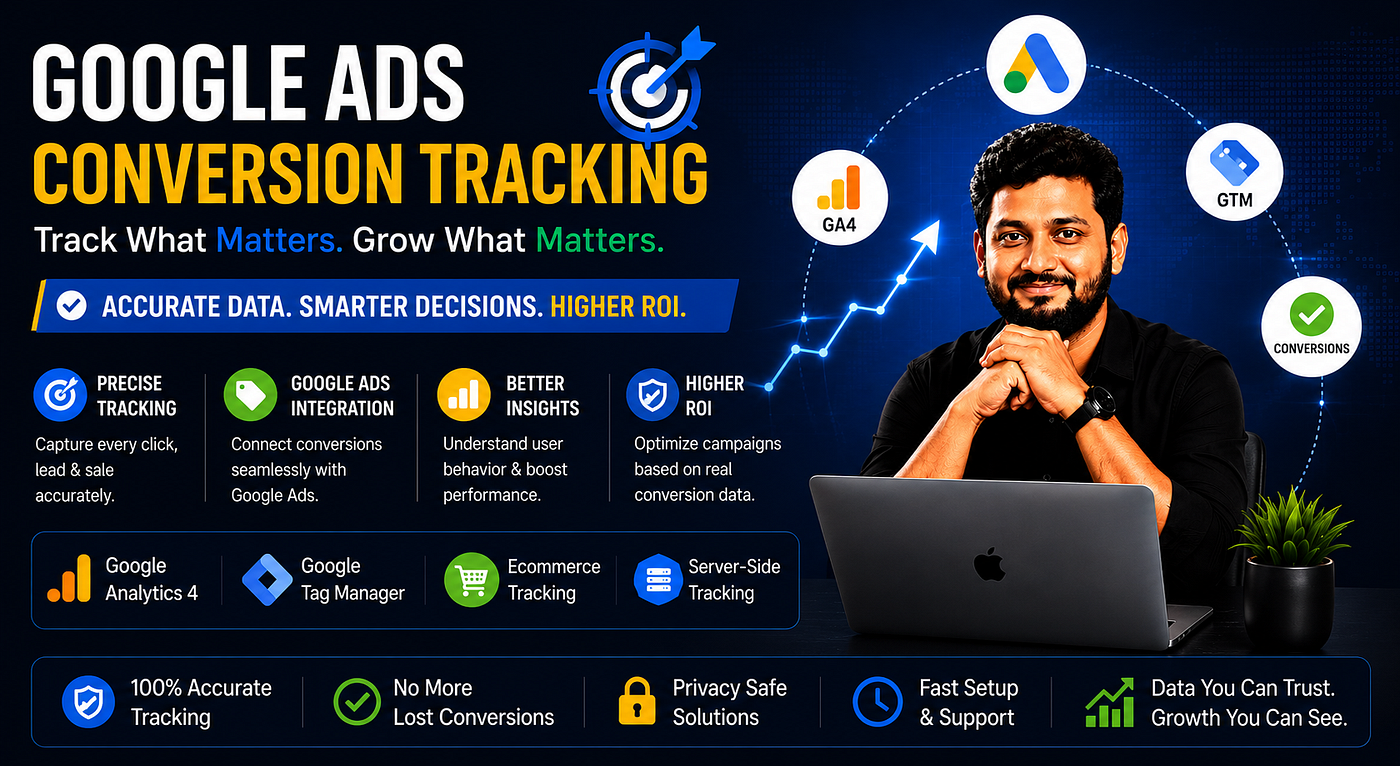
A professional tracking setup should include:
- Google Ads Conversion Tracking
- Google Analytics 4 (GA4)
- Google Tag Manager (GTM)
- Enhanced Conversions
- Ecommerce Tracking
- Lead Tracking
- Form Submission Tracking
- Phone Call Tracking
- Server-Side Tracking (where appropriate)
Together, these technologies create a reliable measurement system that supports better campaign performance.
The Difference Between Spending and Scaling
Many advertisers believe increasing budget leads to growth.
In reality, scaling only works after measurement is accurate.
When your tracking system is reliable, you can confidently answer questions like:
- Which campaign generates the most revenue?
- Which keyword produces qualified leads?
- Which landing page converts best?
- Which audience deserves more investment?
- Where is your marketing budget being wasted?
Without these answers, optimization becomes guesswork.
With them, growth becomes predictable.
My Approach
Whenever I start working with a new client, I don’t immediately change bids or rewrite ads.
I begin by validating the data.
Because every optimization decision depends on trustworthy measurement.
I help businesses build reliable tracking systems using:
- Google Ads Conversion Tracking
- Google Analytics 4 (GA4)
- Google Tag Manager (GTM)
- Enhanced Conversions
- Server-Side Tracking
- Ecommerce Tracking
- Web Analytics
- Performance Reporting
Whether you’re running an eCommerce store, SaaS business, DTC brand, or local service company, accurate tracking is the foundation of profitable advertising.
Final Thoughts
Great Google Ads campaigns are built on great data.
Before increasing your advertising budget or changing your bidding strategy, ask yourself one simple question:
Can I trust my conversion data?
If the answer is uncertain, fixing your tracking may deliver a bigger performance improvement than launching an entirely new campaign.
If you’d like to learn more about Google Ads, Conversion Tracking, Google Analytics 4, and Web Analytics, visit:
Website: https://www.itsumon.com
Book a Free Strategy Call: https://calendly.com/itsumon/adstracking
When your data is accurate, your decisions become smarter. And when your decisions improve, your business grows.
메타데이터
- post_id
- b508d99eae9f
- slug
- why-most-google-ads-campaigns-dont-fail-because-of-poor-ads-they-fail-because-of-poor-tracking-b508d99eae9f
- url
- https://medium.com/@itsumon/why-most-google-ads-campaigns-dont-fail-because-of-poor-ads-they-fail-because-of-poor-tracking-b508d99eae9f
- canonical_url
- https://medium.com/@itsumon/why-most-google-ads-campaigns-dont-fail-because-of-poor-ads-they-fail-because-of-poor-tracking-b508d99eae9f
- author_url
- https://medium.com/@itsumon
- status
- ok
- fetched_at
- 2026-07-25 01:02:52