How to Tell If You Have Bed Bugs — What Houston Homeowners Need to Know
I’ve spoken to a lot of people in Houston who spent weeks convinced they had a skin condition, an allergic reaction, or a mosquito problem…
How to Tell If You Have Bed Bugs — What Houston Homeowners Need to Know
I’ve spoken to a lot of people in Houston who spent weeks convinced they had a skin condition, an allergic reaction, or a mosquito problem — only to find out months later that bed bugs had been living in their mattress the entire time.
The delay almost always makes things worse. A small problem that could have been fixed in a single afternoon turns into a full infestation that’s spread from the bedroom into the living room furniture and the baseboards along the hallway.
If you woke up this morning with unexplained bites and you’re not sure what’s going on — this is worth reading before you do anything else.
The First Thing Most People Get Wrong
The biggest mistake Houston homeowners make is assuming they would see a bed bug if they had them.
You won’t. Not at first.
These insects are roughly the size of an apple seed, flat enough to slide into a seam in your mattress piping, and they only come out between 2am and 5am when you’re in your deepest sleep. By the time you wake up, they’re already back inside the mattress or behind the headboard.
What you will notice — if you know what to look for — are the signs they leave behind.

Sign 1 — The Bites Themselves
Bed bug bites show up as small, red, raised welts. They’re intensely itchy. They appear overnight and you notice them in the morning.
What separates them from mosquito bites is the pattern. Mosquitoes bite randomly wherever they land. Bed bugs probe along your skin looking for a good blood vessel, get disturbed by your movement, withdraw, and bite again an inch further along. This creates a distinct line or tight cluster — sometimes called the “breakfast, lunch, and dinner” pattern.
If you’re waking up with bites in straight rows or clusters of three to five marks on your arms, neck, or shoulders — that’s not a mosquito. Learning exactly what bed bug bites look like and how to tell them apart from other insects is the fastest way to confirm what you’re dealing with.
Sign 2 — What You’ll Find on Your Mattress
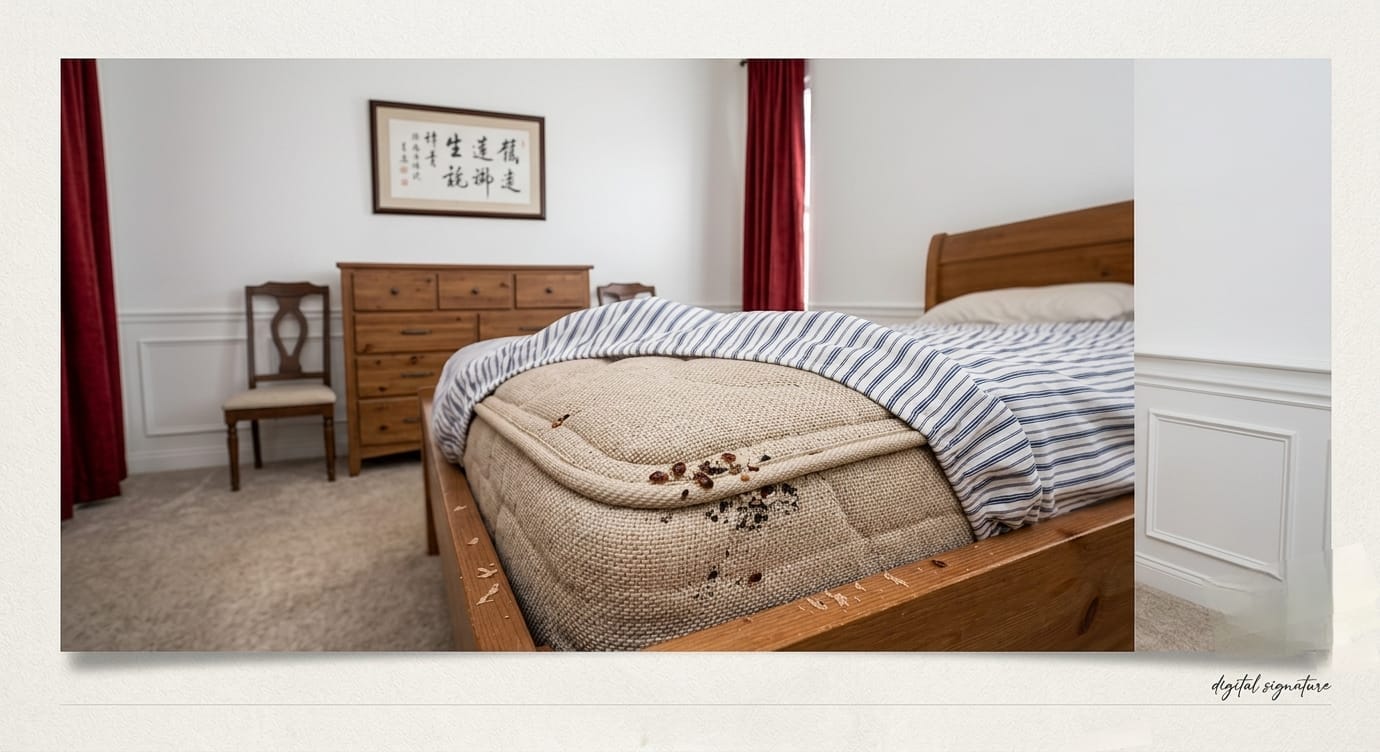
Pull back your sheets right now and look at the seams along the edge of your mattress — especially near the corners and along the piping.
You’re looking for three things:
Tiny dark rust-colored dots — about the size of a pen tip. This is bed bug waste. If you wipe it with a damp cloth and it smears red, it’s digested blood.
Clear or golden shell-like casings — these are shed skins from nymphs growing through their life stages. Finding these means the colony has been active long enough for bugs to mature.
Tiny white eggs in clusters — extremely small, about 1mm, usually tucked deep into fabric folds or seam piping.
Finding any one of these confirms an active infestation. You don’t need to find the bug itself.
Sign 3 — A Smell You Can’t Place
This one surprises people.
A mature bed bug colony produces a distinct sweet, musty odor — often described as overripe raspberries or a damp locker room. It comes from the pheromones the insects release.
If your bedroom has developed a faint unusual smell with no obvious source, and you’ve already noticed bites or mattress stains — trust your instincts. That smell means the colony is large. At that point bugs have almost certainly spread beyond the mattress into nearby furniture and wall voids.
What To Do If You Recognise Any of This
Don’t flip your mattress. Don’t spray store-bought pesticide. Both of these actions disturb the colony and force bugs deeper into walls and structural gaps where they’re significantly harder to treat.
The right sequence is:
- Check your mattress seams and headboard without disturbing anything
- Run through a proper bed bug symptoms identification guide to confirm what you’re seeing
- Call a licensed exterminator for a same-day assessment before the colony grows
Houston’s climate — high humidity, warm temperatures year-round — creates ideal breeding conditions. A colony that’s left untreated for three weeks in a Houston home can grow significantly larger than the same colony in a drier northern climate.
One Thing Worth Knowing Before You Call
A lot of Houston homeowners delay calling because they’re worried about cost and embarrassed about what their neighbors might think.
Both concerns are understandable and both are manageable.
Reputable Houston bed bug exterminators will give you an exact price before starting any treatment — no surprises. And professional services use unmarked vehicles specifically because discretion matters to their clients.
The cost of waiting is always higher than the cost of acting early. A single-room heat treatment caught at the right time costs a fraction of what a whole-home treatment costs three months later.
If you’re in Houston and you’re unsure what you’re dealing with — don’t guess. The earlier you confirm it, the simpler and cheaper it is to fix.
Written for Houston homeowners dealing with unexplained bites or mattress stains. Information based on professional pest control protocols used across Harris and Fort Bend County.
메타데이터
- post_id
- b5103441cc6d
- slug
- how-to-tell-if-you-have-bed-bugs-what-houston-homeowners-need-to-know-b5103441cc6d
- url
- https://medium.com/@buttusman1990/how-to-tell-if-you-have-bed-bugs-what-houston-homeowners-need-to-know-b5103441cc6d
- canonical_url
- https://medium.com/@buttusman1990/how-to-tell-if-you-have-bed-bugs-what-houston-homeowners-need-to-know-b5103441cc6d
- author_url
- https://medium.com/@buttusman1990
- status
- ok
- fetched_at
- 2026-06-09 15:37:30