How OCR Technology Really Streamlines Identity Verification
At first glance, identity verification sounds simple. You take a document, read the information on it, and move on. But anyone who has…
How OCR Technology Really Streamlines Identity Verification
How OCR Technology Really Streamlines Identity Verification
At first glance, identity verification sounds simple. You take a document, read the information on it, and move on. But anyone who has worked with real documents knows it is not that straightforward.
Identity documents vary widely. Different countries use different formats, languages, scripts, and layouts. Even within the same country, documents can look completely different depending on the issuing authority. Small inconsistencies can easily turn into verification errors.
That is why the real challenge is not whether OCR can read text. It is whether it can handle all of this complexity in real conditions.
What OCR actually does in identity verification
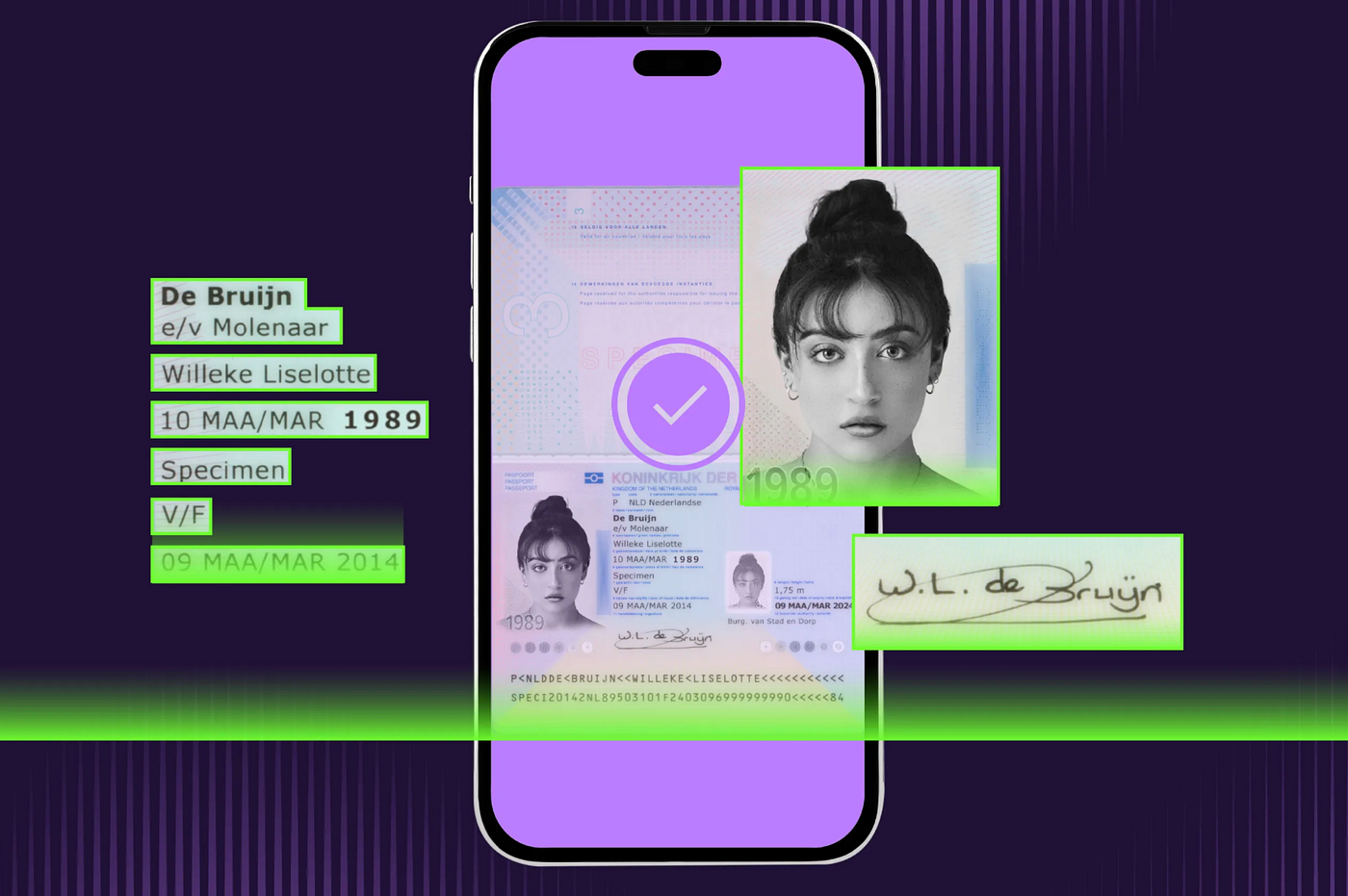
OCR, or optical character recognition, is the technology that turns text from images into data that systems can understand. In identity verification, it is used to extract information from passports, ID cards, and driver’s licenses so it can be processed automatically.
In practice, this means replacing manual data entry. Instead of typing in a name, date of birth, or document number, the system reads it directly from the image. This not only saves time but also reduces human error.
But OCR is not just about reading text anymore. Modern systems are designed to understand documents, not just characters.
What happens behind the scenes
When someone uploads a photo of their ID, a lot happens in the background within seconds.
First, the system finds where the text is. This may sound simple, but it has to separate text from backgrounds, patterns, and security features like holograms.
Then it reads the text. Modern OCR uses machine learning to recognize characters across different fonts, languages, and layouts. It is no longer limited to matching letters one by one.
Finally, the system prepares the data so it can actually be used. It may correct small errors, standardize formats, or check whether the information looks logical before passing it on.
At this point, the document is no longer just an image. It becomes structured data that can be verified, stored, and analyzed.
Why OCR matters so much in identity verification
Everything in identity verification depends on data. If the data is wrong or incomplete, every check that follows becomes unreliable.
OCR provides that starting point. It turns a static image into something the system can work with.
This is especially important in remote onboarding. There is no human reviewing every document in real time. The system has to capture and process everything quickly and accurately on its own.
It also makes the user experience much smoother. Instead of filling out long forms, people can simply upload a document. The system handles the rest.
This reduction in friction is one of the main reasons OCR has become essential across industries that rely on identity verification.
Why identity documents are harder than they look
Reading text from a clean document is one thing. Reading it from real identity documents is something else entirely.
Documents are not standardized. A passport from one country may look nothing like another. Some use multiple languages. Others include non Latin scripts or special characters.
Even the same type of document can vary. Driver’s licenses are a good example. Different states or regions often use completely different designs.
On top of that, identity documents include security features that make OCR harder. Text may overlap with patterns, sit on complex backgrounds, or be partially covered by holograms.
This is why OCR systems used for identity verification need to be trained specifically for these documents, not just for generic text recognition.
How OCR adapts to identity documents
To handle this complexity, OCR systems rely on document templates and large databases of document types.
Instead of treating every document as unknown, the system tries to recognize what kind of document it is first. Once it knows that, it understands where to look for specific data and what format to expect.
For example, it knows where the date of birth should appear and how it should be written. It can also interpret abbreviations or coded values that appear in certain fields.
This makes the process much more reliable than simply scanning text blindly.
Some systems go even further. They check whether the data appears exactly where it should on the document and whether the format matches what is expected. This helps detect inconsistencies or signs of tampering.
OCR as part of a bigger verification process
OCR is a key piece of identity verification, but it is not the whole picture.
The visual part of a document was designed for people, not machines. Unlike machine readable zones or barcodes, it does not always include built in ways to confirm that the data is correct.
That is why OCR is usually combined with other checks.
For example, data extracted from different parts of the document can be compared to make sure it matches. Machine readable zones can be cross checked with visible text. Logical checks can verify whether the data makes sense.
Together, these steps turn raw text extraction into a reliable verification process.
The biggest challenges OCR still faces
Even with modern technology, OCR is not perfect. It still depends heavily on the quality of the input.
If the image is blurry, poorly lit, or taken at an angle, accuracy drops. That is why many verification systems guide users during document capture or automatically adjust the image.
Language and formatting also remain challenging. Documents may use unfamiliar scripts or local date formats that require additional interpretation.
And because document designs change over time, OCR systems need to be constantly updated to keep up.
So what makes OCR effective in the end?
The difference between basic OCR and OCR that works for identity verification comes down to context.
It is not just about reading characters. It is about understanding the document, knowing what data should be there, and verifying that it appears as expected.
When OCR is trained on real documents, supported by templates, and combined with additional checks, it becomes much more than a text recognition tool.
It becomes the foundation of automated identity verification.
메타데이터
- post_id
- b5204bed42e0
- slug
- how-ocr-technology-really-streamlines-identity-verification-b5204bed42e0
- url
- https://medium.com/@RegulaForensics/how-ocr-technology-really-streamlines-identity-verification-b5204bed42e0
- canonical_url
- https://medium.com/@RegulaForensics/how-ocr-technology-really-streamlines-identity-verification-b5204bed42e0
- author_url
- https://medium.com/@RegulaForensics
- status
- ok
- fetched_at
- 2026-07-13 11:34:04

