Titanium vs. Aluminum Alloys: The Ultimate Forging Choice for Extreme Temperatures
When sourcing components from a leading flange manufacturer in India, engineers often face a critical dilemma: Titanium or Aluminum? While…
Titanium vs. Aluminum Alloys: The Ultimate Forging Choice for Extreme Temperatures
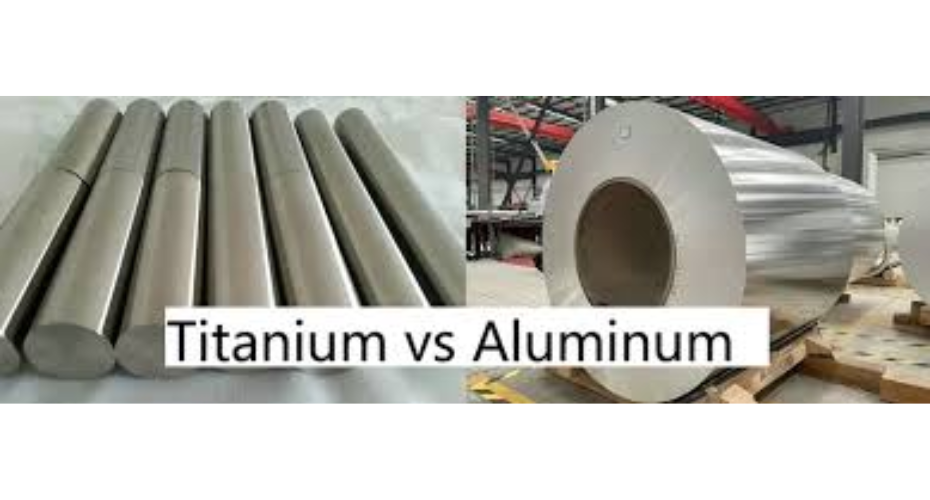
Titanium vs. Aluminum Alloys
When sourcing components from a leading **flange manufacturer in India, engineers often face a critical dilemma: Titanium or Aluminum?** While both materials are celebrated for being “lightweight,” their performance diverges drastically when the heat is turned on. For industries like aerospace, defense, and subsea oil and gas — where “extreme” is the standard — choosing the wrong alloy isn’t just a budget error; it’s a failure risk.
- The Temperature Threshold: Where Aluminum Fades Aluminum alloys are the champions of the “room temperature” world. They are cost-effective and offer an incredible strength-to-weight ratio. However, aluminum has a relatively low melting point (approx. 660°C).
- The Drop-off: Most aluminum forgings begin to lose structural integrity once temperatures exceed 150°C (300°F).
- The Exception: Aluminum performs better than almost any other metal in cryogenic (extreme cold) applications, where it actually gains toughness.
- Titanium: The High-Heat Powerhouse If your application involves jet engines, exhaust systems, or high-pressure steam, Titanium is the undisputed king. Titanium alloys (like Ti-6Al-4V) maintain their mechanical properties at temperatures up to 600°C.
- Creep Resistance: Titanium resists “creep” — the tendency of a metal to slowly deform under persistent mechanical stress at high heat.
- Corrosion in India’s Climate: For coastal industrial plants in India, Titanium’s natural oxide layer provides immunity to saltwater corrosion, a feat aluminum cannot match without heavy coating.
- Forging Challenges: Why Your Manufacturer Matters Forging these two metals requires vastly different expertise. As a specialized **flange manufacturer in India**, we understand that the process is as important as the element:
Feature Aluminum Forging Titanium Forging Forging Temp 350°C — 500°C 870°C — 980°C Equipment Standard hydraulic presses High-tonnage, precision-controlled presses Cost Budget-friendly Premium investment Common Use Automotive, Cryogenics Aerospace, Chemical Processing Why Source from a Flange Manufacturer in India? India has become a global hub for high-grade alloy forging. By partnering with a local expert, you benefit from:
- International Standards: Adherence to ASTM, ASME, and DIN specifications.
- Customization: Precise CNC machining for complex titanium flange geometries.
- Supply Chain Efficiency: Faster lead times for critical infrastructure projects compared to Western counterparts.
Conclusion: Making the Call
- Choose Aluminum if your project is budget-sensitive, operates below 150°C, or involves cryogenic storage.
- Choose Titanium for any “mission-critical” component exposed to high heat, high pressure, or corrosive chemicals.
Looking for high-performance forged components? As a premier **flange manufacturer in India**, we specialize in both titanium and high-strength aluminum alloys
메타데이터
- post_id
- b53a9d8fc63e
- slug
- titanium-vs-aluminum-alloys-the-ultimate-forging-choice-for-extreme-temperatures-b53a9d8fc63e
- url
- https://medium.com/@khatriarnav512/titanium-vs-aluminum-alloys-the-ultimate-forging-choice-for-extreme-temperatures-b53a9d8fc63e
- canonical_url
- https://medium.com/@khatriarnav512/titanium-vs-aluminum-alloys-the-ultimate-forging-choice-for-extreme-temperatures-b53a9d8fc63e
- author_url
- https://medium.com/@khatriarnav512
- status
- ok
- fetched_at
- 2026-07-14 04:48:47