What If AI Investigated: The Burns Cable Nobody Listened To
In February 2008, a US diplomat sent Washington a warning so precise it reads, today, like a forecast of the war that began fourteen years…
What If AI Investigated: The Burns Cable Nobody Listened To
In February 2008, a US diplomat sent Washington a warning so precise it reads, today, like a forecast of the war that began fourteen years later. Two months after he sent it, the policy it warned against was announced anyway

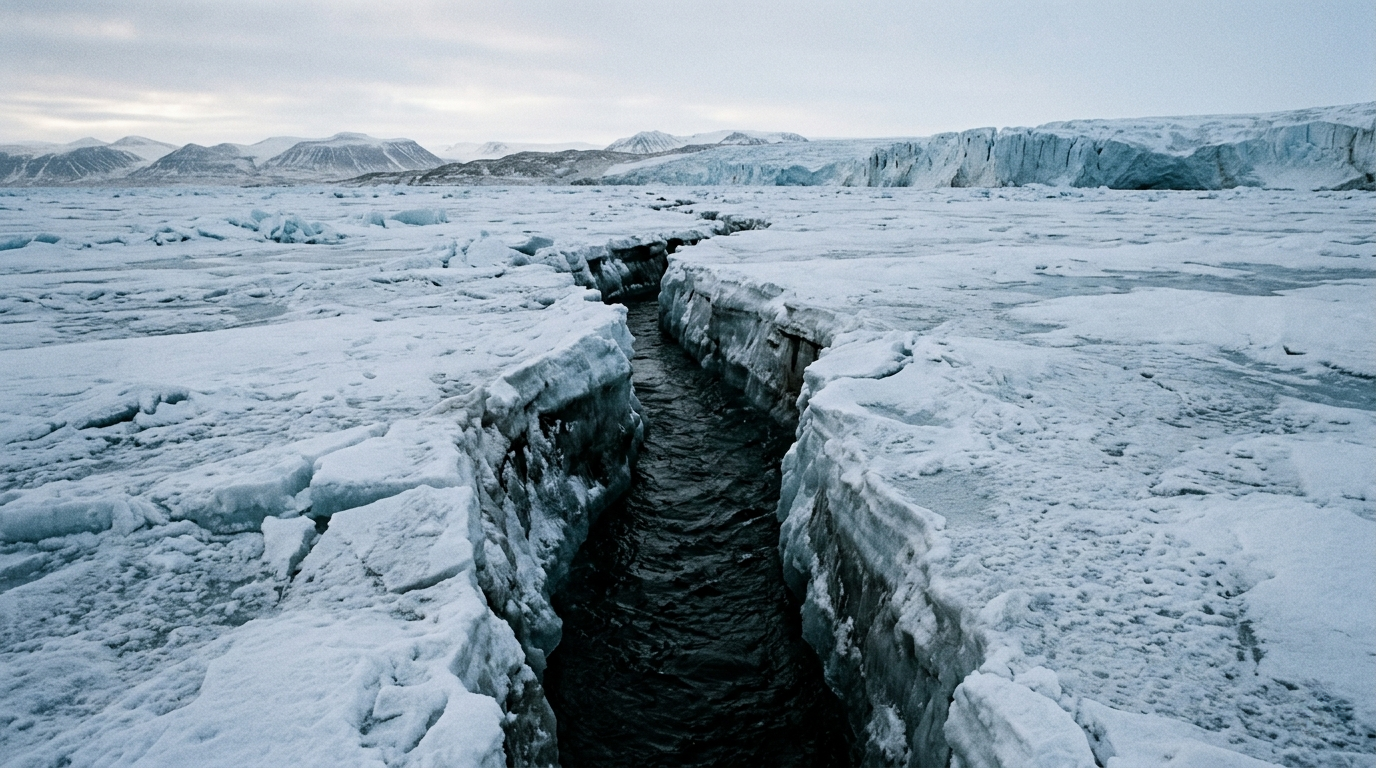
February 2008. William Burns, US Ambassador to Russia, sent a classified cable to Washington titled “NYET MEANS NYET: RUSSIA’S NATO ENLARGEMENT REDLINES.” Two months later, the policy the cable warned against was announced. Fourteen years later, the war the cable forecast began. All images generated by author unless stated.
The cable was titled “NYET MEANS NYET: RUSSIA’S NATO ENLARGEMENT REDLINES.”
It was sent in February 2008 by William Burns, then US Ambassador to Russia, to the State Department in Washington. It was classified. It has since been declassified. Its central passage reads:
“Ukrainian entry into NATO is the brightest of all redlines for the Russian elite, not just Putin. In more than two and a half years of conversations with key Russian players, from knuckle-draggers in the dark corners of the Kremlin to Putin’s sharpest liberal critics, I have yet to find anyone who views Ukraine in NATO as anything other than a direct challenge to Russian interests.”
Two months after Burns sent that cable, the April 2008 Bucharest NATO Summit issued a declaration stating that Ukraine “will become a member of NATO.”
The cable had reached Washington. It had been read. The Bucharest declaration was issued anyway.
Fourteen years later, on February 24, 2022, Russia invaded Ukraine. Burns was by then CIA Director under President Biden. He had spent the preceding months briefing European allies on the intelligence assessment that an invasion was coming. He was right again.
This is not a story about intelligence failure. The intelligence was there, precise, classified and accurate. This is a story about what happens when a forecast is accurate and a political system decides, for its own reasons, not to act on it.
1. What the Cable Said
Burns had been in Moscow since 2005. By February 2008 he had spent nearly three years in sustained conversation with Russian officials across the political spectrum, not just Putin loyalists but liberals, technocrats, military figures and intelligence professionals. The cable’s opening framing was deliberate: this was not one man’s view or the view of one faction. It was the consensus view of the entire Russian elite.
The cable laid out the redlines with precision. NATO membership for Ukraine would not be accepted by Russia as a manageable geopolitical adjustment. It would be experienced, across the Russian elite without exception, as a direct challenge to Russian vital interests. Burns used the word “brightest” deliberately: among all the lines Russia had drawn around its near abroad, Ukrainian NATO membership was the one that most clearly could not be crossed without consequences.
He also described what the consequences would look like. Russia would not accept a Ukraine on the NATO membership pathway. The risk of conflict, not as a remote hypothetical but as a rational strategic response, was explicit in the analysis.
The cable was written with the Bucharest Summit approaching. Burns knew the Bush administration was pushing for Ukraine and Georgia to receive Membership Action Plans, the formal first step toward NATO membership. He was warning, as clearly as classified diplomatic language permits, that the policy under consideration would produce the outcome it was designed to prevent.

William Burns, US Ambassador to Russia, 2005–2008. In February 2008 he sent the cable that forecast the collision with a precision no subsequent event has contradicted. He was ignored. He became CIA Director in 2021 and spent the following year warning that Russia would invade. He was right again. Image: Wikimedia
2. The Bucharest Declaration
The April 2008 Bucharest NATO Summit was the moment the question, would Ukraine eventually join NATO?, was answered in the worst possible way.
Germany and France, led by Merkel and Sarkozy, blocked the formal Membership Action Plan for Ukraine and Georgia. They had read the warning intelligence. They correctly assessed that granting MAP would be immediately provocative. In this, they were responding to the analysis Burns had provided.
But the compromise language that replaced MAP was, in its own way, more dangerous. Unable to agree on MAP, the summit issued a declaration stating: “These countries will become members of NATO.”
This statement combined the worst elements of both options. It gave Ukraine a public promise that could not be honoured, there was no mechanism, no timeline and no enforcement structure. And it gave Russia a stated strategic threat, Ukrainian NATO membership as official Western policy, without the deterrent that would have accompanied actual MAP. Russia now faced the formal announcement of the outcome Burns had identified as the brightest of all redlines, delivered without the commitment that might have made challenging it too costly.
Five months after Bucharest, Russia invaded Georgia. The Bucharest declaration had committed NATO to Georgia’s eventual membership. NATO did not intervene militarily. The lesson was precise and devastating: NATO’s aspiration promise was not accompanied by security guarantees during the transition period. The promise could be made; the consequences of making it could be borne by the country it was made to.

The Bucharest NATO Summit, April 2008. The Bush administration pushed for Ukraine and Georgia to receive Membership Action Plans. Germany and France blocked MAP — but the compromise declaration stated that these countries “will become members of NATO.” Burns had warned, two months earlier, that this was the policy Russia could not accept. The declaration was issued anyway. Image: Wikimedia
3. The Pattern Burns Sat Inside
The cable did not arrive in a vacuum. It was one data point in a pattern of warnings that were consistently ignored.
In February 2007, a year before Burns’s cable, Vladimir Putin delivered his Munich Security Conference speech. He described NATO’s expansion toward Russia’s borders as a “serious provocation.” He said the deployment of military infrastructure near Russian borders was unacceptable. He said Russia would respond. The speech was delivered publicly, in English, to an audience of Western defence ministers and heads of government. It was widely noted at the time and widely dismissed as posturing.
Burns’s classified cable in February 2008 said the same thing in the language of diplomatic intelligence: not posturing, not rhetoric, actual redline.
Robert Gates, serving as Secretary of Defence under Bush, later wrote in his memoir that pushing NATO expansion to Ukraine was “truly overreaching” and “recklessly ignoring what the Russians considered their own vital national interests.” Gates was inside the administration at the time. The concern was not unvoiced. It was not unheard. It was overridden.
After the Georgia invasion of August 2008, the first territorial seizure by military force in Europe since 1945, the West imposed no meaningful consequences. No serious economic pressure. No military response. Georgia lost South Ossetia and Abkhazia. The lesson the Western response taught was a lesson Russia absorbed and retained: territorial revision below the threshold of direct NATO member attack would not trigger military consequences.
In 2023, Jens Stoltenberg, serving as NATO Secretary-General, said in an interview: “The war didn’t start in 2022. The war started in 2014.” This was not a controversial statement. It was the sitting head of NATO acknowledging publicly that the trajectory of this conflict was visible before the event that is treated as its beginning.
The pattern is not ambiguous. The warnings were accurate. The warnings were available. The warnings were not acted upon.

Munich 2007. Burns Cable 2008. Georgia 2008. The December 2021 ultimatums. Each alarm rang. None produced a change in the policy trajectory. The last clock rang on 24 February 2022.
4. The Cassandra Problem
The Burns cable is sometimes described as a failure of intelligence. This framing is wrong in a specific and important way.
Burns did not fail. The cable was accurate, precise and prophetic in every material detail. The forecast it contained was confirmed, in full, by subsequent events. The intelligence apparatus produced exactly what it is supposed to produce: an accurate assessment of the likely consequences of a policy under consideration and delivered in time for that policy to be reconsidered.
What failed was not intelligence. What failed was the political system’s capacity to receive and act on accurate warning.
This failure mode has a name in the historical literature. It is sometimes called the Cassandra problem, after the Trojan prophetess who was given the gift of accurate prophecy and the curse of never being believed. The warning is real. The warning is accurate. The institutional context in which the warning is received has invested too much, politically, strategically, ideologically, in a different outcome to accept the cost of changing course.
In February 2008, the Bush administration had committed to NATO expansion as a core strategic objective. Accepting Burns’s analysis would have required acknowledging that this objective carried a cost that might exceed its value. The political cost of that acknowledgement, the domestic criticism, the alliance friction, the perception of backing down before Russian pressure, was, apparently, too high.
This is not a story about bad intelligence. It is a story about good intelligence and the political conditions that determine whether good intelligence is acted on.
5. Burns at the Helm
The detail that gives the Burns cable its particular historical weight is what happened to Burns himself.
In 2021, President Biden appointed William Burns as Director of Central Intelligence, head of the CIA. The man who had sent the most precise pre-war warning in the diplomatic record was now directing the intelligence apparatus at the moment the consequences of ignoring that warning were arriving.
In the months before the February 2022 invasion, Burns and his CIA briefed European allies with intelligence assessments concluding that Russia was preparing for a full-scale invasion. Several European governments expressed scepticism, the assessment seemed too definitive, too confident and too alarming. Burns held the line on the assessment. The invasion began on schedule.
Burns had been right in February 2008. He was right again in late 2021. The question of why being right in 2008 had produced no change in policy, and whether being right in 2021 was therefore the consequence of failing to act on 2008’s accuracy, is the question the institutional record does not answer.

William Burns as CIA Director, 2021–2025. He spent the months before February 2022 briefing European allies that Russia was preparing a full-scale invasion. Several were sceptical. He was right. He had been right about this situation since February 2008. The gap between those two dates is the article’s closing argument. Image: Wikimedia
6. What the Record Requires
The Burns cable is now declassified. It is publicly available. It can be read by anyone. Its accuracy across fourteen years of subsequent events is not contested.
What the declassification record does not produce is a public accounting of why the cable was received, read, and not acted upon.
There has been no parliamentary inquiry in any NATO country into the decision making process at Bucharest and afterward. No senior official has been asked, formally and on the record, what weight they gave Burns’s assessment when they voted for the Bucharest declaration. The decision to proceed with the policy Burns warned against was made by democratic governments, it carries democratic legitimacy in a formal sense. But it was not made with transparent public reasoning about the specific costs the intelligence community had identified.
This matters for the same reason the Merkel-Hollande admission matters and for the same reason the Istanbul question matters. A series of consequential decisions were made by Western governments between 2007 and 2022 that collectively produced the conditions for this war. Those decisions were made without public deliberation about the specific warnings that were available, and in several cases, without public acknowledgement that those warnings existed.
The Burns cable is the clearest single document in that record. A US diplomat, in February 2008, told Washington what would happen. He told them with the precision of someone who had spent three years in sustained, wide-ranging conversation with the people whose behaviour he was predicting. He was not listened to. The war he forecast is now in its fourth year.
Listening to accurate warning is not appeasement. It is strategy. The failure to listen is not intelligence failure. It is a failure of political institutions to receive the intelligence they are given.
That failure has not been examined. The people responsible for the decisions made at and after Bucharest have not been asked to account for their reasoning. The cable has been declassified. The reckoning has not arrived.

The cable was filed. It was declassified. It is publicly available. It can be read. The reckoning with what it means — that an accurate forecast of this war was available in February 2008 and not acted on — has not yet occurred.
This article is part of the What If AI Investigated series, published under the Lumina Project. All claims are evidence-tiered throughout. The Burns cable text is at Established tier — it has been declassified and is publicly available. The Bucharest declaration is at Established tier — a public NATO document. The Georgia invasion timeline and the Stoltenberg and Gates statements are at Established tier. The article does not attribute the 2022 invasion to Western policy, and does not characterise the invasion as justified. It argues that accurate warning was available, was not acted upon, and that this has not been publicly accounted for.
Primary sources: William Burns, “NYET MEANS NYET: RUSSIA’S NATO ENLARGEMENT REDLINES,” US Embassy Moscow classified cable (February 2008, subsequently declassified); Bucharest Summit Declaration, NATO (April 2008); Robert Gates, Duty: Memoirs of a Secretary at War (2014); Jens Stoltenberg interview (September 2023); William Burns, The Back Channel: A Memoir of American Diplomacy (2019).
메타데이터
- post_id
- b54dcfb343d0
- slug
- what-if-ai-investigated-the-burns-cable-nobody-listened-to-b54dcfb343d0
- url
- https://medium.com/what-if-ai-investigated/what-if-ai-investigated-the-burns-cable-nobody-listened-to-b54dcfb343d0
- canonical_url
- https://medium.com/what-if-ai-investigated/what-if-ai-investigated-the-burns-cable-nobody-listened-to-b54dcfb343d0
- author_url
- https://medium.com/@jamie_gray027
- status
- ok
- fetched_at
- 2026-06-15 20:49:13