Unique Ways the World Welcomes Ramadan 🌙
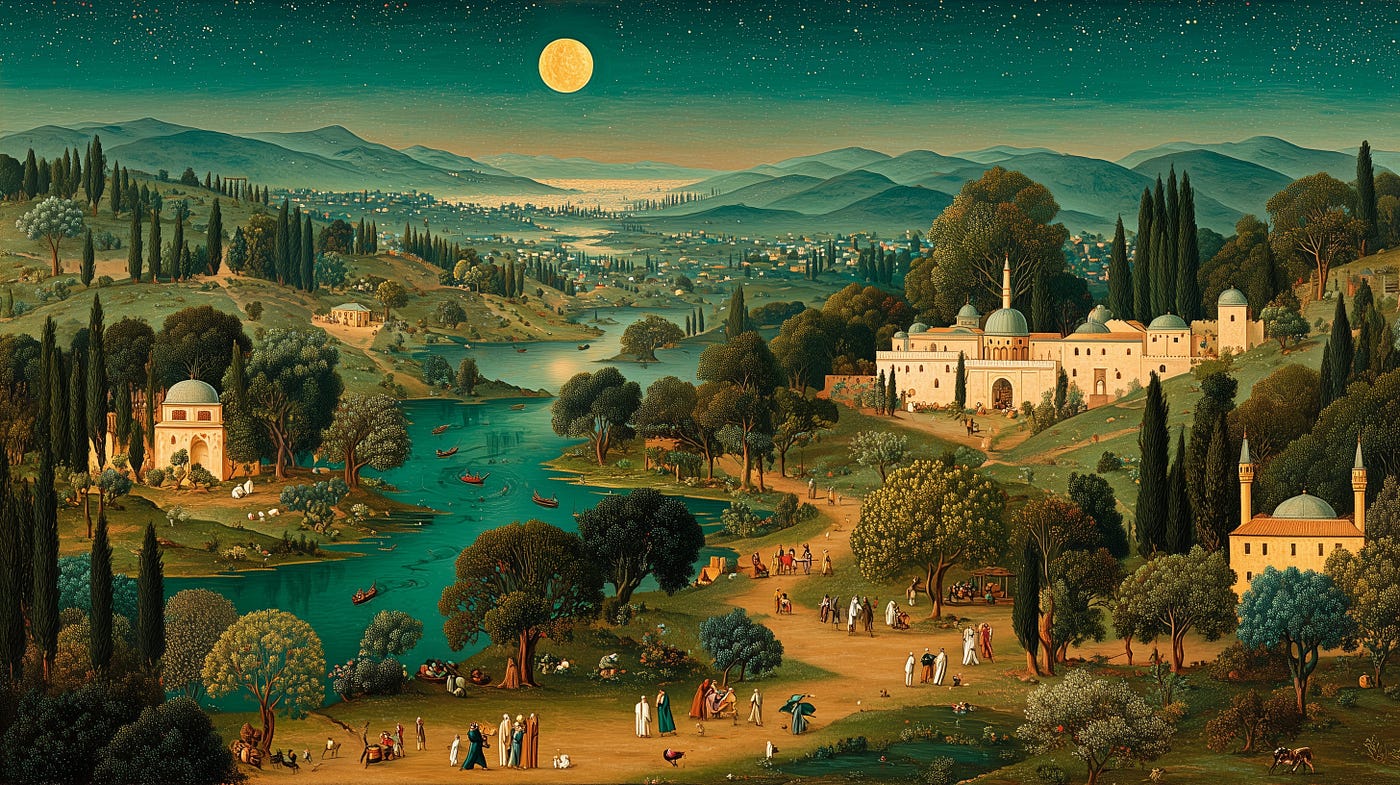
image by author and midjourney
Unique Ways the World Welcomes Ramadan 🌙
Summary: Ramadan / Ramazan is a sacred month anticipated by nearly two billion Muslims around the world. It entails fasting (no food, no drink) from dawn to sunset for 29 to 30 days, as one of the five pillars of worship in Islam. Muslims believe the Quran was first revealed to Prophet Muhammad on the night known as Laylat-al-Qadr (Night of Measure), which occurs within the last ten nights of the month. While the sighting of the new Ramadan moon unites Muslims globally, the “how” of the welcome varies wildly from country to country.
Ramadan began in mid-February this year, based on the sighting of the new moon. The month marks a time of reflection, charity, introspection and spiritual renewal. From the first meal of Sahoor (a.k.a Sehri) first pre-dawn meal, the mind, body and soul tend to shift into a different mode — one of discipline, empathy, gratitude, prayer and deeper awareness. It is the beginning of a collective return to intention and introspection.
From ancient drums to river baths, here is how a number of different cultures mark the arrival of this holiest month, with their own unique traditions and rituals.
1. Indonesia: Purification Ritual of Padusan
In the world’s most populous Muslim nation (around 250 million), the arrival of Ramadan is a time for physical and spiritual “cleansing.”

People participate in Padusan. Photo: Batiqa
In Java, thousands of people participate in ***Padusan***. They plunge into natural springs and rivers to cleanse their bodies before the first day of fasting. It symbolizes a clean slate and the washing away of the previous year’s sins.
2. Egypt: The Lanterns of Cairo
If we walk through the main streets of Cairo as Ramadan begins, we will likely see a sea of colour. Lanterns hang from balconies and café entrances, casting warm patterned light across the city. In historic markets like *Khan el-Khalili*, the glow feels warm and theatrical.

photo: Xinhua
The famous **intricate lanterns** are also hung across shops and narrow alleyways. This tradition dates back over 1,000 years to the Fatimid Caliphate. In modern times, children carry smaller battery-operated versions while singing traditional songs.
3. Türkiye: Dawn Davulcu
Long before digital alarm clocks and iPhones, the community relied on human alarm clocks to wake up for Suhoor.

Ramazan Davulcu
The Ramazan Davulcu is a traditional Ramadan drummer in Turkiye who walks through neighbourhoods before dawn to wake people for Suhoor. Many ***Davulcu*** dressed in traditional Ottoman attire roam the streets beating large drums. Beyond waking people up, the Davulcu represents community spirit and the shared rhythm of Ramadan nights.
4. Japan: The Moon Sighting Tradition
In Japan, where Muslims are a small minority, the beginning of Ramadan is marked quietly but meaningfully. Communities gather at mosques such as *Tokyo Camii,* one of the most prominent Islamic centres in the country, to await moon-sighting confirmations and pray together.

Tokyo Camii surrounded by cherry blossoms. Photo: Batiqa
Many rely on global moon-sighting reports or guidance from local Islamic associations. The atmosphere is intimate — families, students, and expatriates coming together to share the first taraweeh prayers and suhoor plans.
5. Haq-Al-Laila in the UAE
The phrase Haq Al Laila roughly means “the right of the night,” symbolizing generosity, gratitude, and preparation for the sacred month ahead.

Haq Al Laila in UAE. Photo: Mahvin Photography
On the 15th of the month preceding Ramadan, children dress in bright traditional clothes and bags through their neighbourhoods, collecting sweets and nuts singing “Aatoona Allah Yateekum” (Give to us and God will reward you). It builds excitement and teaches the younger generation about the spirit of giving that defines the coming month.
To Conclude…
Across continents and cultures, these traditions remind us that Ramadan is a collective turning of hearts. Whether through lantern light in Cairo, the rhythm of a drum in Türkiye, cleansing waters in Java, or children’s laughter in the UAE, each community welcomes the month in its own language of devotion.
The forms may differ, but the intention is the same: to serve, to reflect, to purify, to reconnect.
Perhaps that is the quiet miracle of Ramadan that we usually don’t read about much, i.e. in a divided world, millions begin the same journey toward reflection, discipline, and mercy at the same time but in their own traditional, and distinctively beautiful ways.
In the words of the 13th-century mystic poet Jalaluddin Rumi…
There’s hidden sweetness in the stomach’s emptiness.
We are lutes, no more, no less. If the soundbox is stuffed full of anything, no music.
If the brain and belly are burning clean with fasting, every moment a new song comes out of the fire.
When you fast, good habits gather like friends who want to help.
– Rumi
Are there any other unique ways you have experienced in welcoming Ramadan in different countries?
💬 comments open for sharing thoughts.

메타데이터
- post_id
- b568f20518fe
- slug
- unique-ways-the-world-welcomes-ramadan-b568f20518fe
- url
- https://medium.com/@nomantoronto/unique-ways-the-world-welcomes-ramadan-b568f20518fe
- canonical_url
- https://medium.com/@nomantoronto/unique-ways-the-world-welcomes-ramadan-b568f20518fe
- author_url
- https://medium.com/@nomantoronto
- status
- ok
- fetched_at
- 2026-07-16 11:47:15