The Group Is Protected. The Woman Inside It Is Not.
When political solidarity becomes more protective of a community’s image than of the women challenging power within it.
The Group Is Protected. The Woman Inside It Is Not.
When political solidarity becomes more protective of a community’s image than of the women challenging power within it.

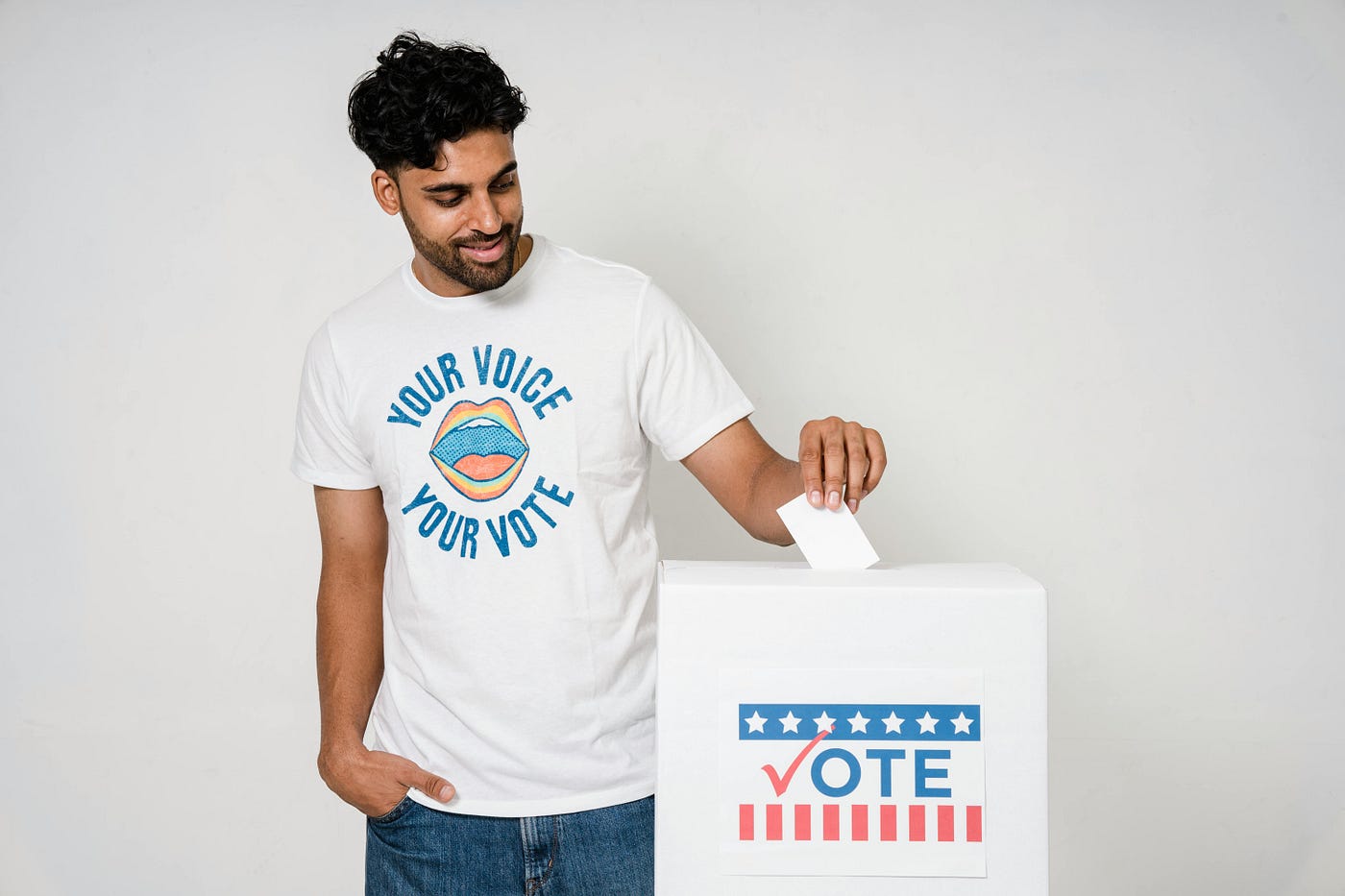
Image created by author.
The Public Story
Progressive coalitions often describe themselves as protecting vulnerable people.
Feminist organizations defend women. Civil-rights groups defend minorities. Religious-liberty advocates defend people from discrimination. In theory, these commitments should reinforce one another.
The contradiction appears when a woman inside a minority religious community describes coercion, unequal family rules, compulsory dress, forced marriage, punishment for leaving the faith, or pressure to remain silent — and the coalition becomes more concerned about how the criticism might be perceived than about the authority she is describing.
The group is protected.
The woman inside it becomes politically inconvenient.
The problem is not that every Muslim woman shares the same experience, or that every Muslim community exercises authority in the same way. The problem begins when protecting the group’s public image becomes more important than confronting the power exercised over women within it.
At that point, solidarity stops protecting the vulnerable person.
It begins protecting the category.
Why the Standard Changes
Modern progressive politics often understands conflict through a hierarchy of power.
Majority institutions are treated as dominant. Minority communities are treated as vulnerable. That distinction can be useful when confronting discrimination, collective suspicion, or exclusion.
It becomes dangerous when the hierarchy is treated as a complete moral map.
Once a community has been placed inside the protected category, criticism of authority within that community can be interpreted as an attack on the community itself. Practices that would be condemned immediately in a majority setting are suddenly described as culturally complicated, politically sensitive, or inappropriate for outsiders to discuss.
The standard changes according to who holds the power.
A conservative Christian institution restricting women may be described as patriarchal. Similar restrictions inside a protected minority are more likely to be surrounded by qualifiers about culture, identity, racism, or community autonomy.
The woman experiences the restriction either way.
When criticism is treated as politically dangerous, coalition loyalty begins to outrank the principles the coalition claims to defend.
That is the contradiction.
The Coalition Has Something to Protect
Advocacy organizations do not operate through principles alone. They also depend on alliances, donors, voting blocs, reputations, institutional access, and shared political campaigns.
A broad coalition gains influence by maintaining unity against discrimination, nationalism, restrictive immigration policy, and the political right. Publicly confronting an allied religious institution risks internal conflict and may provide ammunition to political opponents.
That creates a powerful incentive to avoid the argument.
Criticism of doctrine becomes criticism of people.
Scrutiny of male religious authority becomes hostility toward a minority.
Concern for women inside the community becomes suspicion of the community itself.
Once those distinctions are erased, power becomes harder to question.
The public vulnerability of the group begins shielding the internal authority of its leaders.
This is not merely cultural sensitivity.
It is institutional self-protection.
Who Benefits From the Silence
Progressive organizations benefit because the coalition remains intact.
Political parties benefit because allied communities remain organized around shared enemies.
Public figures benefit because broad language about inclusion is safer than confronting contradictions among their own supporters.
Religious authorities benefit when external scrutiny can be dismissed automatically as prejudice.
The people who lose are often the women, reformers, secular believers, dissenters, and former believers asking outsiders to distinguish between defending people and defending authority.
Their testimony creates a political problem.
If outsiders listen too closely, the clean division between oppressor and oppressed becomes harder to maintain. A group can be vulnerable to discrimination from the outside while still containing systems of control on the inside.
Those two facts can exist at the same time.
But a coalition built around simple moral categories may resist admitting it.
The woman is then told that her experience matters, but not in a way that disrupts the alliance.
She may speak privately, but not too publicly.
She may describe the coercion, but not name the doctrine.
She may criticize the men involved, but not the institution granting them authority.
Her suffering is acknowledged only after it has been made politically harmless.
That is not solidarity.
It is message control.
Feminism Cannot Stop at the Boundary of the Group
A feminist standard that changes according to the religious or political identity of the authority is not a consistent standard.
Patriarchy does not become less patriarchal because the men enforcing it belong to a minority.
Coercion does not become freedom because outsiders are afraid to criticize it.
A woman does not become less deserving of support because her testimony complicates a preferred political narrative.
This should not be difficult.
The woman who freely chooses a religious practice deserves protection.
So does the woman pressured into it.
The woman who remains in the faith deserves protection.
So does the woman who leaves.
The woman who defends her community deserves to be heard.
So does the woman who says that community harmed her.
A movement that only protects the women whose testimony supports the coalition is not protecting women as a principle.
It is selecting politically useful women.
The False Choice
The debate is often reduced to two positions.
Either defend Muslims from prejudice.
Or criticize Muslims as a group.
That is a false choice, and it functions as a shield.
There is a clear third position: defend Muslim people from discrimination while remaining willing to criticize Islamic doctrines, religious institutions, family structures, and political movements that restrict women or punish dissent.
Equal civil rights do not require immunity from criticism.
Religious freedom does not require submission to religious authority.
Opposition to anti-Muslim hatred does not require silence about compulsory veiling, forced marriage, honor-based control, unequal family law, or punishment for apostasy.
Criticism of an idea is not hatred of the people associated with it.
When those categories are deliberately collapsed, the purpose is often not clarity.
It is protection from scrutiny.
When Cultural Sensitivity Becomes Abandonment
Cultural humility matters.
Outsiders can misunderstand traditions, flatten complex communities, or exploit women’s suffering to justify racism, collective punishment, exclusion, or war.
That history is real.
But it cannot become a permanent veto against criticism.
There is a point at which caution becomes avoidance.
There is a point at which sensitivity becomes selective blindness.
There is a point at which fear of helping the wrong political side becomes an excuse for abandoning the woman directly in front of you.
A movement does not prove its opposition to prejudice by refusing to examine power inside a minority community.
It proves only that some forms of authority are politically safer to confront than others.
The result is an uneven feminism: fierce against patriarchy when the target is culturally approved, hesitant when the same criticism may strain the coalition.
That is not moral consistency.
It is political sorting.
Listen Without Preselecting the Answer
The clearest way through this contradiction is to listen to women without deciding in advance which testimony is politically acceptable.
Some Muslim women experience religious dress, family structures, and community traditions as meaningful and freely chosen. Others describe pressure, fear, punishment, surveillance, or limited alternatives.
Neither experience cancels the other.
The problem begins when institutions select the voices that support the public narrative and treat the dissenting voices as dangerous, unrepresentative, manipulated, or politically inconvenient.
No coalition should decide that the woman who praises the community is authentic while the woman who criticizes it is suspect.
Women are not symbols for preserving someone else’s moral arrangement.
They are individuals capable of describing the power operating in their own lives.
A movement claiming to defend them should be able to hear what they say even when the answer threatens an alliance.
Especially then.
The Clean Read
The public story says the coalition is protecting a vulnerable group.
The deeper question is whether that protection extends to the women who challenge the men, doctrines, and institutions exercising power inside it.
When a movement condemns patriarchy everywhere except where criticism might threaten its coalition, that is not consistency.
It is political protection.
The group remains protected.
The woman inside it is asked to be quiet.
Author’s note: Criticism of Islamic doctrine, religious law, and patriarchal authority is not hatred of Muslims. People deserve equal civil rights and protection from discrimination. Ideas, institutions, and systems of authority deserve scrutiny — especially when they govern women’s choices, punish dissent, or place religious loyalty above individual freedom.
메타데이터
- post_id
- b56e97819361
- slug
- the-group-is-protected-the-woman-inside-it-is-not-b56e97819361
- url
- https://medium.com/the-alignment-archive/the-group-is-protected-the-woman-inside-it-is-not-b56e97819361
- canonical_url
- https://medium.com/the-alignment-archive/the-group-is-protected-the-woman-inside-it-is-not-b56e97819361
- author_url
- https://medium.com/@thealignmentarchive
- status
- ok
- fetched_at
- 2026-07-14 16:46:30