What is RNP Approach? Difference between RNAV & RNP Approach
In the world of flying in bad weather, having the right guidance systems is crucial for a safe landing. Two important systems are RNAV…
What is RNP Approach? Difference between RNAV & RNP Approach

In the world of flying in bad weather, having the right guidance systems is crucial for a safe landing. Two important systems are RNAV (Area Navigation) and RNP (Required Navigation Performance) approaches.
Both use satellite navigation, like GPS, but they have some differences in how well they perform and how they work. This article will explain these differences to help pilots understand them better.
RNAV Approach:
Getting to Know the Basics RNAV approaches are a part of Performance-Based Navigation (PBN) and offer more flexibility and accuracy than traditional navigation methods.
They use onboard satellite navigation systems, allowing planes to follow curved paths instead of just straight lines. Key features of RNAV approaches include:
- Area Navigation: The ability to follow curved paths instead of straight lines.
- Published Minimum Navigation Performance (MNP): A specified level of accuracy needed for the approach, usually ranging from RNAV 5 (5 nautical miles accuracy) to RNAV 0.3 (0.3 nautical miles accuracy).
- No Onboard Performance Monitoring and Alerting (OBPMA): The system itself doesn’t continuously check its performance; pilots rely on external sources like flight management systems (FMS) for monitoring.
EXPLORE DETAILED ARTICLE HERE: https://aviatechchannel.com/what-is-rnp-approach/
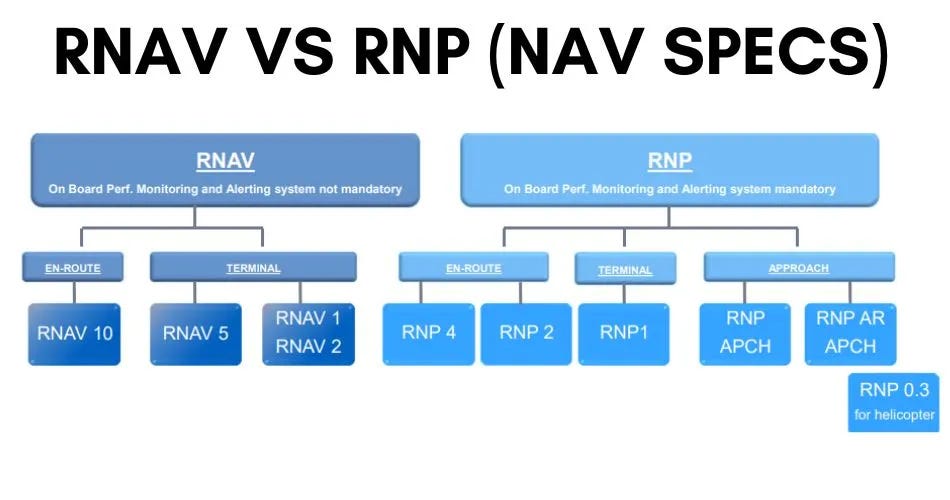
RNP Approach:
Raising the Standards RNP approaches build on RNAV, adding a crucial layer of onboard performance monitoring. This includes:
- Defined RNP Value: Each RNP approach has a specific RNP value (like RNP 0.3) stating the required lateral accuracy (95% of the time).
- Onboard Performance Monitoring and Alerting (OBPMA): The navigation system continuously checks its performance against the RNP value and alerts the pilot if there are any deviations.
- Enhanced Reliability and Integrity: OBPMA ensures the plane stays within the required accuracy, making approaches safer and more efficient.
Choosing the Right Approach:
What Pilots Need to Consider Choosing between RNAV and RNP depends on various factors:
- Airspace Requirements: Some airspaces may require RNP approaches for better safety and efficiency.
- Available Equipment: The plane’s navigation systems must match the approach’s requirements.
- Pilot Training and Authorization: Pilots need specific training and authorization to use certain RNP approaches.
- Weather Conditions: RNP approaches, with their stricter monitoring, might be better in low-visibility situations.
Conclusion:
Flying with Clarity Understanding the differences between RNAV and RNP approaches helps pilots make smart decisions for safe landings.
RNAV provides flexibility and area navigation, while RNP adds onboard monitoring for better reliability and precision.
Knowing these distinctions, pilots can confidently navigate even challenging approaches, ensuring a safe journey through the skies.
메타데이터
- post_id
- b5700a42a26e
- slug
- what-is-rnp-approach-difference-between-rnav-rnp-approach-b5700a42a26e
- url
- https://medium.com/@aviatechchannel/what-is-rnp-approach-difference-between-rnav-rnp-approach-b5700a42a26e
- canonical_url
- https://medium.com/@aviatechchannel/what-is-rnp-approach-difference-between-rnav-rnp-approach-b5700a42a26e
- author_url
- https://medium.com/@aviatechchannel
- status
- ok
- fetched_at
- 2026-06-28 04:42:08