Common Health Myths You Should Stop Believing
Information about health is disseminated quite quickly through various means, such as social media, television, magazines, and online…
Common Health Myths You Should Stop Believing

Information about health is disseminated quite quickly through various means, such as social media, television, magazines, and online resources. Every day we receive new data related to health care advice, popular diets, fitness recommendations, and general wellness. Nevertheless, not everything we hear about our health is beneficial; there are a lot of misconceptions regarding health that can lead to negative results for a person’s health condition.
The reason for this problem is the nature of such health information. Often the information is given by various influencers, celebrities, commercials, and even ordinary acquaintances. The information, which is not true, can gradually become accepted as real if people believe this misconception repeatedly. Thus, such false information about our well-being can be harmful to our diet, fitness programs, and even mentality.
Therefore, it is necessary to know what is not entirely true to avoid being misled by the misconceptions. The current article will discuss several health myths that people should forget about and understand their realities.
Myth 1: Skipping Meals Helps with Weight Loss
Many people have the opinion that skipping meals can be quite a useful strategy if they want to lose some weight in a short period of time. It happens because people do not consume their usual meals and think that reducing their portions will help them decrease the number of calories consumed. Yet, such practices usually lead to negative consequences.
It is important to note that skipping meals can reduce the speed of one’s metabolism, which will make people feel weak and exhausted. People are deprived of food; hence, they tend to eat more at later stages. This means that the probability of overeating and consuming foods with high amounts of sugar and fat becomes much higher.
It would be better if people ate small, balanced meals every day to keep themselves full and healthy. The most recommended diet contains fruit, vegetables, protein sources, fats, and even grains. It helps to avoid overeating and maintain one’s health.
Myth 2: All Fats Are Bad
For decades, fats have been seen as bad things that cause one to gain weight and suffer from various heart problems, and people have consequently avoided fats altogether. But recent findings suggest otherwise.
There are many benefits that come from healthy fats. They help with brain function, hormone secretion, as well as provide energy and protect against diseases such as heart diseases. Foods like nuts, seeds, fish, olive oils, and avocado contain healthy fats that do wonders for your health. The omega-3 fatty acids present in fish help in lowering the risk of heart diseases.
On the other hand, the unhealthy types of fats are trans fats and too much of saturated fats which are found in most junk foods and processed foods. These unhealthy fats can raise the level of cholesterol in your body and increase the risk of heart diseases.
In conclusion, moderate consumption of healthy fats helps one enjoy great benefits.
Myth 3: You Must Exercise Intensely to See Results
Most individuals have a perception that only vigorous exercises provide real health benefits. Social media sites portray vigorous fitness regimens, hardcore gym exercises, and challenging exercise regimes as the only means to get fit or lose weight.
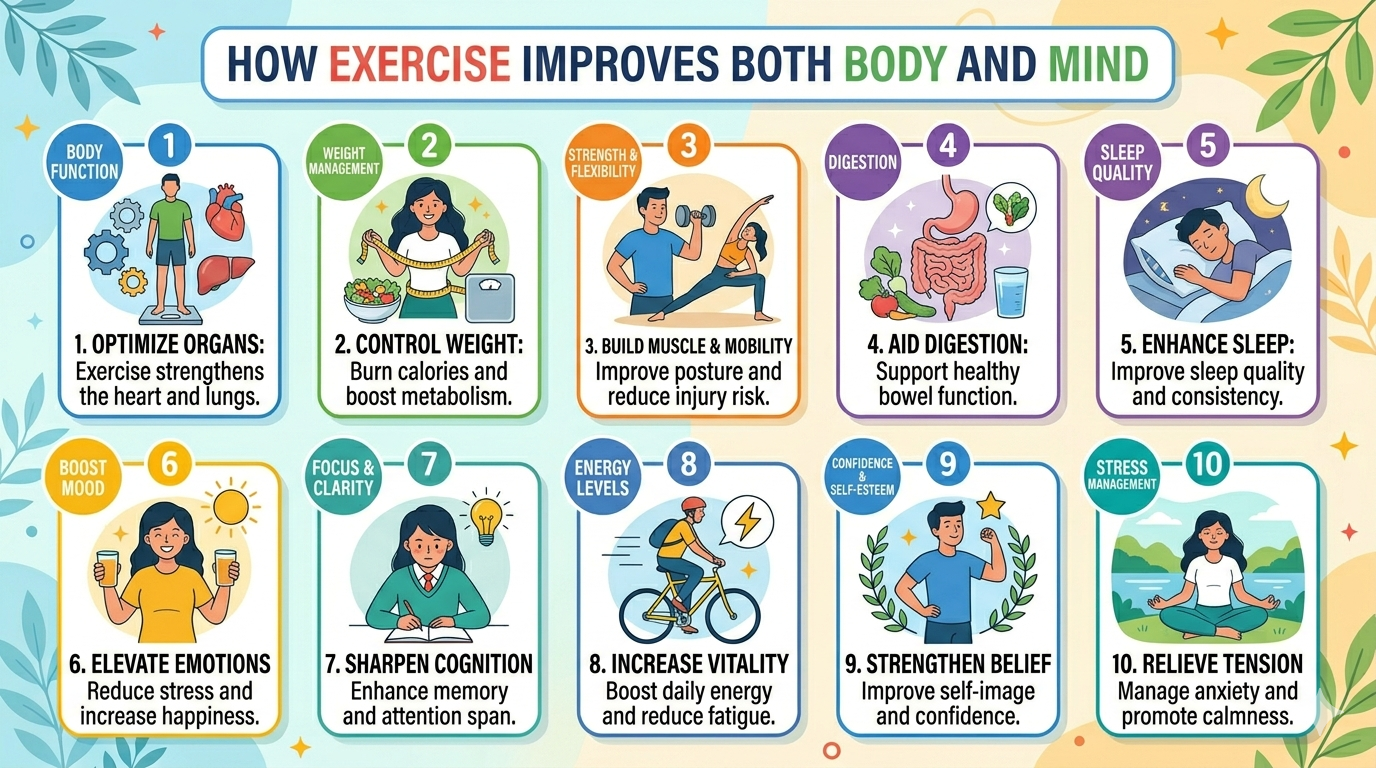
Nevertheless, moderate exercises can contribute to improved fitness levels. Walking, stretching, yoga, biking, swimming, and dancing are perfect types of exercises that contribute to overall well-being. It is not necessary to engage in rigorous physical activity; consistency is important.
Routine exercise helps strengthen muscles, improves circulation, increases energy levels, and lowers the risk of getting diseases like diabetes and heart diseases. Physical activity is associated with release of endorphins that lower stress levels and elevate moods.
It might be easy for newbies to begin exercising through simple exercises rather than opting for strenuous exercises right from the start. Engaging in physical exercises for about thirty minutes on several days a week contributes to long-term health benefits.
In essence, the best type of exercise regime should be easy to stick to consistently.
Myth 4: Drinking Coffee Is Always Unhealthy
Coffee tends to be vilified, and many people consider it to be bad for one’s health. However, too much coffee consumption poses potential risks while moderation may yield many positive effects.
For example, coffee has a high concentration of antioxidants which shield the body from damage brought about by free radicals. Additionally, moderate coffee consumption may result in improved concentration, focus, alertness, and memory. According to scientific research, coffee consumption may reduce the chances of getting sick in certain instances.
The issue with coffee arises in cases where people take too much caffeine or load their coffee with a lot of sugar and creamers. In other cases, coffee consumption brings along anxiety, insomnia, rapid heart rate, and dehydration.
It all comes down to taking the right amount of coffee. Moderation ensures that coffee does not cause any adverse health effects on people. One must also consider the effect that caffeine may have on one’s body.
Myth 5: Mental Health Problems Are Signs of Weakness
The idea that mental health challenges indicate one’s lack of resilience and strength is among the most dangerous misconceptions. However, unfortunately, there is still a stigma related to mental health in many societies and people are afraid to seek help.
Many different mental health problems including anxiety, depression, stress disorders, and emotional burnout may appear in any individuals irrespective of their age, gender, way of life, or social status. They are legitimate diseases that should be treated.
Dealing with psychological difficulties does not mean that an individual is fragile or weak. Similar to physical illnesses, they need attention, care, and help. Moreover, ignoring one’s emotional health may only exacerbate the situation.
Finding a therapist who could provide necessary help is a very smart decision. It shows strength and courage to discuss one’s problems and talk about emotions and psychological state.
Mental health needs much more attention than it gets now and should be taken seriously by people.
Myth 6: Healthy Food Is Always Expensive
Healthy eating is something that most people shy away from due to high costs. The reason for this may be the advertisements of pricey products that supposedly improve one’s health. This gives people the feeling that only rich individuals can afford being healthy.
However, there are several affordable yet nutritious foods which everyone could eat. Such items include rice, beans, lentils, oats, vegetables, eggs, bananas, and seasonable fruits. It is also cheaper to cook healthy food at home rather than constantly eat junk food.
Making meal plans, purchasing food in bulk, as well as minimizing wastage, makes healthy eating cheaper. In addition, frozen vegetables, along with local produce, is an affordable way to stay healthy while getting enough nutrients.
Healthy meals cooked at home require minimal investment since such dishes can be extremely nutritious without expensive components.
Myth 7: More Water Is Always Better
Water is one of the basic necessities of life, and it is crucial to stay hydrated in order to keep oneself healthy. Due to this very reason, many individuals assume that drinking a huge amount of water is always a good thing.
However, drinking excessive quantities of water is not always advantageous either. Excessive intake of water within a short period of time can adversely affect the body’s electrolyte and mineral balance. In exceptional cases, such hydration may cause health issues.
In most cases, individuals need to maintain a moderate level of water intake depending upon their level of thirst, activities, and other factors. Active individuals or those who live in tropical climates might need more water than others.
Instead of drinking a large quantity of water unnecessarily, individuals should try to maintain optimal hydration. It will prove helpful in most cases.
Myth 8: Natural Products Are Always Safe
There is an assumption by many individuals that any product which is natural or herbal is entirely safe since it is derived from nature. Even though herbal products are beneficial to health in certain instances, natural does not necessarily imply safety.
Some herbs might interact with prescription drugs or have other side effects if used inappropriately. In addition, online sales might lack appropriate tests for quality assurance. Anything which is natural will be hazardous to one’s body if taken excessively.
It is crucial to research and seek professional advice concerning the use of any supplement before taking them.
Myth 9: You Can “Detox” Your Body with Special Drinks
Various detox tea beverages, juices, and specialized detox products are widely popular on the internet. Most of the advertisements say that detox products cleanse your body from toxins and make you lose weight quickly.
On the contrary, the human body has its own detoxification mechanism. This detox process is provided by the liver, kidneys, digestive tract, and skin.
It is worth noting that most detox products cannot offer any miraculous effects. Some of them can even cause dehydration, nutritional deficiencies, and gastrointestinal issues.
However, the best strategy for supporting natural detoxification processes in the body is to maintain healthy behaviors such as proper nutrition, hydration, sleep, and physical activities.
Health requires efforts.
The Importance of Reliable Health Information
Since there is an abundance of information on the Internet, it is crucial to refer to credible sources of information. Fake claims regarding health concerns may quickly become widespread, spreading like wildfire across social media channels.
When looking for health advice, one should consult doctors, peer-reviewed journals, hospitals, and credible health organizations. People should not fall victim to trends or advertisements without any proof.
One should approach any health advice critically by asking themselves some essential questions like:
Is the source credible? Is there any scientific proof that backs the claim? Are medical professionals supporting the advice? Does it make sense?
It is beneficial for people to learn how to analyze their information properly.
Myths related to health can contribute to misinformation and promote bad behaviors. False beliefs about health-related facts may result in inappropriate choices regarding nutrition, physical activities, hydration, mental well-being, and general fitness.
Knowledge about facts that debunk common myths will assist individuals in making rational decisions and adopting healthier behaviors. Appropriate nutritional behaviors, physical exercise, proper hydration, support for emotional issues, and professional guidance on health matters are crucial factors contributing to healthy behaviors.
Rather than embracing all trendy and socially popular practices, people need to stick to credible and practical facts regarding health practices. It is more appropriate to adopt minor changes in the current lifestyle rather than engaging in extreme behaviors.
Healthy and evidence-based practices will assist in avoiding dangerous decisions and promoting health and well-being. Knowledge and awareness are crucial for a person to embrace a healthier lifestyle.
메타데이터
- post_id
- b5756ca09d0d
- slug
- common-health-myths-you-should-stop-believing-b5756ca09d0d
- url
- https://medium.com/@movewelljourney/common-health-myths-you-should-stop-believing-b5756ca09d0d
- canonical_url
- https://medium.com/@movewelljourney/common-health-myths-you-should-stop-believing-b5756ca09d0d
- author_url
- https://medium.com/@movewelljourney
- status
- ok
- fetched_at
- 2026-07-07 21:40:51