Stuck Doing It Alone: Why Inner Work Needs an Outside Force
— Sheila Rumble | Rowan Wellness
Stuck Doing It Alone: Why Inner Work Needs an Outside Force
— Sheila Rumble | Rowan Wellness
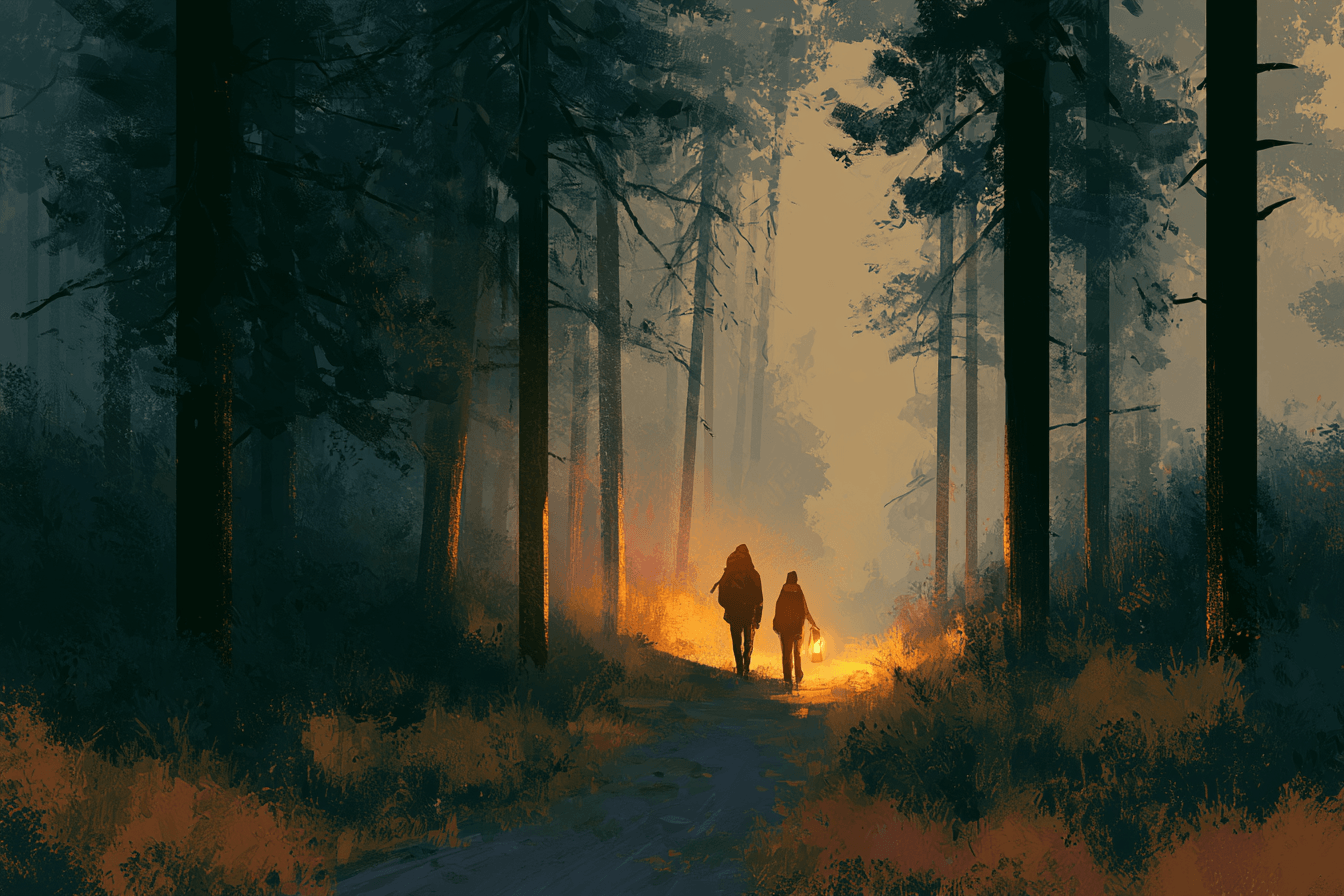
Why the inner work needs an outside force.
Prefer to watch on YouTube? It genuinely helps the channel if you like or comment over there — watch on YouTube.
Are you getting stuck because you’re trying to do this work alone?
The short answer is yes. And I want to talk about why.
When we’re doing inner work — and I want to ground that carefully, because not everyone would say they’re on a spiritual path — what I really mean is the work of trying to evolve, to move through difficulty, to change something in ourselves. A great deal of that work is solo work. One-on-one time with the self. What’s the emotion coming up? What’s the wound underneath it? When did it first show up?
We do that in a lot of ways. Meditation. Breathwork. Shamanic journey. Journaling at the kitchen table at 5am because you woke up with your chest tight again and didn’t know why. There are many doors into that quiet, individual work, and all of them matter.
But there’s a problem built into it, and I want to name it plainly.
When inner work becomes a closed loop
When we work only with ourselves, we can create a closed loop. Almost an echo chamber, where we circle the same material over and over and slowly realize we aren’t actually moving through it. We’re just going around.
It feels like progress. Often, it’s not.
The circling that feels like work
There’s research on this that I find genuinely useful. Susan Nolen-Hoeksema spent her career studying what she called rumination: repetitive, self-focused thinking about our distress and its causes. What she found is that it doesn’t resolve anything. It extends and deepens the state it’s trying to solve.
And the finding that stops me every time is this. People who ruminate typically believe they’re gaining insight. They report that they’re working the problem. The subjective experience of circling is nearly identical to the subjective experience of processing.
So we can’t use the feeling of effort as our evidence. There’s a long line of research, going back to Nisbett and Wilson in the seventies, that finds we have far less access to our own mental processes than we assume. We generate plausible reasons after the fact without knowing we’re doing it. And we spot distortion in other people’s thinking far more readily than in our own.
Sit with that. The circling feels like work. The self-report is unreliable. And the specific thing we can’t see is the very thing that most needs seeing.
There’s something worse than not moving
This is the part I most want you to have.
The research on memory here is still developing, so I’ll hold it loosely — but the shape of it is this. When we go back into a memory, it doesn’t just play like a recording. It appears to soften for a while before it re-sets. And what it carries when it re-sets seems to have a great deal to do with the state we were in when we opened it. Touch it while you’re flooded, and it may go back down hot, activated.
That’s the thing nobody tells you about circling. You’re not only failing to move it. Some of the time you may be rehearsing it. Re-saving it, a little heavier, a little more charged, every pass.
Which means the state you’re in when you go near the material is not a comfort issue. It’s the variable. Hold that thought, because it comes back.
Not all stuckness is the same
I want to be more precise than we all need someone, because that’s true and honestly useless.
In the work I do, I map the territory as a series of thresholds, and some of them are genuinely solo ground. Your relationship with your own nervous system. The negotiation among your own parts — the worrier, the striver, the one who wants to run. That’s real work, it’s yours, and you can get a long way into it by yourself.
Then the territory changes. The moment the work moves to your edges — where you end and another person begins, what you let in, what you keep out, how close you can let someone come without disappearing — you have entered ground that cannot be crossed alone.
Not because you’re not trying hard enough. Because the thing you’re looking for only exists in contact. You find where you end by meeting where someone else begins. One circle cannot make the necessary overlap this work often needs.
This is why so many people report the same shape of experience: years of solid solo practice, real change in some places, and one thing that will not move no matter what they throw at it. That’s not failure of effort. That’s a boundary in the terrain, and it has a location.
It certainly was for me. In my last piece I wrote about my own fear of being seen — a wound I’d worked for years and gotten nowhere with. I’d done all the inner work. I just couldn’t get myself to take the outer step. Of course I couldn’t. Being seen is two-person territory, and I was in there with one circle.
This isn’t a new idea
Think of Autobiography of a Yogi. What’s so clear in that book is that both pieces are always present: the dedicated individual practice, and a teacher, someone walking ahead. Yogananda meditates for years, and he also has Sri Yukteswar, who tells him things about himself he cannot see.
Once you start looking for that structure, it’s everywhere.
Zen builds the disruption directly into the curriculum. A koan is not a riddle with a clever answer. It’s a problem engineered to defeat the ordinary machinery of thinking, handed to a student by a teacher who watches what happens when the machinery fails. You cannot assign yourself a koan. Half of what makes it work is that someone else chose it, for you, having seen where you’re stuck.
The Sufis tell it as a love story. Rumi was already an accomplished scholar, established, deep in his books, when Shams of Tabriz arrived. As the story goes, Shams threw the books into water. The versions differ and it may be legend rather than history, but the legend has survived eight hundred years because it’s true about something. Rumi came out of that encounter a poet.
In the Tibetan tradition, Marpa had Milarepa build a stone tower, then tear it down, then build another. By the traditional account this went on for years. The teacher wasn’t being arbitrary. He was administering ordeal, deliberately, because he could see what needed to be worn away and Milarepa could not.
The secular versions say the same thing
And it isn’t only mystical lineages. Socrates called himself a gadfly, a stinging fly on the flank of a large and sluggish horse. He said the city needed him precisely because it was too comfortable to move itself. That’s a man describing his function as a disruptor, in a courtroom, twenty-four hundred years ago.
There are modern versions as well. Analysts are required to be analyzed themselves. Therapists have supervisors, sometimes for their entire careers. Every serious apprenticeship trade puts a master’s eye on the work. The disciplines that deal most directly with the interior all arrived, independently, at the same rule: nobody is trusted to be the only one looking at their own work.
I use teacher or mentor rather than guru, because we’ve attached a lot to that word. But whatever we call them, the question is what that person actually brings.
Three things a teacher does
1. They see the shape you can’t see
This is the mirror function, and it’s more than encouragement. When something in us is unresolved, the mind keeps the loop open, running it, hunting for the missing piece. Someone outside can often supply the piece in a sentence — and the loop closes. Ideally they’re also a few steps ahead, so they can keep you pointed in a direction that actually goes somewhere.
2. They disrupt
We tend to hear that word negatively, but all I mean is someone who can break the circling. When we’re going round the same thing, certain there’s no answer, a teacher can interrupt the echo chamber.
And I want to be careful here, because there’s a version of this that goes wrong. A friend is not a teacher. A friend often stands inside the loop with us, sympathizing, confirming the story we brought. I’d not trade my people for anything. But agreement doesn’t change trajectory. Somebody has to be standing outside the orbit.
3. They lend you their nervous system
This is the one that gets left out, and it’s the one that ties back to what I said about re-saving the memory hot.
Nervous system states are contagious. The research word for the good version is co-regulation, and it’s its own subject for another day. What matters here is that a steady person in the room with you changes the state you’re in. That changes the state you’re in when you touch the hard material. And that changes what settles back down afterward. Same memory, same dive, different result. The only variable is state.
It’s also why insight so rarely arrives when you need it. You cannot be curious while you’re flooded. Curiosity isn’t the way into regulation; it’s something that becomes available once you’re already there. A regulated teacher isn’t handing you the answer. They’re handing you the state in which an answer is findable.
Why I work with two
I work with two teachers now. It happened because they don’t come at a problem the same way.
Both of them bring all three of the things above. Both see me with a clarity I can’t talk my way around, both ask the hard question, both hold steady when I’m not. That’s not the difference. The difference is where they enter.
One talks me through it. Take the fear of being seen. She’ll walk me back to where it started, why it made sense then, why it doesn’t hold now. I come out of those conversations understanding something I didn’t understand going in.
The other puts me in the middle of it. No walking back, no origin story. He’ll simply put me in the group, in the thing I’ve been avoiding, and leave me standing there. And sometimes he says nothing at all, and it’s in the nothing that I hear it — that some part of the story I’ve been telling is full of shit.
Notice what’s happening between them. She brings me to the edge of it with my eyes open. He’s putting me in contact — which is the only place that particular threshold can be crossed at all. He makes sure I’m standing in the thing rather than describing it.
That’s worth saying because the word guru smuggles in a fantasy of one person who is everything. There’s an old instruction in this work about triangulating the mirror across three sources: yourself, other people, and something larger. No single reflection gets to rule. Two teachers isn’t disloyalty. It’s better triangulation.
A real teacher is working toward your graduation, even if it costs them a client. Be wary of anyone who needs you to stay.
The scarf
So I took it to my teacher. I’ve worked with her for over six years. When I need confirmation, she gives it. When I need a kick in the right direction, she gives that too, and it’s never cruel. It’s truth delivered with compassion. She’ll say plainly, here’s where you’re stuck, here’s the territory to look at, and then she lets me find my own way through.
And then she did something our culture has largely lost. She brought in initiation.
Why initiation has to come from outside
An initiation is when a trusted, respected teacher — call them medicine person, mentor, whatever word fits — helps us see the threshold we’re trying to cross. They’ve traversed it themselves, so they can show us, simply by where they stand, that crossing is possible. No one can carry us over these thresholds. But there is something quietly powerful about someone willing to walk beside us while we do.
There’s a structural reason it has to come from outside. You cannot confer status on yourself. You can decide you’re ready, you can journal your way to I am ready a hundred times, and some part of you knows you’re the one holding the pen. It doesn’t land. Someone with standing has to say it.
She made it tangible
A few weeks earlier, I’d been cutting the grass, listening to a podcast, and a vision came in that clearly wasn’t mine. I saw myself drafting an email to a podcast host, asking to come on his show. My immediate reaction was, no, that’s ridiculous, that’s not how this works, one does not simply email the host. So I dismissed it.
Then a couple of weeks later I was listening to that same podcast, and the guest said, “My guides had been telling me for months to email this host. I kept saying no. Then finally I did, and three weeks later, here I am.”
And I thought: alright. I hear you.
So I brought it to her. I said: I know what my guides are saying, and I know what others have said, but I respect how clearly you see me, and I need to know. Do you think I’m ready? Without hesitation, she said, absolutely. You’re ready.
Then, as I stood to leave, she told me to sit back down. She’s not usually bossy, so this was strange. She went upstairs, and I heard all this clattering about, wondering what on earth she was doing. She came down and laid a beautiful golden scarf across my lap, with something wrapped inside it, something personal that I’ll keep to myself. And she said: I graduate you. You are ready.
I want to say something about why that works, because it would be easy to file it as a lovely gesture and move on.
Initiation isn’t decoration on the work. It’s the thing that makes the work possible. Before a body will go down into difficult material, it has to read the situation as safe enough — and that reading isn’t a decision you make. It’s something underneath decision, closer to how you know a room is fine before you’ve thought about it. A witness, a marking, a person of standing saying you’re ready: those aren’t ceremony wrapped around the descent. They’re what tells the system a descent is survivable. Without that, the deeper material simply isn’t reachable. The system won’t open the door.
These gestures can seem small, and yet they carry the whole weight of it. That moment is a good part of why I’m doing this work now, missteps and small errors and all.
Why disruption works
I have a scientific side alongside the mystical one, and I love it when the two confirm each other. So let me lay some physics over what we’ve been describing. I’m not claiming the physics proves the spiritual teaching. I’m saying the shape is the same, and the shape is instructive.
Newton: an object doesn’t change its own course
Newton’s first law, the law of inertia, says two things. An object at rest tends to stay at rest, unless acted on by an outside force. And an object in motion tends to stay in motion, same speed, same direction, unless acted on by an outside force. Inertia is the resistance to a change in motion. And the more mass something has, the more it resists that change.
Now lay that over the inner work.
When we’re stuck, there may be no motion at all: an object at rest, staying at rest. When we’re spiraling, we’re circling the same idea at the same speed, unable to break the orbit: an object in motion, staying in motion. In both cases the physics says the same thing. Something has to come in from outside to change the trajectory.
That’s the disruptor. That’s what a teacher is. Not a failing on our part that we can’t do it alone — a law of motion. An object doesn’t change its own course. It needs an outside force.
The mass part matters too. A pattern you picked up last year has less mass than one you’ve carried since you were six. It’s not that the old ones are unbreakable. It’s that they need more force, applied longer. Which is why five sessions and a good book sometimes don’t touch a thing that’s been running your life for forty years. That isn’t failure. That’s the equation.
Prigogine: closed systems degrade, open ones reorganize
But Newton leaves a question open. Inertia tells us an outside force changes the trajectory. It doesn’t tell us why the new trajectory would be any better. Why doesn’t disruption just produce more chaos?
For that I’d point at Ilya Prigogine, who won a Nobel Prize in 1977 for work on what he called dissipative structures. Roughly: a closed system runs down. Sealed off, it moves toward disorder and stays there. But an open system, one exchanging energy with its environment, behaves differently under pressure. Push it far enough from equilibrium and it doesn’t simply fall apart. It can reorganize, spontaneously, into a new pattern carrying more order than the one it left.
The condition is openness. A closed system can only degrade. An open one can reorganize.
I hold that loosely, as science applied to psyche, as a metaphor, not proof. But it names something I’ve watched happen in ceremony and in sessions more times than I can count. The disruption isn’t the destruction. The disruption is the energy coming in that lets a system which had settled into a low, stuck order reassemble into a higher one. The instability is the mechanism. What decides whether you fall apart or reorganize is largely whether anything is coming in from outside.
Closed, we circle. Open, we can be rebuilt.
Finding a teacher, and knowing a good one
What to look for
Look for someone a little ahead of you, though remember, this path isn’t linear. Look for lived experience, and their own inner work. It doesn’t have to be the exact thing you’re moving through.
When I was struggling with grief after losing my husband several years ago, my teacher hadn’t walked that particular road, and yet she had enough life experience to draw on that she could still help me through it. What matters is a broad enough well.
And look for someone who’s regulated. When we’re stuck or cycling, there’s usually activation present, the nervous system moving into fight or flight, and we tend to carry that into the session. That’s appropriate to this work. What we don’t want is a teacher who becomes activated when we do. We want one who can hold their own settled state despite what’s happening with us, because then they share it.
Who not to walk with
A few things I’ve learned the hard way.
- Be wary of someone who needs you to stay. A real teacher is working toward your graduation, even if it costs them a client. Mine literally handed me mine.
- Be wary of someone who can’t be questioned. If disagreement gets reframed as your resistance, your ego, your unreadiness, every single time, you’ve found a closed system wearing robes.
- Be wary of correction that shames. The disruption should land on the pattern, never on your worth. My teacher has told me hard things and I’ve never once left her house feeling small.
- Ask who their teacher is. Anyone genuinely walking this has someone ahead of them and will tell you so without flinching. Someone who claims to have arrived, who answers to no one, who is nobody’s student anymore — that’s a closed loop too. Just a larger and more expensively decorated one.
You’re entitled to ask me the same question, and I’ve answered it: two, and one of them graduated me last week.
One more thing before I leave it with you.
No one person is right for every situation. Not your teacher, not mine, not me. What you should expect from a good one is that they’ll tell you when something sits outside what they can hold — plainly, without embarrassment, and often with a sense of who might be better placed. That willingness is among the surest signs you’ve found the real thing. Someone with an answer for every situation has simply stopped noticing they have an edge, and everyone has an edge.
And if you’ve already tried a door and it didn’t help you, I want to say clearly that this doesn’t mean the work is closed to you. It means that room wasn’t yours. There are more doors than most of us were ever told about, and you’re the one who gets to decide which of them to walk through.
And none of this requires a spiritual context. Your disruptor might be a therapist. A coach. A bodyworker who says one sentence while working on your hip that undoes six months of your story. An older colleague. A friend’s mother. What matters is that they’re outside the orbit, they can see you, they’re steady, and they’re willing to tell you the truth.
Before you go
If there’s something you’ve been circling for years, I want to offer you a different reading of it than the one you’ve probably been carrying.
You’re not stuck because you failed at this. You’re standing partway across a threshold, holding two things that both feel true and won’t reconcile, and nobody has yet given you what you’d need to cross. That’s not a verdict about your capacity. That’s a description of where you are, and it has a way through.
It just isn’t a way you can walk entirely by yourself.
An outside eye on your own terrain
A Terrain Session is a live session and a map. The map shows you the shape you’ve been too close to see. The session is where you borrow a settled nervous system to go near the material safely.
Finding Your Medicine sessions are the ongoing version — for the long stretch where the real change actually happens.
Explore the Terrain Session See All Ways to Work Together
Sit with these
- What are you circling, alone?
- What are your thoughts on finding a teacher or a mentor?
- What’s one step you could take this week toward finding someone to walk with?
Originally published at https://rowan-wellness.com on August 7, 2026.
메타데이터
- post_id
- b58bb2bfa1d9
- slug
- stuck-doing-it-alone-why-inner-work-needs-an-outside-force-b58bb2bfa1d9
- url
- https://medium.com/@rowanwellness77/stuck-doing-it-alone-why-inner-work-needs-an-outside-force-b58bb2bfa1d9
- canonical_url
- https://medium.com/@rowanwellness77/stuck-doing-it-alone-why-inner-work-needs-an-outside-force-b58bb2bfa1d9
- author_url
- https://medium.com/@rowanwellness77
- status
- ok
- fetched_at
- 2026-08-16 07:20:50