50 Years Of ‘Carrie’
Don’t mess with the shy, awkward, strange kids
Horror | Movies | Books
50 Years Of ‘Carrie’
Don’t mess with the shy, awkward, strange kids
“Once, twice, three times a lady.”
— “Three Times A Lady”, The Commodores
Oh how I do love a big ol’ heapin’ helpin’ of bloody revenge, especially if high school bullies are involved. Sure, some peak by 18, creating little fiefdoms over which to exert their iron fisted rule. That’s pathetic enough. But for many of us, school days ranged anywhere from a slog to get through to an endless cycle of humiliation and torture and all things in between.
Stephen King published his take on this despicable teenage world in 1974 after it was infamously saved from the trash by his wife. Two years later, Brian De Palma unleashed the first adaptation. Most recently is the promise of a Mike Flanagan miniseries.
Personally, after her performance as Bev Keane in Midnight Mass, I can’t wait to see what Samantha Sloyan brings as Margaret White. But since that’s not until October, how about a little comparative analysis of the relative merits of Carrie? All. Three. Versions. Plus a bonus. Plus the book.
Credit: Sony Pictures Releasing
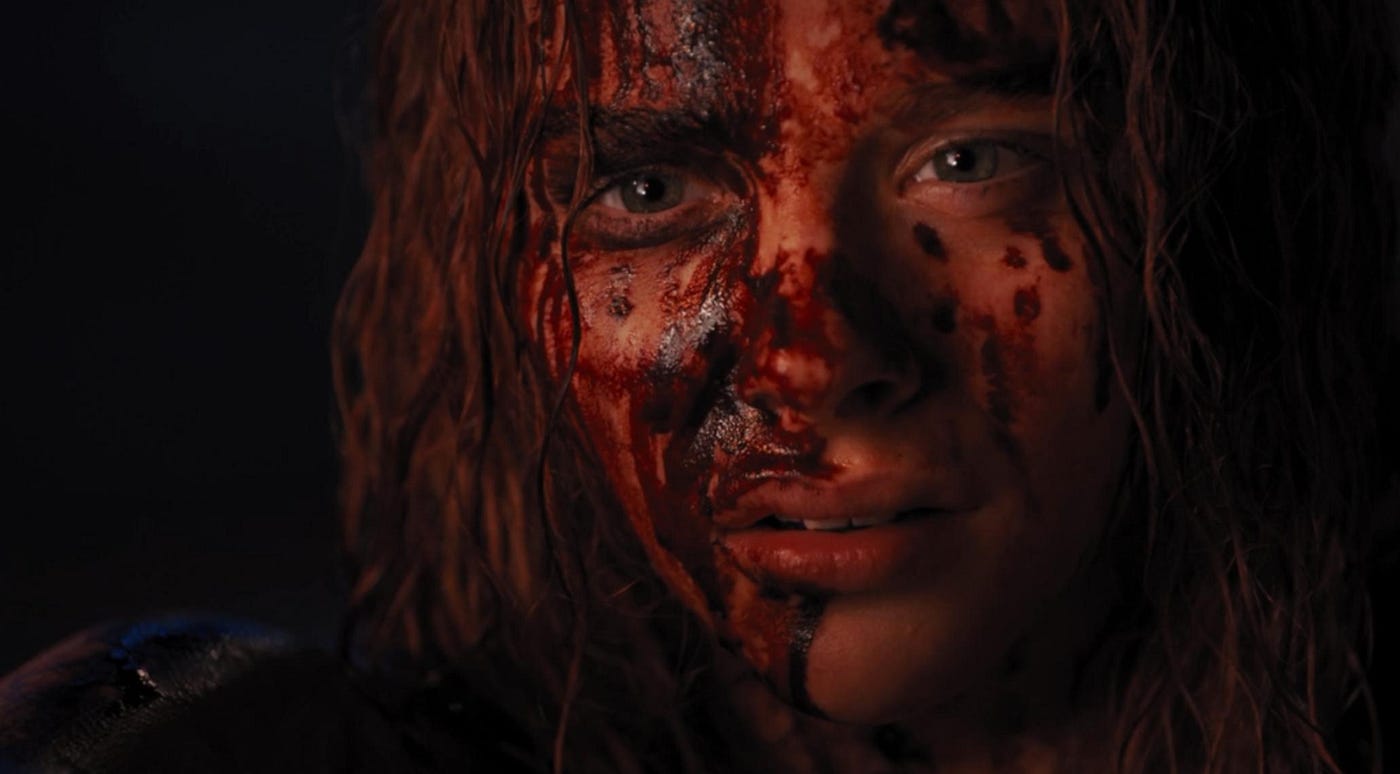
Carrie (2013, dir. Kimberly Peirce)
It’s been suggested that Stephen King was lukewarm about another Carrie remake. Supposedly he also thought Lindsay Lohan would have been a good Carrie. That said, director Kimberly Peirce’s Boys Don’t Cry proved to be a fine vehicle for Hilary Swank’s Best Actress Oscar (now there’s someone I’d love to have seen as Carrie), so hopes were high.
On the other hand, earlier iterations of Carrie White were substantially different in handling or not handling her psychic ability. In this case, Chloë Grace Moretz’s Carrie is in total control. We can see it in her facial expressions and hand gestures during this version of the prom rampage. She consciously directs the destruction which I very much engaged with.
Carrie has not only reached the breaking point, but her face says, “Now it’s my turn!” There’s some evil glee in her face that I appreciate, along with her levitating from the stage. Mean girl Chris’s face smashing through the windshield is an effective visual as well.
Still, I wanted to like this way more than I did. I mean, I liked it just fine, but it’s the least effective of the three. For one thing, Peirce doesn’t add much that sets this version apart. Ansel Elgort isn’t bad as Tommy, but doesn’t stand out in any way. Julianne Moore, though, performs gamely as Carrie’s mother, leaning into a more menacing kind of religious zeal than the caricature Piper Laurie went for.
Carrie herself doesn’t even become interesting until the prom. As satisfying as that turns out to be, it’s not enough to balance out the movie’s more lackluster aspects.
Credit: NBC
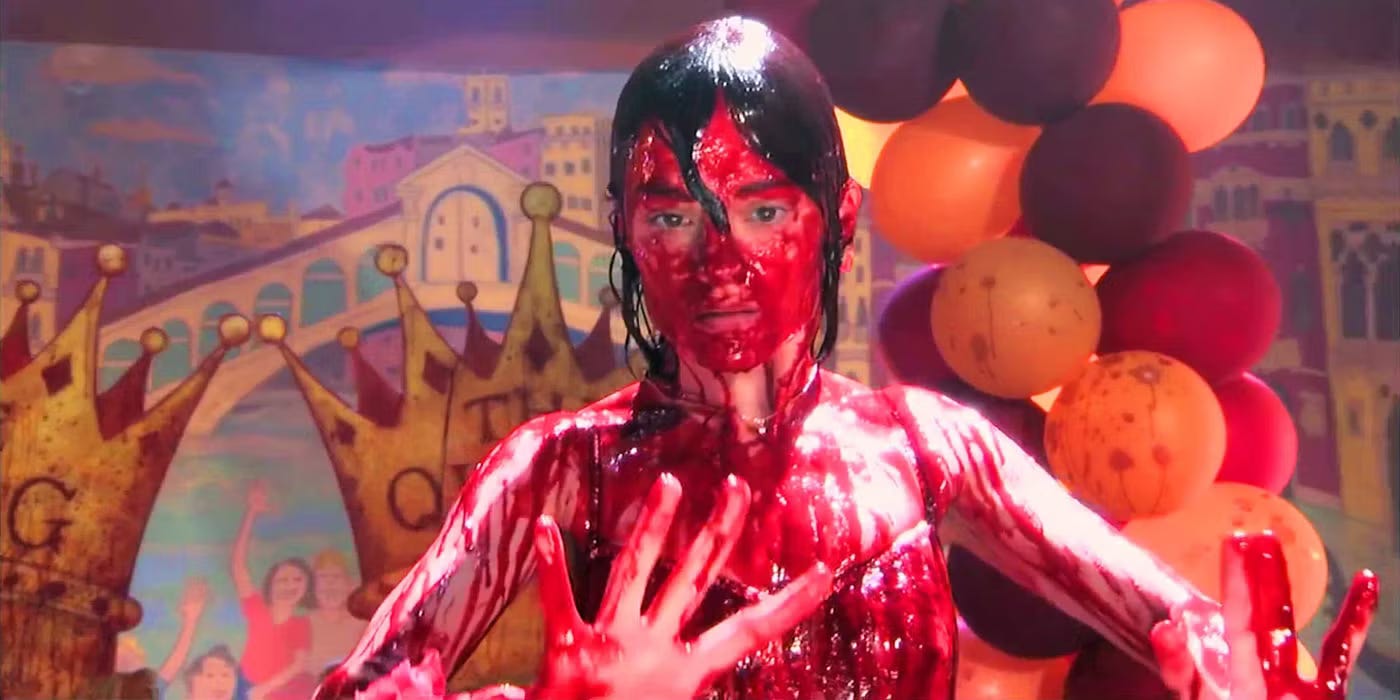
Carrie (2002, David Carson)
This time the title role goes to Angela Bettis (yes, from Lucky McKee’s May and Sick Girl). I love her, and she’s fascinating to watch. The pre-prom Carrie is like a skittish bird you’re trying to get to trust you: darting head movements, trembly, easy to shoo away.
As made-for-TV flicks go, this is surprisingly effective and arguably remains noticeably more (but not entirely) faithful to the source material. Carrie destroys much more of the town this time, as she does in the novel. When she crashes the car with Chris and Billy in it, she then wraps it around a tree. Nicely done.
One major departure is the ending, written apparently for the possibility of Carrie becoming a TV series (which never happened, but I so would have watched it). Carrie’s mother drowns her in the bathtub, but Sue Snell fishes her out and saves her. They fake Carrie’s death, and Sue helps her flee to Florida. I must admit, I love that she gets away with it.
Another major difference is her relationship to her power. Sissy Spacek’s Carrie seems almost about to lose control but doesn’t. She looks around as if seeking targets. Chloë Grace Moretz’s is full of purposeful, vengeful malice. Angela Bettis’s Carrie goes catatonic and motionless; she’s overcome and doesn’t know what’s happened by the time she returns home, almost as if she’s awaking from a trance.
The shortfall for this version is the other characters who remain relatively hollow. Still, this just might be my favorite of the three, and I’m curious to know how Stephen King felt about it.
Credit: United Artists
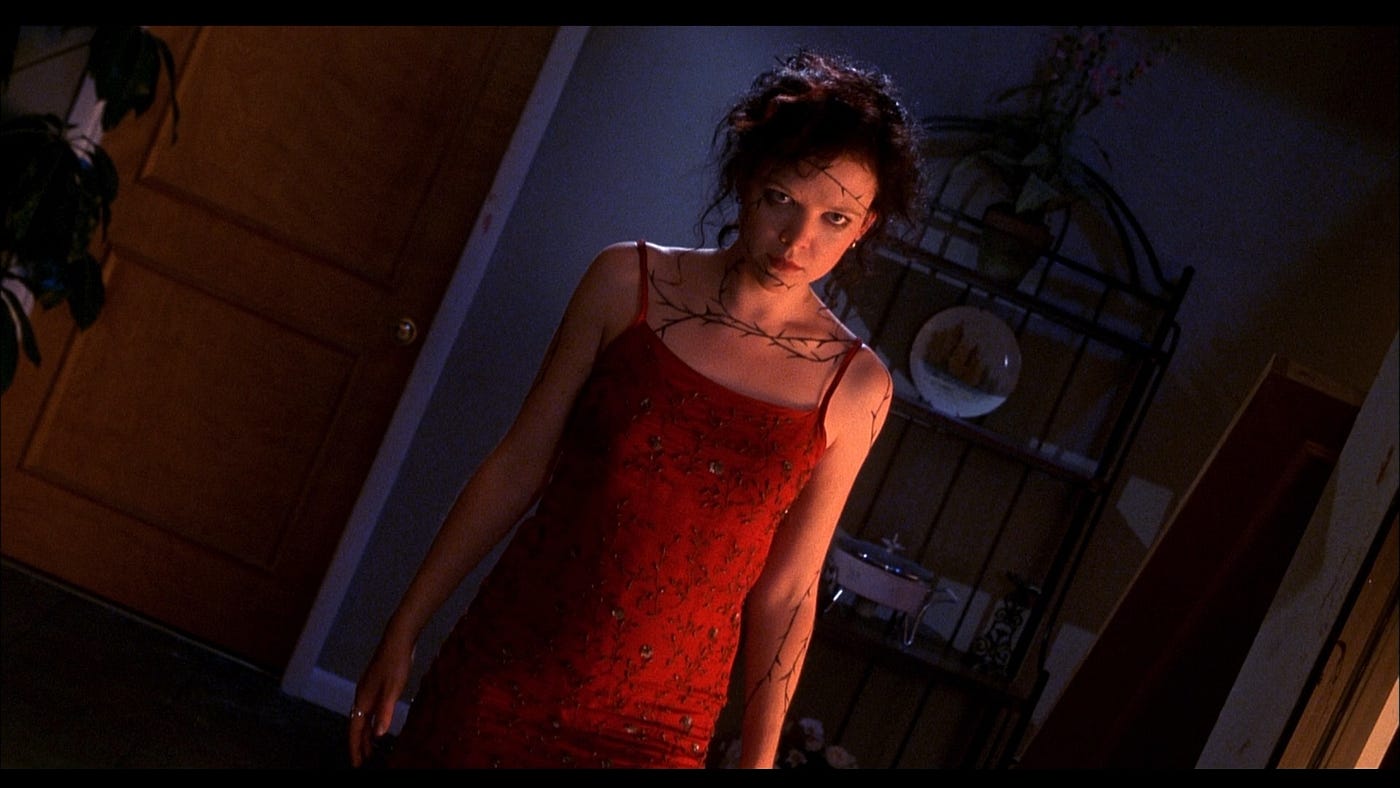
The Rage: Carrie 2 (1999, Katt Shea)
And here’s your terribly named bonus movie. Originally written as an unrelated standalone called The Curse, this was significantly reworked into a direct Carrie sequel. Rachel Lang basically walks the same path that Carrie White did. Her mother thinks Rachel is possessed and ends up institutionalized, leaving Rachel to be raised by foster parents.
She becomes a high school outcast but ends up bonding with football player Jesse after he helps save her injured dog. In the midst of all this, Rachel is also harassed by football players Eric, Mark, and Chuck because she claims Eric is partly to blame for her sole friend Lisa’s suicide. This gets Eric charged with statutory rape (which is later covered up).
Everything culminates in Rachel being “invited” to a party at Mark’s family’s mansion, but just like Carrie’s prom, it’s a setup. No pig’s blood this time, but Mark secretly recorded Rachel and Jesse having sex, and plays it on a projection screen. Telekinetic mayhem ensues
But how does this tie into Carrie? Well, Rachel’s guidance counselor, Sue Snell, yes that Sue Snell, even played again by Amy Irving, discovers that Rachel is Carrie’s half sister. And so, we come full circle.
Credit: United Artists
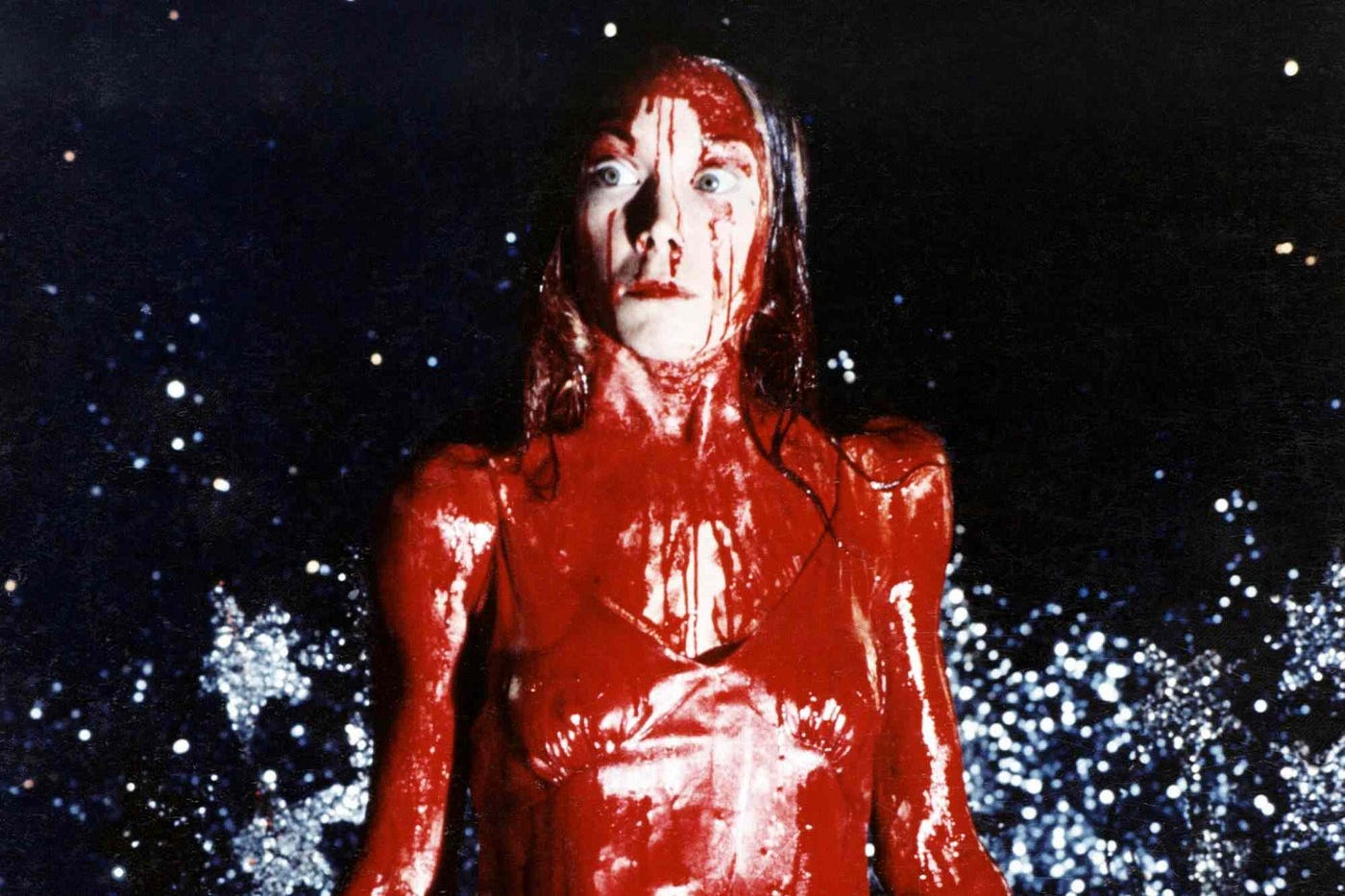
Carrie (1976, Brian De Palma)
Whether you liked this first adaptation or not, for many of us Sissy Spacek’s portrayal of Carrie White will always be the definitive one. Who can forget that wide-eyed telekinetic rampage? Or Piper Laurie as a comically literal holy terror?
If that’s not enough, how about pre-Greatest American Hero William Katt and pre-Halloween P.J. Soles? Or Nancy Allen and John Travolta roasted in a muscle car? Or an electrocuted Sydney Lassick? And yes, he does look familiar. He was Cheswick in *One Flew Over The Cuckoo’s Nest. *Turns out he gets the ol’ shock treatment once again. Surely De Palma did that on purpose, right? Come on, what are the odds? Hell, even Edie McClurg gets flambéed at the prom.
I also love De Palma movies in general, and I’m perfectly happy to rank him right up there with Hitchcock and Argento. In fact, at least to me, some of the colors and cuts from Suspiria the following year have a very De Palma/Carrie feel to them.
Stephen King considered this version “a really good horror-suspense film, much better than the book.” I don’t know if I’d go quite that far, but it’s still good, still holds up, and is well worth watching repeatedly.
Public domain, via Wikimedia Commons
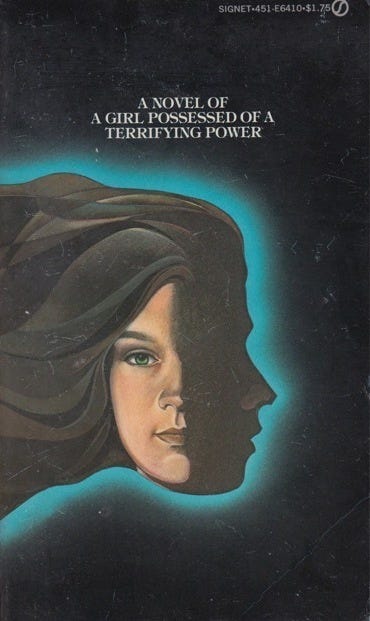
Carrie (1974 novel, Stephen King)
I read this a long time ago and had to revisit the prom scene while writing this. King takes an interesting approach to the narrative, interspersing news stories, interviews with an investigative group called The White Commission, as well as characters’ parenthetical thoughts.
But mainly I want to focus on said prom scene which is in many ways very different than all three adaptations. Yes, the iconic pieces are all there: pig’s blood (two buckets), everyone laughing, gym doors slamming shut, sprinklers, electrocutions, fire, explosions, town destruction.
Eventwise, Carrie and Tommy are seated on stage when the disaster starts. When everything goes sideways, Carrie actually tries to flee, but someone trips her. She gets up, runs outside, but comes back. In the novel, then, she wreaks havoc from outside the gym looking in.
Each film highlights different aspects of Carrie’s personality with none truly encapsulating the whole. More than once King refers to Carrie’s conscious decision making regarding her actions, and Sissy Spacek’s wide-eyed but piercing gaze lines up well with that aspect but no others.
He also refers more than once to Carrie’s increasingly unhinged smile and giggle which Sissy Spacek doesn’t embody, but Chloë Grace Moretz’ somewhat does, seeming filled with gleeful malice and vengeance. Unlike these two, Angela Bettis’s Carrie barely moves at first, but in the novel, Carrie occasionally thinks, “Flex,” before doing something destructive. Bettis sometimes tenses her fingers. It’s a small thing, but I like it.
And so, class, the moral of our little cautionary tales: don’t mess with the shy, awkward, strange kids.
We don’t like it.
메타데이터
- post_id
- b59ad2633a1f
- slug
- 50-years-of-carrie-b59ad2633a1f
- url
- https://medium.com/theuglymonster/50-years-of-carrie-b59ad2633a1f
- canonical_url
- https://medium.com/theuglymonster/50-years-of-carrie-b59ad2633a1f
- author_url
- https://medium.com/@jtwilliams65
- status
- ok
- fetched_at
- 2026-07-16 04:42:14