The Cockroach Revolution at Jantar Mantar: India’s Youth Demand a Fair Future
More than twenty years ago, while my best friend and I were working on a practical assignment with a group of classmates, the conversation…
The Cockroach Revolution at Jantar Mantar: India’s Youth Demand a Fair Future
More than twenty years ago, while my best friend and I were working on a practical assignment with a group of classmates, the conversation turned to the Higher Secondary Certificate (HSC) board examinations in India. Two of our classmates began reminiscing about how they had received copies of their board examination papers a few hours before the actual exam. These students came from affluent families and could afford private one-on-one tuition from professors at their own college. As far as I remember, the fees ranged from ₹50,000 to ₹1 lakh.
That day, we realized that these expensive private tuitions did not merely provide extra academic attention — they also could give students access to leaked examination papers. As our classmates laughed about it as though it were something to be proud of, my friend and I sat there in disbelief. We felt angry, disappointed, and completely helpless. Did/ Could we do anything about it? No we couldn’t/ didn’t.
Exam paper leaks, academic dishonesty, and bias against students from marginalized communities are not new problems in India. They have existed for decades. Some people may dismiss this by saying, “So what? Everyone cheats.” But that simply isn’t true. Countless students study day and night to earn their success honestly. Many parents place their faith in their children’s hard work instead of taking shortcuts. However, when privileged individuals use money and influence to secure unfair advantages, the competition ceases to be fair. Deserving students lose opportunities they have rightfully earned.
For years, I believed nothing could be done about this deeply rooted problem. Then the NEET examination paper leak finally received national attention. Public outrage grew, and awareness spread across the country. Following the cancellation of the NEET examination in May 2026, millions of aspiring medical students and their families were devastated. Many had dedicated years of preparation, enormous financial resources, and their hopes to this single examination. Reports suggested that at least twelve students died by suicide following the cancellation, while countless others experienced severe anxiety, depression, and uncertainty about their future. For many, this became the straw that broke the camel’s back.

Symbol of Cockroach Janata Party
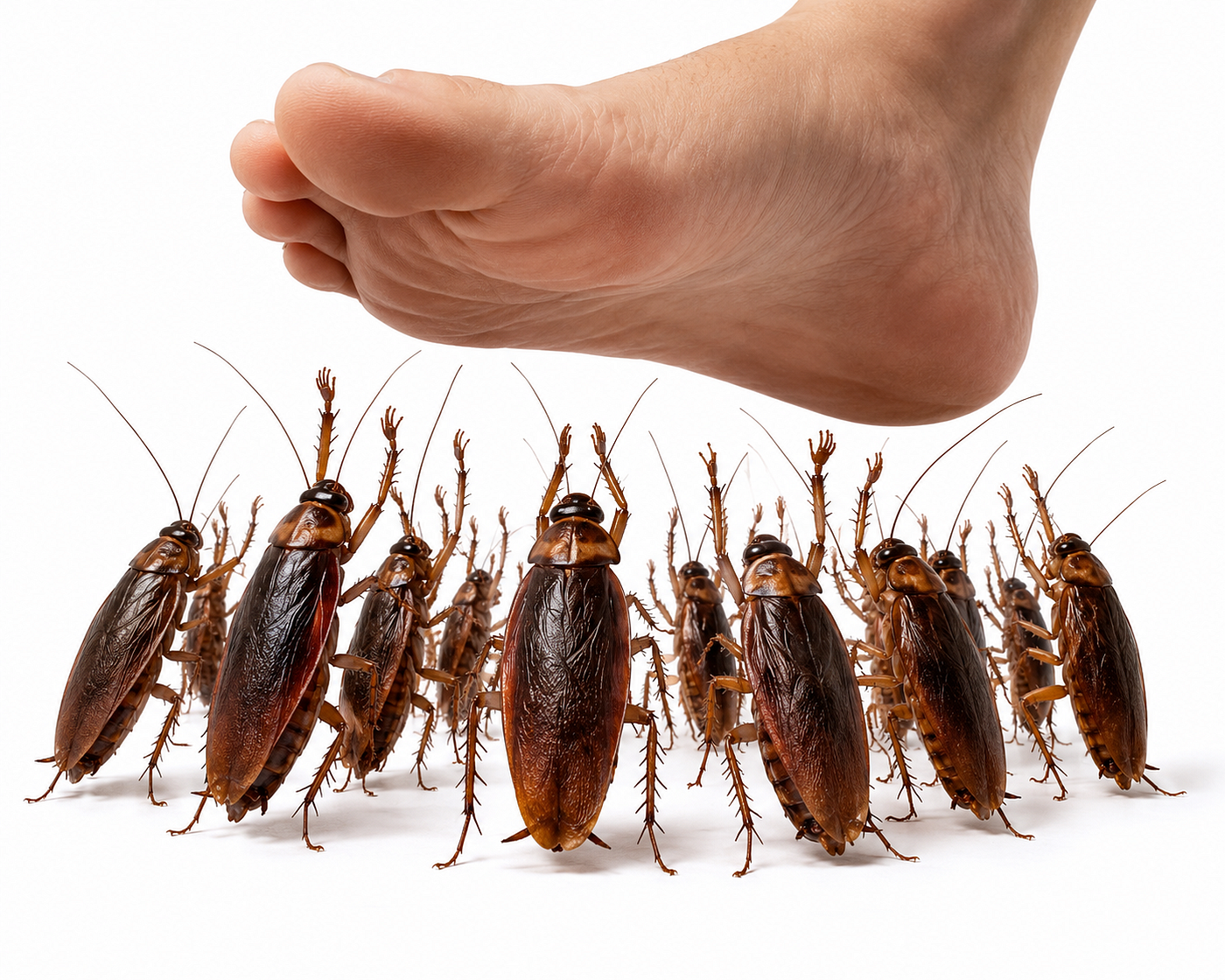
At around the same time, another incident intensified public frustration. On May 15, 2026, Supreme Court Chief Justice Surya Kant reportedly remarked, “There are youngsters like cockroaches; they don’t get any employment, they don’t have any place in profession…” The statement shocked many people across the country. The Gen Zs of India, suffering from unemployment and challenges in education did not just keep quiet this time. They accepted the title cockroach with a pride turned it into a social movement under the leadership of Abhijit Dipke who founded CJP — Cockroach Janata Party. What began as an insult quickly evolved into a revolution.
CJP also stepped forward to support students affected by the NEET paper leak and examination cancellation. The organization launched peaceful protests demanding the resignation of India’s Education Minister, Dharmendra Pradhan, arguing that someone should be held accountable for the repeated failures that had shattered the lives of so many young people. Given the seriousness and persistence of the issue, many believed that responsibility should not go unaddressed.
Now, let’s go back 17 years to 2009, when a comedy movie based on the lives of students was released — Three Idiots. The film highlighted many shortcomings of India’s education system through humor and satire while presenting a more inspiring vision of learning. Its protagonist, Rancho, became an iconic character known for his creativity, innovation, and unconventional thinking. At the end of the film, Rancho establishes an innovative school for children in a remote village. The character was inspired by the real-life engineer, innovator, environmentalist, and educator Sonam Wangchuk.

Sonam Wnagchuk
Like Rancho, Sonam Wangchuk has earned admiration for his lifelong commitment to improving education and creating opportunities for young people. Together with his wife, Geetanjali J. Angmo, he has worked tirelessly to promote innovative education and shape futures of young Indians. When he publicly supported the CJP protests, the movement gained even greater momentum.
At the time of writing, Sonam Wangchuk has reportedly been on an indefinite hunger strike for nineteen days. His physical condition has continued to weaken, yet his determination remains unwavering. Despite the seriousness of the situation, there haven’t been any communication from the Government to address the protesters’ concerns. If this continues, India risks losing not only a respected scientist but also a deshbhakt (patriot) who has consistently dedicated himself to the welfare of the nation’s youth.
Some have attempted to portray the movement through a religious lens. However, reports from Jantar Mantar in Delhi suggest that people from different religions, castes, educational backgrounds, and socioeconomic groups have come together with a common purpose: protecting the future of India’s young generation.
I sincerely hope that the Government reaches out to the protesters and works toward a constructive resolution. The failure to safeguard the integrity of one of the country’s most important examinations must be met with accountability, and meaningful reforms should be implemented by capable leadership. As a parent of a teenager, I deeply sympathize with the anxiety and uncertainty that students and their families are experiencing. College admissions are already fiercely competitive. If the process itself is not fair, students from underprivileged backgrounds will face even greater disadvantages. Without meaningful reform, the gap between the privileged and the underprivileged will only continue to grow.
Chalosansad
메타데이터
- post_id
- b5a7bb763cd1
- slug
- the-cockroach-revolution-at-jantar-mantar-indias-youth-demand-a-fair-future-b5a7bb763cd1
- url
- https://medium.com/@seedtolife/the-cockroach-revolution-at-jantar-mantar-indias-youth-demand-a-fair-future-b5a7bb763cd1
- canonical_url
- https://medium.com/@seedtolife/the-cockroach-revolution-at-jantar-mantar-indias-youth-demand-a-fair-future-b5a7bb763cd1
- author_url
- https://medium.com/@seedtolife
- status
- ok
- fetched_at
- 2026-08-07 02:37:33