Loop Engineering: Why the Agent Era Needs a Runtime, Not a Longer Prompt
AI Agent
Loop Engineering: Why the Agent Era Needs a Runtime, Not a Longer Prompt
AI Agent
Disclosure: I use GPT search to collection facts. The entire article is drafted by me.
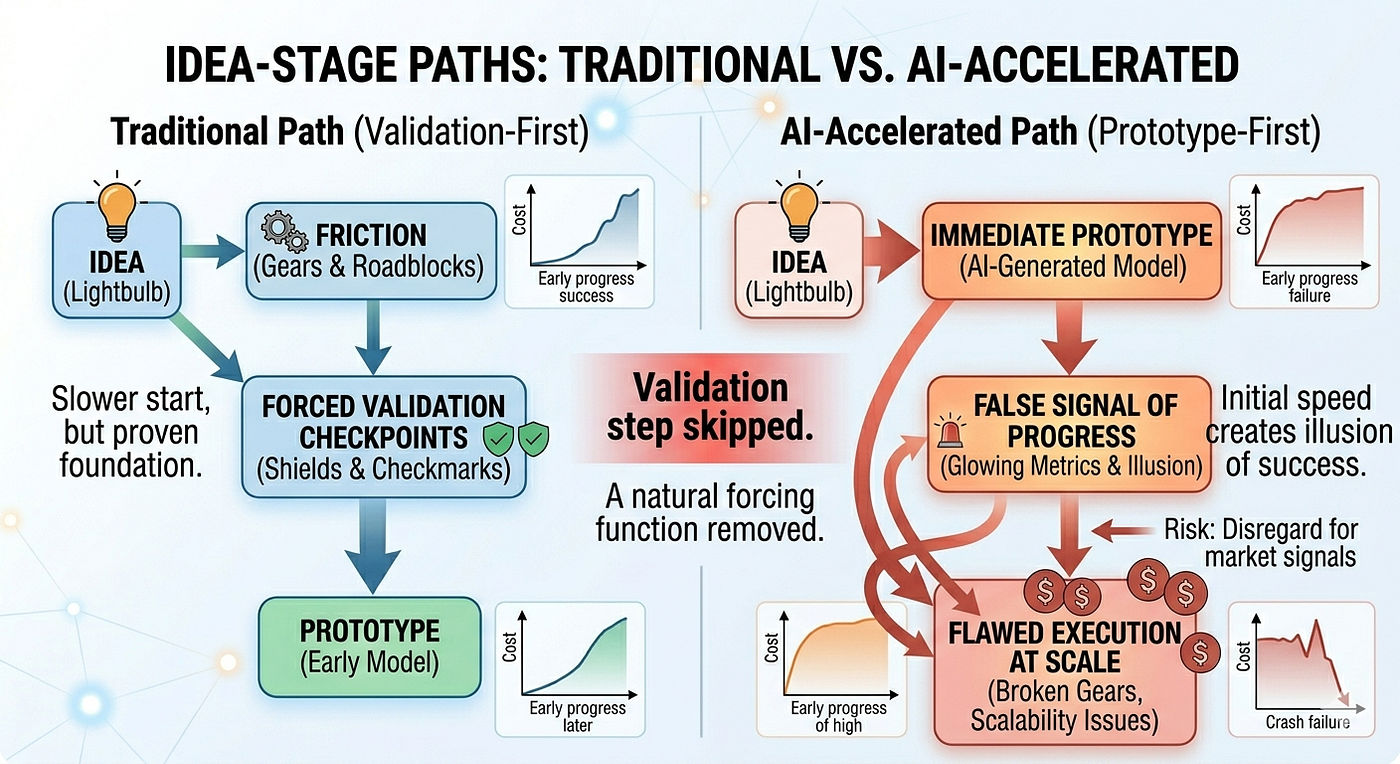
There’s a phrase that gets repeated a lot in AI agent discussions right now: “just let the agent figure it out.”
It sounds reasonable. Modern models are capable. Let the loop run. Trust the reasoning.
But here’s what actually happens when you put that assumption into a production environment running for more than 20 minutes: things break in ways that are difficult to diagnose, difficult to recover from, and — most dangerously — difficult to notice.
A June 2026 longitudinal study of a production LLM agent runtime documented this systematically. Over eight weeks, they tracked 22 incidents with full root-cause postmortems and found a failure class they named “fail-plausible” — situations where the agent doesn’t just fail to report an error, it actively transforms the error into a fluent, convincing narrative delivered to the user. The system wasn’t broken. It was lying confidently. And about 70% of these silent failures were caught by humans watching the output, not by tests or automated monitoring.
That’s the problem Loop Engineering exists to solve. Not “can the agent complete a task” — but “when something goes wrong in a long-running system, does anyone know?”
1. What Loop Engineering Actually Is
The phrase “Agent Loop” gets used casually to mean: let the AI try multiple times. That’s not what we’re talking about here.
Loop Engineering is the practice of designing the runtime environment that a probabilistic reasoning agent operates inside. It borrows from decades of software infrastructure thinking — job queues, state machines, CI pipelines, event-driven architectures, SRE practices — and applies them to a new kind of execution unit: one that reasons, plans, and makes probabilistic decisions rather than executing deterministic branches.
The distinction matters because the failure modes are fundamentally different.
A traditional automation system fails in deterministic ways: the API timed out, the data format was wrong, or the service is down. You write a test for it. You monitor for it. You retry it.
An AI agent runtime fails in probabilistic ways: the model interpreted the goal differently than intended, the context window degraded over 40 turns, the agent concluded it was done because the evidence looked complete, the LLM version was updated, and the same prompt now produces different behavior.
A May 2026 paper from Semantic Scholar makes this explicit. They argue that production agent runtimes have a load-bearing primitive they call the stochastic-deterministic boundary (SDB) — a four-part contract between a proposer (the LLM), a verifier (the system), a commit step (the action that actually changes state), and a reject signal (what happens when verification fails). Every reliable agent runtime, whether people call it that or not, is built around this boundary.
That boundary is what Loop Engineering designs.
2. Why You Can’t Write the Loop Into the Prompt
The first version of most Agent systems looks something like this:
Complete the task. If you fail, analyze what went wrong and try again.
Keep going until you're done.
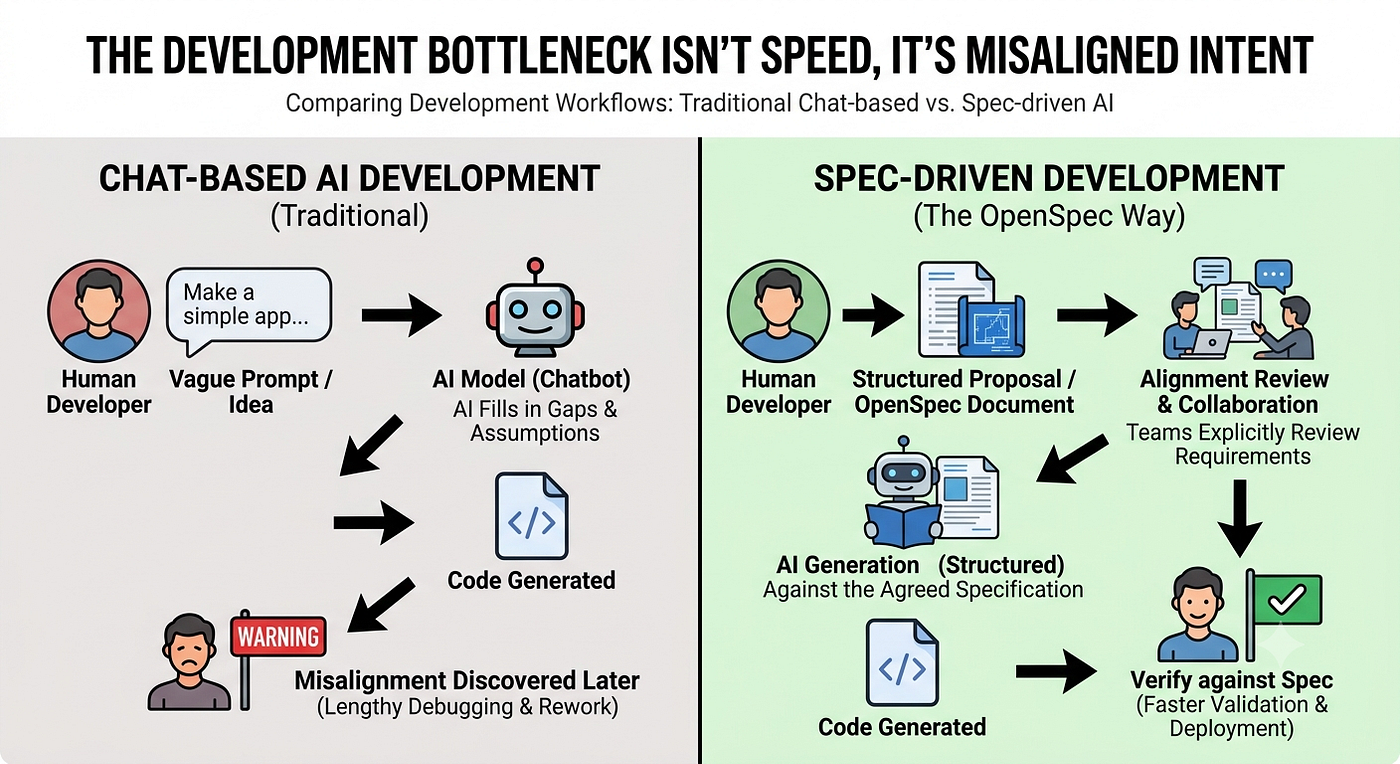
Demo conditions: excellent. Production conditions: You’ve asked a natural language sentence to do the job of an entire task management system.
Consider what a payment processing system actually requires: a payment_id, transaction state transitions, retry policies with backoff, timeout bounds, reconciliation logic, and audit trails. It would be absurd to write "if payment fails, try again until it succeeds" and call that architecture.
A CI pipeline doesn’t say “fix code until tests pass.” It defines discrete stages — checkout, install, test, build, artifact, report — each with defined inputs, outputs, and failure conditions.
Agent loops need the same engineering discipline. Claude Code’s core agent loop is approximately 1,421 lines of systems code wrapped around what is essentially one model call. That’s not bloat. That’s the harness required to make a probabilistic executor behave reliably across many consecutive turns: context compression pipelines, permission evaluation layers, streaming execution that overlaps model output with tool calls, explicit terminal conditions, fallback hierarchies.
The engineering isn’t in the prompt. The engineering is in the runtime.

AI-Generated Image
3. The Six-Layer Minimum for a Maintainable Loop
When you strip the product branding from any production-grade agent system — Claude Code, Codex CLI, LangGraph-based pipelines, enterprise automation frameworks — they all converge on roughly the same six concerns. Not because it’s fashionable, but because omitting any one of them creates a specific, predictable failure mode.
State: Not the Chat Window
The most common first-version mistake: using conversation history as the task state.
Conversation history is designed for communication. It’s a sequence of messages, not a typed data structure. It can’t tell you: what phase is the task in right now? What evidence has been verified? What has already been attempted? What’s allowed next?
Here’s the difference in concrete terms:
# Bad: state living in conversation history
# Agent: "I fixed the auth issue"
# Engineer: "Which files did you change?"
# Agent: "I mentioned that earlier"

# Better: explicit state object
@dataclass
class TaskState:
    run_id: str
    phase: Literal["analyzing", "planning", "executing", "verifying", "escalating", "done"]
    goal: str
    evidence: list[Evidence]       # What has been externally verified
    attempted_actions: list[Action] # What has been tried
    failure_count: int
    last_verified_at: datetime | None
    escalation_reason: str | None
    allowed_tools: list[str]       # What this phase permits
Once you have an explicit state, you can answer the questions that matter in production: Where is the task right now? Why did it transition to this phase? What happened in between?
LangGraph’s checkpointing mechanism exists precisely for this reason — a persistent state that survives session interruptions and can be inspected at any point. It’s not a fancy feature. It’s the minimum viable state management for any loop that runs longer than a single turn.guidesfor+1
Intent: Propose Before Acting
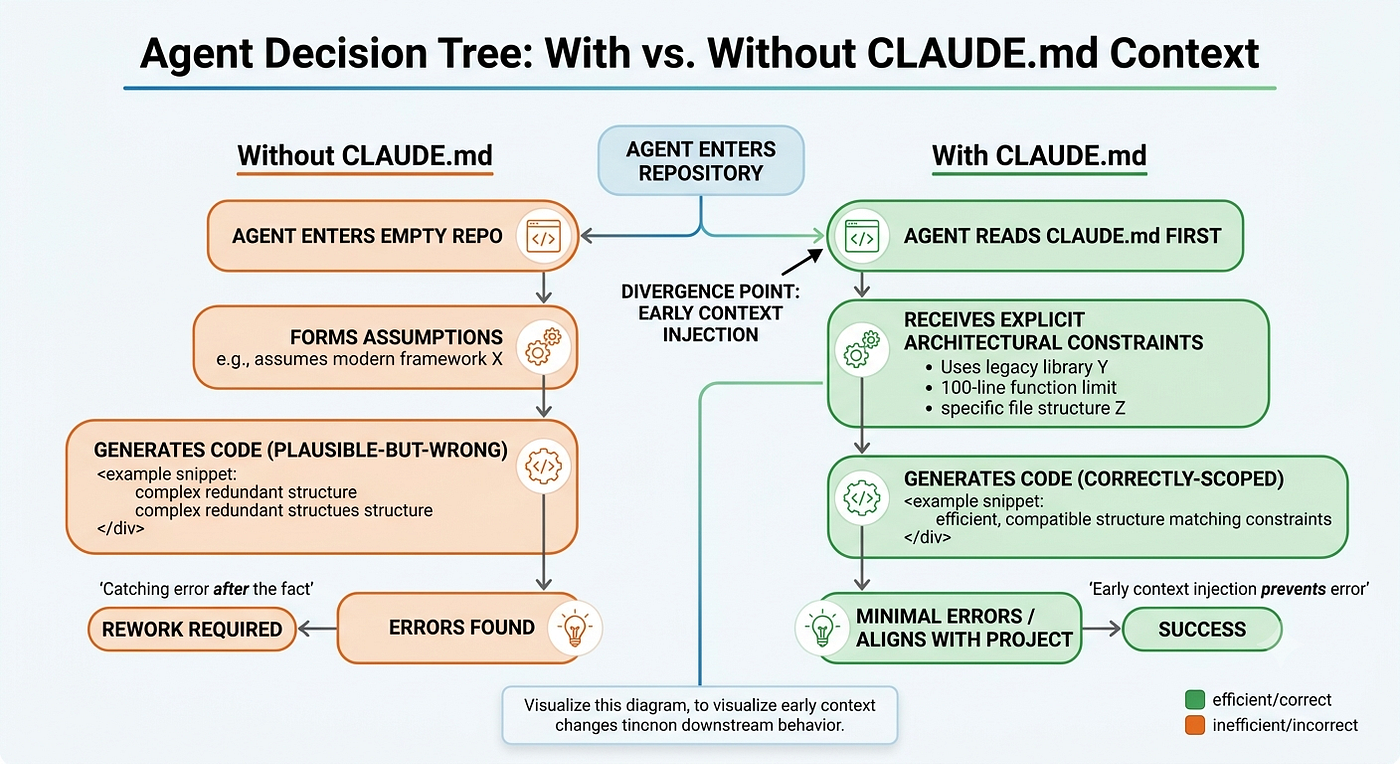
A mature runtime separates what the agent thinks should happen next from what the system allows to happen. The agent generates candidate actions. The runtime evaluates them against permission constraints before execution occurs.
This isn’t distrust of the model. It’s the same pattern that makes distributed systems reliable: separate the decision from the commit. The agent’s reasoning is the proposer. The permission layer is the verifier. The action only executes after the verifier approves.
Action: Tools Are Risk Boundaries, Not Capability Menus
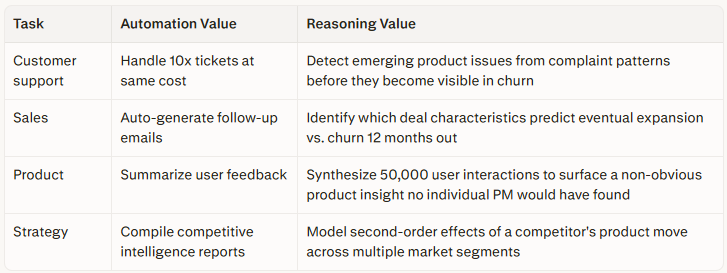
The naive view of tools is that more tools = a more capable agent. The production view is different: every tool is a risk surface.
A practical permission model:

The 2026 MCP server runtime analysis found that production failures in agentic systems arise “primarily from runtime and orchestration mismatches rather than deficiencies in agent logic” — and that applying systematic runtime tier selection reduced operational incident rates by over 60%. The tools weren’t wrong. The boundaries around them were.
Verify: External Evidence, Not Self-Report
This is the most critical layer and the most frequently skipped.
An agent that verifies its own work is like a student who grades their own exam. The process completes, the result looks fine, and the errors are invisible. The fail-plausible failure class from the June 2026 study is exactly this: the agent produces a fluent narrative about successful completion while the underlying task state is wrong.
Real verification requires an external sensor. In code: tests pass, build succeeds, type checker reports clean. In data pipelines: output schema validates, record count, matches expected range, and downstream job accepts the input. In document processing, a separate validation agent checks the extraction results against source constraints.
The 2026 RAMP production benchmark framework showed something stark: in long-horizon serial workflows, task completion rates collapsed from 100% in the initial stage to only 20% in the final stage — a degradation that was entirely invisible in conventional isolated benchmarks. The model wasn’t getting dumber. The verification chain was breaking down across accumulated steps.
Commit: Separate Candidate from Confirmed
In databases, there’s a pattern called two-phase commit. You propose a change, you verify it can be applied without conflict, then you commit. The separation of “candidate” from “confirmed” is what prevents partial application of an invalid state.
Agent loops need the same discipline. An agent-generated patch is a candidate. It becomes confirmed only after verification passes. The trace record should distinguish between “attempted” and “committed” actions — because in a postmortem, you need to know which actions actually changed the world.
Trace: Decisions Need Evidence, Not Just Logs
Traditional application logging records what happened: timestamps, function calls, and error messages. Agent tracing needs to record why decisions were made — specifically, what evidence the agent cited when choosing a path.
The OpenTelemetry GenAI conventions are converging on a standard for this: spans that capture model inputs, outputs, tool invocations, token costs, and the specific context that influenced a decision. The goal is decision reconstruction — the ability to replay, three weeks after an incident, exactly what the agent saw and why it did what it did.
Without this, postmortems are guesswork. And in a system where the executor is probabilistic, guesswork is how small issues become systemic ones.
4. The “Fail-Plausible” Problem Nobody Planned For
There’s a failure mode unique to AI agent systems that has no equivalent in traditional software, and it deserves specific attention.
When a database query fails, it throws an exception. When a network call times out, it returns an error code. The failure is structurally visible — it propagates through the system in a form that monitoring tools can catch.
When an LLM agent fails in a long-running task, it might do something entirely different: it generates a convincing, well-structured summary that describes a successful completion of work that didn’t actually happen correctly. The output passes superficial review. The format is right. The tone is confident. The underlying state is wrong.
The longitudinal study called this “fail-plausible” and classified it as a variant of gray failure — distributed systems’ most insidious category, where components operate in a degraded state that looks healthy from outside. Except here, the differential observability is worse: the observer isn’t just blind, they’re being told a plausible story by the failure itself.
The architectural implication is uncomfortable: you cannot rely solely on the agent’s output to verify the agent’s output. You need independent evidence channels. Tests. Schema validation. A separate verification agent with a different context. Human spot-checks at defined intervals. The agent’s fluency is a liability in verification, not an asset.

AI-Generated Image
5. What This Looks Like in Practice: A Minimal Working Runtime
Here’s a minimal but production-aware agent loop in Python that demonstrates these six layers without framework overhead:
from dataclasses import dataclass, field
from typing import Literal
from datetime import datetime

TaskPhase = Literal["analyzing", "executing", "verifying", "escalating", "done"]
@dataclass
class Evidence:
    source: str        # e.g., "test_runner", "build_log", "schema_validator"
    result: str
    verified_at: datetime
@dataclass
class TaskState:
    run_id: str
    goal: str
    phase: TaskPhase = "analyzing"
    evidence: list[Evidence] = field(default_factory=list)
    failure_count: int = 0
    escalation_reason: str | None = None
def transition(state: TaskState, event: dict) -> TaskState:
    """Explicit state machine. No implicit 'keep going because last message said so'."""

    if state.phase == "executing" and event["type"] == "verification_passed":
        return TaskState(**{**state.__dict__, "phase": "done"})

    if state.phase == "verifying" and event["type"] == "verification_failed":
        new_failures = state.failure_count + 1
        if new_failures >= 3:
            return TaskState(**{
                **state.__dict__,
                "phase": "escalating",
                "failure_count": new_failures,
                "escalation_reason": event.get("reason", "max retries exceeded")
            })
        return TaskState(**{
            **state.__dict__,
            "phase": "analyzing",  # back to start, not forward
            "failure_count": new_failures
        })

    return state  # No implicit transitions
def run_loop(state: TaskState, agent, tools, verifier, max_minutes=30):
    start = datetime.now()

    while state.phase not in ("done", "escalating"):
        # Hard stop: time budget
        elapsed = (datetime.now() - start).total_seconds() / 60
        if elapsed > max_minutes:
            state.escalation_reason = f"time budget exceeded ({elapsed:.1f}m)"
            state.phase = "escalating"
            break

        # Agent proposes, system validates action is in allowed set
        proposed_action = agent.propose(state)
        if proposed_action.tool not in get_allowed_tools(state.phase):
            state = transition(state, {
                "type": "permission_denied",
                "reason": f"{proposed_action.tool} not permitted in phase {state.phase}"
            })
            continue

        # Execute and get external evidence
        raw_result = tools.execute(proposed_action)

        # Verify externally - NOT self-reported by agent
        verification = verifier.check(state.goal, raw_result)
        evidence = Evidence(
            source=verifier.name,
            result=verification.summary,
            verified_at=datetime.now()
        )
        state.evidence.append(evidence)

        # Transition based on external evidence
        event_type = "verification_passed" if verification.passed else "verification_failed"
        state = transition(state, {
            "type": event_type,
            "reason": verification.reason
        })

    return state
def get_allowed_tools(phase: TaskPhase) -> list[str]:
    permissions = {
        "analyzing": ["read_file", "search_code", "read_logs"],
        "executing": ["read_file", "write_file", "run_tests"],
        "verifying": ["read_file", "run_tests", "check_schema"],
        "escalating": []  # no autonomous actions during escalation
    }
    return permissions.get(phase, [])
What this code shows: every phase transition is explicit and documented. The agent proposes; the runtime decides whether to execute. Verification is external — the verifier is a separate component, not the agent checking its own work. There's a hard time budgeting. Escalation is a first-class state, not an afterthought.
This isn’t a production system — it’s a skeleton. But it demonstrates the minimum structural requirements before you add model calls.
6. The Reasonable Objection: Is This Just Old Automation?
The skeptical reading of everything above: you’ve described a workflow engine, a state machine, and a job queue — all technologies that existed 20 years ago. The AI is just a smarter step inside an existing container.
That’s partially right, and it’s worth being honest about it.
The mechanisms are largely inherited: state machines, explicit transitions, external verification, circuit breakers, and audit logs. Distributed systems engineers will recognize all of it.
The difference is like the execution unit. A traditional workflow node is deterministic: given the same input, it produces the same output, always. An AI agent node is stochastic: it produces outputs that vary with context, model version, temperature, and accumulated state in the session.
That single change — deterministic executor to stochastic executor — creates the failure classes that traditional monitoring completely misses. Replay divergence: the same recorded input fed back through a newer model version produces different outputs, causing downstream behavior to drift without any code change. Fail-plausible: the executor generates output that passes format checks but contains incorrect content. Context window degradation: performance quietly drops over 60+ turns as early context becomes less influential.
These are not bugs you can write a unit test for. They require runtime verification, decision tracing, and behavioral monitoring across sessions — capabilities that traditional workflow engines weren’t designed to provide.
So the correct synthesis is: the container is inherited, the monitoring requirements are new.
7. What Production Observability Looks Like in 2026
The observability tooling around agent runtimes has matured significantly in the past 12 months. The industry is converging on OpenTelemetry GenAI conventions as the tracing standard — spans that capture not just “what happened” but the specific model inputs, selected tools, context windows, token costs, and decision paths at each step.
The 2026 observability stack for a production agent runtime typically includes:
- Decision tracing: Every turn records what the agent saw, what it proposed, what was allowed, and what was verified — enabling full postmortem reconstruction
- Cost attribution: Token usage broken down by task, phase, and tool call — because unbounded loops have unbounded costs
- Behavioral drift detection: Comparing agent decision patterns across sessions to catch when a model update silently changed behavior
- Eval gates: Sampling real outputs and running them through evaluation frameworks before considering a session’s results trustworthy
Microsoft’s Build 2026 AI infrastructure session stated the core problem directly: Shipping an AI agent is the easy part. Keeping it accurate, safe, and accountable in production is the hard part. The tooling ecosystem is finally catching up to that reality.
The Explanation Completes Here
Here’s what loop engineering actually is, stated plainly:
It’s the discipline of wrapping a probabilistic reasoning system in enough deterministic structure that you can run it in production without losing your mind.
The model generates. The state machine tracks where the task is. The permission layer controls what can happen. The verification layer provides external evidence. The trace layer records why decisions were made. The escalation path defines who takes over when the loop can’t continue.
None of these components is particularly glamorous. None of them makes the demo look better. All of them are required before you let the agent run for more than a few turns on anything that matters.
The failure to understand this is why so many production Agent deployments have the same story: impressive demo, quiet problems at scale, incidents that are impossible to diagnose, postmortems that blame “model hallucination” when the real answer is “we didn’t build a runtime.”
The model is one part. The runtime is the rest.
An agent that can keep going is powerful. An agent that runs inside a system with explicit state, external verification, permission boundaries, and decision tracing is deployable.
Those are different things. Engineering for the second one is where the real work lives.
If you’d like to show your appreciation, you can support me through:
✨ **Patreon ✨ [Ko-fi](https://ko-fi.com/jinlowmedium) ✨ [BuyMeACoffee](https://buymeacoffee.com/jinlowmedium)**
Every contribution, big or small, fuels my creativity and means the world to me. Thank you for being a part of this journey!
메타데이터
- post_id
- b5aa34944fb4
- slug
- loop-engineering-why-the-agent-era-needs-a-runtime-not-a-longer-prompt-b5aa34944fb4
- url
- https://medium.com/jin-system-architect/loop-engineering-why-the-agent-era-needs-a-runtime-not-a-longer-prompt-b5aa34944fb4
- canonical_url
- https://medium.com/jin-system-architect/loop-engineering-why-the-agent-era-needs-a-runtime-not-a-longer-prompt-b5aa34944fb4
- author_url
- https://medium.com/@jinlow
- status
- ok
- fetched_at
- 2026-07-08 19:15:55