PyTorch vs. TensorFlow: A Beginner-Friendly Comparison
Choosing the right deep learning framework can be confusing for beginners, especially with PyTorch and TensorFlow being the two most…
PyTorch vs. TensorFlow: A Beginner-Friendly Comparison
Choosing the right deep learning framework can be confusing for beginners, especially with PyTorch and TensorFlow being the two most popular options. Both have their strengths and are widely used in research and industry. PyTorch is known for its ease of use and flexibility, while TensorFlow offers powerful tools for large-scale deployment. In this post, we’ll compare them in a simple and beginner-friendly way to help you decide which one suits your needs.
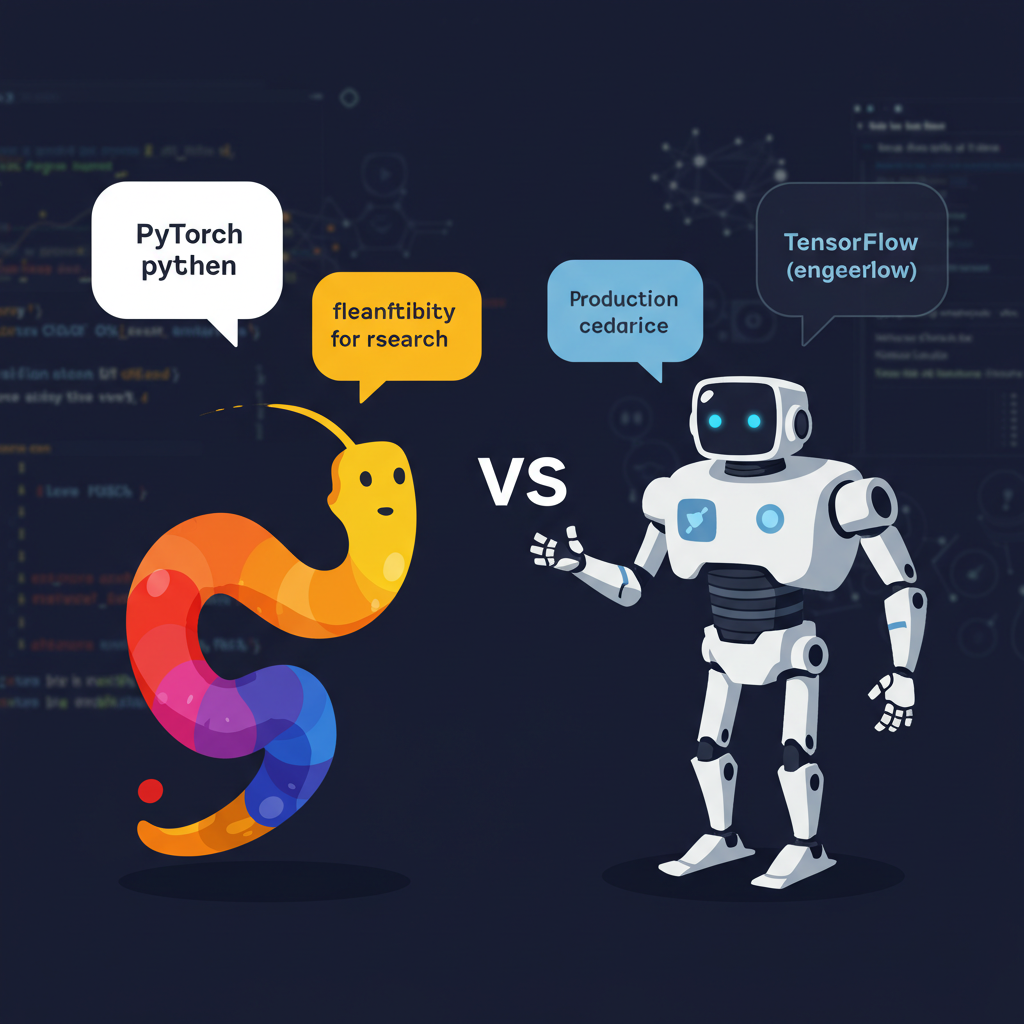
Here’s a fair and neutral comparison of PyTorch and TensorFlow, specifically for beginners:
1. Ease of Learning
- PyTorch: Has a more intuitive, Pythonic interface that feels natural for beginners who already know Python. Easier to debug because it follows standard Python execution.
- TensorFlow: Earlier versions (1.x) were harder to learn, but TensorFlow 2.x is much more beginner-friendly with its Keras API. Still, it can feel a bit more complex than PyTorch.
Beginner Verdict: PyTorch is generally easier to learn, but TensorFlow with Keras is also beginner-friendly.
2. Code Simplicity
- PyTorch: Uses a dynamic computational graph, meaning you can write and run code interactively, making it easier to experiment.
- TensorFlow: Uses a static computational graph by default (though eager execution is available). More boilerplate code is needed for some tasks.
Beginner Verdict: PyTorch has simpler and more readable code, while TensorFlow requires slightly more setup.
3. Community & Learning Resources
- PyTorch: Popular in research and academia. Many tutorials are designed for researchers and deep learning enthusiasts.
- TensorFlow: Used more in industry. More official documentation, Google support, and production-focused tutorials.
Beginner Verdict: Both have great learning resources, but PyTorch has more research-focused tutorials, while TensorFlow has more industry-related content.
4. Performance & Speed
- PyTorch: Generally fast but slightly behind TensorFlow in large-scale training.
- TensorFlow: Optimized for large-scale training and deployment, often slightly faster in real-world production settings.
Beginner Verdict: Performance differences are minimal for beginners, but TensorFlow may have an edge for large-scale tasks.
5. Model Deployment
- PyTorch: Supports deployment via TorchServe and ONNX but has a smaller ecosystem for production.
- TensorFlow: More mature deployment options (TensorFlow Serving, TensorFlow Lite for mobile, TensorFlow.js for web).
Beginner Verdict: TensorFlow is better if you plan to deploy models in real-world applications.
6. Job & Career Opportunities
- PyTorch: Preferred in research, academia, and AI startups.
- TensorFlow: More widely used in big companies for production systems.
Beginner Verdict: If you’re aiming for industry jobs, TensorFlow might be a safer choice, but PyTorch skills are also valuable.
Final Recommendation
- If you are just starting and want an easy-to-learn framework: PyTorch
- If you want a framework that helps with production-ready deployment: TensorFlow (with Keras)
- If you’re interested in research and prototyping: PyTorch
- If you want a job in a large tech company: TensorFlow
메타데이터
- post_id
- b5b05bbae7ee
- slug
- pytorch-vs-tensorflow-a-beginner-friendly-comparison-b5b05bbae7ee
- url
- https://medium.com/@genaibriefs/pytorch-vs-tensorflow-a-beginner-friendly-comparison-b5b05bbae7ee
- canonical_url
- https://medium.com/@genaibriefs/pytorch-vs-tensorflow-a-beginner-friendly-comparison-b5b05bbae7ee
- author_url
- https://medium.com/@genaibriefs
- status
- ok
- fetched_at
- 2026-07-17 03:50:05




