Dr. Ammon Hillman & The Old Testament was Written in Greek
Is there an evidence the Septuagint (Greek Old Testament) was the original text and the Hebrew Bible or Torah is a derivative or…
Bible Hebrew Septuagint
Dr. Ammon Hillman & The Old Testament was Written in Greek
Is there an evidence the Septuagint (Greek Old Testament) was the original text and the Hebrew Bible or Torah is a derivative or translation?
I recently wrote about the theory that the Hebrew Bible was an Hellenistic invention, and if this is interesting to you I’d encourage you to read that — there is a link below this article.
Today I’m going to list the details of Ammon Hillman’s evidence. But first, to understand the significance of his claims you should be aware that he seems to stand alone as the only expert who believes the Hebrew bible was a later translation of an original Greek text.
Scholars say:
- the Hebrew Bible was written mostly in ancient Hebrew probably between 539–333 BCE.
- the final compilation may have been, in the Hellenistic period (333–164 BCE) — and in this sense many scholars will agree it’s possible to date the “Old Testament” as a collection to the Hellenistic era.
- The Septuagint is considered to be a translation of the Hebrew, dating to between 280–100 BCE. Almost everyone except Hillman agrees with this!
Looking at the dates alone, there is enough overlap in those dates that either could have been written first.
Alternatively, they could have been written independently at the same time both drawing on older stories.
But it isn’t just about dates.
The evidence that the Greek is a translation from the Hebrew is compelling and I gave sources in my previous article (link below).
Today, I just want to list Dr. Hillman’s specific evidence to support his claim that the Greek was the first — an original document and not a translation.
Note, even though I am presenting this because it is an interesting discussion, I should in fairness state, I suspect Dr. Hillman is wrong. Nevertheless, when you dig down into the evidence, it raises interesting questions.
Dr. Hillman’s Claims the Septuagint was NOT Translated from Hebrew…
These are some of the comments he makes across various videos, I have not checked all of these for accuracy. It is also possible that I have misquoted Hillman because he is sometimes hard to follow.
- The Dead Sea Scrolls, which include fragments in Hebrew, are translations from the Greek, not original Hebrew texts.
- The Septuagint does not read like a translation, but as an original text, utilizing Greek idioms and colloquialisms. The colloquialisms are difficult to translate, so their presence suggests the Greek text came first.
- The Greek text is described as “beautifully fluently Greek”.
- The Dead Sea Scrolls, which are in Hebrew, were lower in technicality than the Greek, indicating that they are the translation.
- The Hebrew language is described as having a limited vocabulary of 8,000 unique words (“barely enough for breakfast”), which is insufficient to express the concepts in the text…. This limitation would make it difficult to translate from Greek to Hebrew without losing meaning and nuance.
- It is argued that when translating from Greek to Hebrew, the Hebrew translators had difficulty with certain words and concepts, resulting in questionable derivations and nonsensical passages….
- The Hebrew text is described as sometimes having “fractures” because it is “incapable of expressing what the Greek was actually saying”.
- Note, Hellenistic influences on the stories within the Old Testament, especially in the Book of Genesis, and in the story of Samson in the Book of Judges…. The narratives in the Hebrew Bible seem to be “riffing off” or drawing from elements in Greek mythology.
- The Greek text has an internal consistency and flow that the Hebrew lacks. In Zechariah 6, it’s noted that the Septuagint uses “Sophias” (wisdom) rather than the transliterated “Zephaniah,” which is more meaningful. This is presented as an example of the Greek being the original since it makes sense.
- The Peshitta (Syriac translation of the New Testament) is aligns with the Septuagint rather than the Hebrew.
- Some early church fathers like Julius Africanus and Origen, are claimed to recognise that the text of the Old Testament is in Greek.
- It’s stated that synagogues in Northern Israel in the second century BCE had zodiacs with Greek inscriptions rather than Hebrew, which is presented as further evidence of the dominance of Greek at that time.
- Persian period coins depict the Greek god Zeus but are inscribed with the name “Yahweh”. It is claimed that this indicates that Hellenism was influencing the region.

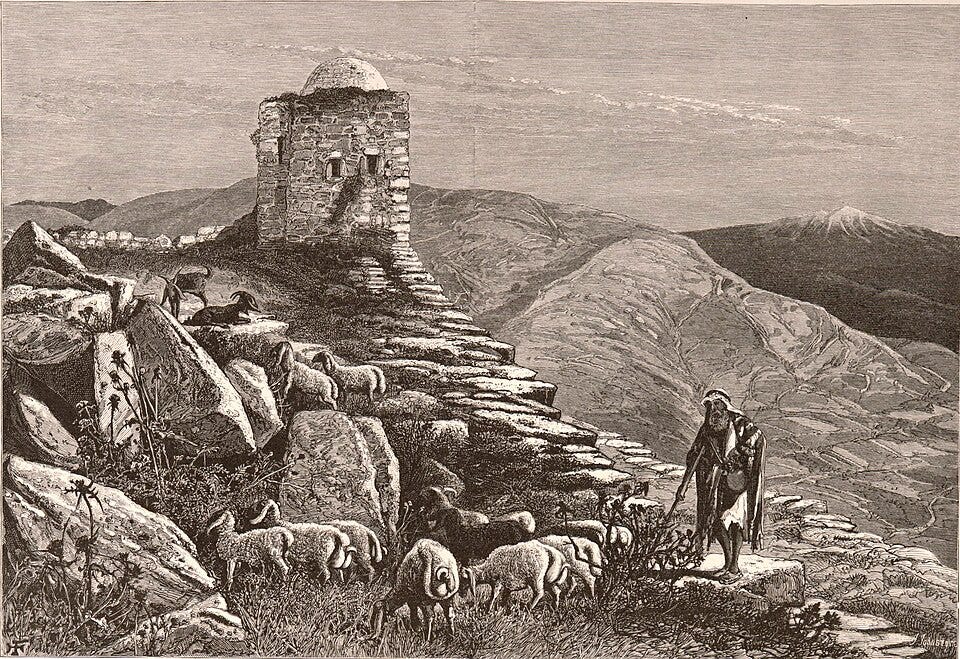
What do we know about the origins of the bible? Image: Pixabay
It is tempting to think that Dr Hillman makes a lot of general claims without backing them up with concrete facts.
You have to watch a lot of YouTubes… I did it so you don’t have to.
- I’d like to know more about the Greek Idioms that don’t translate well into Hebrew.
- Show me those verses.
Ammon Hillman’s Evidence that the Septuagint is an Original Greek Composition
OKAY: I have found actual examples — Thank you, Dr Hillman (see Ancient Hebrew and it’s Forgery: YouTube August 2024).
I started off being very skeptical, but as I double checked the evidence that I detail below, I started to understand Dr Hillman’s point of view. I’ve only checked into a few of the Greek verses and there’s certainly a lot to what Ammon is telling us.
Okay, let’s get into it:
Genesis 2:15 Hebrew:
The LORD God took the man and put him in the garden of Eden to work it and keep it
Genesis 2:21 Hebrew:
And the Lord God caused a deep sleep to fall upon Adam, and he slept: and he took one of his ribs, and closed up the flesh instead thereof
Hillman says the Greek (original) didn’t say garden but used these words:
“Paradise of Pleasure” (luxurious wantonness)
Hillman’s argument can be summed up by one good example:
If the original word was the Hebrew “sleep” why would it be translated in to “ecstasy” in the Greek?
Now, I don’t read Hebrew or Ancient Greek, but there are plenty of independent translation resources on line, so I was easily able to check out Hillmans translations and cross checking with the Septuagint on line.
Hillman’s translations and interpretations aren’t traditional, but they aren’t wrong. Of the few items I have checked the Greek does employ more sophisticated words that aren’t in the Hebrew.
If the Greek was a translation from Hebrew why did the translators choose words that had a very different meaning? Words that have profound meanings that would have been understood by Hellenistic Greeks.
- Note: there is no direct translation for “ecstasy” in Hebrew, so if the Greek was original the Hebrew would have had to find a different word or phrase, whereas the Greeks did have a word for sleep.
- In the original Hebrew text of the Bible, the word used for the Garden of Eden is “גַּן” (gan), which directly translates to “garden.” When translating this into ancient Greek, the translators of the Septuagint chose the word “παράδεισος” (paradeisos), which in the context of the time referred to a walled or enclosed park, garden, or hunting ground, typically belonging to a king or noble.
- If one sought a Greek word that more specifically and simply meant “garden” in a more general sense, without the royal or grand connotations of “παράδεισος,” the word “κῆπος” (kēpos) might be used. This term refers to a garden or orchard and could be considered for a translation that focuses strictly on the aspect of a cultivated area of plants, similar to the basic concept of a garden in the Hebrew text.
- Thus, while “παράδεισος” was chosen perhaps for its connotations of a grand, divine space, “κῆπος” might be closer to the everyday concept of a garden. However, in the context of Biblical translations and the theological implications of the text, “παράδεισος” remains the traditional choice.
- The phrase “ἔκστασιν μεγάλην” (ekstasin megalēn) translates as “a great deep sleep” which captures a sense of profound or miraculous slumber, possibly richer in connotation than the plain “deep sleep” in English.
- The Greek word “ἔκστασιν” (ekstasis), which translates as “ecstasy” in English, also implies a state of being outside oneself. This word choice could be interpreted as Adam entering a transcendent state beyond ordinary sleep, perhaps emphasizing a divine intervention or a mystical experience rather than just physical sleep.

Adam & Eve: Generated by the author
And Genesis 2:7
“And the Lord God formed man of the dust of the ground” where God forms man from the dust, “ἔπλασεν” (eplasen) from “πλάσσω” emphasizes the artisan-like, creative act of God as a potter molds clay.
“The breath of life” translates “πνοὴν ζωῆς” (pnoēn zōēs). The word “ζωή” (life) in Greek philosophical embodies not just biological life but eternal life, spiritual vitality, or the essence of life itself.
And then in the Garden they are forbidden to eat the fruit of knowledge.
I can’t help thinking this story reminds me of the Greek myth about Prometheus, a Titan who is credited with the creation of mankind. According to the myth, Prometheus molded humans out of clay. Prometheus also defied Zeus to give fire (a symbol of knowledge and civilization) to humanity.
The breath of life isn’t unique either. It was a thing in ancient Greek and Indian philosophy.
I’m sure there are more examples to support Hillman’s argument and I’m sure there are counter arguments, which I put in my previous article.
I just want to show examples of the argument the other way around.
In Genesis, the phrase “towards the sea” is used to indicate the west. In Hebrew, “sea” is synonymous with the direction of west because of the location of the Mediterranean Sea. The Septuagint uses the Greek word thasan for “sea” in this context, which is not the typical Greek way to say “west”.
This is presented as an example of a literal translation of a Hebrew idiom, which wouldn’t occur in an original Greek text; instead, an original Greek text would use an idiomatic Greek way of saying west. The use of thasan is therefore regarded as evidence of a Greek translation from a Hebrew text, not the other way around.
In Leviticus, the Septuagint uses anthropos anthropos to translate the Hebrew idiom “man, man,” which means a certain individual. This is presented as an example of a direct translation of a Hebrew idiom that does not exist in Greek, indicating that the Greek is not original. If the Greek were original, it would not have used a phrase that is not idiomatic in Greek.
The wordplay present in the Hebrew text is lost when translated into Greek. For instance, the name ‘Adam’ in Hebrew is related to the word for earth or land (‘adamah’), but there is no connection in the Greek.
- Hillman claims that the name Adam is borrowed from a Mycenaean word, predating any Hebrew usage. And it existed for thousands of years before the earliest Hebrew texts, as far back as Linear B.
The name “Eve” is related to the Hebrew word for living (Chava), while the Greek translates it as “Zoe”, creating a disconnect; however Dr. Hillman has an alternative reasoning behind the use of Zoe as the word means essential eternal life.
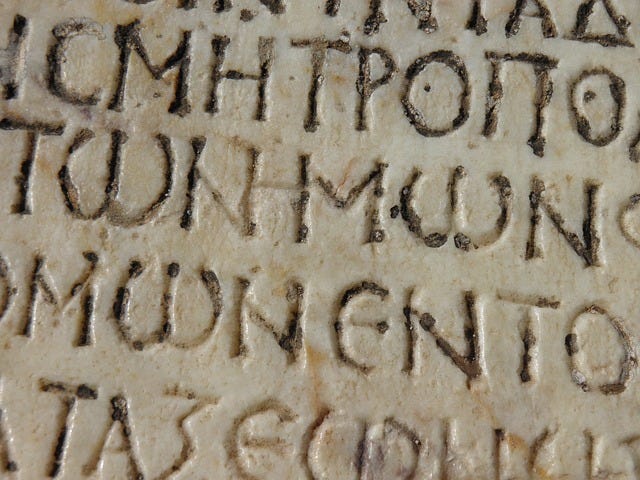
It’s all Greek to me. Image: Pixabay
CONCLUSION
As far as I can tell there is little to nothing published in writing to support his view, but Dr. Hillman does make the claim across many YouTube videos that the Hebrew is a poor translation from the Greek original.
This is not supported by scholars.
However, for fifty years or so academics have been discussing and acknowledging the Hellentistic influence at that time.
Some references:
https://www.jewishencyclopedia.com/articles/7535-hellenism
Hillman goes on the say that the monotheist Jewish religion is a Hellenistic invention, and this is broadly inline with scholarly opinion. The YHWH cult that emerged from the Canaanites originally had many Gods. It’s a fascinating history.
I have found these sources from his channel: Lady Babylon and his appearance on other channels including Danny Jones and Gnostic Informant.
Read more:
Edited to add:
At least one of the doubts over Hillman’s assertion is because when we translate the Greek Septuagint into English there are some very clunky passages with repeated works — this occurs many times, so I’m told.
However, now that my attention has been drawn to this I am noticing the same feature in other ancient Greek writings (nothings to do with Hebrew Bible). I saw an expert talk about this writing style being a deliberate poetic play on words — which worked well in classical Greek.
So, perhaps sentences that that repeatedly use the same word were deliberate, they do seem to fit a pattern of stylised literary Greek. I am sorry, I have not gathered examples — it is on my to do list.
메타데이터
- post_id
- b5c4feaac002
- slug
- dr-ammon-hillman-the-old-testament-was-written-in-greek-b5c4feaac002
- url
- https://medium.com/is-it-true/dr-ammon-hillman-the-old-testament-was-written-in-greek-b5c4feaac002
- canonical_url
- https://medium.com/is-it-true/dr-ammon-hillman-the-old-testament-was-written-in-greek-b5c4feaac002
- author_url
- https://medium.com/@helperry
- status
- ok
- fetched_at
- 2026-07-16 17:05:11