What just happened at ASCO 2026 — and why it matters if you’re facing advanced cancer
The world’s largest cancer conference just presented a cell therapy result that most patients have never heard of.

What just happened at ASCO 2026 — and why it matters if you’re facing advanced cancer
The world’s largest cancer conference just presented a cell therapy result that most patients have never heard of.
Every year, the world’s largest cancer conference picks a handful of studies so significant they get announced in front of the full auditorium. This year, out of 63 of those studies, exactly one was a cell therapy trial.
It was GC101. A TIL therapy developed by a Shanghai company called Juncell Therapeutics. And the results were, in the words of one international expert in the room, “unbelievable.”
What the study actually showed
The trial enrolled patients with advanced melanoma who had already failed immunotherapy and other treatments. These were people who had run out of standard options. The kind of patients who are often told there’s nothing left.
Half received GC101. Half received chemotherapy.
In the GC101 group, 42% of patients had a meaningful tumour response. In the chemotherapy group, 6.1% did.
The risk of disease progression or death was 57% lower in the GC101 group. Median progression-free survival was 4.3 months versus 1.6 months for chemotherapy.
These are not small differences.
Why this is different from other immunotherapies
Most patients with advanced cancer have already tried immunotherapy — checkpoint inhibitors like pembrolizumab or nivolumab. When those stop working, the options get very limited very fast.
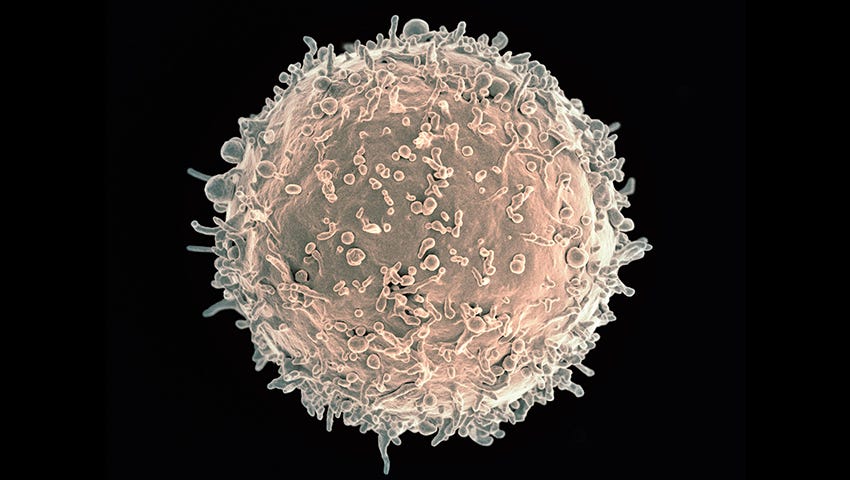
TIL therapy works differently. Instead of broadly activating the immune system, it extracts T cells that are already living inside the tumour itself, cells that have already learned to recognise that specific cancer, grows them into the billions in a lab, and puts them back.
What makes GC101 specifically unusual is that it does this without the high-intensity conditioning chemotherapy and without the high-dose IL-2 injections that conventional TIL therapy requires. The original version of TIL therapy, approved in the US in 2024, needs patients to go through intensive pre-treatment that often requires ICU support. GC101 patients are treated in a general ward.
This matters not just for safety. It means more patients can access it.
What this means beyond melanoma
The reason melanoma tends to lead in immunotherapy research is that it responds well and results come faster. But TIL therapy is not only being studied in melanoma.
Juncell’s NSCLC programme (MIZAR-005) has shown a 41.7% objective response rate in lung cancer patients who had failed a median of three prior lines of treatment. That data was presented before this week’s ASCO results, and the melanoma results now give further weight to the underlying technology.
The researchers are explicit about the direction: they see this as a starting point, not a ceiling. The goal is to move TIL therapy earlier in treatment, potentially as first or second line rather than last resort, and to expand across solid tumour types.
What this means practically for patients right now
GC101 is not yet approved in most countries. In China, it is currently accessible to international patients through Hainan’s Boao Lecheng medical pilot zone, which allows advanced therapies ahead of full regulatory approval. Two short trips to China are required, tissue collection in Shanghai, and cell infusion in Hainan around five to six weeks later. Total time in China is approximately five to six days.
The ASCO results will accelerate the path to formal approval. But for patients who cannot wait, access exists now.
A note on what “no more options” actually means
One of the things that comes up again and again in the stories of patients who found GC101 is that they were told there was nothing left before they found it.
“Nothing left” usually means nothing left in that hospital’s standard protocol. It doesn’t mean nothing exists in the world.
The ASCO results this week are one more data point that the world has more to offer than any single oncologist’s protocol. For anyone facing that conversation or supporting someone who is, it’s worth knowing that.
I write about TIL therapy and advanced cancer treatment options at CancerPath. If you’d like to understand whether this could be relevant for a specific situation, you can find more information at CancerPath.
Clinical data: Lu S., et al. ASCO 2026. LBA 9509. Individual results vary.
메타데이터
- post_id
- b5d183d9ed07
- slug
- what-just-happened-at-asco-2026-and-why-it-matters-if-youre-facing-advanced-cancer-b5d183d9ed07
- url
- https://medium.com/@chloe.zhu/what-just-happened-at-asco-2026-and-why-it-matters-if-youre-facing-advanced-cancer-b5d183d9ed07
- canonical_url
- https://medium.com/@chloe.zhu/what-just-happened-at-asco-2026-and-why-it-matters-if-youre-facing-advanced-cancer-b5d183d9ed07
- author_url
- https://medium.com/@chloe.zhu
- status
- ok
- fetched_at
- 2026-07-07 15:45:26