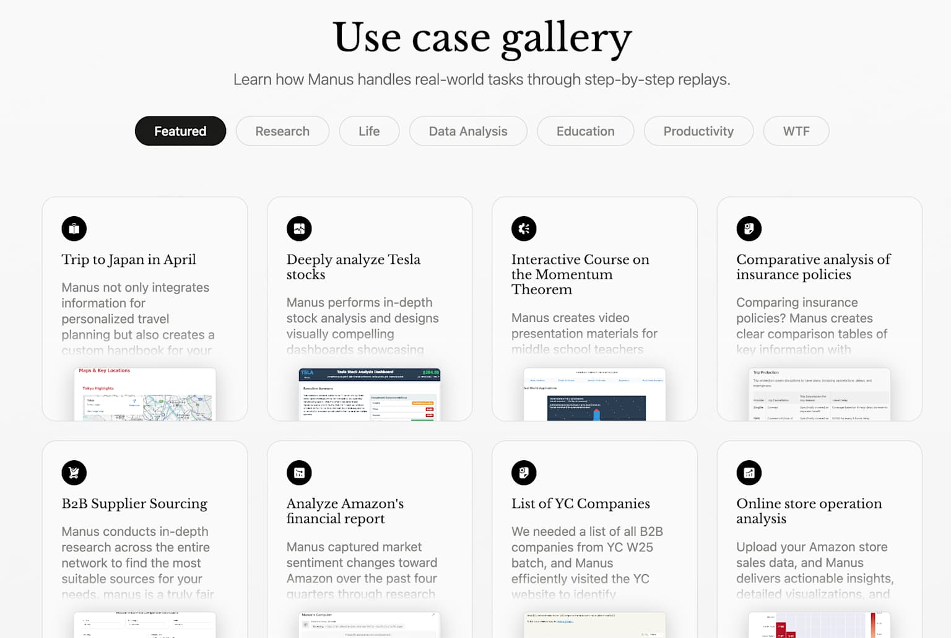
Manus AI + MCP Explained: The Architecture Behind Reliable Autonomy
…No Hype, Just Engineering
Manus AI + MCP Explained: The Architecture Behind Reliable Autonomy
…No Hype, Just Engineering

Credit : AI Generated Image (2026)
By mid-morning, most technical professionals are no longer solving problems. They are translating them.
A Slack thread becomes a Jira ticket. The ticket becomes a meeting. The meeting becomes a document. The document becomes a follow-up email. Somewhere in that chain, the original intent thins out, like a signal degraded by too many hops.
This is not a failure of skill. It is a failure of tooling.
“Automation fails when it forgets intent. Intelligence begins when systems remember why they act.”
Agentic AI emerged to absorb this coordination tax. Not by replacing engineers, data scientists, or architects, but by holding intent steady while the world changes around it. When these agentic systems are paired with Model Context Protocol (MCP) servers, something qualitatively different happens: automation stops behaving like a fragile script and starts behaving like infrastructure.
This article explores that shift in depth. It shows how Manus-style agents are built, why MCP servers matter, and how Python-level design choices separate durable systems from expensive experiments.
When AI Learned to Hold State (and Why That Changed Everything)
Classic automation executes instructions and forgets them. Chatbots answer questions and wait for the next one. Agentic AI does something fundamentally different: it maintains intent over time.
The attached guide defines an agent as a system in which a large language model decides execution flow, invokes tools, stores memory, and adapts based on feedback. That definition sounds abstract until you experience the practical consequence. An agent does not wait passively. It wakes up with unfinished business.
Technically, every production-grade agent resolves into five forces that must remain in balance: perception, decision-making, action, memory, and communication. Think of them less as modules and more as organs. You can remove one and the system still functions, but reliability collapses.
Perception ingests messy reality: unstructured text, APIs, logs, PDFs, dashboards. Decision-making — usually an LLM — reasons about that reality. Action interfaces with the world through tools. Memory preserves what mattered yesterday so today does not restart from zero. Communication keeps humans informed and empowered rather than surprised.
This is not intelligence as spectacle. It is intelligence as infrastructure.
Why MCP Is the Missing Contract Layer
Early agent systems failed for a predictable reason. They knew how to act, but not what they were allowed to touch.
Tool integrations were hard-coded. Permissions were implicit. Risk boundaries lived only in documentation. When agents hallucinated a tool call or misunderstood an API, damage followed.
MCP changes this dynamic by introducing a formal contract between agents and tools. Instead of guessing, agents discover capabilities.
Through MCP servers, an agent can ask: What tools exist? What inputs do they accept? What outputs do they guarantee? What permissions apply? What risk level do they carry?
This turns tool usage from improvisation into negotiation. For agentic systems, that difference is existential.
Manus AI as a Reference Architecture, Not a Mystery
Manus AI feels powerful because it does something deceptively simple: it refuses to forget what it is doing.
Where lightweight agents collapse into prompt loops, Manus behaves like a disciplined project manager. A goal enters the system and becomes persistent state. From there, a planner decomposes that goal into tasks, each annotated with dependencies, cost expectations, and risk boundaries. Execution routes tasks deliberately — internal reasoning when possible, external tools when necessary. Memory stores outcomes, not chatter. Reflection verifies progress instead of assuming it.
Nothing here is exotic. Every component appears in the agentic AI guide: planning, ReAct loops, tool routing, reflection, and human oversight. Manus succeeds because these pieces cooperate instead of competing.
The Core Execution Loop (Python, Minimal but Real)
Underneath the abstraction, a Manus-style agent loop looks almost boring. That is its strength.
from mcp import MCPClient
from planner import plan_tasks
from memory import VectorMemory
from evaluator import reflect
mcp = MCPClient(server_url="http://localhost:3333")
memory = VectorMemory()goal = "Analyze competing AI agent platforms for fintech compliance use"
tasks = plan_tasks(goal)while tasks:
task = tasks.pop(0)
context = memory.retrieve(task) tools = mcp.list_tools(task.type)
tool = select_best_tool(tools, task) result = mcp.invoke(tool, task.payload, context=context)
memory.store(task, result) if reflect(task, result) == "replan":
tasks = plan_tasks(goal, memory)The intelligence does not live in clever prompts. It lives in state, flow control, and restraint.
How MCP Servers Make Agents Safer by Default
Without MCP, agents guess which tool to use. With MCP, they reason about risk.
Each MCP-exposed tool is described as a schema, not a suggestion. A simplified definition might look like this:
{
  "name": "regulatory_search",
  "description": "Search approved regulatory databases",
  "inputs": {"query": "string"},
  "outputs": {"documents": "list"},
  "risk_level": "low"
}
This metadata becomes part of the agent’s reasoning context. Tasks that exceed a risk threshold can be blocked, escalated, or routed to humans automatically. The result is autonomy with guardrails, not autonomy by accident.
Deep Use Case: Competitive Intelligence Without Losing the Thread
Rhea is a senior data scientist at a regulated fintech firm. Her assignment sounds straightforward: assess how peer institutions are deploying AI agents.
In reality, it means reading marketing claims, technical documentation, regulatory filings, and third-party audits. It means reconciling contradictions. It means knowing when uncertainty matters.
Before agentic systems, this took days of fragmented attention.
With a Manus-style agent backed by MCP servers, Rhea defines a single goal: produce a defensible competitive analysis of agentic AI platforms in fintech. The agent plans the work, breaking it into categories and prioritizing regulated use cases. Research tasks are routed through MCP-approved web search tools. Internal document access is permission-scoped. Anything touching customer data is automatically blocked.
Midway through execution, the agent detects conflicting claims between vendor blogs and technical specifications. Reflection triggers replanning. Additional sources are pulled. Uncertainty is annotated rather than hidden. Confidence levels are attached to findings.
By the next morning, Rhea reviews a report that includes traceable sources, explicit assumptions, cost implications, and risk assessments. Her effort is spent on judgment, not gathering.
As one engineer described it, “The breakthrough wasn’t speed. It was never losing context.”
Scaling with Multi-Agent Collaboration
Manus-style systems scale by specialization. One agent plans. Another researches. A third validates. All share memory and discover tools through the same MCP servers.
planner.plan(goal)
researcher.execute(tasks)
validator.review(memory)
This division of labor prevents cognitive overload and localizes failure.
Where Most Teams Still Fail
Teams chase autonomy instead of bounded authority. They hard-code tools. They skip reflection. They let agents run without spend limits. When things break, they blame the model.
The guide is clear: reliability emerges from architecture, not prompts. MCP enforces contracts. Manus-style loops enforce discipline.
Deep Dive:
[embed]
Autopilot as an Engineering Choice
Autopilot does not mean surrendering control. It means expressing control declaratively.
When agentic loops meet MCP servers, systems gain clarity. They know what they are allowed to do, what they must ask permission for, and what they need to remember.
That is not magic. That is engineering.
And that is how real work finally gets quieter.
메타데이터
- post_id
- b5e85d033aa0
- slug
- manus-ai-mcp-explained-the-architecture-behind-reliable-autonomy-b5e85d033aa0
- url
- https://medium.com/pythoneers/manus-ai-mcp-explained-the-architecture-behind-reliable-autonomy-b5e85d033aa0
- canonical_url
- https://medium.com/pythoneers/manus-ai-mcp-explained-the-architecture-behind-reliable-autonomy-b5e85d033aa0
- author_url
- https://medium.com/@rogt.x1997
- status
- ok
- fetched_at
- 2026-06-10 22:59:55