South China Sea Strategic Node (SCSN)
✍️ Apolítik0 → ← PGT
South China Sea Strategic Node (SCSN)
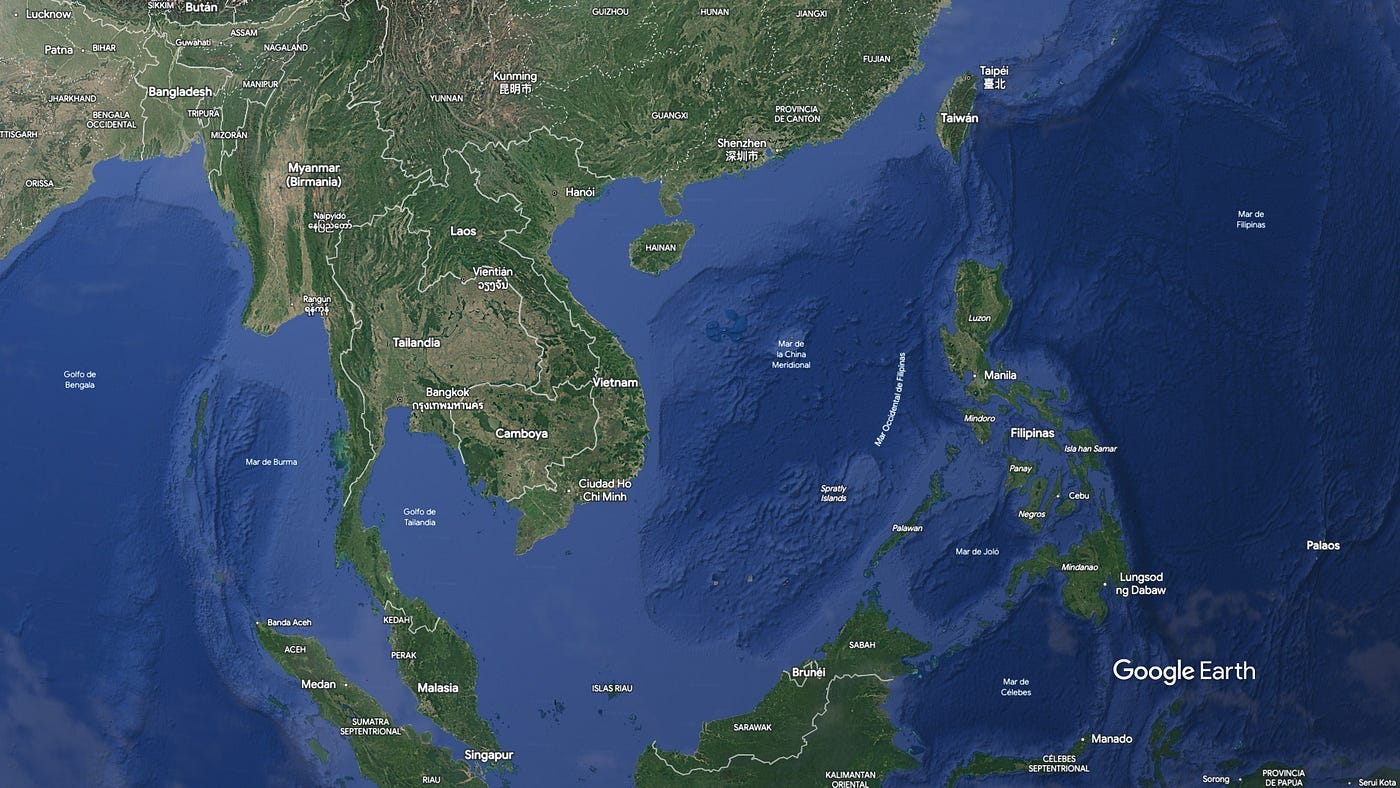
Satellite view of the South China Sea Strategic Node(SCSN). The image provides the spatial reference for the Region axis, illustrating the geographical configuration of the system and the interaction among the principal maritime actors of the Indo-Pacific. Source: Google Earth
✍️ Apolítik0 → ← PGT
∞ → ← ∞
ERE Axis: Region
Guiding Question
What makes the South China Sea a strategic region within the international system?
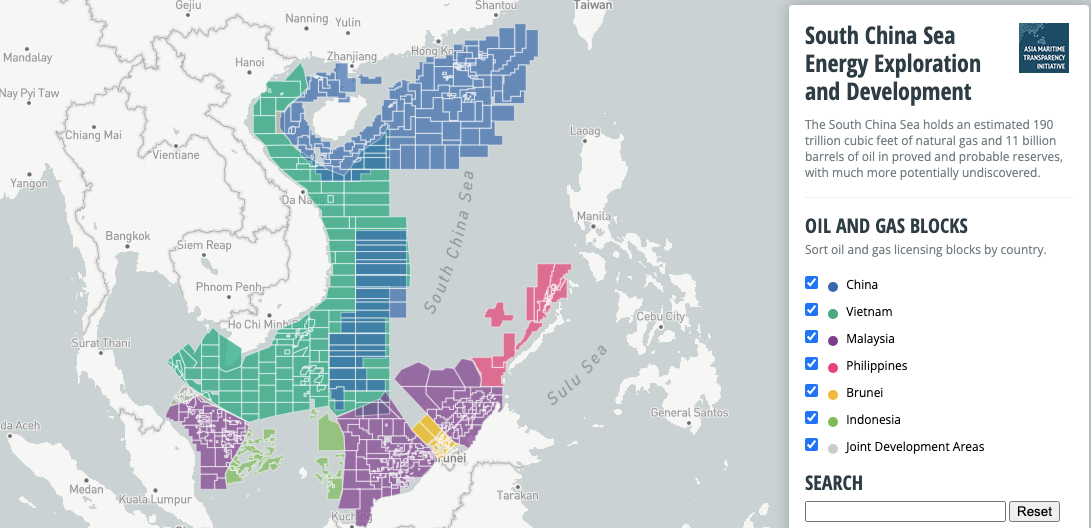
The South China Sea is one of the world’s most strategically significant maritime regions because it concentrates interests that extend far beyond competing sovereignty claims. Its location between the Indian and Pacific Oceans, the convergence of some of the world’s busiest maritime trade routes, the presence of substantial energy and fisheries resources, and overlapping territorial claims make it a focal point where national, regional, and global interests continuously intersect.
Its strategic importance derives not only from geography but from the role it plays in shaping the balance of power across the Indo-Pacific. For China, it represents a vital component of maritime security and regional strategic projection. For the Philippines, Vietnam, Malaysia, and Brunei, it is closely linked to sovereign rights, national security, and economic resources. For the United States and other extra-regional powers, the South China Sea remains essential to preserving freedom of navigation, regional stability, and the uninterrupted flow of global maritime commerce.
This convergence of interests transforms the South China Sea into a strategic region where the actions of one actor inevitably influence the decisions of others. Naval deployments, diplomatic initiatives, legal disputes, infrastructure development, and freedom of navigation operations should not be understood as isolated events but as interconnected expressions of a continuously evolving strategic environment.
Rather than representing a series of recurring crises, the South China Sea functions as a strategic system in which geography, power, law, economics, and security interact simultaneously. Understanding the region from this broader perspective helps explain why it continues to occupy a central position in twenty-first-century geopolitical competition.
Strategic Event
The progressive consolidation of political, legal, military, and administrative presence by multiple actors across the South China Sea to strengthen their strategic position within the region.
Observable Indicator
An increase in naval patrols, military exercises, infrastructure construction and expansion on islands and reefs, diplomatic initiatives, international legal actions, and freedom of navigation operations conducted by both regional and extra-regional actors.
Observable Variable
Strategic Territorialization
Definition
The process through which a geographical space progressively acquires strategic significance through sustained presence, functional projection, and the generation of legitimacy before becoming a territory under effective control.
Operational Status
Consolidating.
Systemic Observation
The strategic relevance of the South China Sea extends beyond its geographical location. It stems from the continuous interaction among actors seeking to influence the functioning of the region. This persistent competition transforms the South China Sea into a central component of the international system and reinforces its role as one of the most important strategic arenas of the Indo-Pacific.
∞ → El equilibrio decide ← ∞
∞ ⟷ ∞
메타데이터
- post_id
- b5f5410f5355
- slug
- south-china-sea-strategic-system-scss-b5f5410f5355
- url
- https://medium.com/tgp-strategic-notes/south-china-sea-strategic-system-scss-b5f5410f5355
- canonical_url
- https://medium.com/tgp-strategic-notes/south-china-sea-strategic-system-scss-b5f5410f5355
- author_url
- https://medium.com/@apolitik0
- status
- ok
- fetched_at
- 2026-07-08 17:17:42