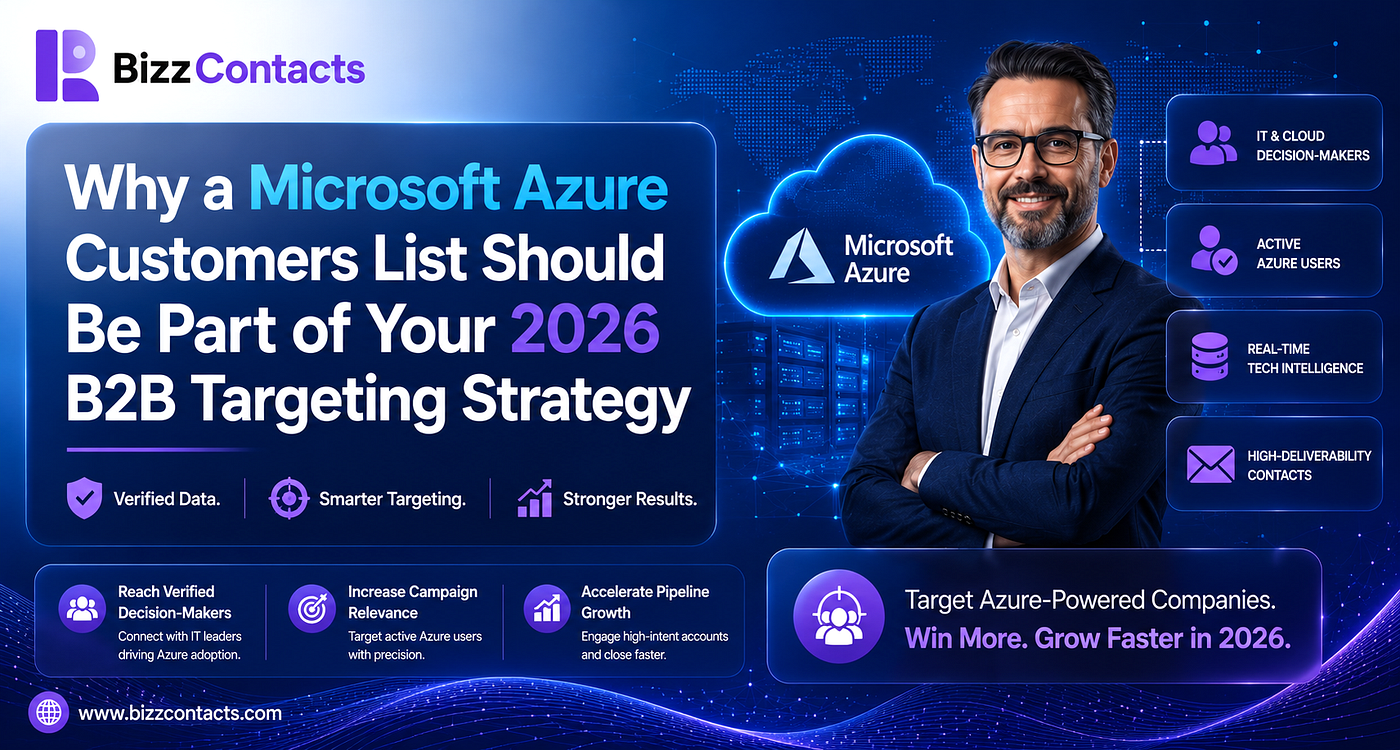
Why a Microsoft Azure Customers List Should Be Part of Your 2026 B2B Targeting Strategy
Cloud infrastructure decisions rarely stay contained to a single team anymore. What starts as an IT platform choice eventually shapes how a…
Why a Microsoft Azure Customers List Should Be Part of Your 2026 B2B Targeting Strategy
Cloud infrastructure decisions rarely stay contained to a single team anymore. What starts as an IT platform choice eventually shapes how a company builds software, secures data, runs analytics, and scales operations. For companies running on Microsoft Azure, that influence extends across engineering, security, data, and increasingly the broader business.
For B2B teams selling into these accounts, that scale creates a clear opportunity. If you know which companies run Azure, and who inside those companies owns cloud infrastructure decisions, you can skip the guesswork and go straight to accounts where your product or service is actually relevant.
The challenge is that cloud platform usage isn’t always easy to confirm from the outside. Ownership of an Azure environment can sit with a CTO, a VP of Engineering, a cloud architect, or a dedicated infrastructure team depending on the company, and manually verifying “does this account run Azure, and who manages it” doesn’t scale across a real pipeline.
This is the gap a Microsoft Azure customers list is designed to close.
What Is a Microsoft Azure Customers List, and Why Does It Matter?
A ***Microsoft Azure customers list*** is a curated dataset of companies confirmed to use Azure as part of their cloud infrastructure, typically segmented by company size, industry, and region, along with contact details for the roles most likely to influence or own cloud infrastructure decisions, such as CTOs, VPs of Engineering, cloud architects, and IT infrastructure leaders.
Instead of running broad outbound campaigns and hoping a fraction of recipients happen to be Azure users, teams working from a verified list can target accounts where the technology fit is already confirmed. That turns prospecting into a far more precise, higher-converting motion.
This matters most for a specific set of sellers: cloud consulting and managed services firms, DevOps and infrastructure tooling vendors, cybersecurity companies focused on cloud environments, data and analytics platforms built for Azure, systems integrators, and any B2B company whose product connects to or extends an Azure environment.
For these teams, confirmed cloud platform usage is often one of the strongest available signals of fit, stronger than industry or company size alone.
What Makes a High-Quality Azure Customers List
Technology usage lists vary significantly in reliability, and the difference shows up fast once a team starts working the data.
Freshness is the foundation. Cloud platforms shift quickly, companies migrate between providers or adopt multi-cloud strategies, and a list built on outdated data will send reps toward accounts that no longer match.
Depth of technology signal adds real precision. Some accounts run Azure as their primary cloud provider, while others use it alongside AWS or Google Cloud as part of a multi-cloud setup. Knowing the extent and context of Azure usage helps a team craft a far more relevant pitch.
Role-level contact accuracy is what makes the list actionable. Knowing a company runs Azure is useful. Having a verified contact for the person who actually owns or influences that infrastructure is what turns research into a real conversation.
Firmographic context, including company size, industry, and geography, helps teams prioritize which accounts to approach first instead of treating every match as equally valuable.
And usability ties it together. A list that exports cleanly into a CRM or outreach platform gets used consistently, while one that requires heavy manual cleanup tends to get abandoned after the first attempt.
How Sales, Marketing, and Partner Teams Use Azure Customers Lists
The most direct use case is account-based prospecting. Sales and business development teams use the list to build target account territories and tailor outreach around a prospect’s existing Azure investment, rather than opening with a generic cloud pitch.
Marketing teams use the same data to build technology-based segments for account-based marketing campaigns, so content and ad spend reach companies with a confirmed technical fit instead of a broad, unqualified audience.
Partner and channel teams, particularly cloud consulting and managed services providers, use the data to identify accounts that may be candidates for a migration project, cost optimization engagement, or infrastructure expansion, since cloud environments tend to grow in complexity over time.
Security and compliance-focused vendors use Azure customer data to prioritize accounts where their specific cloud security or governance tools are directly relevant.
And revenue operations teams often use this data to enrich existing CRM records, closing technology and contact gaps for accounts already in the pipeline that lack verified infrastructure details.
How to Choose an Azure Customers List Provider
With several data providers offering technology-based lists, a handful of factors typically separate a genuinely useful list from one that creates more cleanup work than value.
Data freshness deserves a direct question. Cloud infrastructure data older than a year starts losing reliability quickly, given how often companies adjust their cloud strategy.
Technology context matters beyond a simple yes or no. Understanding whether Azure is a primary platform or one part of a multi-cloud environment helps a team craft messaging that actually lands.
Contact verification is just as important as company-level accuracy. A list of the right accounts with outdated titles or unreachable contacts still requires significant manual work before it’s usable.
Export flexibility and CRM compatibility determine how quickly a team can put the data into motion rather than losing time reformatting it after the fact.
***BizzContacts***, a New York-based B2B contact data provider and marketing and sales intelligence company, is one option worth evaluating for teams building Azure-focused targeting. The company specializes in helping businesses connect with verified decision-makers through professional contact data, technology and firmographic intelligence, buying signals, and intent data.
The Bigger Picture: Technology-Based Targeting in B2B Sales
A Microsoft Azure customers list reflects a broader shift in how B2B teams approach targeting: prioritizing confirmed technology usage over assumptions based on industry or company size alone.
Firmographic filters narrow a market, but they don’t confirm whether a specific infrastructure need actually exists inside an account. Technology usage data does, which is why it continues to gain ground as a core layer in account-based strategies rather than a niche tactic.
As intent data, buying signals, and technographic intelligence continue to mature, expect technology-based customer lists to become a standard part of how teams target any major cloud or platform ecosystem, not just Azure, but the broader set of infrastructure tools that create downstream demand for complementary products and services.
Conclusion
For any company selling into Azure environments, whether through consulting, security, DevOps tooling, or complementary infrastructure software, a Microsoft Azure customers list turns a vague sense of fit into a targeted, verified prospecting motion. The real value depends on data freshness, technology context, and verified contact details, since a list is only as useful as a team’s ability to act on it.
Providers like BizzContacts pair this kind of technology and contact intelligence with broader sales intelligence tools, helping revenue teams move from “this company might run Azure” to “here’s exactly who to contact, and why.”
메타데이터
- post_id
- b60ff785426e
- slug
- why-a-microsoft-azure-customers-list-should-be-part-of-your-2026-b2b-targeting-strategy-b60ff785426e
- url
- https://medium.com/@bizzcontactsllc/why-a-microsoft-azure-customers-list-should-be-part-of-your-2026-b2b-targeting-strategy-b60ff785426e
- canonical_url
- https://medium.com/@bizzcontactsllc/why-a-microsoft-azure-customers-list-should-be-part-of-your-2026-b2b-targeting-strategy-b60ff785426e
- author_url
- https://medium.com/@bizzcontactsllc
- status
- ok
- fetched_at
- 2026-08-10 14:42:50