How the U.S. Air Force Is Bringing Old Military Aircraft Back to Life With 3D Printing
The Most Practical Use of 3D Printing Isn’t Futuristic at All
How the U.S. Air Force Is Bringing Old Military Aircraft Back to Life With 3D Printing
The Most Practical Use of 3D Printing Isn’t Futuristic at All
It’s helping the U.S. Air Force keep very old aircraft flying.
For years, 3D printing has been marketed as the technology of the future. We were told it would reinvent manufacturing, decentralize production, and unlock forms that traditional methods could never achieve.
All of that may still be true.
But one of the most compelling uses of additive manufacturing right now is far less glamorous: making sure old machines don’t die because nobody makes their parts anymore.
That is exactly why the U.S. Air Force is investing in a new phase of metal additive manufacturing research with the University of Oklahoma and Oak Ridge National Laboratory. The program’s goal is not to build something flashy or experimental. It is to solve a stubborn, expensive, very real problem: how do you sustain aircraft that can remain in service for more than 60 years when replacement parts become difficult — or impossible — to source? Phase II of the effort, announced on March 23, 2026, carries an $8.8 million award and brings together OU, ORNL, the Air Force Sustainment Center, the Air Force Research Laboratory, and the Oklahoma City Air Logistics Complex.
That question matters far beyond military aviation.
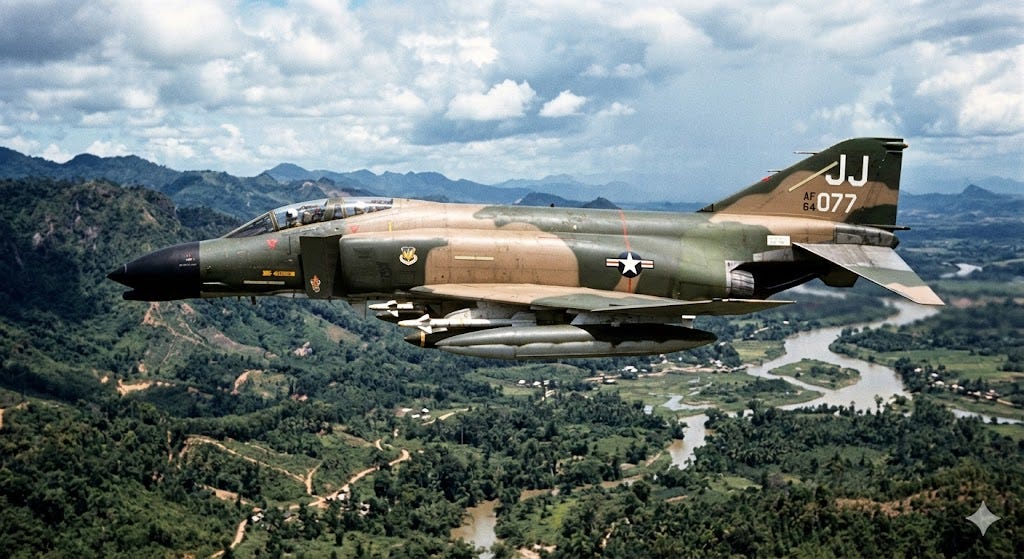
Because the real bottleneck in long-life industrial systems is often not design. It is continuity. Supply chains change. Tooling disappears. Vendors shut down. Expertise evaporates. And suddenly, the challenge is not how to improve a platform, but how to keep it operational at all. The OU-led program is explicitly aimed at legacy weapon systems and legacy aircraft, where parts scarcity has become a structural sustainment problem.
This is where 3D printing becomes strategically interesting.
In the Air Force program, the focus is on metal additive manufacturing, especially laser powder bed fusion, to produce replacement components for aging aircraft. The attraction is obvious: instead of relying on obsolete tooling or fragmented supply chains, you can manufacture complex parts on demand. That alone is valuable. But it is only the first layer of the story.
The harder problem is certification.
In aerospace, and especially in military sustainment, it is not enough to print a part that looks right. The part has to be traceable, repeatable, and certifiable for airworthiness. Today, that process is still painfully fragmented. Materials are qualified. Machines are qualified. Geometry is evaluated. Process parameters are treated almost as isolated islands. According to OU, that makes certification slow, expensive, and difficult to scale.
So the real innovation here is not just additive manufacturing. It is the shift from validating isolated variables to validating a digital process.
The new approach aims to digitally track the entire manufacturing flow — from design file to finished component — so the process itself becomes part of the evidence. Instead of asking whether one exact parameter set on one exact machine produced one acceptable part, the program is trying to establish a data-driven qualification framework that can work across multiple machines and platforms while still meeting military safety requirements. That is a much bigger idea than “we printed a spare part.” It is closer to building a trustworthy manufacturing language.
Oak Ridge has been pushing this concept for years through what it calls a “digital thread.” In ORNL’s description, that thread links manufacturing data across the entire process — from design and feedstock to print build and material testing. Their Peregrine software adds real-time quality monitoring for powder bed 3D printing, using imaging data and AI-based analysis to detect anomalies during production rather than long after the build is complete.
That matters because defects in additive manufacturing do not always announce themselves politely. They can emerge at tiny spatial scales, in fractions of a second, and remain invisible until much later. ORNL says Peregrine was designed to catch process anomalies in real time and support a richer quality record for each part. In the context of the Air Force program, that supports a broader ambition: making components that are, in the words used around the initiative, effectively “born ready to fly.”
And Phase II expands the mission further.
The first phase centered on producing replacement components, especially via laser powder bed fusion. The second phase adds something even more important for real-world maintenance environments: repair. OU says the new stage will look not only at manufacturing new parts, but also at repairing existing ones, while using AI and in-situ monitoring for quality assurance. That changes the scope from a manufacturing experiment into something much closer to a full sustainment strategy.
This is why I think stories like this deserve more attention than many of the headline-grabbing “future of 3D printing” demos.
Because this is what industrial maturity looks like.
Not a viral prototype. Not a concept rendering. Not a one-off design object engineered to prove that something can be printed. Real maturity is when a technology becomes useful inside messy, high-consequence systems with long service lives, compliance burdens, maintenance constraints, and no appetite for gimmicks.
In that environment, the winning question is not, “Can 3D printing make something impressive?”
It is, “Can 3D printing make operations more resilient?”
The Air Force program suggests that the answer is increasingly yes — but only if additive manufacturing is paired with software, monitoring, standardization, and a serious data architecture. The printing hardware matters. The metallurgy matters. But the deeper value may come from process intelligence: the ability to capture enough evidence during production that qualification becomes faster, more portable, and less dependent on repeating the same expensive validation cycle every time a part changes hands or a machine changes location.
And that lesson applies far beyond defense.
Every industry with long-lived assets — aviation, rail, energy, industrial equipment, even some medical and public infrastructure systems — will eventually face the same basic problem. Machines outlive their original supply chains. Spare parts become boutique artifacts. Lead times stretch. Costs rise. Downtime becomes harder to justify.
What additive manufacturing offers in that world is not magic. It offers optionality.
And optionality is underrated.
It means you do not have to choose between stockpiling parts forever and hoping an obsolete supplier still exists in ten years. It means you can start imagining a future where the part, the process, and the quality record are all linked in a way that makes manufacturing more local, more flexible, and more resilient.
That is a much less cinematic story than “3D printing will change everything.”
But it may be the truer one.
Because sometimes the most meaningful technology shift is not about making the next revolutionary object.
It is about keeping critical systems alive when the old ways of making and sourcing no longer work.
And that may turn out to be one of the most important things 3D printing ever does.
메타데이터
- post_id
- b62c9b3a9c1b
- slug
- how-the-u-s-air-force-is-bringing-old-military-aircraft-back-to-life-with-3d-printing-b62c9b3a9c1b
- url
- https://medium.com/@pippopipposky/how-the-u-s-air-force-is-bringing-old-military-aircraft-back-to-life-with-3d-printing-b62c9b3a9c1b
- canonical_url
- https://medium.com/@pippopipposky/how-the-u-s-air-force-is-bringing-old-military-aircraft-back-to-life-with-3d-printing-b62c9b3a9c1b
- author_url
- https://medium.com/@pippopipposky
- status
- ok
- fetched_at
- 2026-07-11 11:04:43