🚀AWS Strands Agents Are the Secret Sauce Behind Cloud-Scale Agentic AI
Artificial Intelligence is shifting from passive prediction to active autonomy. The next frontier is not just generating text or images —…
🚀AWS Strands Agents Are the Secret Sauce Behind Cloud-Scale Agentic AI
Artificial Intelligence is shifting from passive prediction to active autonomy. The next frontier is not just generating text or images — it’s about AI agents that can observe, reason, decide, execute, and iterate.
This is where AWS Strands Agents step into the spotlight.
Think of Strands Agents as:
🧠 AI + Cloud + Autonomy → Operational Intelligence
Strands is AWS’s emerging agentic framework that allows developers to build autonomous, multi-step, multi-modal, cloud-native agents capable of interacting with AWS services, external APIs, data streams, and user-defined workflows.
These agents can:
- monitor systems
- trigger actions
- perform reasoning
- coordinate with other agents
- learn from state
- and operate 24/7 without human intervention
This article breaks down Strands Agents in an easy-to-understand way, includes hands-on examples, architecture diagrams, and runnable Python SDK-style demos.
🧩 What Are AWS Strands Agents?
AWS Strands Agents are modular, programmable autonomous agents designed to operate in cloud environments. They combine:
- LLM reasoning
- memory management
- planning
- tool use
- secure AWS execution
- event-driven workflows
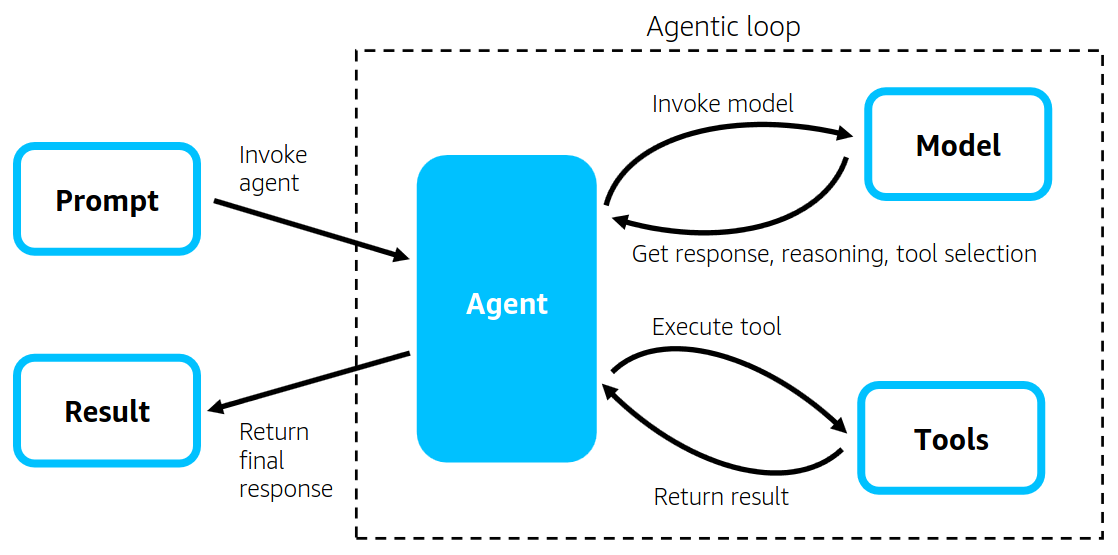
They are built to connect AI cognition with real-world cloud operations.
🛠️ Key Features
1️⃣ Multi-Agent Collaboration
Strands supports swarms of specialized agents working together:
- Planner Agent
- Execution Agent
- Data Fetcher Agent
- Validator Agent
- User Interface Agent
Each agent can have its own personality, goals, tools, and constraints.
[embed]
2️⃣ Deep AWS Integration
Strands agents can call:
- Lambda
- DynamoDB
- S3
- Bedrock models
- CloudWatch
- EC2/Batch tasks
- EventBridge
- Step Functions
This means tasks like “Monitor EC2 CPU and scale automatically” can be fully automated by an agent.
3️⃣ Real-Time Event Handling
Strands agents continuously monitor:
- Logs
- Metrics
- Webhooks
- Data streams
- API endpoints
And respond instantly.
4️⃣ Autonomous Planning + Execution
Agents can plan multi-step workflows dynamically — not pre-coded logic.
Example: A ML agent can decide:
- Fetch new training data
- Validate schema
- Trigger re-training job
- Evaluate metrics
- Deploy if accuracy improves
5️⃣ Memory & State Management
Strands includes persistent memory layers:
- short-term working memory
- long-term memory in DynamoDB/S3
- episodic memory from previous runs
This allows agents to evolve over time.
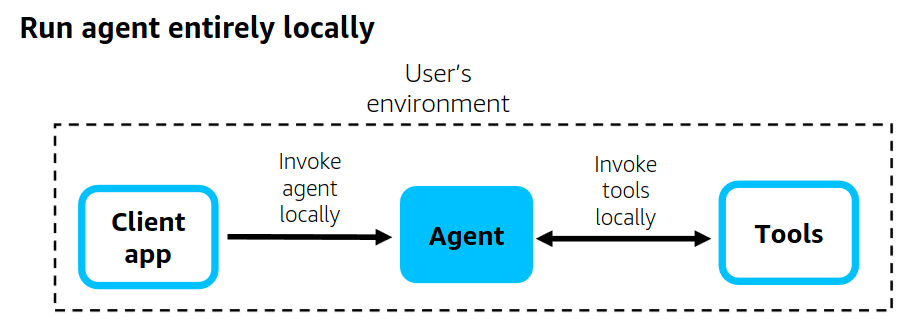
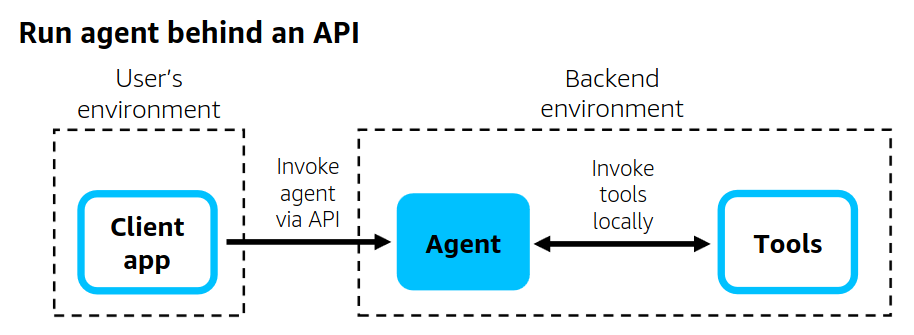
🏗️ Architecture: How Strands Agents Work
Below is a simplified architecture view:
┌────────────────────────────────────────────┐
│                User / System               │
└────────────────────────────────────────────┘
                   │
                   ▼
┌────────────────────────────────────────────┐
│           Strands Orchestration Layer      │
│ - Agent Registry                           │
│ - Memory Manager                           │
│ - Tools & APIs                             │
│ - Secure Execution Sandbox                 │
└────────────────────────────────────────────┘
         │                 │
         ▼                 ▼
┌────────────────┐   ┌───────────────────────┐
│ Planner Agent  │   │  Executor Agent       │
└────────────────┘   └───────────────────────┘
         │                 │
         ▼                 ▼
  AWS Services (S3/Lambda/DynamoDB/EC2/Bedrock)
🧪 Hands-On Demo: Building a Strands Agent
⚠️ Note: AWS Strands is in early-access ecosystem; below is a conceptual demo using a typical AWS-style SDK approach.
We’ll create a simple agent that:
- monitors an S3 bucket
- detects when a new file arrives
- reads content
- summarizes it using an LLM
- stores the summary in DynamoDB
📌 Step 1: Install Dependencies
pip install boto3 awsstrands openai📌 Step 2: Define the Agent
from awsstrands import StrandsAgent, Memory
import boto3
import json
s3 = boto3.client("s3")
dynamodb = boto3.resource("dynamodb")
table = dynamodb.Table("summaries")class FileSummaryAgent(StrandsAgent):
def observe(self, event):
# event contains S3 bucket and file details
return {
"bucket": event["bucket"],
"key": event["key"]
} def think(self, observation):
# read the file contents
response = s3.get_object(
Bucket=observation["bucket"],
Key=observation["key"]
)
text = response["Body"].read().decode("utf-8") # summarize using LLM
summary = self.llm(
f"Summarize the following text:\n\n{text}"
) return summary def act(self, result):
# store summary in DynamoDB
table.put_item(
Item={
"file": "latest",
"summary": result
}
)
return "Summary written to DynamoDB."✔️ Expected Output
Agent triggered by S3 event...
Downloaded file: reports/input1.txt
LLM summary complete.
Writing summary to DynamoDB...
Success: Summary stored.
👥 Example: Multi-Agent Collaboration Flow
Let’s define two agents:
- Watcher Agent → detects S3 update
- Summarizer Agent → performs LLM summarization
Watcher Agent
class WatcherAgent(StrandsAgent):
    def observe(self, event):
        return event
def think(self, obs):
if obs["eventType"] == "ObjectCreated":
return "NEW_FILE"
return None def act(self, result):
if result == "NEW_FILE":
return self.call_agent("SummarizerAgent", obs)Summarizer Agent
class SummarizerAgent(StrandsAgent):
    def observe(self, data):
        bucket = data["bucket"]
        key = data["key"]
        text = s3.get_object(Bucket=bucket, Key=key)["Body"].read().decode()
return text def think(self, text):
return self.llm(f"Summarize:\n{text}") def act(self, summary):
table.put_item(Item={"id": "latest", "summary": summary})
return "Summary stored."🏁 Example Output
WatcherAgent detected new S3 object.
Delegating job to SummarizerAgent...
SummarizerAgent reading file...
Generated summary (198 words).
Writing to DynamoDB...
Complete.
📊 Real-World Use Cases
🔐 1. Security Automation
- detect log anomalies
- initiate incident workflow
- auto-remediate IAM risks
🤖 2. MLOps Autopilot
- data drift detection
- retraining
- model validation
- rollback
📈 3. FinOps Optimization
- cost prediction
- unused resource detection
- auto-stop idle workloads
🏥 4. Healthcare Automation
- process medical documents
- schedule tasks
- extract structured data
🧬 5. Research & Data Pipelines
- ingest data
- clean and validate
- generate insights
🔮 The Future of AWS Strands Agents
AWS is clearly aiming toward:
- cloud-native autonomous AI
- LLM-driven automation
- multi-agent orchestration
- continuous operation without human prompts
Strands Agents may eventually integrate with:
- Amazon Q (developer agents)
- Bedrock Guardrails
- Step Functions composer
- CodeWhisperer AI coders
Expect AWS to turn Strands into the backbone of agent-based enterprise automation.
🧠 Final Thoughts
AWS Strands Agents represent a paradigm shift in how AI interacts with cloud infrastructure.
Instead of just consuming information, AI can now:
- watch
- think
- decide
- execute
- learn
- repeat
All autonomously.
We are entering a world where AI agents operate as cloud-native employees, tirelessly performing complex workflows.
메타데이터
- post_id
- b62fcb0aaafd
- slug
- aws-strands-agents-are-the-secret-sauce-behind-cloud-scale-agentic-ai-b62fcb0aaafd
- url
- https://aws.plainenglish.io/aws-strands-agents-are-the-secret-sauce-behind-cloud-scale-agentic-ai-b62fcb0aaafd
- canonical_url
- https://aws.plainenglish.io/aws-strands-agents-are-the-secret-sauce-behind-cloud-scale-agentic-ai-b62fcb0aaafd
- author_url
- https://medium.com/@greekofai
- status
- ok
- fetched_at
- 2026-06-09 15:37:30