Cassandra Love Lambert Of C-Love: 5 Things I Wish Someone Had Told Me Before I Switched Careers
An Interview with Phil La Duke
Cassandra Love Lambert Of C-Love: 5 Things I Wish Someone Had Told Me Before I Switched Careers
An Interview with Phil La Duke

Your body will tell you the truth before your mind does. I ignored tension and burnout for years. When I finally listened, it became my compass.
You don’t need to have the full plan — you just need the next aligned step. My career shifted when I allowed clarity to unfold instead of forcing a five-year map.
Every pivot will feel like a loss and a rebirth at the same time. I had to grieve old versions of myself to make room for who I was becoming.
Not everyone will understand your choices — and that is okay. Leaving stable paths confused some people, but inner alignment mattered more than external approval.
Healing is the greatest career asset you’ll ever have. The more I healed, the more confident, creative, and purpose-led my work became.
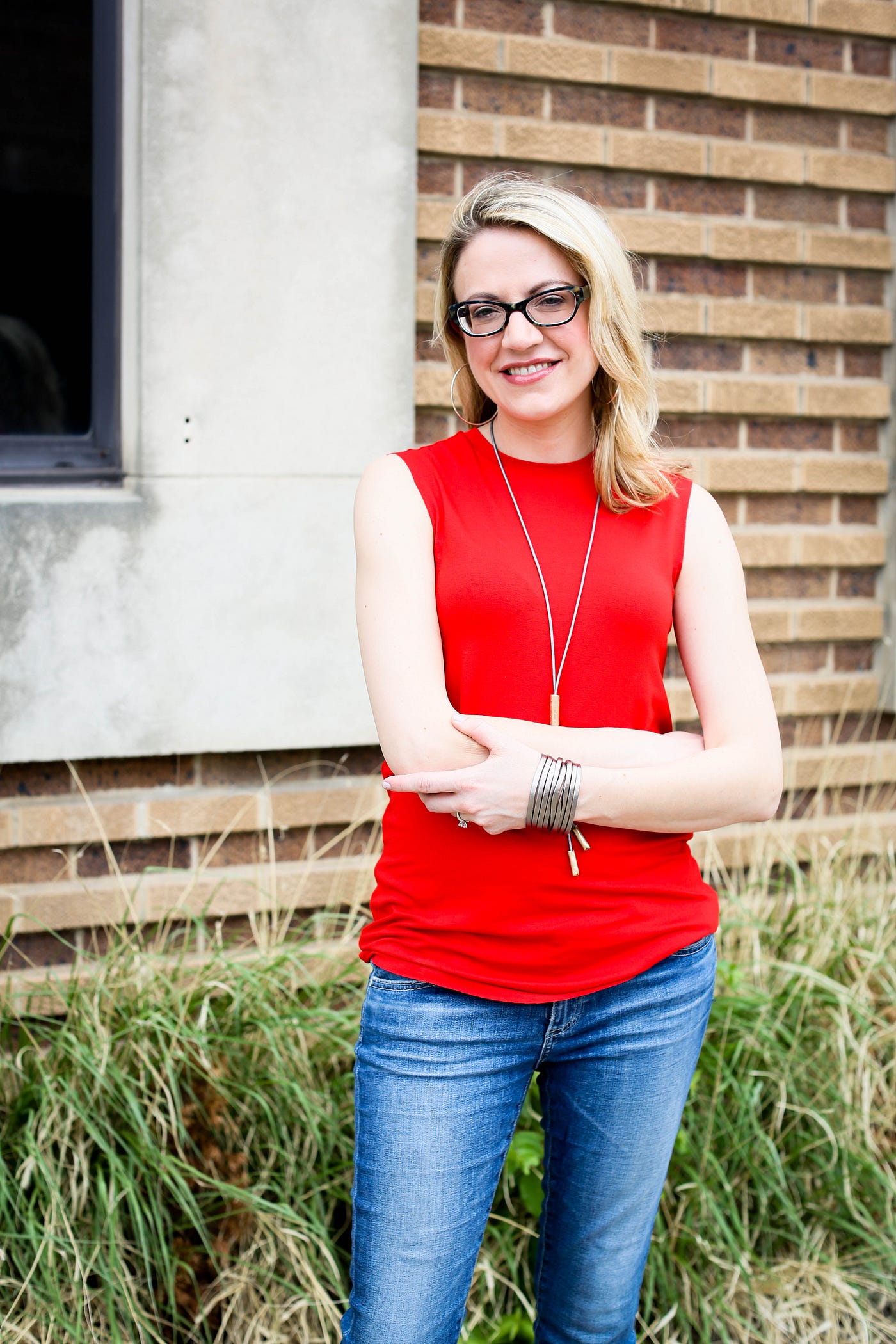
According to the US Department of Labor, “The average person will change careers 5–7 times during their working life. Approximately 30% of the total workforce will now change jobs every 12 months.” The statistic is disconcerting for many. After all, we tend to think of our careers as a linear progression of increased skills and (ideally) earning power. We reached out to business professionals who have successfully switched careers in hopes of gleaning bits of their wisdom. As part of this series, we had the pleasure of speaking with Cassandra Love Lambert. Cassandra Love Lambert is a Trauma Trained Somatic Transformational Coach, Artist, and founder of C-Love. Certified in Clinical EFT, Brainspotting, and Somatic Attachment Therapy, she guides women on the path from emotional survival to embodied healing. A survivor of childhood sexual abuse and emotional neglect, Cassandra has transformed her personal journey through trauma into a mission to help others reclaim safety, self-trust, and personal power.
Thank you so much for joining us in this interview series! Our readers would like to get an idea of who you are and where you came from. Can you tell us a bit about your background? Where do you come from? What are the life experiences that most shaped your current self?
I grew up in a childhood environment shaped by instability, sexual abuse, and emotional abandonment. I didn’t have the language for trauma back then, but I carried the symptoms into adulthood — hypervigilance, dissociation, perfectionism, and a deep sense of “not enough.” For years, I lived in survival mode without knowing that’s what it was.
What shaped me most wasn’t just the trauma itself, but the long journey of finding my way back to myself. Healing taught me how to be in my body, how to feel again, and how to trust emotions I spent decades suppressing. That journey became the foundation of who I am today and the work I do now.
Let’s jump right in. Can you please tell us about the career changes you’ve made? What prompted you to make these changes? Why didn’t you make the changes sooner?
My career path wasn’t linear. I shifted from creative work to corporate roles, then into helping professions, and eventually into somatic trauma work. Every transition was me trying to find a way to feel aligned, purposeful, and safe.
The real catalyst for change came when my nervous system finally hit its limit. I realized I couldn’t keep building careers on top of unresolved pain. I didn’t make the switch sooner because I didn’t yet believe I was worthy of the life I wanted — and I didn’t yet have the internal safety to pursue it. Once I healed enough to see myself clearly, everything changed.
Have you ever made a career change only to find that your decision to do so was not at all what you expected? If so, how did you handle things?
Absolutely. There were roles that looked ideal on paper but felt suffocating once I stepped into them. I handled those moments by listening to my body — the tension, the heaviness, the anxiety. Those sensations became information instead of a personal failing.
Instead of forcing myself to “tough it out,” I took those missteps as redirection. Every pivot taught me what I didn’t want, which ultimately led me to what I was meant to do.
The statistic we cited above says that people might change careers about five times during their working life. In recent times some people have questioned the utility or benefit of college because of the often crushing burden of student loan debt. On top of that, in light of this trend that people can expect to change careers five times, how can anyone hope to prepare themselves properly through college for five careers?
We can’t — at least not through college alone. College can offer education, exposure, and discipline, but it doesn’t prepare us for the internal work required to navigate multiple career shifts.
What prepares us is emotional intelligence, nervous system resilience, adaptability, and self-awareness. Those aren’t taught in a classroom — they’re cultivated through life experience and healing.
The world is changing, but so are we. Our ability to evolve is what prepares us for multiple careers, not a single degree.
The other statistic we cited above is troubling; 30% of the workforce will switch jobs every 12 months. The cost to employers — not just in dollars and cents, but in customer service, customer loyalty, and other less tangible ways. What should the smart business executive do to retain talent, if anything?
Leaders need to understand one truth: people stay where they feel safe, valued, and seen.
Retention isn’t about perks. It’s about emotional culture — psychological safety, clear communication, fair boundaries, and genuine humanity. When leaders support their people as whole humans, not just labor sources, turnover drops naturally.
I personally know of at least five people who decided to quit their jobs (three gave their notice immediately) because they “didn’t like the person the job was making them become.” From your experience and perspective, is this sentiment a broader trend? How important is it for an individual’s personal values to align with the values of an organization? How can companies help correct this?
Yes — this is a growing trend, and honestly, a necessary one.
People are no longer willing to abandon themselves for a paycheck. When a job forces you into numbing, burnout, or survival mode, your body will eventually rebel. Alignment between personal values and company values isn’t a luxury; it’s a mental health requirement.
Companies can correct this by letting employees contribute to culture decisions, encouraging honest feedback, modeling emotional intelligence at the leadership level, and ensuring their values aren’t just words on a wall but lived behaviors.
What are a few things that employers, managers, and executives can do to ensure that workers enjoy their jobs?
● Cultivate psychological safety
● Communicate clearly and compassionately
● Respect boundaries and personal time
● Create opportunities for growth that align with employees’ strengths
● Lead with transparency rather than control
● Offer flexibility and trust
People enjoy work when they feel treated like humans, not cogs.
Can you share a few things that employers, managers, and executives should be doing to improve their company work culture?
● Model emotional regulation — culture starts with leadership’s nervous system
● Encourage mental health days without shame
● Invite community input into decision-making
● Address conflict without blame
● Make rest and recovery part of the workflow
● Ensure diversity isn’t performative but embodied
Good culture doesn’t happen by accident. It’s built intentionally, day by day.
Some business leaders believe that the solution lies in the gig economy. Do you believe this trend supports this belief? Do you think the gig economy lends itself to a sustainable and stable business model?
The gig economy offers freedom, autonomy, and creative experimentation — things traditional employment often lacks. But it also comes with instability, self-responsibility, and a lack of safety nets.
It’s great for individuals with strong internal regulation, adaptability, and entrepreneurial drive. But it’s not sustainable for everyone, and it shouldn’t replace the responsibility companies have to create humane work environments.
Ok, thank you for that. Here is the main question of this interview. What are your “5 Things I Wish Someone Had Told Me Before I Switched Careers?” (Please share a story or example for each.)
- Your body will tell you the truth before your mind does. I ignored tension and burnout for years. When I finally listened, it became my compass.
- You don’t need to have the full plan — you just need the next aligned step. My career shifted when I allowed clarity to unfold instead of forcing a five-year map.
- Every pivot will feel like a loss and a rebirth at the same time. I had to grieve old versions of myself to make room for who I was becoming.
- Not everyone will understand your choices — and that is okay. Leaving stable paths confused some people, but inner alignment mattered more than external approval.
- Healing is the greatest career asset you’ll ever have. The more I healed, the more confident, creative, and purpose-led my work became.
Can you please give us your favorite “Life Lesson Quote”? Can you share how that was relevant to you in your life?
“Your story didn’t break you — it built you.” For years, I believed my trauma made me damaged. But healing taught me that everything I survived gave me empathy, resilience, and purpose. It didn’t destroy me — it shaped me into someone who can walk others home.
We are very blessed that some very prominent names in Business, VC funding, Sports, and Entertainment read this column. Is there a living person in the world or in the US with whom you would love to have a private breakfast or lunch, and why? He or she might just see this if we tag them.
I would love a private breakfast with Oprah. She understands trauma, survival, reinvention, and storytelling in a way that mirrors so much of my own journey. A conversation with her would feel deeply aligned and incredibly meaningful.
Our readers often like to follow our interview subjects’ careers. How can they further follow your work online?
You can find me and learn more about my offerings at:
**www.CassandraLoveLambert.com**
IG: @CassandraLoveLambert
FB: C-Love Somatic Healing
Thank you for these fantastic insights. We greatly appreciate the time you spent on this.
Thank you so much for having me. I’m grateful for the opportunity to share my story and my heart.
About The Interviewer: Phil La Duke is a popular speaker & writer with thousands of works in print. He has contributed to Authority, Buzzfeed, Entrepreneur, Monster, Thrive Global, and many more magazines and is published on all inhabited continents. He is the author of four books and a contributor to one more. His latest book Stop. Don’t Shoot! Preparing For and Surviving Mass Shootings and Rampage Attacks. deals with identifying and preventing Mass Shootings. La Duke believes this subject is so important that he sent copies to the POTUS, the VPOTUS, and every US Senator who was seated as of January 7, 2023.
His first book is a visceral, no-holds-barred look at worker safety, I Know My Shoes Are Untied! Mind Your Own Business. An Iconoclast’s View of Workers’ Safety. His second book Lone Gunman: Rewriting the Handbook On Workplace Violence Prevention that deals with workplace violence, particularly directed at women, is listed as #16 on Pretty Progressive magazine’s list of 49 books that powerful women study in detail. His third book, Blood In My Pockets Is Blood On Your Hands is a step-by-step guide to getting worker safety right, and Loving An Addict: Collateral Damage Of the Opioid Epidemic is due to be released in 2025. La Duke also contributed a chapter to 1% Safer, a not-for-profit book, written by the “top game-changers and global thought leaders.”
Expertfile lists Phil La Duke as a top 25 thought leader in multiple areas. In addition to his writing, Phil sits on eight Biomedical Research Oversight Boards and is a highly sought-after speaker. La Duke is currently employed as a COVID Compliance and Production Safety Consultant for the film and television industry.
Follow Phil on Twitter @philladuke, and on Facebook at https://www.facebook.com/Phil-La-Duke-320996002174991/,
His author’s page on Amazon https://www.amazon.com/~/e/B07G799XC6, or read his weekly blog www.philladuke.wordpress.com that he updates with the regularity of a turtle with too much rice in its diet.
메타데이터
- post_id
- b63dfc172f3e
- slug
- cassandra-love-lambert-of-c-love-5-things-i-wish-someone-had-told-me-before-i-switched-careers-b63dfc172f3e
- url
- https://medium.com/authority-magazine/cassandra-love-lambert-of-c-love-5-things-i-wish-someone-had-told-me-before-i-switched-careers-b63dfc172f3e
- canonical_url
- https://medium.com/authority-magazine/cassandra-love-lambert-of-c-love-5-things-i-wish-someone-had-told-me-before-i-switched-careers-b63dfc172f3e
- author_url
- https://medium.com/@pcladuke
- status
- ok
- fetched_at
- 2026-06-27 07:40:21