The Virality Trap: When Your Content Goes Too Far and Your Audience Stops Buying
There’s a specific point at which emotional intensity stops converting consumers and starts converting them into an audience. Data from 2…
The Virality Trap: When Your Content Goes Too Far and Your Audience Stops Buying
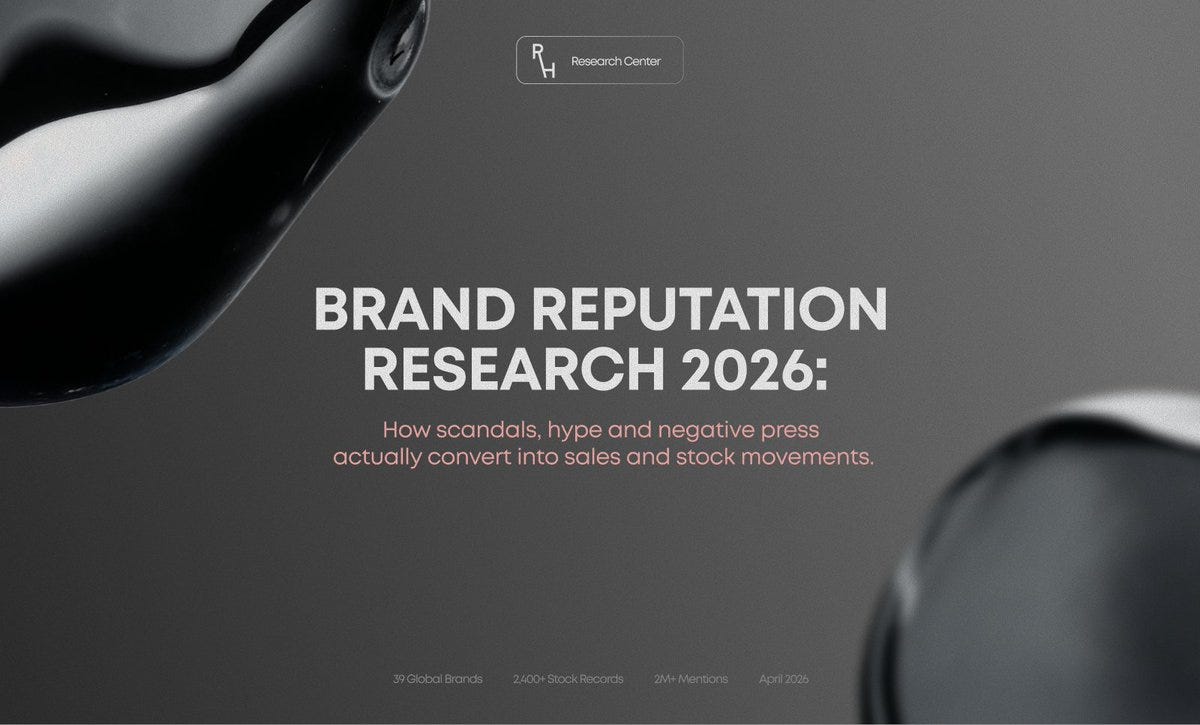
There’s a specific point at which emotional intensity stops converting consumers and starts converting them into an audience. Data from 2 million brand mentions shows exactly where that line is.
Every marketing team has experienced some version of this: a campaign catches fire. The numbers are extraordinary — shares, reactions, earned media, press coverage. For a week, maybe two, the brand is everywhere. And then the performance report lands, and the sales line is flat.
The default explanation is timing. Attribution lag. Channel mix. Brand awareness working on a longer cycle.
But two years of continuous data across 39 global brands suggests a different explanation — one that’s more specific, more measurable, and more fixable. The content didn’t fail to convert because of attribution complexity. It failed because it crossed a threshold beyond which conversion becomes structurally impossible.
There Is a Ceiling on Emotional Intensity — and It’s Lower Than You Think
A study analysing over two million brand mentions identified six levels of emotional intensity within brand mention peaks, ranging from completely neutral to extreme. The relationship between intensity and downstream consumer behaviour — search activity, purchase intent signals — follows a pattern that holds consistently across categories, markets, and brand sizes.
Below 10% emotional expression within a peak, content fails to activate. The signal is too weak to move people from passive awareness into curiosity.
Between 10% and 39%, something different happens. Consumers engage. Informational searches rise at the moment of the peak. Transactional searches — the ones expressing purchase intent — follow one to two months later. This is the window in which media events actually translate into commercial behaviour.
Above 40%, the effect disappears. Not diminishes. Disappears.
The mechanism behind this is straightforward once you see it: at extreme emotional intensity, content stops functioning as a trigger for consideration and starts functioning as entertainment. People experience it. They share it. They react to it. But they don’t search for the product, don’t move toward a purchase decision, don’t change their behaviour in any way that produces revenue. They become spectators.
Virality and Conversion Are Not the Same Thing
This is the uncomfortable core of the finding. The content properties that make something go viral — extreme emotion, divisiveness, shock, spectacle — are largely the same properties that push emotional intensity above the conversion ceiling.
A campaign can be genuinely, measurably viral and produce zero incremental purchase intent. Not because virality doesn’t matter, but because past a specific threshold, the nature of audience engagement shifts from consideration to observation.
The Pop Mart / Labubu phenomenon of April 2024 illustrates what the correct range looks like in practice. At its peak, the emotional intensity around the Labubu collectible craze sat in the upper part of the effective window — intense enough to feel culturally significant, contained enough to remain credible. The result was a sharp and sustained lift in both informational and transactional searches, peaking about a month after the media moment.
Brands in the same collectibles category that generated content above the 40% threshold during the same period showed erratic or absent search responses. Same audience. Same cultural moment. Different intensity calibration. Entirely different commercial outcomes.
The Metric Your Dashboard Isn’t Showing You
Most brand monitoring platforms report sentiment in one of two ways: positive versus negative, or total volume over time. Neither of these captures the variable that actually predicts commercial response.
What matters is the share of emotionally expressive content within a peak — not whether it’s positive or negative, but whether it carries genuine evaluative weight — and specifically whether that share falls within the 10–39% conversion window.
A campaign sitting at 55% emotional expression isn’t just “doing well on sentiment.” It’s operating above the ceiling where consumer behaviour responds. The extra intensity isn’t producing extra conversion; it’s producing extra spectacle.
This means it’s entirely possible to look at a dashboard showing strong emotional engagement and draw exactly the wrong conclusion. High emotional response rates, when they exceed the effective range, are not a sign of success. They’re a sign that the content has outrun its commercial function.
The Questions Your Next Campaign Report Should Answer
Before the next post-campaign review, three questions are worth answering with actual data rather than intuition:
- What was the emotional intensity of the peak? Not the sentiment ratio — the share of expressive versus neutral content within the spike. Did it fall within the conversion window, or above it?
- Did informational searches rise at the peak? And did transactional searches follow one to two months later? If the first happened without the second, the peak produced curiosity but not intent — a signal that intensity may have been too high to convert.
- Where in the funnel did audience behaviour stop? Spectator-mode engagement has a specific fingerprint: strong reaction metrics, weak downstream search movement, no transactional lift. If that pattern is present, the calibration problem is identifiable and correctable.
- The 40% ceiling isn’t a theory. It’s a pattern observed across 85 mention peaks, 39 brands, and two years of real consumer behaviour data. The brands that consistently convert media moments into commercial outcomes aren’t the ones generating the most emotional intensity. They’re the ones generating the right amount of it.
There’s a significant gap between a viral moment and a converting one. Most brands don’t measure it. That’s why most viral moments don’t show up in the revenue line.
Get access to the full research: https://rc.reputation.house/brand-reputation-research-2026
메타데이터
- post_id
- b642bcacf566
- slug
- the-virality-trap-when-your-content-goes-too-far-and-your-audience-stops-buying-b642bcacf566
- url
- https://medium.com/@reputation.house/the-virality-trap-when-your-content-goes-too-far-and-your-audience-stops-buying-b642bcacf566
- canonical_url
- https://medium.com/@reputation.house/the-virality-trap-when-your-content-goes-too-far-and-your-audience-stops-buying-b642bcacf566
- author_url
- https://medium.com/@reputation.house
- status
- ok
- fetched_at
- 2026-06-12 22:02:08