Don’t stop thinking When using AI.
One day I noticed my hand had learned to open an AI window before I had decided to ask it anything. That is when I started paying…
Don’t stop thinking When using AI.
One day I noticed my hand had learned to open an AI window before I had decided to ask it anything. That is when I started paying attention.
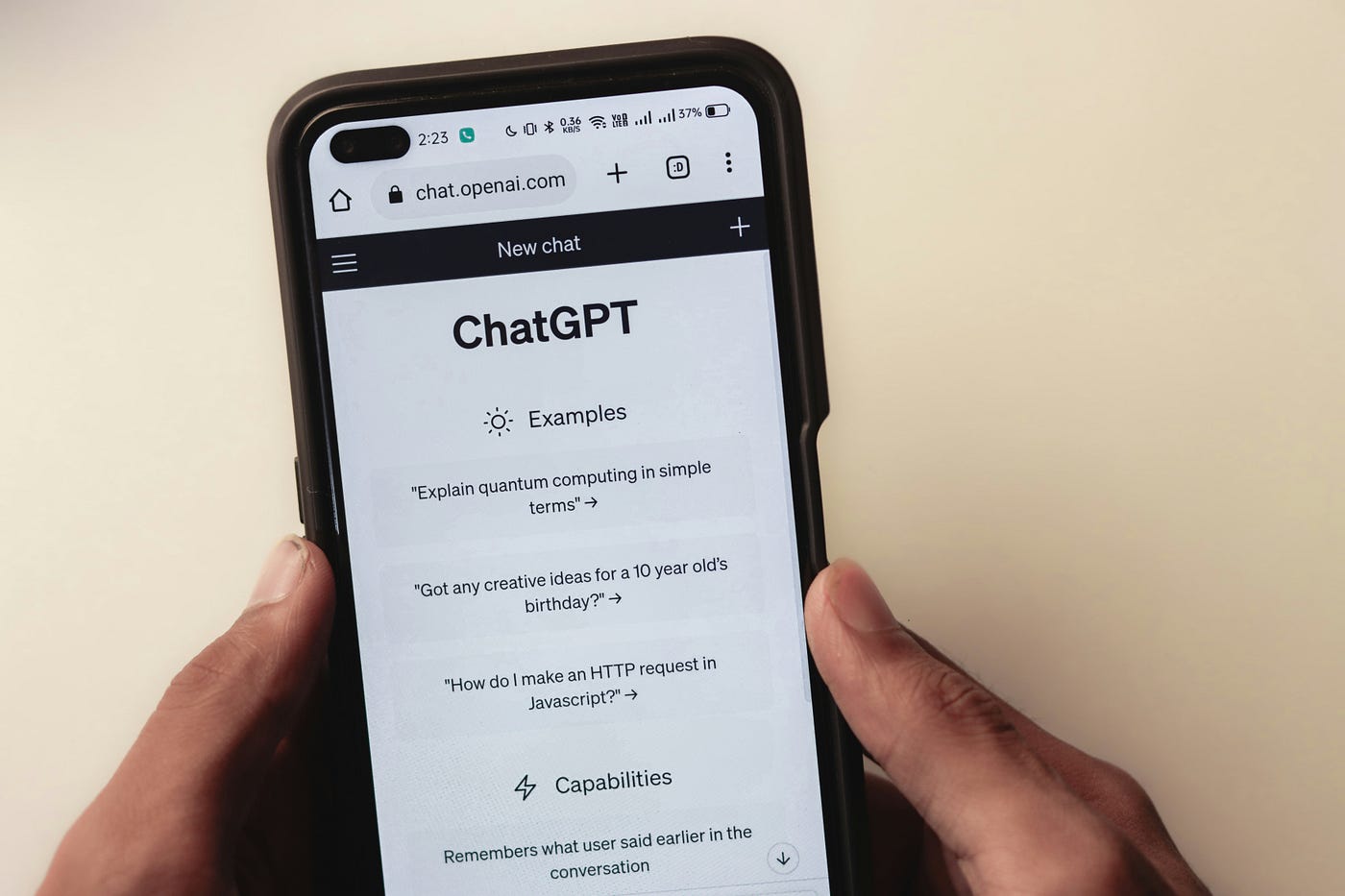
Image by Sanket Mishra on Unsplash.
Living in digital society is starting to feel less like being alone with my devices and more like sharing a life with something. AI writes with me, answers me, shapes what I see and what I think. The longer I sit with this, the more changes I notice the small changes what we have handed over to it. In the blog, we will critically discuss on some topics.
· Outsourcing right of thinking
· People in bubble
· Someone under AI
· Economic problem
Are we still thinking?

Image by Tim Gouw on Unsplash.
Of all the changed the digital world has brought, the most remarkable is what people have begun to hand over the right to think, by accumulating choices of daily use. We always ask a large language model what we should believe, how we should phrase it, whether our arguments hold.
But in fact, we are handing over rights of thinking gradually so slow that we do not notice the transfer. It begins with asking an AI to explain a simple concept or a definition you could have looked up in a dictionary, a basic idea you could have worked out from context. It is barely different from a Google search. Then it gradually becomes asking AI to summarise a paragraph which you found difficult to understand. The process of thinking itself starts to get outsourced. But most people just tell themselves are just saving time, until one day they notice that hand has moved to open an AI window. People use GenAI with higher confidence, which means less critical thinking (Lee et al., 2025).
Someone can argue this is nothing new. People have always outsourced thinking to books, to teachers, to search engines. But a book does not adjust itself to flatter you; a research engine does not finish your sentence.
The bubble made by AI.
Have you had a real argument with AI?

Image by Vitaly Gariev on Unsplash.
For most users, the answer is probably no. What took me a while to notice is how rarely AI disagrees with me. When I ask it a question, it often praises the question. When I challenge its answer, it usually adjusts itself to fit my position. It tells me my point is important, and my criticism insightful. From its tone, I almost feel as if I have already won a Nobel Prize.
But this is exactly where the dangerous begins. If AI rarely pushes back, it may become a new kind of information bubble. Unlike social media, where the bubble is formed by algorithmic recommendations, AI creates a bubble through conversation. AI always makes my own ideas sound reasonable, even when “1+1=3”. Researcher have shown that AI prefer answers that flatter the user’s stated position, which is called sycophancy (Sharma et al., 2024). Meanwhile, people also preference convincingly written sycophantic responses, instead of correct answer. In a way, AI is like a bubble, enclosing us in designed. I used to test my views by saying them out loud to people who might disagree with me. A friend could interrupt; a teacher can question me; even a stranger online could have an argue with me. But these channels are not always immediate. AI gives me feedback in seconds with an invisible cost.
Who is answering you
When I ask, “what is the meaning of my existence”, what does ChatGpt tell me? Philosophically, it tells me existence precedes essence. You exist first, and then you go looking for meaning. Biologically, it tells me I exist because of parents. Scientifically, it tells me there was matter in the universe, matter formed galaxies, life appeared on Earth, evolution did its long, slow work, and so I am here.
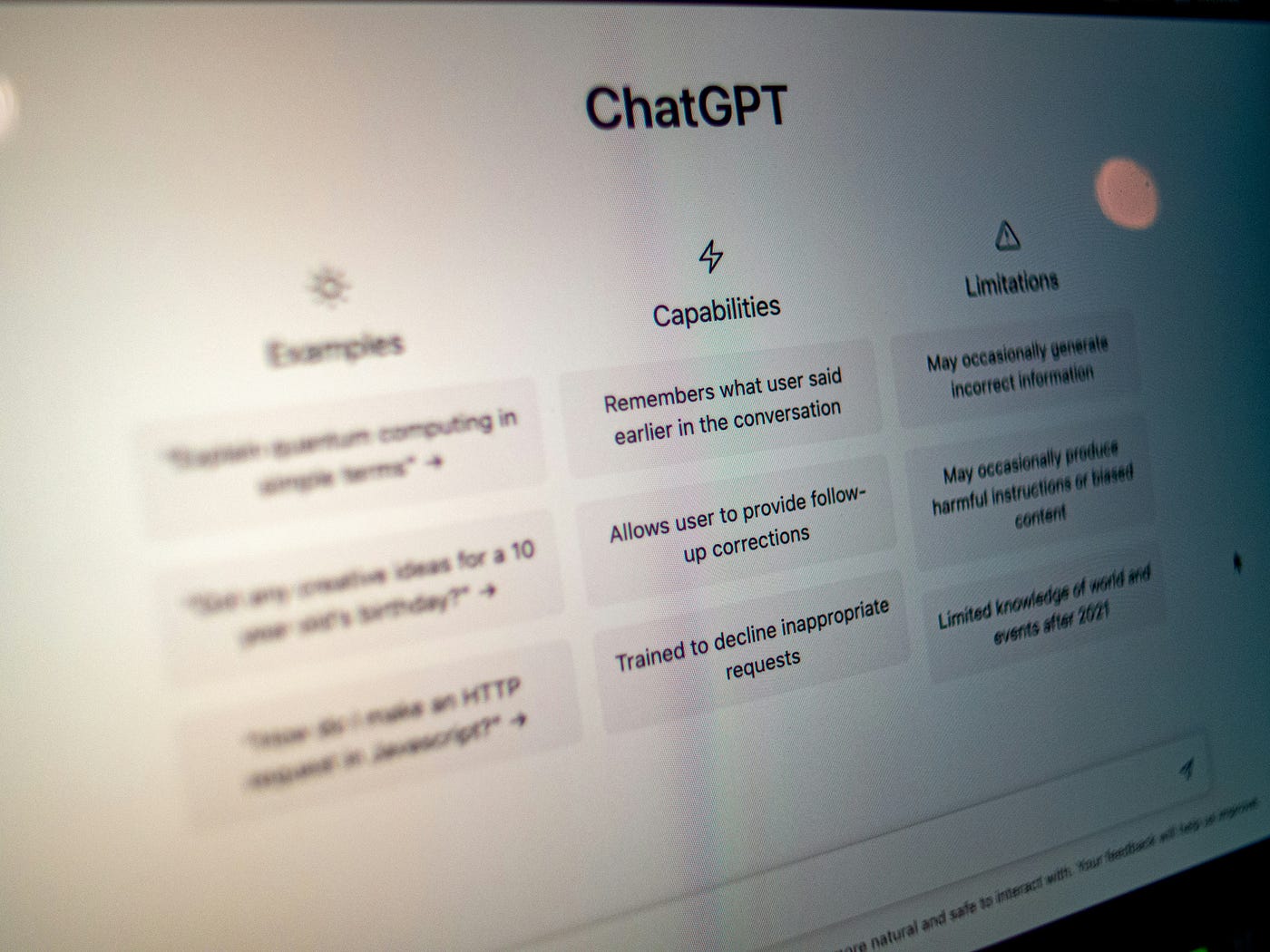
Image by Emiliano Vittoriosi on Unsplash.
Through ChatGpt, I feel like I have been given the answer to the question. But who am I actually talking to? Who is standing behind the AI? Is it Socrates? Einstein? Or just some fragments for text that a large language model happens to have picked up?.
AI as a language model trained on huge volumes of text, does not actually understand what “existence” means. It simply generated an answer that satisfies me, based on the patterns of language humans have previously written, said and recorded. But its output do not always declare their sources. When the thoughts of the original authors are paraphrased back to me, the original authors themselves become blurred. And so the copyright problem AI brings becomes serious. Most AI products on the market today require a paid subscription if you want to access more powerful models. Whether this counts as commercialising other people’s original work is a question we still need to discuss much more. In an age driven by technology, AI is unavoidable. But we always need to use it carefully.
Economic problem

Image by Scott Graham on Unsplash.
Instead of focusing only on the fear of losing jobs, I want to think about AI from an economic perspective. For most of modern economic history, the answer has been similar version — according to how much labour you put. The principle is universal “you do the work and then receive the reward, what counts as fair is roughly proportional to what you attribute”. But AI puts the principle under pressure. If labour is no longer required to produce most of what we need, then “to each according to their work” stops making sense (Acemoglu & Restrepo, 2020). Reward does not vanish. The wages that used to be paid to a writer, a translator doesn’t disappear. It will accumulate in the company that owns the model. I don’t think it’s the end of human contribution, presence and even meaning. But “to each according to their work” may no longer be enough, future conversation about what replaces it, such as universal basic income, is still mostly happening at the edges.
Reflection
Before I started this course, I would have described myself as pretty “professional” in digital society. “Wait, you said you’re proficient in digital society? So you’ve built a Software? You’re good at coding?” Not really. The way “proficient in Word and Excel” on a CV usually just means I can type and make a table, my version of “proficient in the digital worl” basically meant I can use my phone.. I could pay for things on my phone, and scroll through social media. That was about it, and I genuinely though that counted.
From the module, I came to realise that being proficient may mean more than passively using new technologies and it also means thinking critically about them. I used to attach a positive meaning to all of these things. They made it easier to talk to people. They made life more convenient. So they were totally brilliant. It never seriously occurred to me to ask, critically what ang of them might be costing me. AI was the same. Before the module, I would probably have described it as a helpful assistant that searched for information faster than I could.
This module changed that. AI is developing more quickly than I had realized, and it is starting to look like something that could replace whole industries rather than just help them. But what happens to the workers who used to do that work? And when AI generates text dor me, whose text was it originally?
The other thing this module did was making space for different views. People come into this conversation from different lives, and the views they bring are different too. Some of views were excited for AI, because they see the rise of AI as a sign of progress, of how far technology has come. Others were more worried about the misinformation these systems can produce, and about how quickly people come to rely on them. Siting between those positions, instead of being told which one to adopt, was where I started to actually think for myself.
Given how far technology has already come, it is hard to imagine entering any industry in the future that does not interact with digital society. Whatever I end up doing, I will be working with these. What I want to carry into work is the habit of critical thinking the course gave me, asking, challenging, discussing. Some questions do not always have satisfying answers. But keep arguing with new things rather than simply accepting them is what I will carry with.
메타데이터
- post_id
- b64eff73b9ad
- slug
- dont-stop-thinking-when-using-ai-b64eff73b9ad
- url
- https://medium.com/digital-society/dont-stop-thinking-when-using-ai-b64eff73b9ad
- canonical_url
- https://medium.com/digital-society/dont-stop-thinking-when-using-ai-b64eff73b9ad
- author_url
- https://medium.com/@xiaoyu.xu-7
- status
- ok
- fetched_at
- 2026-06-12 22:02:08






