BOD Incubation Temperature Explained: Why 20°C is Critical for Accurate Results
Accurate measurement of Biological Oxygen Demand (BOD) is one of the most important tests conducted in water quality analysis…
BOD Incubation Temperature Explained: Why 20°C is Critical for Accurate Results
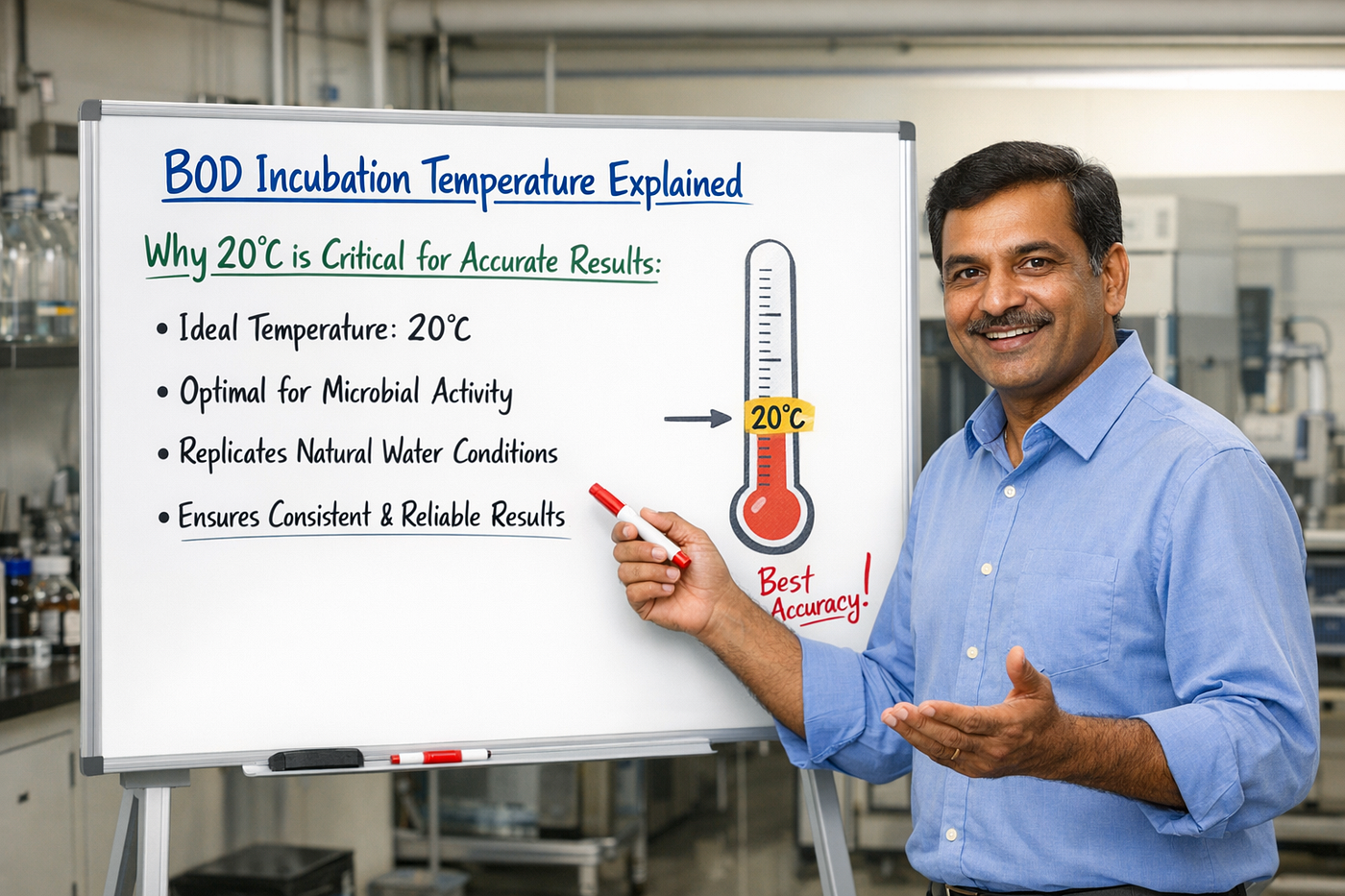
Accurate measurement of Biological Oxygen Demand (BOD) is one of the most important tests conducted in water quality analysis, environmental monitoring, and wastewater management. At the heart of every reliable BOD test is one non-negotiable parameter: incubation temperature. Even a minor deviation from the standard 20°C can significantly alter microbial activity, leading to inaccurate results that affect regulatory compliance, treatment decisions, and environmental reporting.
In this detailed guide, Effective Lab India — a trusted lab equipment manufacturer — explains why 20°C is the universally accepted BOD incubation temperature, what happens when it varies, and how to choose a BOD incubator that maintains this precision reliably and consistently.
1. What is BOD and Why is Incubation Temperature Important?
Understanding Biological Oxygen Demand (BOD)
Biological Oxygen Demand (BOD) is a measure of the amount of dissolved oxygen consumed by microorganisms while decomposing organic matter in a water sample over a specified time period — typically five days (BOD₅). It is one of the most widely used indicators of organic pollution in water bodies, industrial effluents, and treated wastewater.
A higher BOD value indicates greater organic contamination, which means more oxygen is being consumed by bacteria — leaving less available for aquatic life. Environmental regulatory bodies such as the Central Pollution Control Board (CPCB) in India, the US Environmental Protection Agency (EPA), and the European Environment Agency (EEA) mandate BOD testing as part of effluent discharge standards.
Role of Temperature in Microbial Activity
The BOD test is fundamentally a biological process. Microorganisms break down organic compounds in the water sample, and like all biological processes, their rate of activity is highly sensitive to temperature. At higher temperatures, microbial metabolism accelerates; at lower temperatures, it slows down. This means that the same water sample tested at 18°C and 22°C will yield meaningfully different BOD readings — not because the water quality has changed, but because the biological activity rate has changed.
To eliminate this variable and ensure that BOD results are consistent and comparable across laboratories worldwide, a standard incubation temperature has been established: 20°C ± 1°C.
2. Why 20°C is the Standard BOD Incubation Temperature
Scientific Reason Behind 20°C
The selection of 20°C as the standard incubation temperature is not arbitrary — it is rooted in environmental science and practical reproducibility. 20°C closely approximates the average temperature of temperate surface water bodies such as rivers, lakes, and streams, which are the primary subjects of BOD-based water quality assessment.
At 20°C, the biochemical oxidation reactions proceed at a moderate, stable, and well-documented rate. The temperature is low enough to prevent excessive volatilization of organic compounds and nitrification interference, yet high enough to support the aerobic microbial populations responsible for organic degradation. This makes 20°C the ideal equilibrium point for reproducible, scientifically sound BOD measurement.
Global Testing Standards and Guidelines
The 20°C incubation standard is mandated or recommended by every major international testing guideline, including:
• ISO 5815–1 and ISO 5815–2: Water quality — Determination of BOD after n days (International Organization for Standardization)
• APHA Standard Methods for the Examination of Water and Wastewater (Method 5210 B)
• US EPA Method 405.1 for BOD determination
• BIS IS 3025 (Part 44): Indian Standard for BOD testing in water and wastewater
• EU Water Framework Directive (WFD) monitoring protocols
Any laboratory conducting BOD testing for regulatory compliance, environmental impact assessment, or research must maintain a sample incubation temperature of 20°C ± 1°C throughout the full five-day incubation period.
3. How BOD Incubation Temperature Affects Test Accuracy
Impact on Bacterial Growth
The microbial communities used in BOD testing — primarily aerobic heterotrophic bacteria — exhibit temperature-dependent growth kinetics described by the Arrhenius equation. A temperature increase of just 10°C approximately doubles the metabolic rate of these organisms (a principle known as Q10 = 2). This means that incubating samples at 25°C instead of 20°C could result in BOD values that are significantly overstated, misrepresenting the true pollution load of the sample.
Conversely, temperatures below 20°C suppress microbial activity, leading to underestimated BOD values. Both scenarios carry serious consequences for wastewater treatment plant operations, environmental monitoring programs, and regulatory submissions.
Errors Caused by Temperature Variation
Even small temperature fluctuations inside the incubator can introduce systematic errors in BOD results:
• ±2°C variation from 20°C can introduce a 10–15% error in BOD values
• Hot spots or cold zones within the incubator cabinet lead to non-uniform sample incubation
• Frequent temperature cycling (due to poor insulation or frequent door opening) accelerates nitrification reactions that artificially elevate BOD readings
• Temperature deviations during the first 24–48 hours of incubation have the most pronounced effect on final BOD₅ results, as this is when the initial oxygen uptake rate is highest
This is why investing in a high-quality, well-calibrated BOD incubator with precise temperature control is essential for any serious water quality laboratory.
4. What is a BOD Incubator?
Definition and Purpose
A BOD incubator is a specialized laboratory instrument designed to maintain a constant, stable temperature of 20°C ± 1°C over a five-day (or longer) period for the purpose of conducting Biological Oxygen Demand tests. Unlike general-purpose laboratory incubators that may operate across a wide temperature range, BOD incubators are engineered specifically for the precision and stability required in water quality analysis.
How a BOD Incubator Works
A BOD incubator functions by using a combination of refrigeration and heating systems to maintain precise temperature around the setpoint of 20°C. Most models use a balanced cooling-heating mechanism: the refrigeration compressor cools the chamber, and the heating element compensates to maintain the target temperature regardless of ambient room temperature fluctuations.
Advanced models incorporate microprocessor-based PID (Proportional-Integral-Derivative) controllers that continuously monitor the chamber temperature via calibrated probes and adjust the heating and cooling cycles in real time to minimise temperature overshoot and drift.
Key Components and Features
• Refrigerated chamber with uniform airflow (fan-forced circulation)
• Microprocessor PID temperature controller with digital display
• High-density polyurethane (PUF) insulation for thermal stability
• Glass inner door for sample visibility without opening the outer door
• Adjustable stainless steel shelves for flexible sample loading
• Alarm systems for temperature deviation alerts
• Data logging ports (USB/RS-232) for GLP/GMP compliance
5. Key Features to Look for in a BOD Incubator
Temperature Stability and Uniformity
The most critical specification of any BOD incubator is temperature uniformity across the entire chamber. Look for instruments that maintain ±0.5°C uniformity throughout the usable volume. A temperature gradient between the top and bottom shelves will result in inconsistent test results across samples placed at different heights.
Digital Controls and Display
Modern BOD incubators should feature microprocessor-controlled PID temperature regulation with a clear digital display showing both set and actual temperatures simultaneously. Models with alarm functions, data logging, and USB connectivity allow laboratories to maintain complete audit trails — a requirement for ISO/IEC 17025 accredited testing facilities.
Energy Efficiency and Insulation
BOD tests run for a minimum of five consecutive days. During this period, the incubator must operate continuously. Energy-efficient models with thick PUF insulation, tight door seals, and efficient compressor systems significantly reduce electricity consumption and operating costs, while also delivering better temperature stability due to reduced thermal cycling.
Suggested Post:
Salt Spray Lab Equipment Chamber Price List in India — All Models & Brands Hot Air Oven principle Explained: Uses, and Best Practices for Laboratories
6. Common Mistakes in Maintaining BOD Incubation Temperature
Overloading the Incubator
Placing too many BOD bottles in the incubator reduces airflow circulation, creating uneven temperature zones. Always follow the manufacturer’s recommended maximum load capacity and ensure adequate spacing between sample bottles for uniform air distribution.
Frequent Door Opening
Every time the incubator door is opened, warm room air enters the chamber, causing a temporary temperature rise that can take 15–30 minutes to stabilise. If samples are checked or handled frequently, temperature excursions above 20°C become routine. Use incubators with a glass inner door to inspect samples without opening the main door.
Poor Calibration Practices
Relying solely on the built-in temperature display without independent verification is a common error. The internal probe may drift over time, giving a false reading while the actual chamber temperature is outside tolerance. Regular calibration against NABL-traceable reference thermometers is essential for maintaining result integrity.
7. Best Practices to Maintain Accurate BOD Incubation Temperature
Calibration Tips
Calibrate the BOD incubator temperature at least every six months using a NABL-traceable calibrated reference thermometer. Place the reference probe at multiple locations (centre, corners, top shelf, bottom shelf) to verify spatial uniformity. Maintain a calibration log for each instrument as required by ISO 17025 and GLP standards.
Ideal Lab Conditions
Position the BOD incubator away from direct sunlight, air conditioning vents, and heating sources. The ambient laboratory temperature should ideally be maintained between 18°C and 25°C to minimise the thermal load on the incubator’s refrigeration system. Avoid placing the unit in unventilated enclosures, as this restricts heat dissipation from the compressor.
Monitoring Techniques
For high-stakes regulatory testing, consider installing a continuous temperature monitoring system with remote alerts via SMS or email. This ensures that any temperature deviation during the five-day incubation period is detected and documented immediately, allowing corrective action before samples are compromised.
8. Applications of BOD Incubators in Laboratories
Water Treatment Plants
Municipal and industrial water treatment plants use BOD testing to monitor the effectiveness of biological treatment processes, verify that effluent meets discharge consent limits, and optimise aeration and nutrient dosing in activated sludge systems. Reliable BOD incubators are indispensable tools in these operations.
Environmental Testing Labs
NABL-accredited and government-approved environmental testing laboratories routinely conduct BOD analysis on river water, groundwater, and industrial effluent samples submitted for regulatory compliance testing. These labs require incubators with documented calibration and performance records to support their accreditation.
Research and Academic Labs
Universities, research institutions, and environmental science departments use BOD incubators for studies on biodegradability, ecotoxicology, and wastewater characterisation. Accurate temperature control is critical in these settings to ensure that experimental data is reproducible and publishable.
Suggested Post:
Bursting Strength Tester Manufacturer: Everything You Need to Know
Box Compression Tester and Its Role in Corrugated Box Testing
9. Choosing the Right Lab Equipment Manufacturer
What to Look for in a Manufacturer
When selecting a lab equipment manufacturer for a BOD incubator, evaluate the following criteria: manufacturing quality and material standards, adherence to national and international testing guidelines, availability of after-sales service and calibration support, response time for technical issues, and availability of spare parts.
A manufacturer that understands the regulatory landscape of water quality testing — not just the engineering of the instrument — is far better positioned to deliver equipment that meets the real-world demands of your laboratory.
Certifications and Quality Standards
Look for manufacturers whose products comply with ISO 9001 quality management systems and whose instruments meet the temperature stability and uniformity requirements outlined in APHA, ISO, and BIS standards for BOD testing. CE marking and BIS certification are additional indicators of product quality and regulatory alignment.
10. Why Choose Effective Lab India for BOD Incubators
Reliable and High-Precision Equipment
Effective Lab India is a leading lab equipment manufacturer in India, offering a comprehensive range of BOD incubators engineered for precision, durability, and regulatory compliance. Our BOD incubators feature PID microprocessor control, fan-forced air circulation, PUF insulation, and stainless steel interiors — all designed to maintain 20°C ± 0.5°C throughout the incubation period.
Competitive Pricing
We offer BOD incubators across multiple capacity ranges — from compact 50-litre models for smaller labs to large 700-litre models for high-throughput testing facilities — at competitive prices that make precision testing accessible to laboratories of all sizes across India and South Asia.
Strong After-Sales Support
Every BOD incubator from Effective Lab India is backed by a comprehensive warranty, detailed technical documentation, on-site installation support, and a responsive after-sales service team. We also offer periodic calibration services and Annual Maintenance Contracts (AMC) to ensure your instrument stays within specification year after year.
11. Conclusion
The 20°C incubation temperature is not a guideline — it is the scientific and regulatory foundation of accurate BOD testing. Any deviation, however small, introduces errors that cascade through treatment decisions, compliance reporting, and environmental protection outcomes. Investing in a high-quality, precisely controlled BOD incubator from a trusted manufacturer like Effective Lab India is the most effective way to ensure that your BOD results are accurate, reproducible, and defensible.
Whether you operate a municipal water treatment plant, an environmental testing lab, or a university research facility, Effective Lab India has the right BOD incubator for your requirements. Contact us today for a product demonstration, technical specifications, or a customised quotation.
12. FAQs on BOD Incubation Temperature
FAQ 1: What happens if the BOD incubation temperature exceeds 20°C?
If the incubation temperature rises above 20°C, the metabolic activity of aerobic bacteria accelerates, causing faster oxygen consumption. This leads to an artificially inflated BOD reading that does not accurately reflect the true organic load of the sample. Additionally, higher temperatures can promote nitrification — the oxidation of ammonia to nitrate by nitrifying bacteria — which further elevates apparent oxygen demand and introduces a significant systematic error in BOD5 results. All BOD incubators should be maintained at 20°C ± 1°C as mandated by ISO 5815, APHA, and BIS standards.
FAQ 2: Can BOD be tested at temperatures other than 20°C?
While 20°C is the universally accepted standard for regulatory and comparative BOD testing, some research applications use alternative incubation temperatures such as 25°C or 30°C to study biodegradability under tropical or elevated-temperature conditions. Temperature correction factors (such as the theta correction: BOD_T = BOD_20 × 1.047^(T-20)) can be applied to convert results from other temperatures to the 20°C equivalent. However, for regulatory compliance testing under CPCB, EPA, or EU standards, 20°C remains mandatory.
FAQ 3: How do you calibrate a BOD incubator?
Calibrating a BOD incubator involves verifying the actual chamber temperature against a NABL-traceable reference thermometer at multiple points inside the chamber (typically centre, four corners, top shelf, and bottom shelf). Set the incubator to 20°C, allow it to stabilise for at least two hours, then record the reference thermometer reading at each position. If the deviation exceeds ±1°C at any point, adjust the instrument’s setpoint offset or contact the manufacturer for sensor recalibration. Calibration should be performed at least every six months and documented in the lab’s calibration register.
FAQ 4: What is the standard incubation period for BOD testing?
The standard incubation period for the most widely used BOD test is five days, referred to as BOD5. During these five days, water samples are kept in airtight BOD bottles at 20°C in the dark (to prevent photosynthesis). Dissolved oxygen (DO) is measured before and after incubation, and the BOD5 value is calculated as the difference. Some applications use a 7-day (BOD7) or 20-day (ultimate BOD) incubation period to capture slower-degrading organic fractions. The five-day standard is used because approximately 60–70% of the ultimate carbonaceous BOD is exerted within this period under standard conditions.
FAQ 5: Why is temperature control critical in BOD testing?
Temperature is the single most important environmental variable in BOD testing because the entire test is based on biological (microbial) activity, which is exponentially sensitive to temperature changes. Even a ±2°C variation from 20°C can introduce a 10–15% error in BOD results, making the data unreliable for regulatory compliance, treatment process control, or scientific research. Consistent temperature control at 20°C ensures that results are reproducible, comparable across laboratories and time periods, and compliant with international standards such as ISO 5815 and APHA Standard Methods.
메타데이터
- post_id
- b65a2d75e522
- slug
- bod-incubation-temperature-explained-why-20-c-is-critical-for-accurate-results-b65a2d75e522
- url
- https://medium.com/@effectivelabindia/bod-incubation-temperature-explained-why-20-c-is-critical-for-accurate-results-b65a2d75e522
- canonical_url
- https://medium.com/@effectivelabindia/bod-incubation-temperature-explained-why-20-c-is-critical-for-accurate-results-b65a2d75e522
- author_url
- https://medium.com/@effectivelabindia
- status
- ok
- fetched_at
- 2026-06-09 15:37:30