Evaluating the 10 Best Performances in the Harry Potter Movie Series
Intro
Evaluating the 10 Best Performances in the Harry Potter Movie Series

Intro

I know, I know, Alan Rickman was too old to play Book Snape. But guess what? He was playing Movie Snape. And he was excellent in the role.
There’s no argument that Alan Rickman’s casting was not faithful to the source material, and created serious thematic problems downstream — we’ll circle back to that later — but the performance itself can also be judged on its own merits, alongside the broader discussion on adaptations.
The same applies to the other characters as well. We can evaluate the portrayals in the movies by more comprehensive metrics than how well they match up with the characterizations and physicality in the books.
Although this won’t be true for all the movie characters, when the new HBO Harry Potter TV series concludes in 22 years, Rickman will still be the definitive Snape — and we will still not have an accurate Book Snape* portrayal.
The Audiobook Effect

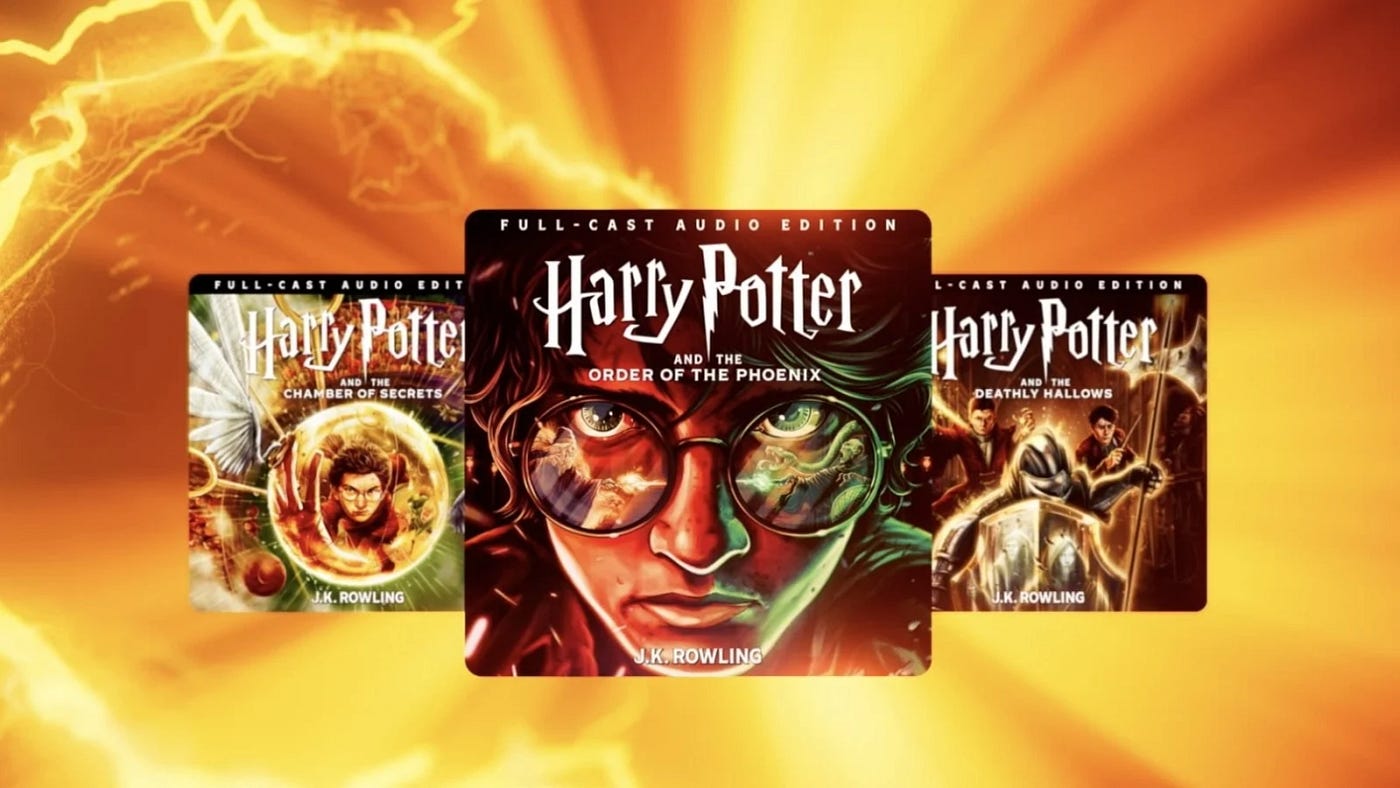
In evaluating the portrayals of the characters in the movies, we now have another interesting comparison in the form of the full-cast audiobooks, which are, with very few exceptions, excellent and, for the most part, far superior to the films.
Some of the performances in the audiobooks really raise the bar.
Voicing the character is obviously only one component of the portrayal compared to the films or subsequent show, but it is no coincidence that one fantasizes to see some of the actors from the audio version in live-action.
The Movies as Adaptations
Now that the long-anticipated HBO Harry Potter series has started raising too many red flags, people are suddenly asking why the show is even necessary. (Funny how they seemed to have the answer to that just a few months ago, before the trailer, featuring Snape’s final costume reveal, dropped…)
The movies are not very old, and they absolutely retain their status as both culturally iconic and commercially untouchable, regardless of quality. But a long-form television adaptation should, in theory, be able to improve on them dramatically.
Because the films are mostly weak even on their own terms — and they become infinitely worse once you’re familiar with the source material.
The movies often “read” like consecutive Wikipedia summaries of selected scenes from the books. So much essential setup, context, and connective tissue is missing that the story eventually becomes disorienting if you try to engage with it too carefully. Key emotional payoffs arrive without proper groundwork because the pieces that make them function simply aren’t there.
Telling audiences to switch their brains off — or do homework beforehand to compensate for missing storytelling — has certainly become an industry-standard strategy, with industry-standard results.
From poor writing and directing to wildly uneven creature design, butchered character arcs, and visual effects that fluctuate between impressive and rough, the films leave a surprising amount of room for improvement.
Which is why HBO initially seemed perfectly positioned for the task. With access to elite talent at every level of production, essentially unlimited resources, and — perhaps most crucially — a completed story, the studio had the potential to create one of the biggest television events in history.
This last point is one of the key reasons the films struggled to fully do justice to the books. As it turns out, adapting the series while the novels were still being released was a double-edged sword. The movies benefited enormously from the momentum and cultural explosion surrounding the books, but they also lacked the hindsight necessary to understand which details would later become essential.
Harry Potter is fundamentally a mystery story. Major character motivations, thematic parallels, and narrative setups often don’t pay off until several books later. Without knowing the ending, how do you determine which seemingly minor details are actually critical?
A modern adaptation has the advantage of approaching the story as a completed work. In theory, that allows for the kind of focused, deliberate setup and long-form narrative cohesion the films constantly mishandled**.
You also have access to an audience deeply knowledgeable about — and heavily invested in — the material itself. That is an invaluable source of feedback.
(Or you could just attack the audience for your own failings instead.)
Then there are the scenes the films simply had no excuse for cutting: sequences that establish critical plot points and character motivations, whose absence actively damages the cohesion of the scripts surrounding them.
And beyond that, there are entire sequences that are not only hugely important to the story but inherently cinematic. Yet the movies repeatedly chose to replace them with newly invented scenes that were somehow both less interesting and less functional.
That isn’t an adaptation limitation. It’s just incompetence.
But here’s where things get touchy: the Harry Potter books also have a lot of flaws.
Some characters could disappear entirely because the story is simply stronger without them (Lavender Brown). Others desperately needed more development (Tonks). And nearly every romantic subplot should probably be reduced to the absolute minimum — although we do, admittedly, need at least a few more scenes of Cho crying. (You can’t argue with comedic value!)
I won’t say anything about Quidditch or the Triwizard Tournament in this context, because I understand some people might be slightly upset if they were fully decanonized.
But the story probably would improve.
On Casting

There are, however, things the movies do exceptionally well — foremost among them the music. The Harry Potter films contain some of the best blockbuster scores in cinema history, and maintaining that level of quality across eight movies is genuinely remarkable. Even the weakest film entries still, at least, sound fantastic.
And then, of course, there is the epic ensemble, which includes some of the greatest actors of the 20th century:
Ralph Fiennes, Richard Harris, Toby Jones, Gary Oldman, Rhys Ifans, and Bill Nighy, along with newcomers, baby Harry Melling (Ballad of Buster Scruggs, 2019), baby Robert Pattinson (Twilight), Domhnall Gleeson (Rise of Skywalker, 2019), and Jaime Campbell Bower (Rings of Power).
And all those are just the ones who didn’t make it into the list.
The most obvious is the now-infamous age shift surrounding Snape — a consequence of casting the admittedly great Alan Rickam — as this drastically alters how young the Marauders and the original Order of the Phoenix would have been during Voldemort’s first rise to power. Their generation needs to parallel the Trio. Otherwise, the story loses too much thematic weight surrounding youth colliding with tragedy, inexperienced people inheriting impossible responsibility, and resistance to evil demanding enormous sacrifice.
There’s also the unavoidable reality that Harry Potter depends heavily on child actors. The young cast is the story, and audience immersion in the fantasy world relies almost entirely on whether those performances work.
That’s an incredibly difficult gamble.
You cannot reliably predict children’s long-term acting ability, chemistry, professionalism, or how fame itself will affect their development over the course of a decade-long production.
Daniel Radcliffe begins the series with one of the roughest lead performances in a major blockbuster franchise — a failure that largely falls on the directing — but steadily improves throughout the films. Meanwhile, Emma Watson peaks almost immediately as a performer.
She also has noticeably stronger chemistry with Radcliffe than with Rupert Grint, which unintentionally makes Ron and Hermione’s endgame romance from the novels feel forced.
And we’re not even going to discuss Harry and Ginny.
Still, despite all those challenges, much of the series’ casting was genuinely excellent.
The Best Acting Performances in the Harry Potter Movies
First off, a few honorable mentions:
Warwick Davis does an enormous amount with very little screen time as Griphook the goblin, primarily in the setup to the Gringotts vault heist. He’s often literally immobile, buried under prosthetics that restrict most facial movement, yet still manages to give the character a distinct presence.
John Hurt, as Ollivander, could probably deliver the initial wand shop scene with his eyes closed. Where he really shines, though, is after his rescue from torture and captivity — quietly reasserting the stakes of the story, introducing the Deathly Hallows, and delivering the uncomfortable truth to Harry that if Voldemort possesses the Elder Wand, there may be no way to defeat him.
The most complex mention, however, goes to the performers behind Kreacher. The house-elf is criminally underused in the films, and his arc is largely discarded, but in his limited appearances, he remains one of the strongest CGI character performances in the series.
Timothy Bateson provided both motion capture and voice work in Harry Potter and the Order of the Phoenix. After his passing in 2009, Simon McBurney took over the role for Harry Potter and the Deathly Hallows — Part 1.
And now for our top 10!
1. Imelda Stanton’s Dolores Umbridge

By far the most perfect villain of the series, and one of the most unique villains in cinema. With her unassuming appearance and a deceptively mild-mannered voice, Delores has way more finesse in her sadism than Voldemort, and her presence is far more imposing than Snape's.
She also literally pins a dead man’s eye to her office door. (How macabre!)
Utilizing the authority of government to crush dissent, maintain the narrative, and barbarically torture students with a magic quill, she is both the most original character in the saga and — sadly — the most realistic.
Stanton and her performance are pretty much the one saving grace of Order of the Phoenix, 2007. The rest of the movie (apart from the best wizard-duel scene in the Series) is garbage, which is a shame because the original material is actually quite good.
2. Alan Rickman’s Severus Snape

Every word is chewed on and relished like a million-dollar steak; every expression exudes meaning. Rickman’s performance is nothing short of majestic.
There isn’t always the best script to work with, and the final sequences are truly beyond any actor's capabilities, but no performance in the series is more iconic.
A lot of Snape’s complexity is filtered out of the movies, and his vindictiveness is a little too sanitized, but nobody could have pulled off such a magnetic presence. And, frankly, it is more than the character deserves.
It might be interesting to get a book on Snape one day, but the character being synonymous with Rickman’s performance just isn’t going to go away. Ever.
3. Robbie Coltrane’s Rubeus Hagrid

Robbie Coltrane’s performance requires a huge amount of chemistry with the trio of young actors, and his likability — despite Hagrid’s flaws — has to feel fully grounded in believability. He needs to convey naïveté and general ineptitude rather than overt charisma, while still maintaining warmth and unshakable loyalty.
Hagrid isn’t just a generic “gentle giant.” You don’t necessarily need to lean as heavily into his alcoholism as the books do, but removing his capacity for real fierceness — particularly in moments of resistance against the Death Eaters — is a missed opportunity.
It’s difficult to imagine anyone else pulling the role off in quite the same way. That said, Mark Addy managed something impressive in the audiobooks, arguably capturing aspects of the character the films downplay.
As for Nick Frost in the upcoming adaptation, the early impression is… cautious. There’s potential there, but also plenty of reasons to be skeptical at this stage.
4. Emma Thompson’s Sybill Trelawney

The most endearing adult performance in the series, Emma Thompson always looks like she’s having a blast on screen.
It’s not, strictly speaking, a complicated character to play, and some key scenes involving Sybill are bafflingly cut from the films. But the role lives or dies on tonal precision: the comedic balance has to be just right, or the character risks tipping into broad, unconvincing parody.
Thompson, unsurprisingly, gets it exactly right.
5. Maggie Smith’s Minerva McGonagall

Maggie Smith is so natural as McGonagall that it often feels like she’s doing it in her sleep. We can even forgive the occasional “always wanted to use that spell” line — that’s a directing issue, not a performance one.
She consistently carries presence, clarity, and control, striking the right balance between stern authority and quiet care.
It’s not a large or especially complex role, but it depends entirely on tonal precision and a specific kind of lived-in authority. Smith delivers that effortlessly, with an abundance of charm — or spades of it, to borrow the appropriate Britishism. (It’s time to rewatch Paddington).
6. Jason Isaac’s Lucius Malfoy

A perfect menacing antagonist turned broken man, trying to roll with the punches at the point of no return, Jason Isaacs brings a screen presence that never goes unnoticed.
He isn’t on screen for long, but he makes every second count. More importantly, he never drops character when he isn’t the focal point of a scene — there’s a constant, lived-in naturalism to his performance that makes it feel effortless rather than “performed.”
By contrast, you’re always aware of some actors performing a role rather than inhabiting it — say, Ralph Fiennes as Voldemort, who, spoiler, will not be appearing further down this list (because overacting is not the same thing as acting).
7. Kenneth Branagh’s Gilderoy Lockhart

Kenneth Branagh is always excellent, but here he seems to be having an unusually good time. And when he’s having fun, the audience tends to have fun with him.
I’ve been a fan since Henry V (1991) — or, as I like to call it, “Fifth for Members of Congress” — and Branagh, alongside Jason Isaacs, is one of the few bright spots in the otherwise uneven Chamber of Secrets adaptation (though, admittedly, I’m not particularly fond of the book either).
Lockhart is, on the page, a relatively simple character. But his self-mythologizing as a fraud pretending to be a hero gives the role enough friction to be genuinely interesting. Push it too far, and he becomes an insufferable caricature. Pull it back too much, and you lose the comedy entirely.
The films mostly get the balance right in performance terms, even if the broader adaptation choices undermine him — something Branagh isn’t responsible for. That responsibility lies with the script, which is arguably the film’s biggest weakness.
Kit Harrington does an amazing job in the audiobooks as well. It would be a shame to strike out with the show.
8. Evanna Lynch’s Luna Lovegood

By far the most charming of the young cast and the most endearing performance in the series, Evanna Lynch benefits from largely avoiding the more overtly campy child-direction of the earlier films. Even so, the role still requires a careful balance: Luna’s unconventional perception of reality has to feel effortless and certain, while still carrying a quiet undercurrent of melancholy appropriate to the character.
Despite limited screen time, she arguably comes across as one of the most fully realized members of the younger cast. We can even forgive the occasional rough dialogue in the finale — that’s more a screenwriting issue than a performance one.
Lynch brings a kind of natural, unforced rhythm to the role, shifting smoothly between detachment and emotional presence without it ever feeling like a switch being flipped. There’s a subtle ambiguity to her performance: neither clearly extroverted nor introverted, vulnerable but never fragile.
Ten points to Ravenclaw.
9. Helena Bonham-Carter’s Bellatrix Lestrange

On its face, this is arguably the laziest casting in the series: stylize Helena Bonham Carter as a live-action Corpse Bride archetype and ask her to be both childish and menacing. Not a high bar, and not a particularly demanding brief for an actress of her caliber. To be fair, Bellatrix herself isn’t much more substantial on the page.
It is only in Deathly Hallows, where she and her stunt double (and the stunt coordinator, editor, director, and cinematographer) perform a compelling action scene, in which Bellatrix finally demonstrates grounded capabilities as a fierce magical-combatant, smoothly dispatching multiple opponents with ease, no girl-bossery needed. She makes it look good.
But where Helena truly shines is in one of the better sequences of the Series: the initial sequence of the Gringotts’ vault heist, when she is playing Emma Watson’s Hermione, badly posing as her own portrayal of Bellatrix, to con the goblins to gain access to a Horcrux.
Possibly the best stretch of performance in the series, because of how fun it is, and how fundamentally levity is juxtaposed with Bellatrix’s over-serious (if slightly goofy) character. It is further extended by comparison with Brendan Gleeson’s performance in Goblet of Fire, in which he isn’t actually supposed to be playing Mad-Eye Moody (which is what he does), but rather Barty Crouch Jr. playing Gleeson’s Moody.
While the acting is fine on its face, none of the intended nuance really comes through in the performance, which makes it far less effective and feels like a waste of Gleeson’s talent — since he absolutely could have pulled it off.
Gleeson loses 10 points for Gryffindor (I have no idea what house he was in, just that Gryffindor needs to lose some points to balance out Dumbledore’s gross favoratism), and Helena gets 30 points for Slytherin.
10. Daniel Radcliffe as Harry

Last and least, Daniel Radcliffe’s performance is often atrocious throughout the early part of the series. But he is the only member of the trio who actually improved with time. There is a legitimate reason why he is the only one of the three who went on to have a sustained acting career.
Rupert Grint was not without natural talent, but he was consistently misused, underutilized, sanitized, and poorly directed. Emma Watson’s acting, meanwhile, remains largely unchanged across the films — and that is not a compliment.
Radcliffe’s first real moments of naturalistic acting arrive at the end of the fourth film, when he has to process the tragedy of Cedric’s death while everyone around him is celebrating his presumed (and actual) victory in the tournament. It is, frankly, a little out of nowhere. There is little in the earlier films to suggest he would ever reach that level of believability — a limitation that may well be inherent to being a child actor in Chris Columbus’ early direction.
The trio all begin with fairly abominable over-acting. Radcliffe is the only one both given the space and able to grow out of it, and on occasion, he manages to deliver a genuinely good — if not consistently great — performance.
The gap between his early work in the first film and his later highs throughout the series — Dobby’s death, “Look at me” with Dumbledore, the memorable Felix Felicis sequence, and the walk to his death in Deathly Hallows Part 2 — is genuinely striking.
Outro
Unfortunately, a lot of performances in the series are simply terrible. That includes not only the main cast, but also some otherwise excellent actors. There are also a lot of other bad choices in play.
If you have your nostalgia glasses on, you may have forgotten — or never noticed in the first place — just how weak some of these performances and casting choices really were.
Now, that doesn’t necessarily mean we’re at the right time for a reboot. On the one hand, the full-cast audiobook is a thousand times better than the films (putting aside everything I don’t like about the books themselves). On the other hand, there are already several indications that the HBO series may end up being a very mixed bag.
Either way, it’s going to be very funny. Maybe just don’t take it too personally.
Who am I kidding? Of course you will.
— — — — — — — — — — — — — — — — — — — — — — — — — — — — — — — — — — —
I love Riz Ahmed at his best (Nightcrawler, 2014, Sound of Metal,* 2019). I am not a big fan of his Snape in the audiobook. I was expecting a lot more, though this is far from his worst work.
*There are also instances in which Rowling advised the production team of elements that would be important later on, and they chose* to ignore her.
메타데이터
- post_id
- b66a45228fe2
- slug
- evaluating-the-10-best-performances-in-the-harry-potter-movie-series-b66a45228fe2
- url
- https://medium.com/@movieidiotblog/evaluating-the-10-best-performances-in-the-harry-potter-movie-series-b66a45228fe2
- canonical_url
- https://medium.com/@movieidiotblog/evaluating-the-10-best-performances-in-the-harry-potter-movie-series-b66a45228fe2
- author_url
- https://medium.com/@movieidiotblog
- status
- ok
- fetched_at
- 2026-06-09 15:37:30