Reading Material for UGC – NET (Home Science)
(i) ‘award of Junior Research Fellowship and appointment as Assistant Professor’,
Reading Material for UGC – NET (Home Science)
(i) ‘award of Junior Research Fellowship and appointment as Assistant Professor’,
(ii) ‘appointment as Assistant Professor and admission to Ph.D.’ and
(iii) ‘admission to Ph.D. only’
UNIT-I : FOOD SCIENCE AND FOOD SERVICE MANAGEMENT
2. Properties of food – physical and chemical properties
Chemical Properties of food
Abstract
Food chemistry, a major aspect of food science deals with the composition and properties of food and chemical changes it undergoes during cooking, handling, processing, and storage. Chemical properties cannot be determined just by viewing or touching the food materials; the food’s internal structure must be affected greatly for its chemical properties to be investigated. When a prepared food material or recipe goes under a chemical reaction, the properties will change drastically, resulting in chemical change. However, a catalytic property would also be a chemical property. Food is a complex mixture of water, proteins, lipids, carbohydrates, vitamins, and minerals which make various intra- and intermolecular interactions in the texture. This knowledge (further review of literature is needed) is essential for ensuring that new food product which is prepared either in industry or home, contribute to a healthy and balanced diet, ultimately benefiting family health, consumer health and well-being.
Food chemistry, a major aspect of food science deals with the composition and properties of food and chemical changes it undergoes during cooking, handling, processing, and storage (1). Food chemistry is the study of chemical processes and interactions of all biological and non-biological components of foods (John M. de Man., 1999 & John M. de Man. 2009) (2). This discipline also encompasses how food product changes under certain food processing techniques and methods either to enhance or to prevent them.
e.g., enhancing a process would be to encourage fermentation of dairy products with microorganisms that convert lactose to lactic acid; preventing a process would be stopping the browning on the surface of freshly cut apples using lemon juice or other acidulated water (2).
A chemical property is any of food properties that becomes evident during, or after, a chemical reaction; that is, any attribute that can be established only by changing a food’s chemical identity (William & Hurley, 2009) (3).
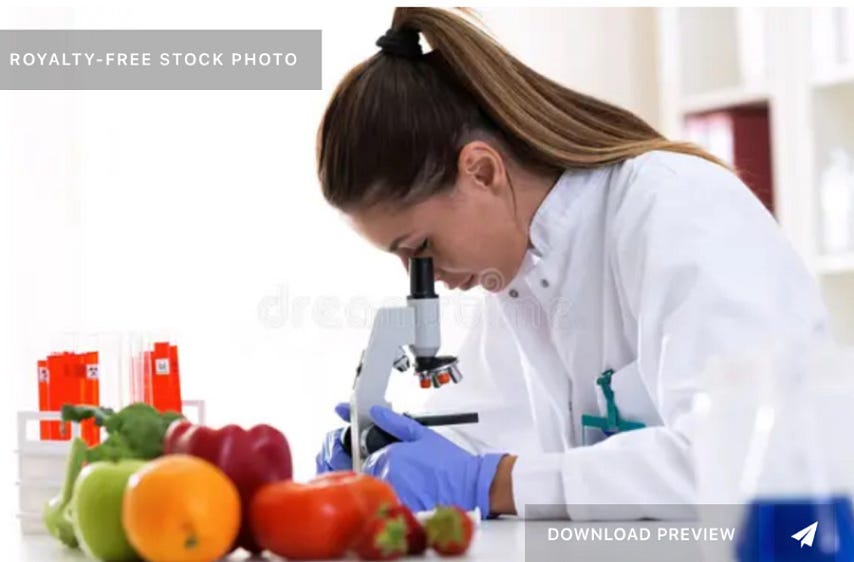
Source: http://dreamstime.com (8)
Chemical properties cannot be determined just by viewing or touching the food materials ; the food’s internal structure must be affected greatly for its chemical properties to be investigated. When a food material or recipe goes under a chemical reaction, the properties will change drastically, resulting in chemical change. However, a catalytic property would also be a chemical property (3).
Food is a complex mixture of water, proteins, lipids, carbohydrates, vitamins, and minerals which make various intra- and intermolecular interactions in the texture. Food is composed of a wide range of chemical compounds that contribute to its flavor, texture, colour, and nutritional properties. These include macronutrients and micronutrients. Carbohydrates are a primary source of energy in food, and they exist in foods as simple sugars (e.g., glucose, fructose) and complex forms (5). The chemical composition of foods is usually made from a variety of different chemical components. In addition, food is always prone to structural modifications during storage or processing. Analysis and quantification of food components is required to determine nutritional value and quality assurance of food products. The chemical specificity, ease of sampling, rapidity of measurements, and nondestructive nature of FT-Raman spectroscopy make it an ideal tool to analyze foods and pharmaceuticals at the molecular level (Li-Chan, 1996; Yang and Ying, 2011; Nunes, 2014; Boyaci et al., 2015; Su et al., 2017; Buckley and Ryder, 2017) (4).
Understanding how carbohydrates break down during digestion, cooking, and storage helps optimize food preparation.
e.g., Maillard reaction, which occurs when sugars and proteins interact under heat, is responsible for browning in foods like roasted meat or bread, impacting both flavour and appearance. Proteins are composed of amino acids and are crucial for muscle repair, immune function, and overall growth. Proteins undergo denaturation when exposed to heat, which changes their structure and can alter the texture of food (Dabirian , et al ., 2019 & Davinelli , et al ., 2018).
For instance, heating eggs causes proteins to solidify, which gives boiled eggs their firm texture. Understanding protein interactions is also key to developing food products such as meat substitutes or processed foods.
Lipids play an essential role in food chemistry, influencing flavor, texture, and satiety. They also serve as carriers for fat-soluble vitamins like A, D, E, and K. Lipids undergo oxidation during storage, leading to rancidity.
Food chemists, food and nutrition professional, Home science academician focus on methods to prevent or slow oxidation, such as adding antioxidants or using packaging techniques that limit exposure to oxygen.
Water is a vital component of food, affecting its texture, preservation, and safety.
Water activity (the amount of free water in food) influences microbial growth and food spoilage.
Food chemistry explores how water interacts with other components in food, such as forming gels with starches or dissolving salts and sugars. The presence of water is a crucial factor in food preservation methods like drying, freezing, and salting. Vitamins and minerals are essential micronutrients in food. Food chemistry examines how these nutrients are affected by factors like heat, light, and oxygen. For instance, vitamin C is sensitive to heat and can be destroyed during cooking, which is why raw fruits and vegetables retain more of this nutrient. Similarly, the bioavailability of minerals like iron and calcium can be enhanced or inhibited by other food compounds, such as phytates in grains or vitamin C in fruits. Beyond the basic nutritional components, foods contain various bioactive compounds such as antioxidants, polyphenols, and flavonoids (Fang , et al ., 2018 & Hai VL, et al ., 2021).
Food chemistry guides preservation methods such as freezing, canning, and drying, which work by altering the water content or microbial load in food. Understanding how chemical reactions are triggered or inhibited by these processes allows food scientists to design more efficient preservation methods that retain the nutritional value and flavour of food. Food safety is another critical area where food chemistry plays a pivotal role (Nygaard , et al ., 2021 & Pancaldi & Trindade , 2020).
Chemical reactions during food preparation or storage can lead to the formation of potentially harmful substances, such as acrylamide in fried or roasted foods. Food chemists study these processes to develop guidelines and techniques for reducing harmful byproducts in food, ensuring that foods are safe to consume.The detection of contaminants, such as pesticides, heavy metals, and foodborne pathogens, also relies on food chemistry.
Analytical techniques like chromatography and spectroscopy allow scientists to identify and quantify these contaminants, ensuring compliance with food safety regulations andprotecting public health (Pant , et al ., 2009 & Sun L, et al ., 2021) (5).
Chemical properties of food are those properties that cannot be measured without altering the chemical composition of the food material. Important chemical properties of food are briefly described below : (6)
Moisture Content
Moisture content is an important test done in the food industry since it may affect spoilage rates, texture, palatability and product cost.
e.g., high moisture content is likely to increase spoilage rates due to higher chemical and microbial activity. Lack of water can cause such textures as, hardness, crumbliness, and gumminess where they are not desired, or may provide improved palate-enhancing textures such as tenderness, softness and smoothness.
pH
The term pH stands for potential hydrogen. It represents the relative basicity or acidity of a food product. Its value ranges from 1 to 14. A pH of 7 is neutral (neither acidic nor basic) e.g. water. Below 7 is acidic and above 7 is alkaline. Some foods such as mayonnaise, ketchups and other sauces must be prepared at a pH of 3.4 or less in order to prevent the growth of dangerous bacteria. Hence, managing pH is critical to food safety. In addition, controlling pH can also adjust the taste of the food. That is because certain foods taste better when they are acidified. In the case of jam and jelly production, apart from providing a sour taste, pH is also essential in creating its gel-like structure.
Acidity
Acidity is the percentage of acids present in the food. Acidity is caused by the presence of acidic compounds in food. These acids play a significant role in providing the degree of sourness of the food, which can modify flavour and aroma. Examples of common acids in food include:
- Citric acid in citrus fruits
- Ascorbic acid (vitamin C) in broccoli and green peppers
- Lactic acid in yogurt
- Malic acid in apples
- Acetic acid in vinegar
- Tartaric acid in grapes
- Phosphoric acid in carbonated sodas
Flavour Compounds
Flavour compounds or odorants, are the volatile chemical components Many flavour compounds are formed during the maturation and ripening stage of fruit development which is why fruits taste better when they are ripe. Although major aromatic compounds in a food can play a significant role in the final flavour, the overall flavour experience is typically due to many flavours combined.
Examples of flavour compounds include:
- Menthol in peppermint
- Cinnamaldehyde in cinnamon
- Citral in lemon grass
- Vanillin in vanilla
- Limonene in citrus
Pigments
Pigments are the compounds in food that gives them their colour.
e.g.,vegetables are green due to the presence of chlorophyll. Apart from green, food comes in all the colours of the rainbow. Each of these colours is due to a pigment or the combination of pigments in the food. Common pigments include
- Anthocyanins: Gives red cabbage and black beans their red and dark colour respectively
- Carotenoids: Gives carrots, mangoes and cantaloupes their yellow colour
- Betanins: Gives beetroot its red colour
- Curcumins: Gives tumeric its yellow colour
- Carmine: Gives a red color to processed foods
- Myoglobin: Gives meat its red color
- Changes in the colour of food is due to changes in the structure of the pigment during processing.
Enzymes
Enzymes are proteins that speed up the rate of chemical reactions. Humans, animals, plants and all life forms need them to support life. In food they are responsible for countless biochemical reactions including growth, maturity and decay. As enzymatic activity increases, foods tend to decay and spoil faster. Therefore food processing activities such as cooking, freezing, and acidification (adding acid) are essential in controlling their activity. Enzymes are used in certain food processing operations, e.g., beer and cheese making.
- Amylase: Used to convert starch to glucose in bread to give it a softer texture and improved moisture retention
- Glucose isomerase: Used to convert glucose to fructose in the production of corn syrup
- Pectinase: Added to juice pulp to soften it and aid in juice extraction
- Papain (from the latex of the green papaya), and bromelain (from pineapple root): Used to tenderize meat (6).
Chemical reactions and transformations plays a pivotal role in food processing, driving the development of various food products which are healthy too. This knowledge is essential for ensuring that new food product which is prepared either in industry or home, contribute to a healthy and balanced diet, ultimately benefiting family health, consumer health and well-being (7).
References
(1) https://egyankosh.ac.in/bitstream/123456789/11995/1/Unit-1.pdf
(2) https://en.m.wikipedia.org/wiki/Food_chemistry
(3) https://en.m.wikipedia.org/wiki/Chemical_property
(4) Ramazan Kizil, Joseph Irudayaraj, Spectroscopic Technique: Fourier Transform Raman (FT-Raman) Spectroscopy 2018, Modern Techniques for Food Authentication (Second Edition)
https://www.sciencedirect.com/topics/food-science/chemical-composition-of-food
(5) Chenig Zhayog, Food Chemistry & Safe Understanding the Science Behind What We Eat, Department of Nutrition and Center for Food Safety and Security Systems, University of Maryland, College Park, USA, @Chen.edu Manuscript No. AJFST-24–156532, Short Communication – African Journal of Food Science and Technology ( 2024) Volume 15, Issue 10
(6) https://foodsciencetoolbox.com/introduction-to-chemical-properties-of-food/
(7) Waqar Nisar, Sadaqat Ali, Asmara Anwar, Iram Saba, Maaz Fahim, Tayyaba Farooq, Hassan Shabbir, ANALYZING THE ROLE OF CHEMICAL REACTIONS AND TRANSFORMATION IN FOOD PROCESSING AND THEIR EFFECT ON NUTRITION VALUE, DOI: 10.53555/ecb/2023.12.Si13.279, Eur. Chem. Bull. 2023, 12(Special Issue 13), 1732 – 1742
메타데이터
- post_id
- b66cc17da6bf
- slug
- reading-material-for-ugc-net-home-science-b66cc17da6bf
- url
- https://medium.com/@mayuri.kapur88/reading-material-for-ugc-net-home-science-b66cc17da6bf
- canonical_url
- https://medium.com/@mayuri.kapur88/reading-material-for-ugc-net-home-science-b66cc17da6bf
- author_url
- https://medium.com/@mayuri.kapur88
- status
- ok
- fetched_at
- 2026-08-10 08:02:46