Reading for Joy vs. Reading for Learning: The Eternal Struggle
Every book lover (or even book dabbler) knows the dilemma: Should I read for pure, unadulterated joy, or should I read something that will…
Reading for Joy vs. Reading for Learning: The Eternal Struggle
Every book lover (or even book dabbler) knows the dilemma: Should I read for pure, unadulterated joy, or should I read something that will make me smarter? Should I immerse myself in a story so gripping that I forget to eat, or should I force my brain to process concepts that will allegedly improve my life but mostly just make me stare out the window questioning my choices?
This internal conflict is a tale as old as time, or at least as old as the first person who picked up a scroll and thought, “Should I read this myth about a heroic goat, or should I study irrigation / escaping from tiger techniques?”
The Case for Reading for Joy
Ah, the simple pleasure of reading for fun. No highlighters. No note-taking. No existential crisis about whether you’re living up to your full potential. Just you, your book, and the perfect beverage of choice (tea, coffee, or — let’s be honest — hot chocolate).
Reading for joy is like eating dessert first. You know you probably should have some vegetables in there somewhere, but life is short, and the latest fantasy epic is calling your name. There’s something undeniably magical about getting lost in a story with no objective beyond sheer enjoyment. You’re not trying to optimize your workflow or decode the secrets of billionaires; you’re just hanging out in a world where dragons exist and people actually speak in full, dramatic monologues. Sometimes you even get both, where the dragon speaks in fiery dramatic monologues!
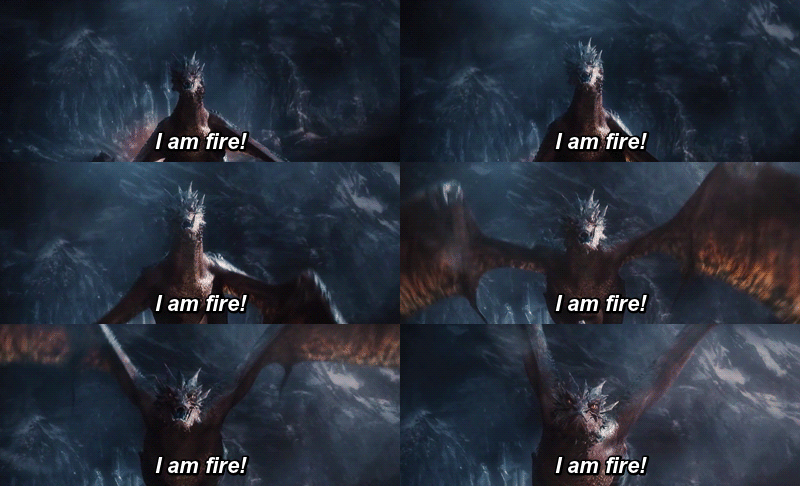
Smaug is a drama queen
So why on earth (middle or otherwise) would you leave that to read something that will checks notes make you a better person?
The Case for Reading for Learning
This is the reading that promises wisdom, insight, and possibly a more impressive LinkedIn bio. It’s the kind of reading that makes you feel productive even if you accomplish nothing else that day.
Books on history, psychology, finance, or the ever-present “How to Be a Better Human” genre all fall into this category. These are the books that demand a level of engagement that occasionally leaves you questioning why you chose this over a nice, mindless rom-com. But they’re also the books that gift you those delicious, self-righteous moments where you can casually say, “Oh, I was just reading this fascinating study on the cognitive biases that influence decision-making,” and feel like an absolute intellectual powerhouse. And be called a pretentious douche by… everyone else!
The Real Struggle: The Guilt
The problem isn’t that we can only read for joy or learning — it’s that we think we should always be reading for learning. This is the same mental nonsense that makes us feel like we should always be doing something productive instead of, say, watching a TV show where an entire episode revolves around a stolen bike that was stolen again.

Side note : Phil is how I will be as a dad. 100%
Joyful reading often comes with an unwelcome side of guilt. “Shouldn’t I be reading something useful?” your inner overachiever whispers. Meanwhile, learning-focused reading comes with its own struggle: “Why am I forcing myself through 300 pages of dense economic theory when I could be on a thrilling adventure with morally ambiguous space pirates?”
The Solution: Read What You Want (And Maybe Trick Yourself a Little)
Here’s a revolutionary thought: You can do both. You can read for joy and for learning, and, shockingly, neither has to feel like a chore.
Some books straddle the line perfectly — nonfiction written with the storytelling flair of a novel, historical accounts that feel like action movies, self-improvement books that don’t make you want to roll your eyes into another dimension. Find those. Seek out the books that educate without boring you into oblivion.
Or, better yet, accept that reading doesn’t always have to serve a grand purpose. Sometimes, the value of a book is simply that it made you happy. And if you really, really need to justify it? Call it “narrative-based stress reduction therapy” and… realise you’re a massive nerd and you’re happy that way.

Thanks Ryan
At the end of the day, books should add to your life, not be another metric of productivity that you stress over. So go forth! Read for joy! Read for learning! And if you’re ever torn, just pick the book with the cooler cover. It’s probably the right choice anyway.
메타데이터
- post_id
- b671ef3b13cd
- slug
- reading-for-joy-vs-reading-for-learning-the-eternal-struggle-b671ef3b13cd
- url
- https://medium.com/@siddharth771995/reading-for-joy-vs-reading-for-learning-the-eternal-struggle-b671ef3b13cd
- canonical_url
- https://medium.com/@siddharth771995/reading-for-joy-vs-reading-for-learning-the-eternal-struggle-b671ef3b13cd
- author_url
- https://medium.com/@siddharth771995
- status
- ok
- fetched_at
- 2026-06-16 19:09:56