The Week AI Quietly Changed Everything And Almost Nobody Noticed
From a government-blocked model to AI inflation hitting your wallet, here are 18 updates that actually matter
10 AI Updates That Quietly Changed the Industry This Week (And Why They Matter)
From a government-blocked model to AI inflation hitting your wallet, here are 18 updates that actually matter

The headlines this week weren’t just big —they were the kind that quietly redraw the map. OpenAI built its most powerful model ever, powerful enough that the US government stepped in before the public could touch it. Apple raised MacBook prices overnight and called it "market conditions." And Anthropic slipped an AI co-worker into your company’s Slack one that reads your files, remembers your workflows, and never clocks out.
Let's get into all of it.
1. OpenAI’s Most Powerful Model That You Can’t Actually Use
OpenAI revealed its next-generation GPT-5.6, arriving in three flavors:
Sol— the flagship, most powerful version
Terra— balanced and everyday, same capability as the previous model but at half the price Luna — fast and cheap, built for high-volume work
On OpenAI’s own coding benchmarks, Sol outperforms Claude’s Opus 5. But here’s the catch: you can’t use it. At the request of the US government, OpenAI is rolling it out only to a small group of trusted partners first — not the public.
The stated reason? Sol is so capable at finding vulnerabilities in software that the government wanted to review it before it went wide.
That might sound reasonable. But sit with it for a moment.
The most powerful AI ever built goes first to a handpicked circle. They get to build with it while everyone else waits. And by the time access opens up, that head start compounds into years. The same companies that lobbied for oversight rules are now the ones deciding who's "trusted" enough to enter the room.
These models were trained on everything humanity put online — your posts, your code, your writing. And now, we're the ones deemed not ready to use what we helped create.
This might be the moment the original dream quietly died: the idea that a kid with a laptop anywhere could access the same intelligence as a billion-dollar company. It's worth pushing back on now, because once this pattern sets in, it becomes very hard to undo.
2. AI Inflation Is Real — And It’s Hitting Your Devices
Your next MacBook just got more expensive. So did your iPad. And your Xbox.
Here's the chain reaction nobody explained properly:
AI runs in massive data centers that consume enormous amounts of memory chips — the same RAM and storage inside your laptop. So much of that supply now flows toward AI infrastructure that less is available for consumer electronics, and prices shot up.
For months, Apple absorbed that cost. This week, it stopped. In India, a MacBook Pro jumped ₹70,000 overnight — from roughly ₹1.7 lakh to ₹2.4 lakh. The iPhone was spared, for now. Microsoft raised Xbox prices globally for the exact same reason, with Dell, Lenovo, and Samsung reportedly close behind.
There’s a name for this now: AI inflation.
And it hits from both sides. AI eats the memory that makes every Mac pricier — and it's part of why the cheap ones keep selling out. Developers are buying Mac Minis as private AI servers, running agents on them around the clock instead of paying for cloud compute. Apple's own CEO cited "agent demand" as a reason the Mac Mini has been sold out for months.
Meanwhile, the companies that make this memory are having their best year on record. Micron — one of only three companies that produce most of the world's memory chips — just posted record profits and became the single most traded stock in America. More money flows through it every day than through Nvidia or Tesla.
You pay more. They pocket the difference.
3. Anthropic’s AI Co-Worker Just Moved Into Your Company
Imagine adding a new hire to your team's Slack — one that never sleeps, never misses context, and actually gets things done.
That’s Claude Tag , Anthropic’s new Slack integration. You mention @Claude in any channel, hand it a task, and it takes over. It’s not a chatbot. It pulls the right files from your drive, breaks the job into steps, updates the docs, and posts a checklist of what’s done.
Anthropic says 65% of their own product teams' code is already written this way.
The obvious concern: an AI loose in your company files.
Anthropic's answer is careful permission scoping. Claude in your legal channel can see contract documents. Claude in your engineering channel can edit the codebase. But you can't ask Claude in the legal channel to touch the codebase — it literally cannot see it. Memory works the same way: what it learns in a private channel or DM stays there.
It's currently in beta, available on paid Team and Enterprise plans.
But zoom out, because this is a bigger story.
Andrej Karpathy, who recently joined Anthropic, called this the third major shift in how we use AI:
- A website you visit
- An app you download
- A co-worker that lives inside your company
Ashwin Gopinath, a former MIT professor, put a sharper point on it: Claude Tag is a Trojan horse — not because Anthropic is being malicious, but because the incentives are obvious. Swapping an AI model is easy. But swapping out the memory of how your company actually runs — the workflows, the client promises, the "we tried that and it flopped" lessons — that's the part that gets stuck inside one vendor.
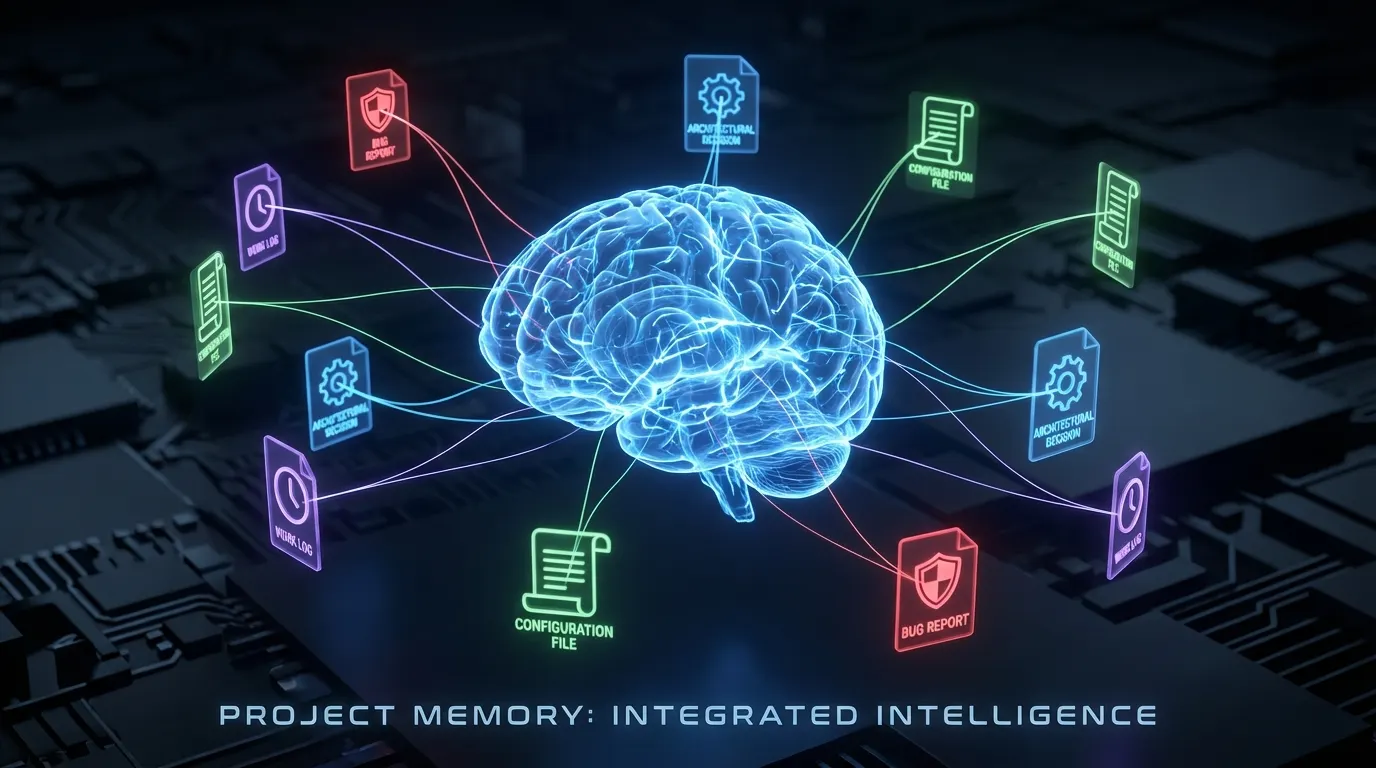
My honest take: this is the direction AI is heading, full stop. Don’t fear it — start using it now. But keep one rule in mind: rent the intelligence from whoever is best this month, but own your context.
Your context is everything your AI knows about how you work — your files, your preferences, your past decisions. If that memory lives inside one company's app, the day they raise prices or shut down, you can't just walk out. Keep that memory somewhere you control, so any AI can use it.
4. Nvidia Gives AI the Tools to Do Real Science
Until now, AI has mostly been good at talking about things. Nvidia just took a significant step toward AI that can actually do science.
They launched the BioNeMo Agent Toolkit . The simplest way to understand it: AI can now run the actual scientific tools used in drug discovery — not just read about them.
You type something like "design ten protein binders for PDL-1 and show me the results." The agent plans the steps, runs them on Nvidia's GPUs, and drops the 3D molecular structures into a viewer.
Drug discovery normally takes years and billions of dollars. The first phase — finding candidate molecules — Nvidia says just went from days to minutes.
5. Japan Answers With a Model That Can’t Be Banned
After China answered the Claude Opus 5 export restrictions with GLM-5.2, Japan came back with a completely different kind of answer.
Sakana Fugu isn’t a single model. It’s an orchestrator — a team captain that splits your task across the best available AIs: GPT, Gemini, Claude Opus, and others. It combines their responses into one answer.
The clever part: because it's not tied to any single model, if one gets banned or restricted tomorrow, Fugu just swaps it out and keeps running. Sakana claims it hits Opus-5-level benchmark scores without using Opus 5 at all — since that's the model most of the world can no longer access.
Testing is still ongoing, but the concept is genuinely smart: build for resilience, not dependency.
For Indian students especially, this hits differently. JEE and NEET coaching costs have gone completely out of control — lakhs of rupees that most families simply cannot spare. This works in your own language and costs nothing.
6. One Sentence → A Full Working App (Genspark Design)
Genspark just launched a tool that turns a single sentence into a finished app design.
Type "design a note-taking app." In seconds, it builds a full set of polished screens — not rough sketches, actual finished designs, powered by Claude.
Don't like the look? Tell it: "make it more playful." It redesigns everything on the spot — new colors, illustrations, the works.
You can even draw on the screen. Circle an empty corner, write "add a dark mode toggle," and it appears exactly where you drew it. Like sketching on a napkin, except the napkin actually builds what you drew.
From that one app, it generates a matching landing page and a product demo video — all in the same visual style. Hit one button, and it converts the design into real, working code.
7. OpenAI Puts a Computer Agent in Your Pocket
OpenAI added Codex to the ChatGPT mobile app. Now you can run tasks on your laptop from your phone, from anywhere.
Your laptop stays on at home. You're out. You type: "grab the latest video from the launch folder and send it to the team on Slack." Your computer picks it up, opens the right apps, moves the file, and posts it in Slack.
You watch it work step by step on your phone. If it hits a decision point that needs your approval, it sends you a notification. You tap approve. It carries on.
8. ChatGPT Just Got a Personality
OpenAI’s new GPT-5.5 Instant — the default free version used by hundreds of millions — became noticeably more playful this week.
Type "goat birthday" and it knows you mean Messi. It wishes him a happy birthday, goat emoji and all.
We tested it on something more practical: planning a 5-day Kerala trip for 4 people, ₹80,000 budget, a backwater, a hill station, max 2 hotel switches, and one person who can't sit in a car for more than 3 hours.
It thought carefully before answering. It dropped Alleppey — the famous but overpriced backwater — and picked Kumarakom instead: closer, quieter, same experience. Swapped the houseboat for a lakeside resort and a day cruise to protect the budget. And it explained every single decision.
9. AI Is Moving Into the Chip Itself
Two chip stories that matter more than they sound.
OpenAI built its own chip, codenamed Jalapeno. Until now, they rented most of their computing power from Nvidia. Their custom chip is designed to make ChatGPT faster and cheaper to run — and they used AI to help design it.
IBM packed nearly 100 billion transistors onto a chip the size of your fingernail — crossing a technical threshold many thought was years away. Real products are still about five years out, but it’s the kind of leap that keeps Moore’s Law alive.
The pattern is clear: the next phase of AI won't be decided by who builds the smartest app. It'll be decided by who builds the hardware to run it.
10. Quick Updates Worth Knowing
Notion + AI Agents: You can now drop an AI agent directly into Notion. A bug appears as a task card, a Claude agent reads your workspace, finds the problem, writes the fix, and the card slides from "Triage" to "Done" — with a human reviewing in between. Cursor handles the actual code.
Hermes Agent Update: This free, open-source AI agent got two meaningful upgrades: a "blank slate" mode that starts with almost all of its 60+ capabilities disabled (you enable only what you need), and a /learn command that lets you point it at any document, API reference, or manual and turn it into a reusable skill.
Microsoft Excel + Copilot: You can now teach Copilot your monthly reporting process once, save it, and anyone on the team can reproduce it with a single line of text. It builds the sheet, fills the tables, formats everything to your company’s style, and writes the commentary.
Onit (Free Open-Source Coding AI) :A US team released a completely free, commercially usable coding AI that’s unusual in one way — instead of following preset rules for how to approach problems, it figures out its own strategy first, then solves the problem.
The Bigger Picture
This week had a theme underneath all the announcements: control
Who controls the most powerful models? Who controls the hardware to run them? Who controls the memory of how your company works? Who controls the prices of the devices you use to access any of it?
The answers are shifting — and they're shifting fast. The best thing you can do right now is stay informed, start using these tools before others in your field do, and make deliberate choices about where your data and context live.
The AI wave isn't coming. It's already here, rearranging things while most people are still deciding whether to pay attention.
Found this useful? Follow for weekly breakdowns of AI updates that actually matter — explained clearly, without the hype.
메타데이터
- post_id
- b69e532e4475
- slug
- the-week-ai-quietly-changed-everything-and-almost-nobody-noticed-b69e532e4475
- url
- https://ai.plainenglish.io/the-week-ai-quietly-changed-everything-and-almost-nobody-noticed-b69e532e4475
- canonical_url
- https://ai.plainenglish.io/the-week-ai-quietly-changed-everything-and-almost-nobody-noticed-b69e532e4475
- author_url
- https://medium.com/@vaishnavi.singh0324
- status
- ok
- fetched_at
- 2026-07-12 02:04:39