The Power of Collective Wisdom: Finding Solutions to Cattle Menace
Lately, numerous unfortunate accidents have occurred in my neighborhood due to cattle menace, with a few resulting in loss of life. The…
The Power of Collective Wisdom: Finding Solutions to Cattle Menace

Lately, numerous unfortunate accidents have occurred in my neighborhood due to cattle menace, with a few resulting in loss of life. The actions taken by the corporation fall short in addressing the issue, leaving us as common individuals with no choice but to live with fear and lament.
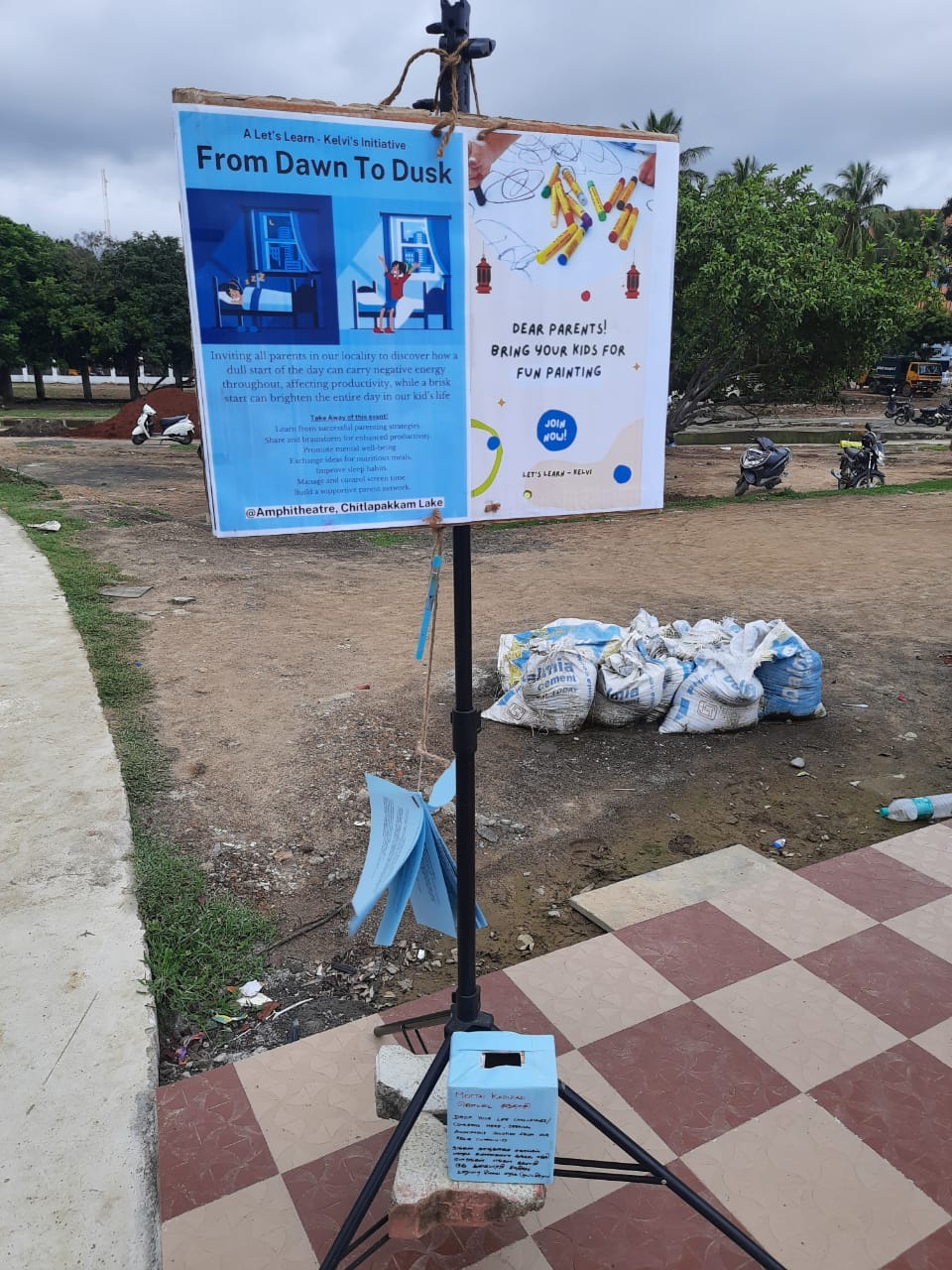
However, in Kelvi, we’ve opted to find an amicable solution through a brainstorming session, especially involving students. With this objective in mind, we organized our third offline event at the lake last weekend, engaging with our community to gather their opinions. Our aim is to translate these opinions into actionable solutions, leveraging the collective ‘Wisdom of the Crowds’.

This marks our first event after the North East Monsoon, and our intention was to gather a diverse crowd ranging from ages 5 to 70, aiming for a variety of thoughts and multiple perspectives. I promoted this event with the aim of addressing the cattle menace issue while also nurturing children’s engineering skills. Some questioned the connection between cattle and engineering, especially for children as young as five. The answer is straightforward: Engineers are problem solvers by nature. Our goal is to encourage students to think like engineers, identifying issues, analyzing them, documenting their findings, and proposing solutions.
Our current education system often focuses on traditional methods and achieving high marks rather than practical application. By fostering an engineering mind-set from a young age, we empower children to apply their learning to real-world challenges. However, as usual, the event ended up with the participation of the usual suspects — a group of four members. Undeterred, we began the brainstorming session with optimism, introducing a simple yet effective idea of wearing three different hats to eliminate biases while collecting ideas.

During our session, four kids, two aged 5 and two aged 8, shared their candid ideas to address the cattle menace:
Extreme Measures: Some suggested drastic measures such as shooting the cattle and their owners for disturbing the public, or imprisoning the owners as punishment.
Physical Barriers: Others proposed installing gates in public places to prevent cattle from entering, with the added idea of automating gate operations for human and vehicle movement.
Empathy and Understanding: A more compassionate approach was suggested, advocating for loving cattle more to prevent them from hurting anyone. Additionally, it was noted that cattle may act out of fear, so understanding their behavior is essential.
Behavioral Changes: One idea was to avoid wearing red clothing, as cattle supposedly dislike this color. Another proposal involved stopping cattle feeding in streets to encourage them to seek food elsewhere.
While these ideas varied in their practicality and feasibility, they reflect the diverse perspectives and creative thinking of our young participants in tackling the cattle menace issue.
To ensure the neutrality of solutions, I suggested elderly participants start by donning the cap representing a cattle owner and asked them to reflect on why they let their cattle roam in the streets.
Limited Space: Due to the increasing trend of renting out vacant spaces for building rooms or shops, cattle owners often face a lack of space to accommodate their cattle.
Financial Constraints: The diminishing income from cattle compared to earlier days, coupled with the constant increase in raw material prices for feeding cattle, leads to financial strain on cattle owners.
Lack of Local Services: The absence of local cattle feeding shops indicates a shift in both business and societal mind-sets, making it challenging for cattle owners to access necessary resources.
Generational Shift: The reluctance of the next generation to continue the cattle business results in the burden falling on elders, leading to fatigue and neglect of the business. Despite these challenges, elders persist in maintaining the business to remain financially independent.
Wearing the cap of corporation officials, here are some ineffective methods and possible effective action points to address the cattle menace:
Lack of Data: The absence of clear data on the number of cattle within the ward or area, along with their owners’ details, hampers the ability to devise effective solutions.
Futile Enforcement: Imposing fines or seizing cattle as a deterrent proves ineffective, as there is no noticeable change in the streets, indicating that these measures are merely symbolic.
Understaffed and Underfunded: Complaints regarding cattle menace often go unaddressed due to limited manpower and insufficient funds for enforcement activities.
Political Influence: The nexus between cattle owners and local politicians complicates the officials’ ability to take action within the confines of the law, leading to ineffective governance.
Now, let’s step into the shoes of the common man, who bears the brunt of the cattle menace:
Safety Concerns: Common folk fear for the safety of their children, hesitant to let them venture out alone due to the presence of stray cattle.
Affected Groups: Elders, bike riders, and school students are among the most affected by this issue, facing inconvenience and potential dangers in their daily routines.
Lack of Contact Information: The absence of comprehensive data on cattle owners leaves the common man in a quandary, unsure whom to contact to address their complaints.
Unattended Complaints: Complaints lodged with the corporation often go unaddressed, leaving residents frustrated with the lack of action.
Environmental Impact: Streets are left dirty and foul-smelling due to the solid waste left behind by cattle, contributing to an unsanitary environment for residents.
Having explored the perspectives of cattle owners, corporation officials, and the common man in the ongoing cattle menace issue, it’s time to embrace the cap of engineering for an automated and inclusive solution. This integrated IT solution aims to provide ample communication to cattle owners about their cattle causing disruptions, support the corporation in efficiently managing tickets despite limited resources, and empower the common man to report issues transparently and witness responsive actions from the corporation. This initiative seeks to harmonize the interests of all stakeholders involved, ensuring a cohesive and effective approach to address the cattle menace.

Developing a mobile application to address the cattle menace:
QR Code Identification: Implement a system where cattle are tagged with QR codes around their necks or ears, enabling individuals to scan them using a mobile app.
Geo-Location Tracking: Upon scanning the QR code, the app will capture the current geo-location and take a photo of the cattle, sending this information to both the owner and corporation officials.
Automated Warning System: The app will automatically issue warnings to cattle owners upon repeated instances of their cattle straying into public spaces, with fines imposed incrementally for subsequent violations.
Enforcement and Action: Beyond a certain number of instances, corporation officials will be notified to take further action, including possible seizure of the cattle, ensuring accountability and deterrence.
Community Engagement: Encourage community participation by empowering individuals to report stray cattle sightings via the app, fostering a collaborative approach to addressing the issue.
We’ve completed the requirement gathering phase of the software life cycle for developing an automated solution to address the cattle menace. The next step in our journey is to design the requirements for our automated solution, both functionally and technically, to transform this theory into reality. I am eager to collaborate with students, whether from schools or colleges, who are passionate about computer science. In today’s dynamic IT landscape, simply scoring marks in exams is no longer sufficient to secure a job. We need to provide students with opportunities to apply their curriculum concepts in real-world scenarios.

I invite you to spread the word about this initiative to your friends and family. Let’s encourage more students to join us in this endeavor, where they can contribute their ideas and creativity to find innovative solutions. I look forward to welcoming many participants to our next offline event.
Please share your views, ideas, and feedback in the comment section below. Your input will be invaluable as we strive to scale up and make a meaningful impact in addressing the cattle menace issue through technology and collaboration.
메타데이터
- post_id
- b6d8bc797d26
- slug
- the-power-of-collective-wisdom-finding-solutions-to-cattle-menace-b6d8bc797d26
- url
- https://medium.com/@letslearn.kelvi/the-power-of-collective-wisdom-finding-solutions-to-cattle-menace-b6d8bc797d26
- canonical_url
- https://medium.com/@letslearn.kelvi/the-power-of-collective-wisdom-finding-solutions-to-cattle-menace-b6d8bc797d26
- author_url
- https://medium.com/@letslearn.kelvi
- status
- ok
- fetched_at
- 2026-06-28 04:42:08