Distance Is the First Language of Boxing
By Ibrahim K. Minyori
Distance Is the First Language of Boxing
By Ibrahim K. Minyori
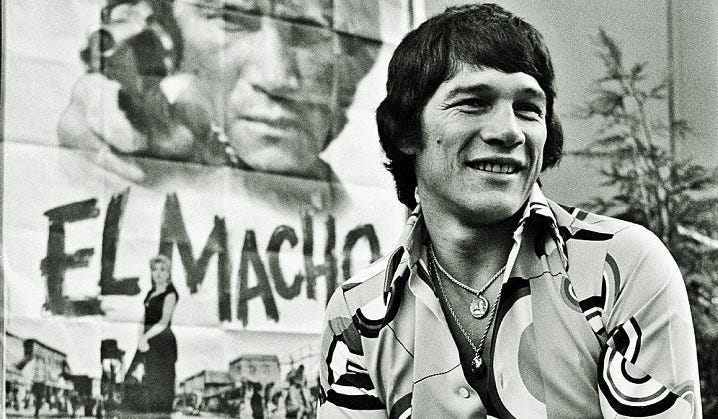
Carlos Monzon, a great distance boxer!
Before the first punch lands, the fight has already begun.
Not in the exchange of strikes, but in the negotiation of space.
Two fighters step into the ring carrying more than skill or intent. They carry preferred distances — ranges in which their offense becomes natural, their defense coherent, and their decisions clear. Long range, where the jab speaks first. Mid-range, where combinations unfold. Close range, where leverage, weight, and instinct take over.
Each distance is a language.
And every fighter is fluent in some, less so in others.
The contest begins as a quiet argument over which language will be spoken.
Distance, in this sense, is not merely measurement. It is structure. It defines what is possible, what is dangerous, and what is unavailable. A punch that is effective at one range becomes irrelevant at another. A defensive movement that protects at distance may fail entirely in close quarters.
Nothing translates perfectly.
And so the fight becomes an act of imposition.
Who decides where the exchanges occur?
This question precedes all others.
Because before a fighter can land, he must arrive. Before he can defend, he must be positioned. Distance determines both. It is the invisible architecture that holds the visible action in place.
When a fighter controls distance, he is not simply maintaining space. He is selecting the terms of engagement. He is choosing which tools are active, which risks are present, and which responses are required.
He is deciding the language of the fight.
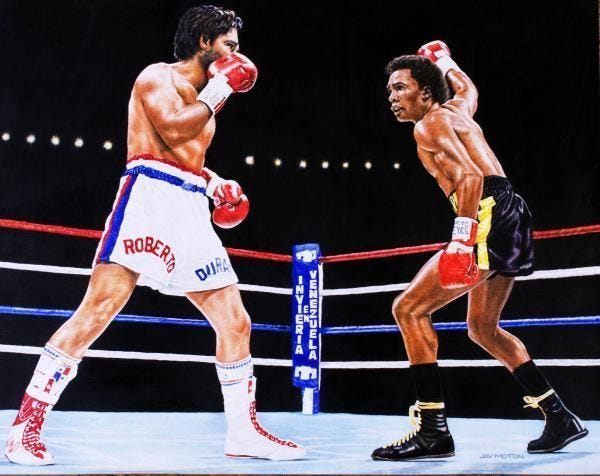
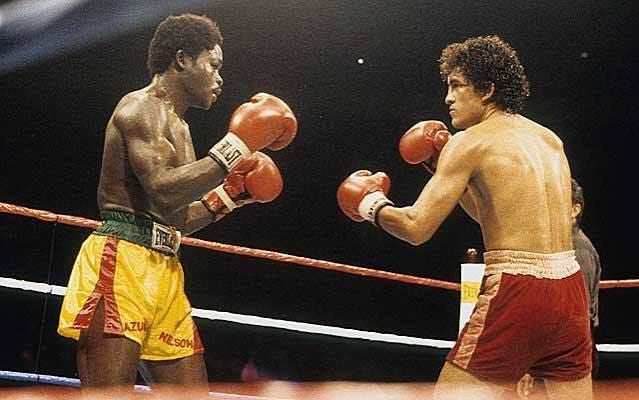
At long range, the contest is stretched. Time expands between actions. The jab becomes the primary instrument — not only as a weapon, but as a measuring device. It defines reach, tests reaction, and establishes rhythm. The fighter who controls long range dictates tempo through extension, keeping the opponent at the edge of possibility.
Here, clarity exists.
Movements are readable, exchanges deliberate, the space between fighters offering both safety and constraint. The one who owns this distance can operate with foresight, seeing the fight before it arrives.
But long range is not neutral.
It favors the fighter who can maintain it.
The opponent must cross that space to become effective. And crossing distance is itself an act of exposure. Each step forward invites response, each attempt to close is met with resistance. The fighter who lives at long range is not retreating.
He is defending territory.
At mid-range, the fight compresses. The space shrinks, and with it, the time available for decision. Combinations replace single shots. Exchanges become layered — attack and counter intertwined within the same moment. The margin for error narrows, and the fight becomes more volatile.
This is where most contests are decided.
Not because it is inherently superior, but because it is unavoidable. Even fighters who prefer distance must pass through this space. It is the corridor between safety and danger, where intent becomes action.
Control at mid-range is more difficult to maintain.
It requires balance — between offense and defense, between commitment and caution. Too aggressive, and the fighter overextends. Too reserved, and he concedes initiative. The ability to operate here is not simply technical.
It is compositional.
At close range, the fight transforms entirely. Space is no longer something to manage, but something that has been consumed. The bodies come together, and the contest shifts from extension to compression. Punches shorten. Angles tighten. Leverage replaces reach.
Here, visibility decreases.
Decisions are made through feel as much as sight. The fighter senses openings rather than sees them. Control becomes physical — through positioning, through balance, and through the subtle manipulation of weight and contact.
This is the most intimate language of boxing.
And often the least understood.
Because from the outside, it can appear chaotic and even crude. The clean lines of long-range boxing dissolve. The rhythm becomes irregular, the actions less distinct. But within this compression, structure still exists. The fighter who understands this range can operate with precision, even in the absence of space.
He creates opportunity within constraint.
The fight, then, is not simply about movement between these distances, but about ownership of them. Each fighter seeks to bring the contest into his preferred range and to keep it there. This is not done once, but continuously. Distance is negotiated with every step, every feint, and every exchange.
It is dynamic.
And it is contested.
A fighter may begin at long range, controlling with the jab, only to be drawn into mid-range exchanges where his advantage diminishes. Another may seek to close distance, to impose physicality, only to be kept at the edge and denied entry repeatedly.
These shifts are not incidental.
They are the fight.
Because what appears as success or failure in punching often originates in positioning. A clean shot is not only the result of timing or accuracy. It is the result of being in the correct place at the correct distance when the opportunity arises.
Position precedes execution.
This is why some fighters appear ineffective despite technical ability. Their punches fall short, their combinations break down, and their defense appears late. The issue is not skill alone, but placement. They are operating in the wrong language, at a distance that does not support their strengths.
They are speaking without being heard.
Conversely, a fighter who controls distance can make ordinary techniques appear exceptional. The jab lands not because it is faster, but because it is delivered from a position of advantage. The defense holds not because it is flawless, but because it is aligned with the space in which it operates.
Everything becomes easier.
Because it is aligned.
This alignment is fragile. It can be disrupted through pressure, through variation, and through the deliberate breaking of rhythm. A fighter who cannot maintain his preferred distance is forced into adaptation. He must operate in unfamiliar space, where his instincts are less reliable and his timing less precise.
The fight begins to slip.
This is where distance reveals its deeper significance. It is not only a technical parameter, but a governing principle. It determines which aspects of a fighter’s skill are expressed and which are suppressed. It shapes the fight before the action becomes visible.
It is the first condition.
Everything else follows.
When the final bell rings, the outcome may be explained through punches landed, rounds won, and moments seized. But beneath these explanations lies a quieter truth. The fighter who controlled distance controlled the possibilities of the fight. He determined not only what happened, but what could happen.
He spoke first.
And ensured that the fight was conducted in a language he understood.
Because in boxing, before there is impact, before there is dominance, before there is victory —
there is space.
And whoever governs it
writes the terms
on which everything else is decided.
메타데이터
- post_id
- b6e7638d2c8b
- slug
- distance-is-the-first-language-of-boxing-b6e7638d2c8b
- url
- https://medium.com/@ibrahimkimathi/distance-is-the-first-language-of-boxing-b6e7638d2c8b
- canonical_url
- https://medium.com/@ibrahimkimathi/distance-is-the-first-language-of-boxing-b6e7638d2c8b
- author_url
- https://medium.com/@ibrahimkimathi
- status
- ok
- fetched_at
- 2026-07-10 09:52:19