The Protein Obsession
Protein water, fortified snacks, and macro panic — how marketing turned nutrition into math and real food into an afterthought.
The Protein Obsession
When eating turned into macro-counting and protein became a moral virtue

Exhibit A.
This morning, I walked into Kroger and found myself standing in what can only be described as a protein chapel.
Protein chips. Protein crackers. Protein cereal. Protein bars stacked like talismans against physical collapse. Even protein water, which feels less like nourishment and more like performance art.
This was not an aisle of food. It was an aisle of reassurance.
Somewhere along the way, eating stopped being about meals and became about macros, and protein — once just one nutrient among many — was promoted to moral virtue. You don’t simply eat protein anymore. You signal responsibility with it.
Americans are obsessed with protein, and most dramatically overestimate how much they actually need. A persistent internet confusion has quietly turned grams per kilogram into grams per pound, effectively doubling protein requirements with no physiological justification. The math is wrong, but the confidence is unwavering.
The result is a population convinced that without constant protein fortification, muscle loss and metabolic decline are imminent — despite the fact that many people do not strength train, and some barely move at all.
Protein has become a talisman. Eat enough of it and weight loss will follow. Muscle will appear. Health will be secured. The rest of nutrition — fiber, micronutrients, food quality, actual eating patterns — fades into the background.
Protein Does Not Magically Become Muscle
One of the most persistent beliefs fueling this trend is that eating more protein automatically builds muscle.
It does not.
Muscle growth requires three things:
- Progressive resistance training
- Adequate total energy intake
- Recovery
Protein alone is inert.
Without mechanical stimulus, excess protein does not transform into muscle. The body does not store it “for later,” like nutritional savings.
When protein intake exceeds what the body can use for tissue repair and synthesis, it doesn’t get stored as “extra muscle.” Amino acids are deaminated — the nitrogen component is stripped off — and that nitrogen is converted into urea and excreted by the kidneys. In other words, you pee it out. The remaining carbon skeletons are either oxidized for energy or converted into glucose or fat, depending on overall energy balance. None of this is exotic or special. It’s basic human metabolism, not a loophole. Your body is very good at maintaining equilibrium and very bad at honoring nutritional wishful thinking.
And here’s the part that rarely makes it onto a protein bar wrapper: a gram of protein provides four calories — the same as carbohydrates and sugar. There is no energetic discount. The equation remains stubbornly unchanged: calories in must be lower than or equal to calories out. Protein is not exempt from thermodynamics, no matter how impressive the label looks.
Eating large amounts of protein also does not guarantee weight loss. Calories remain relevant, regardless of how virtuous the macro appears on the front of the package. Protein can help with satiety — but so can fiber, fat, and meals that resemble food rather than engineering projects.
Institutional Signals and Cultural Fallout
This fixation on protein hasn’t developed in isolation. Influential health voices — including the current U.S. Secretary of Health and Human Services, Robert F. Kennedy Jr., who publicly follows a strict animal-based, carnivore-leaning diet — have helped normalize the idea that more protein is inherently better.
At the same time, the 2025–2030 Dietary Guidelines, released in January 2026, increased recommended protein intake to approximately 1.2–1.6 grams per kilogram of body weight, up from the long-standing 0.8 g/kg baseline. The rationale — reducing age-related muscle loss — is reasonable. The emphasis, crucially, is on high-quality, nutrient-dense proteinfrom real foods: meat, fish, dairy, legumes, nuts.
Which makes the protein aisle all the more baffling.
Because none of the protein-enriched snack foods dominating grocery shelves qualify as high-quality, nutrient-dense protein sources. They are ultra-processed, nutritionally thin, and often more expensive per serving than eggs, fish, yogurt, or legumes — the very foods people claim they can no longer afford.
If protein were truly the priority, this aisle wouldn’t exist.
Protein Quality: The Part Everyone Skips
Protein is not just about grams. It is about amino acid composition.
Essential amino acids — nine of them — cannot be produced by the human body and must be obtained through diet. They are non-negotiable. They support muscle repair, immune function, energy metabolism, and neurotransmitter synthesis.
Real food provides these amino acids in biologically useful ratios.
A protein crisp does not become nutritionally impressive because protein was added back in after processing removed everything else. Yet very few protein obsessives seem concerned with amino acid completeness or bioavailability. The assumption appears to be that if the number is high enough, the job is done.
Marketing is relying on that assumption. And so far, it’s working.
Cost, Control, and the Illusion of Precision
There is one final irony worth addressing. Many of the loudest voices complaining about the cost of food — particularly meat and fish — will routinely spend more money on protein bars, shakes, and snacks that deliver less nutrition per dollar and considerably more packaging.
This isn’t really about health. It’s about control.
Numbers feel safer than judgment. Labels feel easier than learning how to eat. Real food requires attention. Literacy requires curiosity. Marketing offers certainty in a bag.
Protein isn’t the enemy. But turning nutrition into an arms race — while ignoring food quality, movement, and basic physiology — is not progress. It’s just another way of mistaking consumption for care.
Eating like an adult remains stubbornly unfashionable: real food, eaten regularly, with enough protein, enough carbohydrates, enough fat, and enough pleasure to make it sustainable.

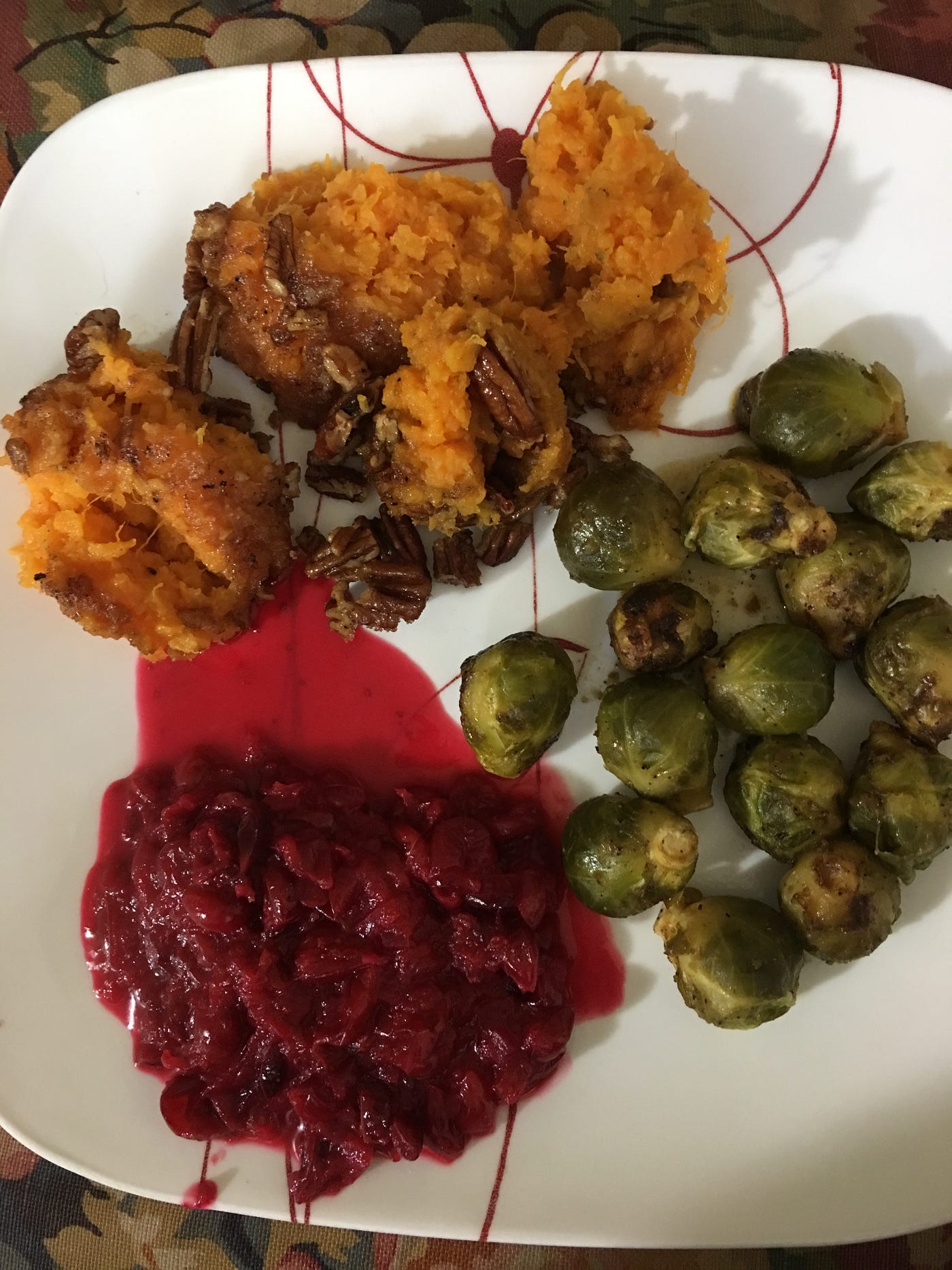
Dinner. Two protein sources. No fortification required.
Which, inconveniently, has worked for generations.
Disclaimer: I’m not a doctor, dietitian, or health influencer. I’m simply someone with a decades-long interest in nutrition, largely immune to food fads, who enjoys real food the way Europeans always have — without moral panic, macro obsession, or protein powder dissolved into water.
If you enjoy thoughtful, no-nonsense takes on food, nutrition, and the cultural stories we tell ourselves about health, you can subscribe here.
Sources & Further Reading
- World Health Organization — Protein and amino acid requirements in human nutrition
- EFSA — Dietary Reference Values for protein
- International Society of Sports Nutrition — Position stand on protein and exercise
- Phillips SM & Van Loon LJC — Dietary protein for athletes: from requirements to metabolic advantage
- Wolfe RR — The underappreciated role of muscle in health and disease
메타데이터
- post_id
- b6fa07b4081b
- slug
- the-protein-obsession-b6fa07b4081b
- url
- https://medium.com/@cathycirisan/the-protein-obsession-b6fa07b4081b
- canonical_url
- https://medium.com/@cathycirisan/the-protein-obsession-b6fa07b4081b
- author_url
- https://medium.com/@cathycirisan
- status
- ok
- fetched_at
- 2026-08-07 05:19:57