A Hunting Rangefinder Is Only Helpful If It Gets These Things Right
A hunting rangefinder sounds like a simple piece of gear.
A Hunting Rangefinder Is Only Helpful If It Gets These Things Right
A hunting rangefinder sounds like a simple piece of gear.
You point it at something, press a button, get a number, and make a better decision. That’s the idea, anyway.
But anyone who has actually used one outside knows it’s not always that clean. The deer doesn’t stand still in perfect light. The branch you ranged might not be the one you meant to range. Your hands might be cold. The display might be hard to read. The animal might be partly hidden in brush. And by the time you get a second reading, the moment could already be gone.
That’s why a hunting rangefinder isn’t just about having a big maximum yardage number printed on the box.
It’s only helpful if it gets a few real-world things right.
It has to give fast readings without making you fight it
Speed matters more than people think.
Not because every shot needs to be rushed, but because hunting situations rarely stay the same for long. An animal takes a few steps. It turns. It slips behind cover. The light changes. Your shooting window opens and closes quicker than expected.
A good rangefinder should feel almost boring to use. Raise it, range the target, get a clean number, move on.
If it makes you press the button three times, hold it too steady, or wonder whether the reading is right, that’s a problem. You start paying attention to the device instead of the situation.
And in the field, gear should not steal your focus.
It has to work on real hunting targets, not just perfect ones
This is where a lot of buyers get fooled.
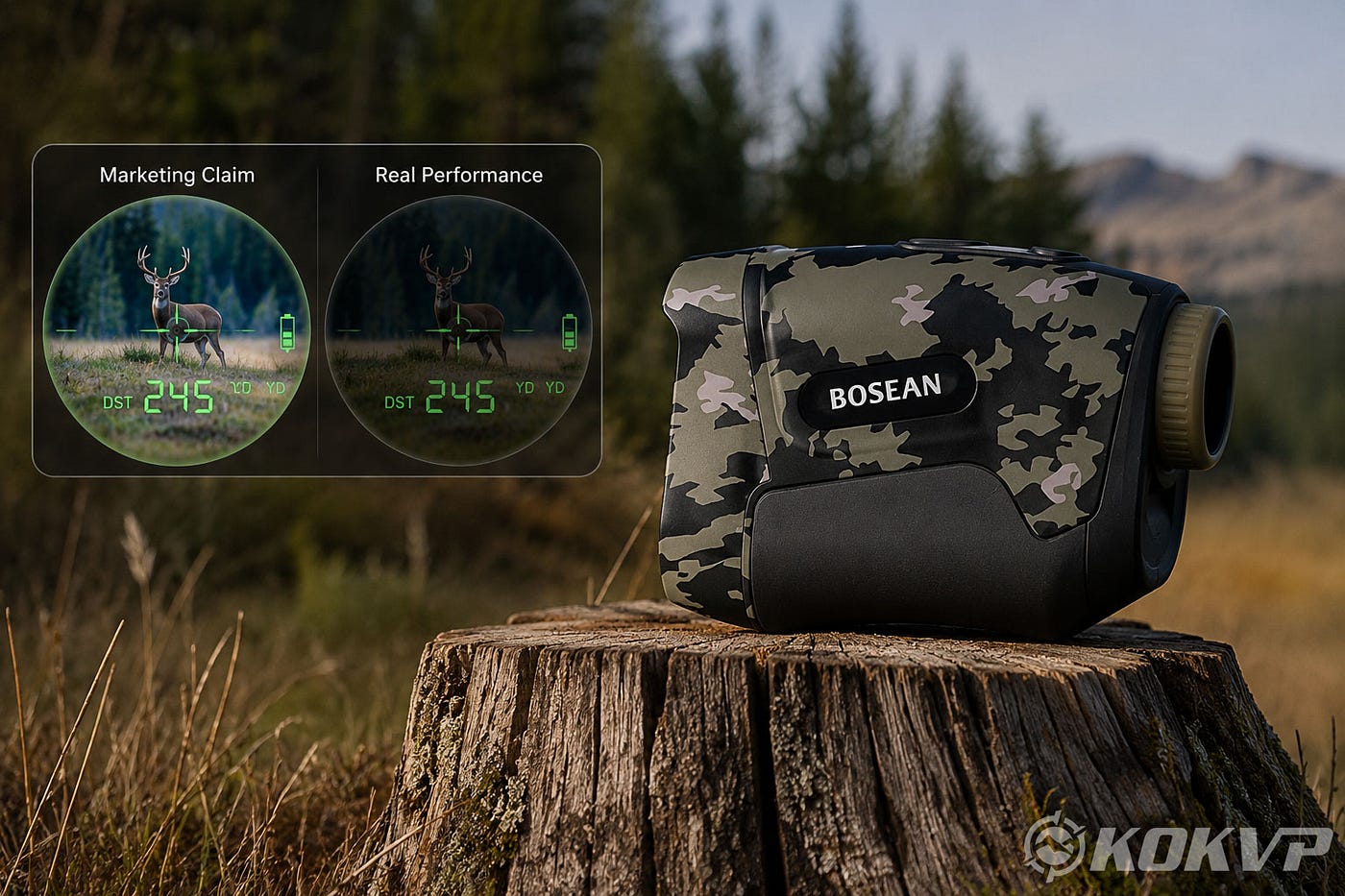
A rangefinder might advertise a long maximum range, but that number often comes from ideal conditions. Large reflective targets. Clean visibility. Stable hands. Open space.
Hunting is messier.
You may be ranging a deer’s body through thin brush, a dark tree line, a hillside, a stump near a trail, or an opening where you expect an animal to step out. Those targets don’t reflect the laser the same way a shiny road sign does.
For most hunters, the real question is not, “Can it range 1,500 yards?”
The better question is, “Can it give me a reliable reading at the distances I actually hunt?”
That might be 40 yards from a tree stand. It might be 250 yards across a field. It might be 600 yards in open country. Whatever your normal range is, that’s where the device has to be dependable.
Big numbers look good online. Reliable numbers matter more in the woods.
The display has to be readable when the light is bad
A rangefinder that works great at noon but struggles at first light is not much help for hunting.
A lot of hunting happens during those awkward low-light windows. Not total darkness, but dim enough that small details start to disappear. If the display blends into the background or the reticle is hard to see, the whole process slows down.
This is one reason display style matters.
Some hunters prefer a red illuminated display because it stands out better against dark timber. Others are fine with a simple black LCD display in brighter conditions. There is no single answer for everyone, but there is a wrong answer: buying one without thinking about where and when you’ll actually use it.
If you hunt thick woods, shaded draws, cloudy mornings, or late evenings, display visibility should be near the top of your list.
Angle compensation should be accurate, not just advertised
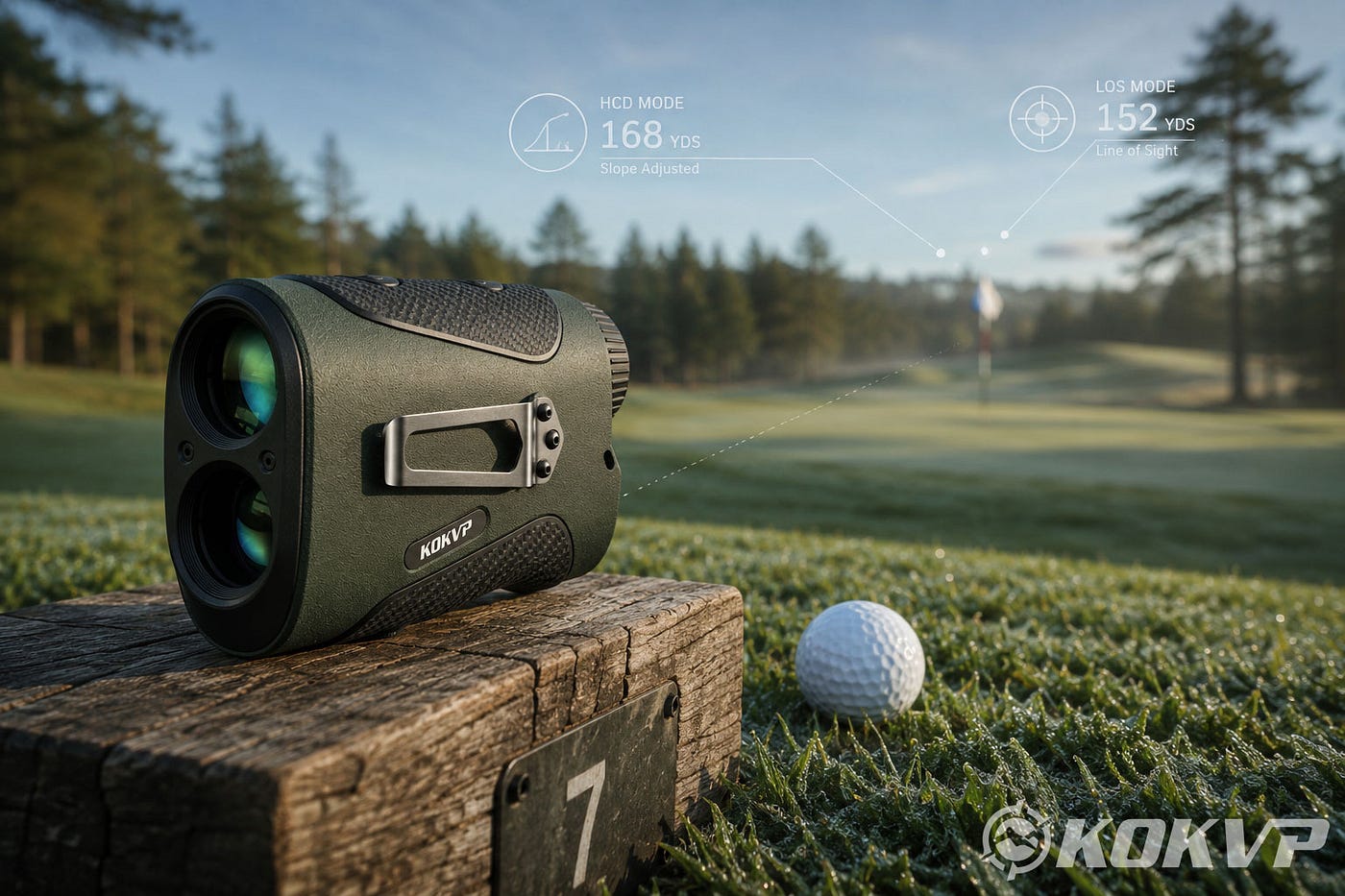
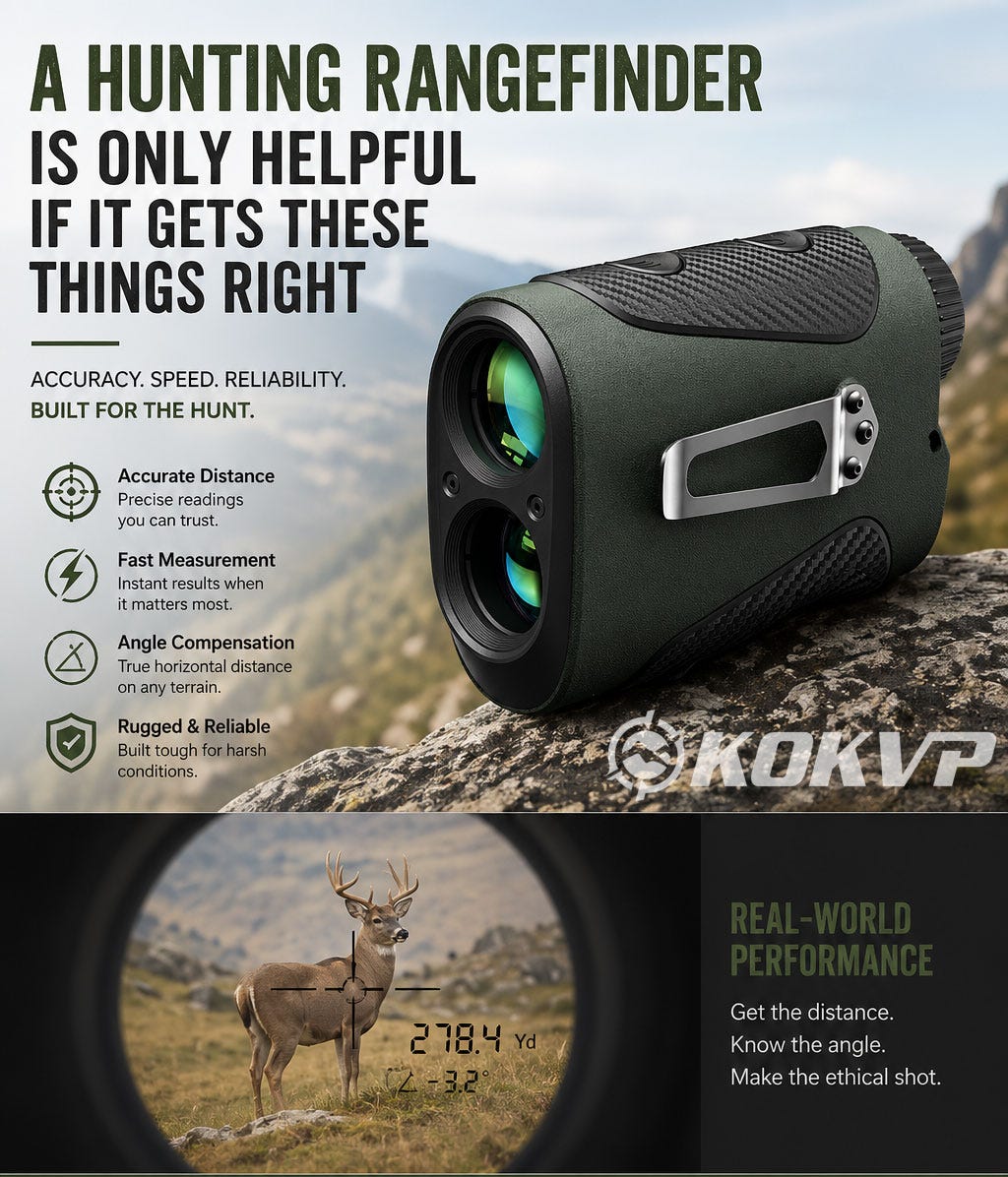
Angle compensation is one of the most useful features in a hunting rangefinder, especially if you hunt from a tree stand or in steep country.
But it’s also one of those features that gets treated like a magic fix.
It isn’t.
Angle compensation helps calculate the horizontal distance to the target, which is what matters for bullet drop or arrow trajectory. That can make a real difference on steep uphill or downhill shots. But it does not replace judgment, practice, or knowing your setup.
For bowhunters, this feature can be especially important from elevated stands. For rifle hunters in mountain terrain, it can also help prevent bad distance assumptions.
Still, the feature only helps if it’s quick, easy to understand, and consistent. If the rangefinder gives you too much information or makes the reading confusing, it can slow you down when you need clarity.
Simple and accurate beats complicated and flashy.
It has to be easy to use with cold hands or gloves
This part sounds small until it happens.
A tiny stiff button might seem fine when you’re testing the rangefinder at home. But with gloves on, in cold weather, while trying to stay quiet, it can become annoying fast.
The button should be easy to find by feel. It should not require so much pressure that you move the rangefinder off target. The grip should feel secure. The body should not be so slick that it feels like it wants to slide out of your hand.
These are not glamorous features, but they matter.
Good hunting gear usually feels simple. You don’t think about it much because it works the way it should.
Scan mode should actually be useful
Scan mode is one of those features that doesn’t always get enough attention.
A single reading is fine when the target is standing still in the open. But that’s not always what happens. Sometimes you’re tracking an animal as it walks. Sometimes you’re checking several trees, openings, or fence lines before anything appears. Sometimes you want to know the distance across a whole shooting lane.
That’s when scan mode becomes useful.
A good scan mode updates quickly and smoothly as you move across the scene. It lets you build a better sense of distance without constantly clicking the button over and over.
For hunters, that can be more practical than another few hundred yards of advertised max range.
The glass should be clear enough to identify what you’re ranging
A rangefinder is not a replacement for binoculars, but the optics still matter.
If the glass is cloudy, narrow, or dim, it gets harder to pick out the target. That matters in brush, low light, and uneven terrain. You don’t want to guess whether you’re ranging the animal, the branch in front of it, or the tree behind it.
Clear glass helps you use the device faster and with more confidence.
You don’t always need premium-level optics, especially if you’re not ranging extreme distances. But you do need enough clarity that the tool feels trustworthy.
There’s a big difference between “good enough on paper” and “good enough when you’re actually hunting.”
It should fit your hunting style, not someone else’s
A western rifle hunter, a Midwest whitetail hunter, and a bowhunter in a tree stand may all use rangefinders, but they don’t need the exact same thing.
If you mostly hunt thick woods, you probably care more about fast short-range readings, low-light display visibility, compact size, and angle compensation.
If you hunt open country, you may care more about longer ranging performance, better glass, and stable readings at distance.
If you bowhunt, the difference between 28 yards and 34 yards can matter a lot. If you rifle hunt open fields, you may be ranging landmarks ahead of time so you’re not scrambling later.
The point is simple: don’t buy based only on what looks impressive in a product listing.
Buy based on how you hunt.
Durability matters because hunting gear gets abused
Rangefinders don’t live easy lives.
They get bumped against tree stands, tossed in packs, rained on, dropped in leaves, carried in dust, and handled with wet or cold hands. A hunting rangefinder does not need to look tactical or oversized, but it should feel like it belongs outdoors.
Water resistance, a grippy body, a decent case, and simple controls all matter.
Sometimes the best rangefinder is not the one with the longest feature list. It’s the one you can carry all season without babying it.
That’s also why I think it’s worth looking beyond only the most expensive names. Some hunters are checking out more budget-friendly optics brands like kokvp because they want something practical for real hunting situations without turning every gear purchase into a huge investment. As always, the key is to look past the label and judge whether the rangefinder handles the basics well.
Battery life is boring until it ruins your day
Nobody wants to think about batteries.
But a dead rangefinder is just extra weight.
Before buying, check what battery it uses. Is it easy to replace? Can you find spares locally? Do you need to charge it before every trip? How does it handle cold weather?
For some hunters, a replaceable battery makes more sense because they can keep a spare in their pack. For others, rechargeable is fine as long as they stay on top of charging.
There isn’t one right answer. Just don’t ignore it.
The more you depend on a rangefinder, the more battery reliability matters.
The best rangefinder gives confidence, not just distance
At the end of the day, a hunting rangefinder is supposed to remove uncertainty.
That is its job.
It should help you confirm distance, understand the shot, and make a cleaner decision. If it gives inconsistent readings, disappears in low light, feels awkward in your hand, or makes you second-guess the number, then it is not really helping.
The best hunting rangefinder is not always the one with the longest advertised range.
It is the one that gets the important things right when conditions are not perfect.
Fast readings. Clear display. Reliable performance on real targets. Good angle compensation. Simple controls. Enough durability for the field. A size you’ll actually carry.
Those things don’t always sound exciting in a product description.
But when you’re out there and the moment finally comes, they matter a lot more than the biggest number on the box.
메타데이터
- post_id
- b707e5bf3eca
- slug
- a-hunting-rangefinder-is-only-helpful-if-it-gets-these-things-right-b707e5bf3eca
- url
- https://medium.com/@velluvangadniyamuddin/a-hunting-rangefinder-is-only-helpful-if-it-gets-these-things-right-b707e5bf3eca
- canonical_url
- https://medium.com/@velluvangadniyamuddin/a-hunting-rangefinder-is-only-helpful-if-it-gets-these-things-right-b707e5bf3eca
- author_url
- https://medium.com/@velluvangadniyamuddin
- status
- ok
- fetched_at
- 2026-06-09 15:37:30