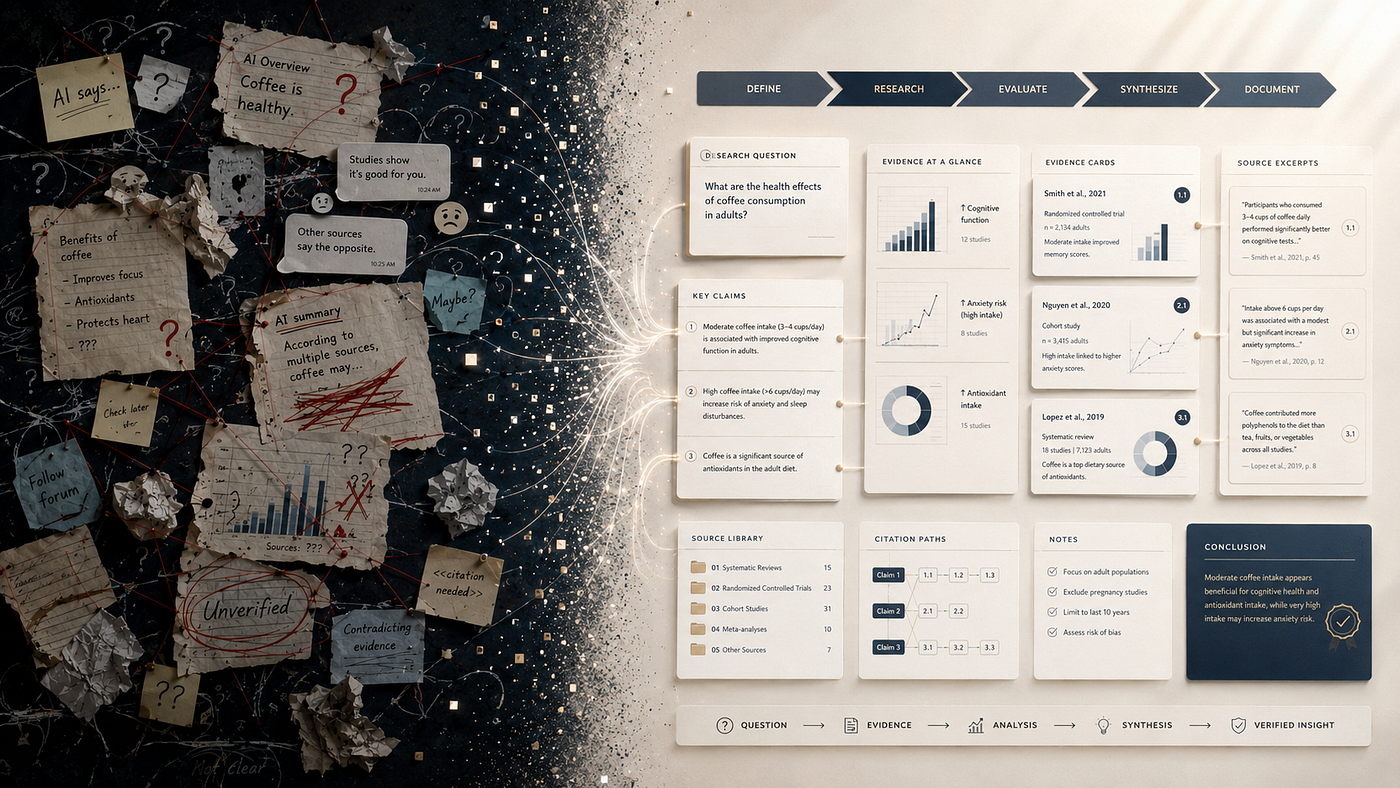
You Don’t Need Better AI Models. You Need Better Prompt Packs
Most weak AI results are not a model problem. They are a workflow problem. Here is how reusable prompt packs fix that.
You Don’t Need Better AI Models. You Need Better Prompt Packs
Most weak AI results are not a model problem. They are a workflow problem. Here is how reusable prompt packs fix that.
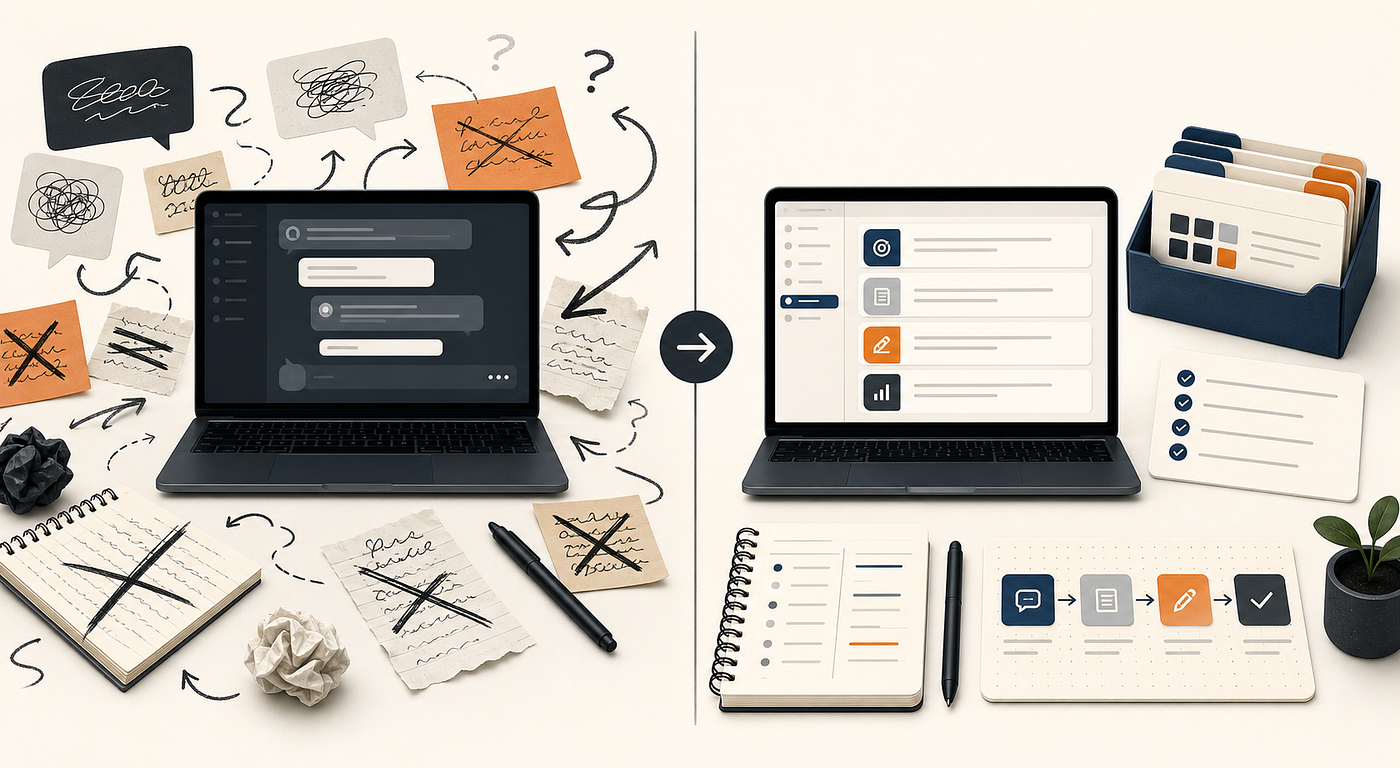
If AI feels brilliant on Tuesday and useless on Wednesday, the problem usually is not the model. It is your workflow.
Many people think AI is inconsistent because the tools are still immature.
I think the bigger problem is simpler.
Most people use ChatGPT or Claude from a standing start every single time.
They open a blank chat, type whatever comes to mind, get one decent result, and then spend the rest of the week trying to recreate that same luck. A proposal sounds sharp once, flat the next time. Study notes come out useful one day, generic the next. A homepage draft feels close, then suddenly the tone is off again. That is why AI often feels magical for five minutes and annoying for the next forty. The model did not suddenly get worse. You just gave it a brand-new job, with brand-new instructions, in a brand-new format, and expected consistent output anyway.
Once you stop treating prompting like improvisation and start treating it like a reusable system, the quality gets better fast.
That is what prompt packs are for.
What Prompt Packs Actually Are
Prompt packs are not mysterious.
They are organized sets of reusable prompts built for specific outcomes. Not one clever sentence. Not a viral screenshot prompt. Not a random note in your phone.
A real prompt pack is closer to a working toolkit. It usually includes: • a clear job to be done • a repeatable structure • guidance on what inputs to swap in • built-in constraints • an output format that saves you from cleanup later
In plain English: instead of explaining the same task from scratch every time, you save the version that already works.
That changes everything.
Because the real bottleneck with AI is rarely access. It is repeatability.
Most prompt advice is solving the wrong problem
A lot of prompt advice lives at the wrong level.
It obsesses over wording tricks as if the main issue is whether you said “act as an expert” or “act as a strategist.”
That is usually not the problem. If your workflow is messy, no clever phrase is going to save it.
You can copy a flashy prompt formula from LinkedIn, paste it into ChatGPT, and still get weak output if the task, audience, format, and constraints are fuzzy. The model is not confused because you forgot a magic spell. It is confused because you handed it a vague brief.
That is why so much prompt-engineering content looks impressive and fails in real work. It is optimized for screenshots, not for daily use.
Real improvement looks less glamorous. It looks like saving the prompts that worked. It looks like separating reusable instructions from changing context. It looks like adding a fixed output format so you stop re-explaining the same thing.
In other words: fewer hacks, better systems.
How Professionals Actually Use Prompt Packs
Professionals do not want to “have a conversation with AI” all day. They want outputs they can trust, with less rework.
That is why the useful move is not writing more prompts. It is building a smaller number of better ones and reusing them on purpose.
A strong prompt pack helps in three ways.
- First, it saves time. You stop rebuilding the task every time.
- Second, it improves consistency. Your outputs start sounding like they came fromthe same brain, not three different interns.
- Third, it reduces guesswork. You no longer stare at a blank box wondering how to ask for what you want.
That matters more than people admit. Going from “write a prompt” to “run the system” is often the difference between AI feeling distracting and AI feeling operational.
What This Looks Like for Students
A student using AI casually might type:
Summarize this chapter and make it easy to understand.
That can work. It can also produce fluffy notes, skip key definitions, or organize ideas in a way that is useless before an exam.
A better prompt pack would define the job more clearly. For example, the pack might tell ChatGPT or Claude to: • explain the chapter in plain language • pull out key terms and definitions • list likely exam questions • show one real-world example per concept • finish with a 10-minute revision sheet
Now the student is not hoping for a good answer. They are running a repeatable study workflow.
That means less prompting, less editing, and better notes across multiple chapters.
The value is not that the AI got smarter. The value is that the input stopped being random.
What This Looks Like for Freelancers
Freelancers waste a ridiculous amount of time repeating work around the work.
Proposals. Discovery summaries. Client follow-ups. Content briefs. First drafts.
Most of that work has a pattern.
A freelancer with a good prompt pack does not start a proposal from zero every time. They use a structure that already reflects how they sell: • client problem • likely bottleneck • recommended approach • expected outcome • tone and level of confidence • clean proposal format
Now AI becomes a first-pass engine instead of a slot machine. The same goes for content work.
A copywriter can have separate prompt packs for blog outlines, landing page drafts, email rewrites, and brand-voice adaptation.
A designer can use packs for client questionnaires, concept rationale, and case study writeups.
The gain compounds fast. Even if each pack only saves 15 or 20 minutes, the bigger win is that the quality becomes more stable. You spend less time correcting the same preventable mess.
What This Looks Like for Founders and Operators
Founders often use AI in the most chaotic way possible.
One day, it is helping with messaging. The next day, it is drafting hiring docs. Then the investor updates. Then support macros. Then product copy.
That variety is exactly why reusable prompt packs matter. If you are a founder, you do not need AI to be creative in a vacuum. You need it to work inside your business context.
That means your prompt packs should carry some fixed logic: • who the customer is • how the product is positioned • what tone the brand uses • what claims should be avoided • what output format is expected
Once that is in place, AI becomes much more useful for recurring tasks.
Your homepage draft sounds more on-brand. Your customer email does not drift into generic startup language. Your internal docs stop sounding like five different people wrote them on five different days.
That is not a minor improvement. That is operational leverage.
The Common Mistake: Treating AI Like a Slot Machine
Most weak AI use follows the same loop.
- Type something vague.
- Get something average.
- Tweak the wording.
- Try again.
- Hope the next pull is better.
That is not a workflow. That is gambling with extra steps.
The habit feels productive because the interface is fast. But fast does not mean efficient.
A reusable prompt pack breaks that cycle because it forces you to decide, once, what good output should look like.
- What is the task?
- Who is it for?
- What should the result include?
- What should it avoid?
- What structure makes it immediately useful?
Those decisions are where the quality comes from. Not from endlessly re-rolling the machine.
How to Start Without Overcomplicating It
You do not need a giant prompt library. Start smaller.
Look at the last five times you used ChatGPT or Claude for real work.
- Which tasks repeated?
- Which prompts gave you outputs you actually reused?
- Which ones would have been better if the format, constraints, or audience were locked in from the start?
That is your starting point. Build prompt packs around recurring jobs, not around abstract inspiration. If you are a student, maybe that is note-making, revision quizzes, and essay planning.
If you are a freelancer, maybe it is proposals, briefs, and first drafts. If you are a founder, maybe it is messaging, customer emails, and content outlines.
The goal is not to build the perfect pack on day one. The goal is to stop wasting good work by letting it disappear into old chat history.
Stop Treating Every Prompt Like a First Draft
AI gets more reliable when your inputs get more reusable.
That is the shift.
If you are a student, turn your best study prompt into a repeatable pack instead of rebuilding it before every chapter.
If you are a freelancer, standardize the prompts behind your proposals, briefs, and first drafts.
If you are a founder, give AI a real messaging framework instead of hoping it invents one on command.
Most people do not need more AI features. They need a better default process.
And if you want the fastest shortcut, do what professionals do: stop prompting from scratch and start working from systems.
Curated prompt packs can help with that because they give you a cleaner starting point, a stronger structure, and less room for avoidable mistakes.
Before you go hunting for the next AI upgrade, look at the last five prompts you wrote and ask one uncomfortable question:
Which of these should have been a system by now?
If you want more practical AI workflow ideas like this, follow along or subscribe for the next breakdown.
메타데이터
- post_id
- b71b029cba49
- slug
- you-dont-need-better-ai-models-you-need-better-prompt-packs-b71b029cba49
- url
- https://medium.com/@kumawat/you-dont-need-better-ai-models-you-need-better-prompt-packs-b71b029cba49
- canonical_url
- https://medium.com/@kumawat/you-dont-need-better-ai-models-you-need-better-prompt-packs-b71b029cba49
- author_url
- https://medium.com/@kumawat
- status
- ok
- fetched_at
- 2026-06-09 15:37:30