How Often You Really Need a Skin Cancer Screening
Skin cancer is the most common cancer, and it is also one of the most treatable when it is caught early. The catch is that early skin…
How Often You Really Need a Skin Cancer Screening
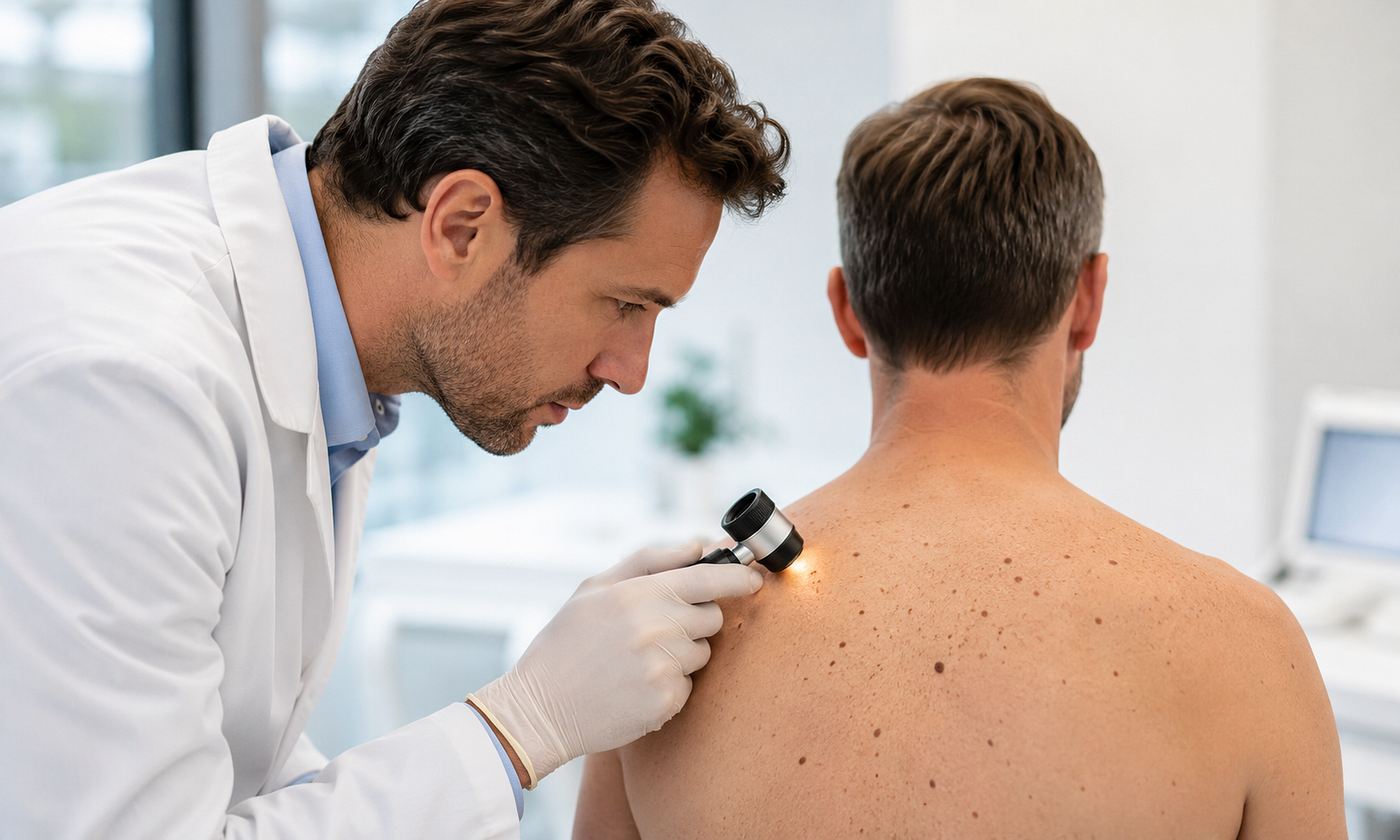
Skin cancer is the most common cancer, and it is also one of the most treatable when it is caught early. The catch is that early skin cancers rarely hurt and often look unremarkable, which is exactly what makes them easy to miss without a trained eye. A spot can sit on your back or scalp for months looking like nothing in particular. A regular professional skin screening is how those subtle changes get found before they turn into a bigger problem, and it is one of the simplest preventive steps available.
So how often is enough? For most adults with no personal or family history of skin cancer, a yearly full-body skin exam is a sensible baseline. The right interval shifts with risk, though, and that is where individual judgment comes in. People with many moles, fair skin that burns rather than tans, a history of blistering sunburns, a weakened immune system, or a family history of melanoma usually benefit from more frequent checks. A dermatologist sets the schedule based on what they actually see on your skin and what your history tells them, rather than a single number that applies to everyone.
A professional exam is also far more thorough than a glance in the mirror. A board-certified dermatologist looks at the entire skin surface, including the scalp, behind the ears, the back, between the toes, and other spots that are nearly impossible to examine on your own. For anything that looks unusual, a handheld device called a dermoscope reveals patterns of color and structure that are invisible to the naked eye and help separate the harmless from the suspicious. If a spot still raises a question, a small sample can be taken in the office and sent to a lab, which is the only way to know for certain whether it is benign.
It helps to know what dermatologists watch for. Clinicians often describe warning signs with the ABCDE guide: asymmetry, an irregular border, more than one color, a diameter larger than a pencil eraser, and evolving, which means any change in size, shape, color, or symptoms over time. Another useful idea is the ugly duckling sign, where one spot simply looks different from the rest of your moles. These are guides for noticing change and starting a conversation, not tools for diagnosing yourself, because appearances can be deceiving in both directions.
Between visits, the goal at home is to notice, not to diagnose. It helps to be familiar with your own skin so that a new or changing spot stands out to you. A spot that grows, changes color, develops an uneven edge, itches, bleeds, or simply will not heal is worth having looked at rather than watched for months on end. Day-to-day sun protection, including broad-spectrum sunscreen, shade during peak hours, and protective clothing, also lowers your risk over the long run and is worth building into a routine.
The reason all of this is worth the time comes down to outcomes. When skin cancers, including melanoma, are found early, treatment is usually more straightforward and the results are far better. Waiting until a spot is obviously a problem can mean a larger procedure, more uncertainty, and a harder road. A short, painless exam once a year, or more often if your risk is higher, is a small investment against a serious outcome, and most people find the peace of mind alone is worth it.
It is also worth knowing that not all skin cancers look like a classic dark mole. Basal cell and squamous cell carcinomas, the most common types, often show up as a sore that will not heal, a scaly or crusted patch, or a pearly bump, and they tend to appear on sun-exposed areas like the face, ears, scalp, and hands. Melanoma is less common but more serious, which is why the changing-mole warning signs get so much attention. A professional exam is valuable precisely because it looks for all of these different patterns at once, rather than focusing on a single type.
If you have noticed a changing spot, have a personal or family history of skin cancer, or simply have never had a professional skin check, that is a good reason to schedule one rather than putting it off another season. Dr. Michael Paltiel, a board-certified dermatologist at Adult & Pediatric Dermatology in Forest Hills, Queens, performs full-body skin exams and mole evaluations for children and adults, and reviews any findings with you directly.
Disclaimer: This article is general information, not medical advice, and it is not a substitute for an in-person evaluation. If you have a skin concern, see a qualified dermatologist, who can examine you, confirm a diagnosis, and recommend treatment suited to your situation.
메타데이터
- post_id
- b71c2ec52d4f
- slug
- how-often-you-really-need-a-skin-cancer-screening-b71c2ec52d4f
- url
- https://medium.com/@michaelpaltielmd/how-often-you-really-need-a-skin-cancer-screening-b71c2ec52d4f
- canonical_url
- https://medium.com/@michaelpaltielmd/how-often-you-really-need-a-skin-cancer-screening-b71c2ec52d4f
- author_url
- https://medium.com/@michaelpaltielmd
- status
- ok
- fetched_at
- 2026-06-27 18:20:27