🧩 Crisis Response Strategies in SCCT: What Leaders Need to Know
In the face of a crisis, what you say matters — but how you say it matters even more. According to SCCT (Situational Crisis Communication…
🧩 Crisis Response Strategies in SCCT: What Leaders Need to Know
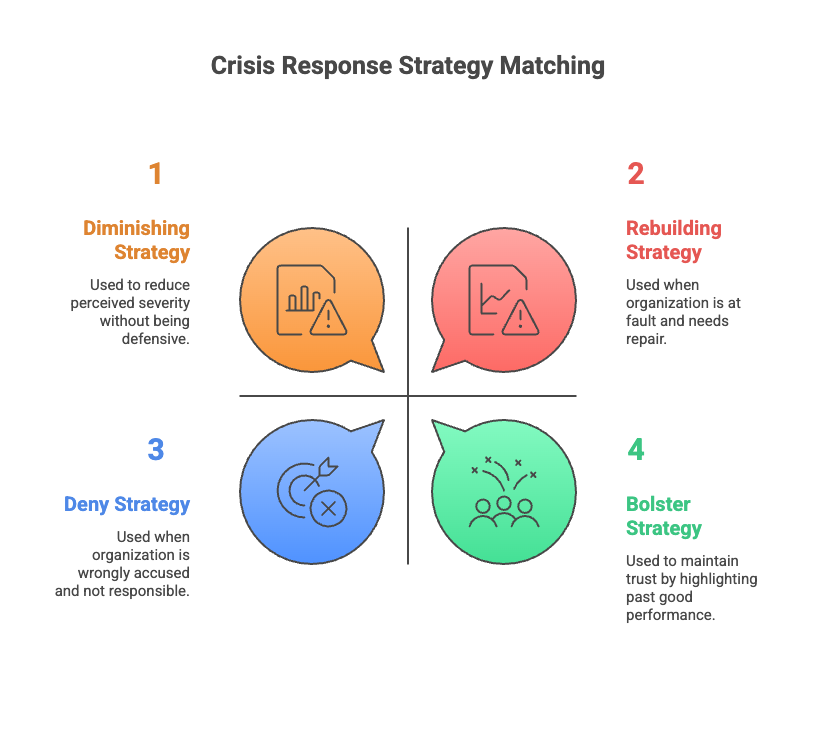
In the face of a crisis, what you say matters — but how you say it matters even more. According to SCCT (Situational Crisis Communication Theory), the strategy you use should match the level of responsibility your organization holds for the crisis.
Coombs outlines four primary response strategies, each suited for different levels of crisis severity and blame.
🔧 1. Rebuilding Strategy
When to Use: High responsibility (e.g., preventable crises) Tone: Sincere, apologetic, and focused on repair
This is your go-to when your organization is clearly at fault and people expect accountability.
🗣️ “We take full responsibility. We’re sorry. Here’s how we’ll make it right.” ✅ Includes: Apology, compensation, corrective action
📌 Linked to: Preventable crises — like misconduct, negligence, or avoidable failures
🔽 2. Diminishing Strategy
When to Use: Moderate responsibility (e.g., accidental crises) Tone: Clarifying without being defensive
Used when the organization may share some blame, but not entirely. The goal is to reduce perceived severity or responsibility.
🗣️ “This issue arose from unexpected system behavior. We’re resolving it and ensuring it doesn’t repeat.” ✅ Includes: Justification, excuse, explanation
📌 Linked to: Accidental crises — like technical glitches or equipment failures
🚫 3. Deny Strategy
When to Use: Low or no responsibility (e.g., victim crises or false claims) Tone: Firm, fact-based, and direct
Used when the organization is wrongly accused or not responsible at all.
🗣️ “These reports are false. We are investigating and will pursue appropriate action.” ✅ Includes: Denial, attack the accuser, clarification
📌 Linked to: Victim crises — like rumors, sabotage, or natural disasters
💪 4. Bolster Strategy (Supportive Add-On)
When to Use: Alongside other strategies to maintain trust Tone: Confident and positive
This strategy reminds the public of the organization’s good past performance or values, even during difficult times.
🗣️ “We’ve always prioritized safety — and we will continue to do so as we improve our systems.” ✅ Includes: Reminding of past good, praising employees, reaffirming mission
📌 Works across all crisis types to strengthen reputation and show consistency
🧭 SCCT + Strategy Matching = Smarter Leadership
SCCT helps you choose the right strategy based on the type of crisis:
Crisis TypeResponsibilityBest StrategyVictim CrisisLowDeny + BolsterAccidental CrisisModerateDiminish + BolsterPreventable CrisisHighRebuild + Bolster
💬 Final Thought
In a crisis, silence is risky — and the wrong message is worse.
SCCT equips leaders to match words with responsibility, restoring trust instead of eroding it.
📚 Want more tools like this to lead under pressure? Explore 👉 **Leaders Eat Last 🍽️** for more leadership models, strategies, and insights.
Which strategy have you seen in action recently — and did it work? Let’s discuss. 💬
메타데이터
- post_id
- b71eaf2f1f77
- slug
- crisis-response-strategies-in-scct-what-leaders-need-to-know-b71eaf2f1f77
- url
- https://medium.com/the-leadership-nexus/crisis-response-strategies-in-scct-what-leaders-need-to-know-b71eaf2f1f77
- canonical_url
- https://medium.com/the-leadership-nexus/crisis-response-strategies-in-scct-what-leaders-need-to-know-b71eaf2f1f77
- author_url
- https://medium.com/@priyakantcharokar
- status
- ok
- fetched_at
- 2026-06-14 16:15:44