Your AI Agent Keeps Starting From Zero
The hidden cost of AI isn’t inference. It’s rediscovery.
Your AI Agent Keeps Starting From Zero
The hidden cost of AI isn’t inference. It’s rediscovery.
Your AI Agent Doesn’t Need More Context. It Needs a Workspace.
Every AI coding tool is fighting the same battle.
More context.
Bigger windows.
More RAG.
More files.
More documentation.
More memory.
And yet teams keep running into the same problem:
The agent can read the repository.
It still doesn’t understand the system.
The Repository Trap
Modern AI tools are built around a simple assumption:
If the model can see enough files, it can understand the project.
That assumption works surprisingly well for:
- Components
- Utility functions
- Small services
- Isolated tasks
It breaks down for production systems.
Because production systems are not repositories.
They’re relationships.
What Lives Outside The Repository
Consider a simple change.
Rename a service contract.
The code change may be trivial.
The system impact is not.
Questions start appearing immediately:
- Which team owns this service?
- Which consumers depend on this contract?
- Which release gates are affected?
- Which verification evidence is required?
- Which environments must be validated?
- Which dependencies become stale?
None of those questions are fundamentally code questions.
They’re system questions.
The Rediscovery Tax
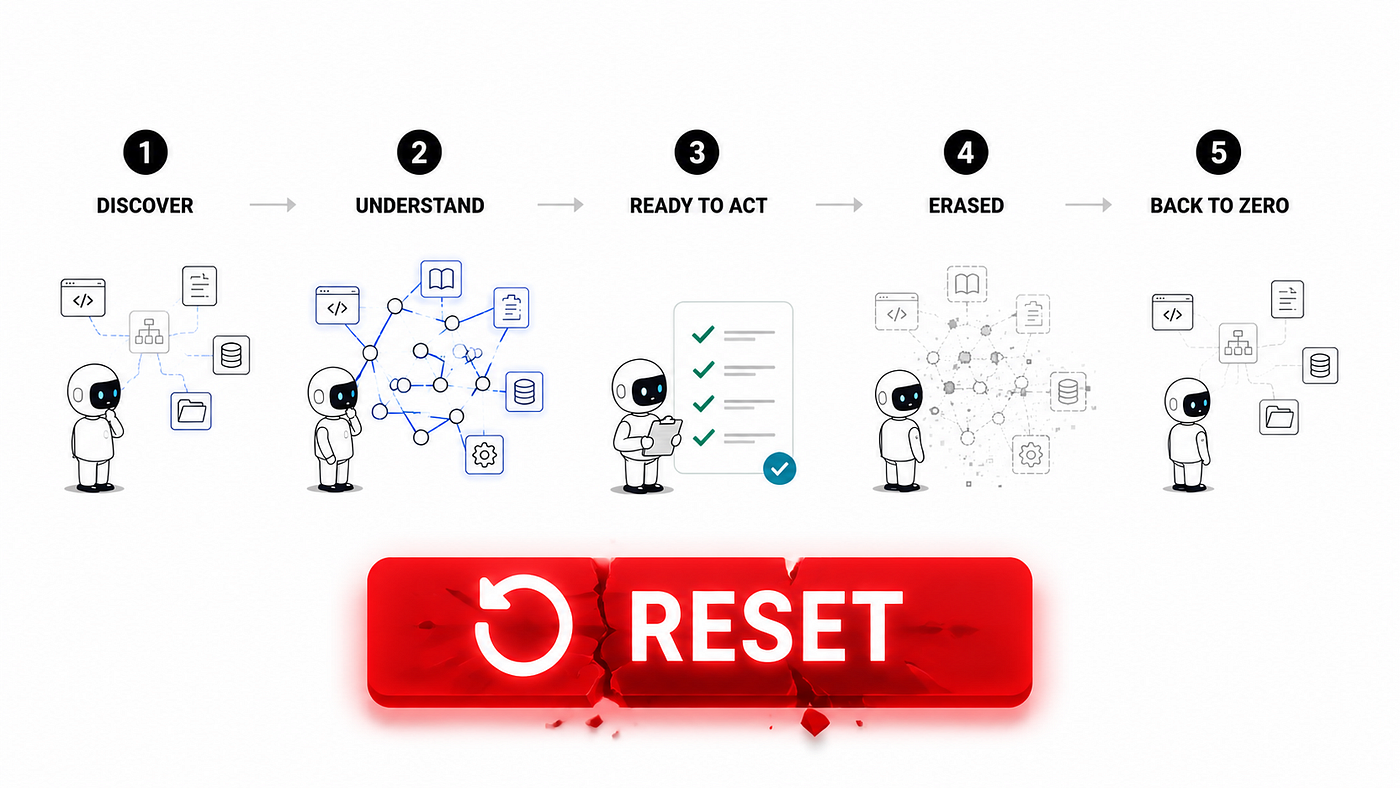
Here’s what most agents do today.
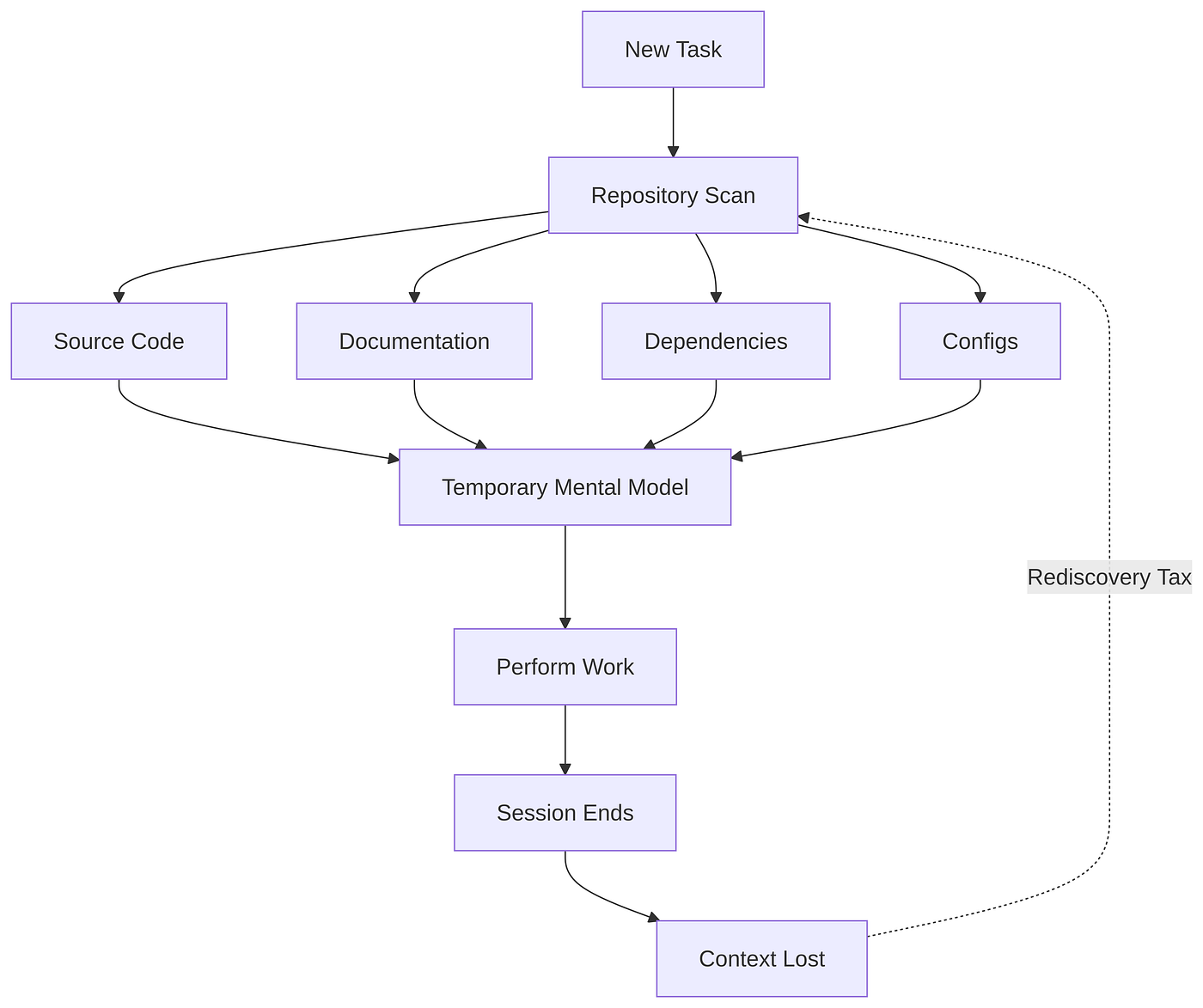
Every session starts from zero.
Every session pays the same discovery cost.
Every session burns tokens rebuilding knowledge that already existed yesterday.
The industry talks about inference cost.
The bigger cost may be rediscovery cost.
Why Bigger Context Windows Don’t Solve It
The common response is obvious:
Give the model more context.
200k tokens.
500k tokens.
1M tokens.
But context is not understanding.
A million tokens of source code still won’t tell an agent:
- Who owns a service
- Which release gate matters
- Which dependency is currently blocking deployment
- Which verification evidence is required
Because those facts often don’t live in source code.
They live in the system.
The Missing Abstraction
For decades software engineering evolved through abstractions.

Files helped us organize code.
Repositories helped us organize change.
Platforms helped us organize infrastructure.
AI systems need another layer.
A layer that organizes understanding.
Repositories Describe Code
Repositories tell us:
- Where code lives
- How code is structured
- What changed
They do not reliably tell us:
- Ownership
- Contracts
- Operational context
- Release readiness
- Verification requirements
- Change impact
Those belong to the system.
Not the repository.
From Repository Intelligence To Workspace Intelligence
Most AI tools understand:
- Files
- Functions
- Repositories
Production systems require understanding:
- Ownership
- Architecture
- Dependencies
- Operational context
- Verification requirements
- Change impact
A useful mental model looks like this:
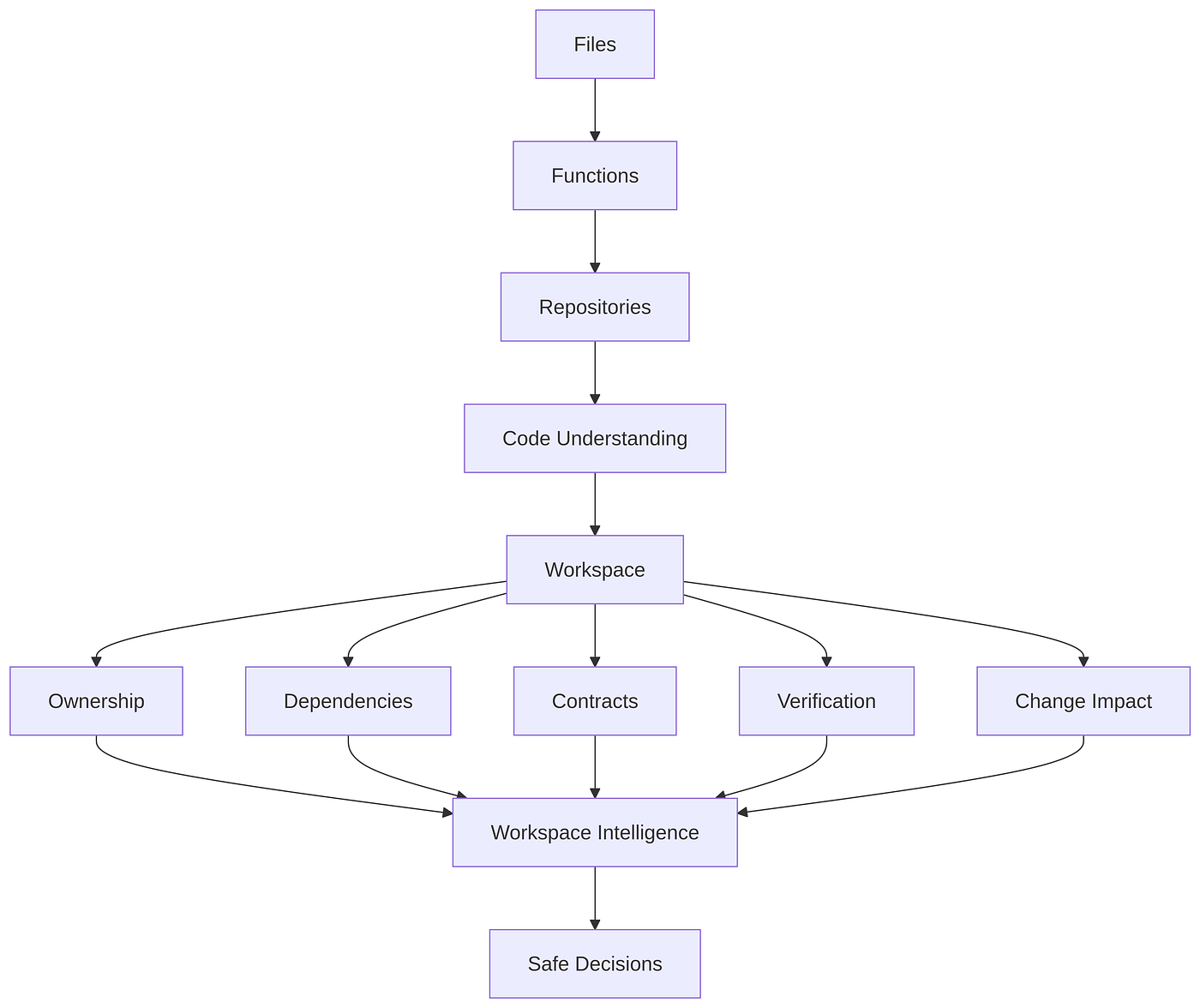
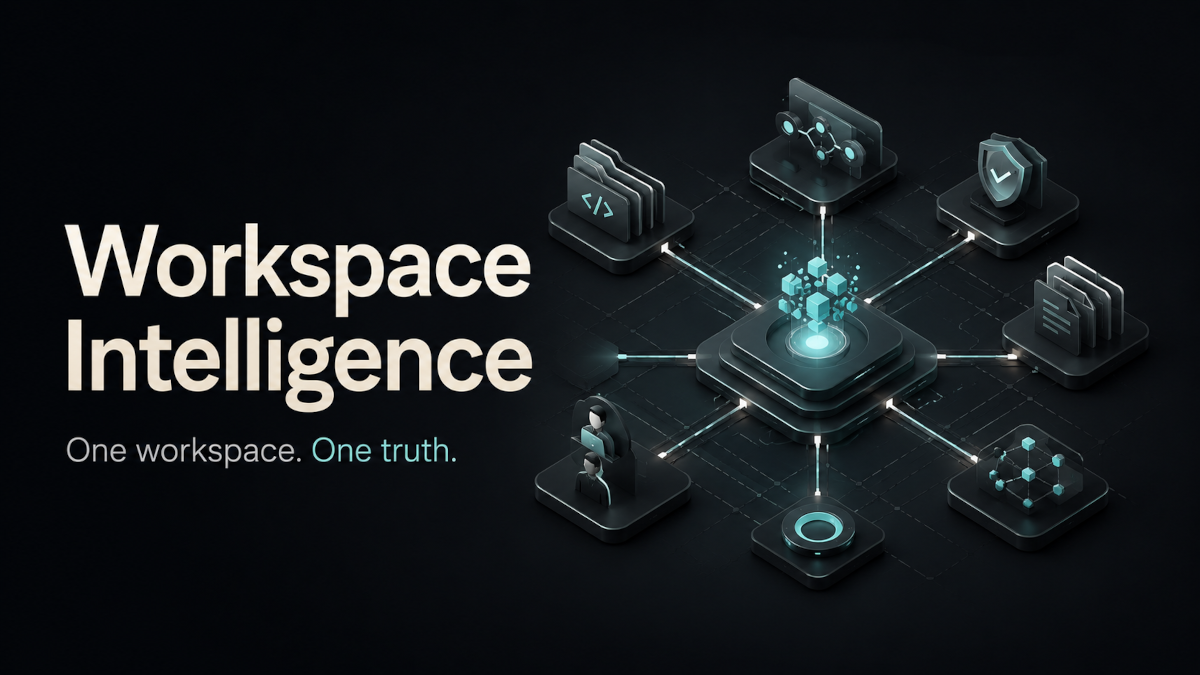
This is where Workspace Intelligence emerges.
Not as another chat interface.
Not as another AI agent.
As a deterministic layer that sits between software systems and the tools operating on them.
Humans.
CI.
IDEs.
AI agents.
All consuming the same understanding of the system.
A Different Workflow
Instead of asking every AI tool to rediscover the repository from scratch, split the work into two loops.
Bootstrap once (shared understanding)
Create or adopt into a workspace, then materialize the model and agent context:
npx rapidkit adopt /path/to/projectnpx rapidkit workspace model --json --writenpx rapidkit workspace context --for-agent --json --writeFor a greenfield workspace, start with npx rapidkit my-workspace or npx rapidkit create frontend nextjs web instead of adopt.
Now the agent doesn’t start with files.
It starts with .rapidkit/reports/workspace-model.json and .rapidkit/reports/workspace-context-agent.json.
After a change (governance loop)
When code or structure changes, run the evidence chain in order:
npx rapidkit workspace diff --from git --json --writenpx rapidkit workspace impact \
--from .rapidkit/reports/workspace-model-diff-last-run.json \
--json --writenpx rapidkit workspace verify --strict --json --writeIf release is blocked, explain why and trace blast radius through gates:
npx rapidkit workspace explain release-blocked --json --writenpx rapidkit workspace trace \
--from .rapidkit/reports/workspace-model-diff-last-run.json \
--json --writeOne workspace.
One truth.
Humans, CI, IDEs, and AI agents consume the same artifacts.
From Code To Shared Understanding
The goal is simple:
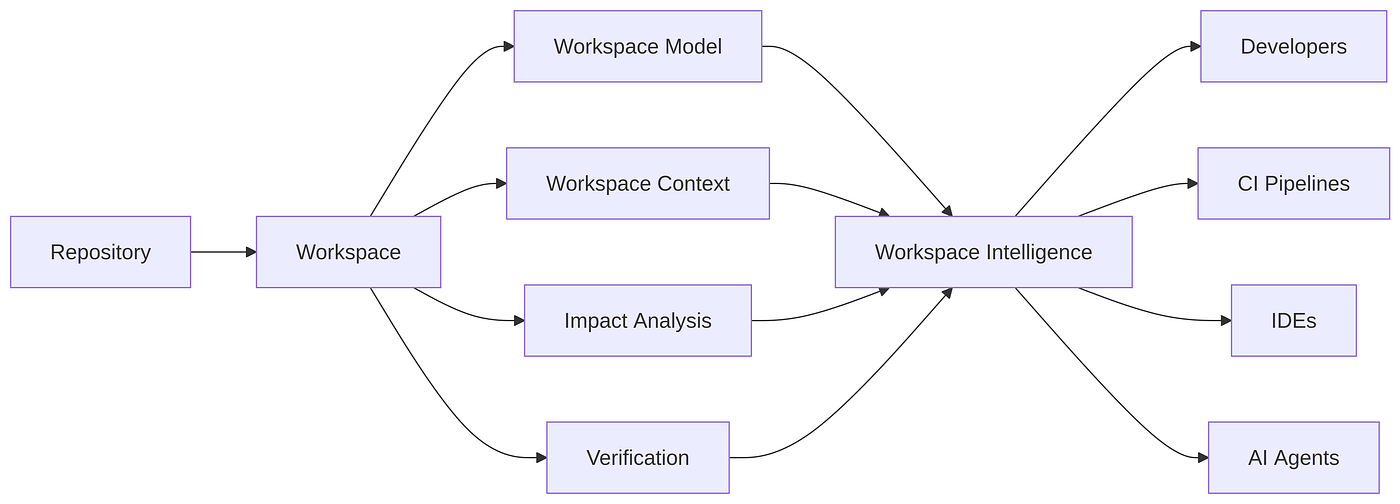
One workspace.
One truth.
Humans and AI aligned.
The Future
The next generation of AI engineering won’t be defined by:
- Larger models
- Larger context windows
- Longer prompts
The winning systems will reduce rediscovery.
They will turn repositories into structured understanding.
They will give developers, CI pipelines, IDEs, and AI agents a shared model of reality.
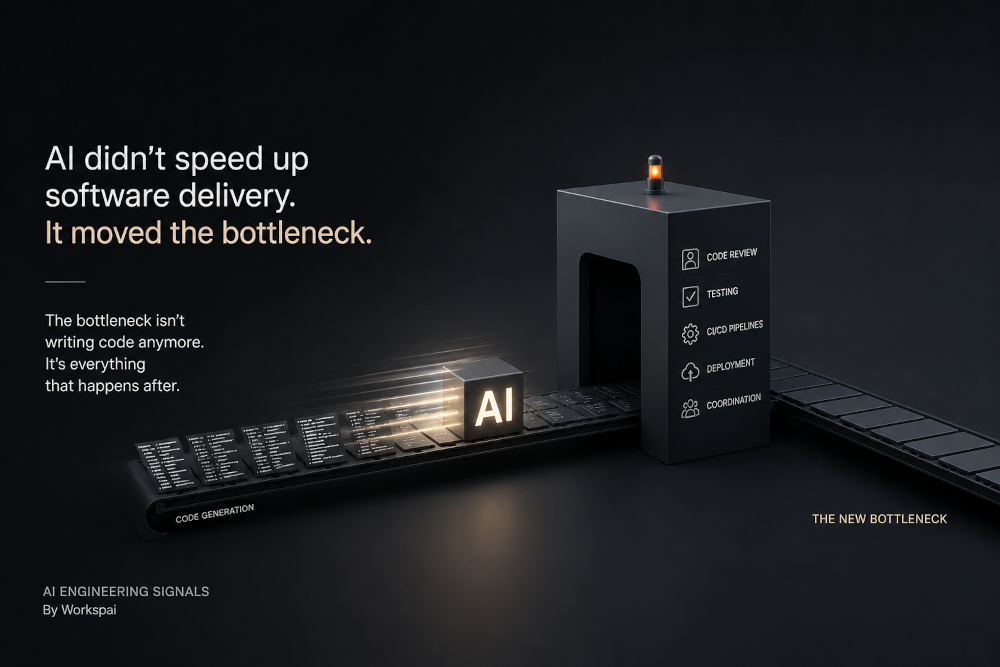
Because the real bottleneck isn’t code generation anymore.
It’s system understanding.
And system understanding begins with a workspace.
메타데이터
- post_id
- b7234459bd70
- slug
- your-ai-agent-keeps-starting-from-zero-b7234459bd70
- url
- https://medium.com/workspai/your-ai-agent-keeps-starting-from-zero-b7234459bd70
- canonical_url
- https://medium.com/workspai/your-ai-agent-keeps-starting-from-zero-b7234459bd70
- author_url
- https://medium.com/@rapidkit
- status
- ok
- fetched_at
- 2026-06-26 06:47:43