Passive Rescue Radio System (PRRS): A Zero-Power, Passive Signal Concept for Disaster Search &…
Search and Rescue (SAR) operations in floods, landslides, and structural collapses repeatedly face the same hard constraint: victims are…
Passive Rescue Radio System (PRRS): A Zero-Power, Passive Signal Concept for Disaster Search & Rescue
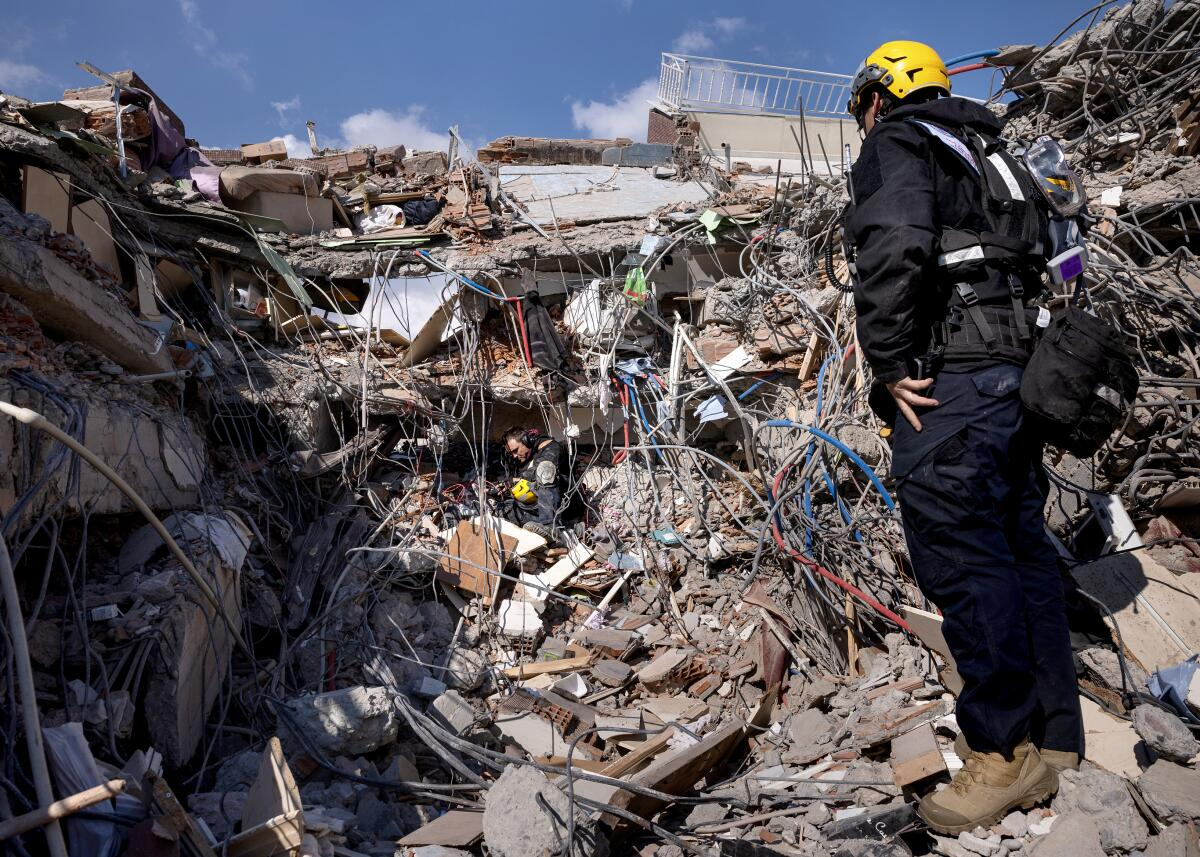
Search and Rescue (SAR) operations in floods, landslides, and structural collapses repeatedly face the same hard constraint: victims are often unable to actively transmit a signal. Batteries die. Devices break. People are unconscious, trapped, or disoriented.
PRRS (Passive Rescue Radio System) explores a different question:
What if rescue signaling did not require the victim to transmit at all?
This document introduces PRRS, an open, zero-power, passive rescue wristband concept designed to be:
- battery-free,
- ultra-low cost,
- long shelf-life,
- and usable at scale in humanitarian contexts.
All materials are released openly for NGOs, SAR teams, and humanitarian engineers.
No funding is requested. No deployment is proposed.
1. The Core Problem in SAR Signaling
Most existing rescue signaling systems implicitly assume that the victim can:
- power a device,
- press a button,
- maintain a battery,
- or consciously operate equipment.
In real disasters, this assumption often fails.
Floods, debris burial, hypothermia, head injury, and exhaustion all reduce the likelihood that a victim can actively transmit a signal when it matters most.
The bottleneck is not radio performance. The bottleneck is human capability under stress.
2. Design Reframing: From “Active Beacon” to “Passive Presence”
PRRS reframes rescue signaling from:
“Victims must send a signal” to “Rescuers should be able to detect presence even if victims do nothing.”
This leads to three guiding principles:
- Zero onboard power — no batteries, no charging, no maintenance.
- Passive interaction — the device reflects or modulates external interrogation signals.
- Human-minimal activation — usable even with minimal speech or simple gestures.

Conceptual illustration. Not a deployed system
3. System Overview (Conceptual)
PRRS is designed as a passive wearable tag, typically a wristband, incorporating:

Conceptual illustration. Not a deployed system
3.1 Passive Backscatter Architecture
- The device does not transmit RF energy.
- It modulates and reflects incoming interrogation signals from rescue platforms (drones, helicopters, ground units).
- This dramatically reduces complexity, cost, and failure modes.
3.2 Voice-Triggered Modulation (Concept)
- Simple spoken phrases such as “HELP HERE” modulate the passive response.
- This enables rescuers to distinguish human-origin signals from background clutter.
- Effective range depends on line-of-sight, interrogation power, altitude, and environment.
3.3 Morse SOS Fallback
- A mechanical or acoustic fallback allows SOS patterns even if voice is not possible.
- This prioritizes robustness over sophistication.
3.4 Harmonic / Signature Detection
- The system produces distinct spectral signatures that can be detected separately from ambient noise.
- Conceptual detection depth depends on soil type, debris density, moisture, and terrain.
These modes are complementary, not exclusive.
4. Why Passive Matters in Humanitarian Contexts
Passive systems have several underappreciated advantages in disaster response:
Conceptual illustration. Not a deployed system
- Infinite shelf life (no battery degradation)
- Pre-deployment feasibility (distributed before disasters occur)
- Low training burden
- Low per-unit cost, enabling mass distribution
In large-scale disasters, coverage matters more than sophistication.
A $2 device in millions of hands often saves more lives than a $200 device in hundreds.
5. Cost, Durability, and Practicality (Targets)
PRRS is intentionally designed with realistic humanitarian constraints:
- Target cost: < USD $2 per unit (at scale)
- Durability target: IP68+ equivalent
- Shelf life: effectively indefinite
- No hazardous materials
- No calibration required by users
These are design targets, not claims of certification.
6. Open Release Philosophy
PRRS is released as:
- open documentation,
- open schematics,
- open simulations,
- open design rationale.
Why open?
Because disaster response is not a competitive market problem. It is a coordination and availability problem.
Any organization capable of testing, adapting, or improving the concept is encouraged to do so.
7. What PRRS Is — and Is Not
PRRS is:
- a conceptual system grounded in existing physical principles,
- a humanitarian design exploration,
- a starting point for field testing and iteration.
PRRS is not:
- a deployed product,
- a certified rescue device,
- a replacement for existing SAR tools,
- a request for funding or partnership.
8. Why Share This Publicly?
Because many SAR innovations fail not due to physics, but due to:
- cost,
- logistics,
- maintenance,
- or unrealistic assumptions about human behavior.
PRRS is intentionally simple. Its value lies in changing the question, not claiming a breakthrough.
9. Call for Feedback (Not Capital)
If you work in:
- Search & Rescue,
- humanitarian logistics,
- disaster response engineering,
- or field operations,
feedback is welcome.
Field criticism is more valuable than praise.
Closing Note
In disasters, the limiting factor is often not technology — it is whether people can still be found when everything else fails.
PRRS exists to explore that edge case.
Nothing more. Nothing less.
메타데이터
- post_id
- b72eee0aa39b
- slug
- passive-rescue-radio-system-prrs-a-zero-power-passive-signal-concept-for-disaster-search-b72eee0aa39b
- url
- https://medium.com/@zunuff1105/passive-rescue-radio-system-prrs-a-zero-power-passive-signal-concept-for-disaster-search-b72eee0aa39b
- canonical_url
- https://medium.com/@zunuff1105/passive-rescue-radio-system-prrs-a-zero-power-passive-signal-concept-for-disaster-search-b72eee0aa39b
- author_url
- https://medium.com/@zunuff1105
- status
- ok
- fetched_at
- 2026-08-15 16:51:03