Climate Change and the Collective Action Problem: Why Global Cooperation Keeps Failing
Why do we keep delaying climate action when everyone knows the stakes? Exploring climate psychology, collective action, COP30, and the…
We All Know the House Is on Fire. So Why Are We Still Arguing About the Hose?
The climate crisis is not failing because of a lack of information. It is failing because of something much older — and much harder to fix.
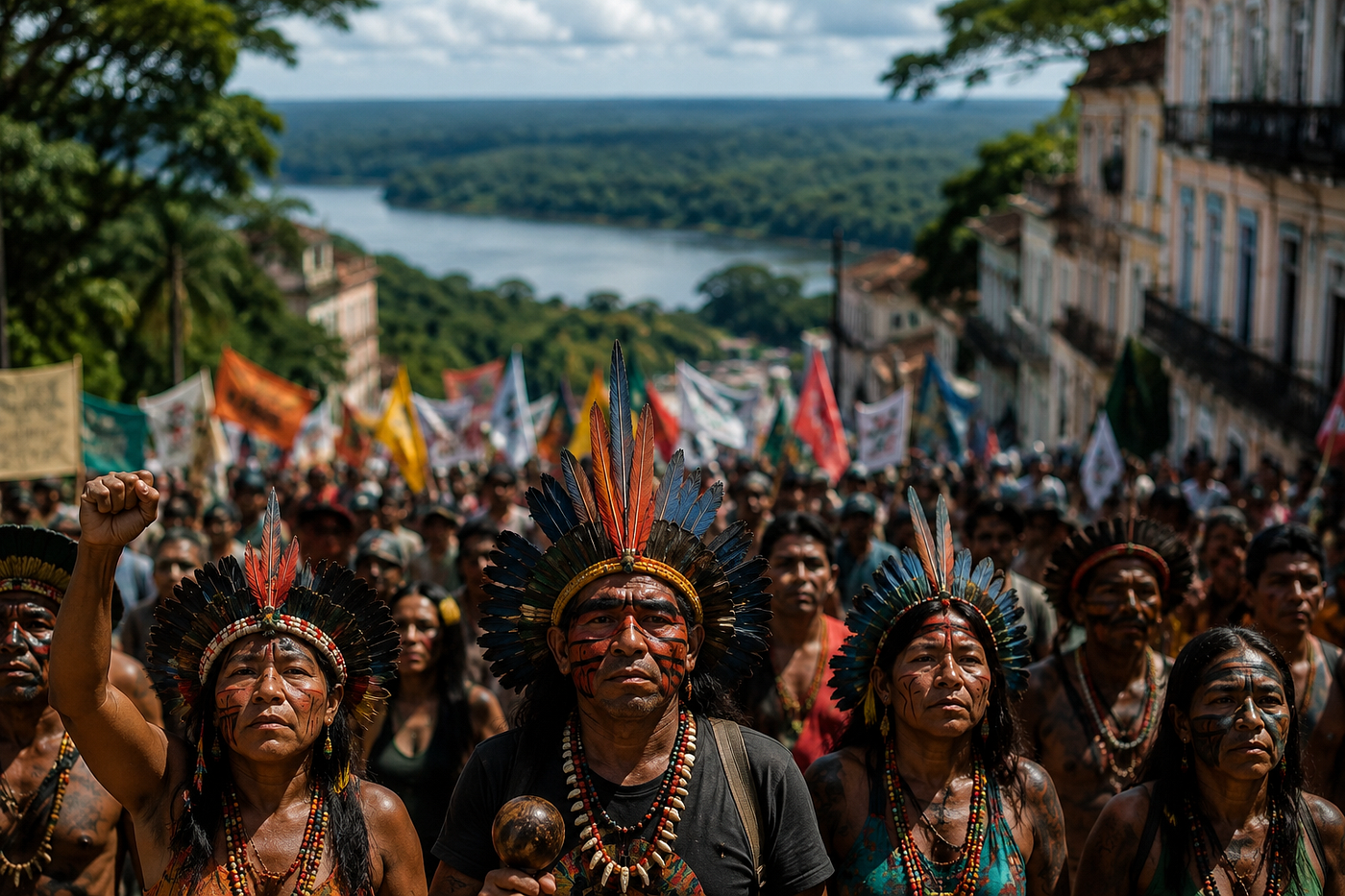
The hardest part is not knowing. It is acting together
Imagine a fishing village beside a lake.
Everyone in the village depends on the fish. Everyone knows the lake is being overfished. The evidence is obvious — the catches are getting smaller, the fish harder to find. If nothing changes, the lake will eventually be empty.
Yet every family continues fishing.
Not because they are ignorant. Not because they do not care about the future.
But because each family faces the same impossible calculation:
If I reduce my catch and my neighbors do not, I lose twice. I eat less today and the lake still dies tomorrow. If I reduce my catch and everyone follows, perhaps the lake survives. But I cannot control everyone else.
So everyone waits.
Everyone hopes someone else will go first.
The lake slowly empties.
The story sounds simple enough to belong in a classroom textbook. Yet it describes one of the largest problems humanity has ever faced.
The fishing village and global climate negotiations are, at their core, the same story. One is small enough to see clearly. The other has 195 countries and thirty years of history obscuring the view.
But the human problem underneath is identical.
The House Is on Fire
In November 2025, world leaders gathered in Belém, Brazil — deep in the Amazon, the very lung of the planet — for COP30, the thirtieth United Nations Climate Conference.
The setting was symbolic. The Amazon forest is one of the most powerful carbon-absorbing systems on Earth. Holding the conference there was intended to signal urgency — to remind the world of what is at stake.
What happened instead was familiar.
Countries that benefit greatly from fossil fuels once again succeeded in largely blocking tangible progress. More than 1,600 fossil fuel lobbyists attended — roughly one in every 25 people present. Since the Paris Agreement was signed a decade ago, global greenhouse gas emissions have risen by approximately 10%.
The Paris framework survived. The climate problem continued.
The house is on fire.
The negotiations about the hose continue.
The Oldest Problem in Human Cooperation

Knowing is easy. Acting together is harder
Climate change is often presented as a scientific challenge.
In reality, science solved the easy part decades ago. We know what is happening. We know why it is happening. We know what must be done.
The harder challenge is cooperation.
Climate change is what economists call a collective action problem. The benefits of reducing emissions are shared by everyone. The costs are paid individually. Every country benefits if everyone acts. Every country also benefits if someone else acts first.
The result is paralysis. Not because people are irrational. Because, in a narrow sense, they are being perfectly rational.
The fishing village keeps fishing. The lake keeps shrinking.
The Psychology Nobody Talks About at Climate Summits
When climate negotiations fail, the public explanations are usually political.
Fossil fuel interests blocked progress. National interests prevailed. Rich countries refused to pay. These explanations are not wrong. But they are incomplete.
A 2025 study published by Cambridge University Press identifies what researchers call “collective dissociation” as one of the deeper reasons climate change fails to generate the shared responsibility needed for effective collective action.
The term sounds technical. The experience is familiar.
Most people know climate change is real. Most people believe action is necessary. Yet most people still wake up, go to work, pay bills, worry about family, and move through ordinary life as though the crisis exists somewhere in the distance.
This is not denial. It is something more subtle — the human mind’s extraordinary ability to hold two things simultaneously: knowing that something is catastrophic and living as though it is not.
The crisis remains real. The feeling of urgency fades. Until the next flood. The next heatwave. The next headline. Then the cycle repeats.
The Free Rider and the Frozen Majority
Economists have a name for what happens next.
The free rider problem.
If one country dramatically reduces its emissions, the atmosphere benefits — and everyone benefits. The country that acted bears the full economic cost. The countries that did nothing enjoy the same environmental gains.
That means every government faces the same temptation: wait, delay, let somebody else go first.
The mathematics of cooperation quietly work against cooperation itself.
For thirty years, this dynamic has shaped climate negotiations. Declarations are made. Targets are announced. Progress occurs. But rarely at the scale the science demands.
Meanwhile, a landmark study collecting climate psychology data from 63 countries found something equally troubling: people consistently underestimate how many others share their concern. Most people support stronger climate action. Most people believe others care far less than they actually do.
When people think they are alone, they stay quiet. When everyone stays quiet, everyone appears indifferent. The illusion reinforces itself.
Researchers call this pluralistic ignorance. The majority wants action. The majority believes it is in the minority. So nothing moves at the speed the situation demands.
But when people discover that others share their concern — when they see evidence that cooperation is actually possible — something shifts. Hope becomes more than an emotion. It becomes evidence.
What the Amazon Already Knows
Ironically, some of the most useful lessons about cooperation come from communities that have never hosted a climate summit.
Across the Amazon basin, Indigenous communities have managed shared resources for generations. They face the same challenge: shared forests, shared benefits, individual incentives to overuse, potential collapse if everyone acts selfishly.
Yet many of these communities have sustained cooperation for decades. Not through global agreements. Not through diplomatic negotiations. Through trust, shared norms, accountability, and a recognition that everyone depends on the same resource.
The political economist Elinor Ostrom spent her career studying exactly these situations. Her conclusion, which won her the Nobel Prize in Economics, challenged a long-standing assumption: collective action is not doomed — but it requires specific conditions. People need meaningful participation. Rules must be seen as legitimate. Communities need ways to monitor behaviour and respond when cooperation breaks down.
Climate negotiations often lack most of these conditions.
The people most affected by climate change — communities in the Amazon, in South Asia, in Sub-Saharan Africa, who contributed least to the problem — have the least power in the rooms where decisions are made. The people with the most power in those rooms have the most to lose from rapid change.
This is not cynicism. It is the structural reality that any honest conversation about cooperation has to begin with.
What Thirty Years of Failing Has Actually Taught Us
It would be easy to read thirty years of insufficient climate summits as evidence that cooperation is impossible.
That reading is wrong.
What thirty years has actually demonstrated is that voluntary, consensus-based negotiations among 195 sovereign nations — each operating within their own political constraints and economic interests — produce agreements that reflect the lowest common denominator rather than the scale of the challenge.
The process rewards consensus. The climate problem demands urgency. Those are not the same thing.
The lesson is not that international cooperation should be abandoned. It is that it cannot be the only tool.
Smaller coalitions of willing nations. Binding agreements with genuine accountability. Financial flows to climate-vulnerable communities actually sufficient to the scale of the problem. And crucially — the people most affected by climate change having a genuine say in the decisions that shape their future.
New research from Stanford finds that one of the most effective ways to motivate collective climate action is showing people how past collective actions have already delivered structural change. What does not work is inducing guilt or simply presenting frightening data.
People do not move because they are scared. They move when they believe that movement is possible.

What we protect today shapes what remains tomorrow
A Larger Village
During COP30, while negotiators debated language and lobbyists crowded the halls, Indigenous activists marched through the streets of Belém.
Many had travelled from communities that have lived within the Amazon for generations. For them, the forest is not a symbol. It is home.
It is livelihood.
It is memory.
It is future.
They were not there to debate emissions trading or carbon markets or the precise language of a just transition mechanism.
They were there because the forest is their Tuesday.
And perhaps that is the lesson hidden beneath all the negotiations, the reports, and the stalled agreements.
Shared problems require shared solutions. Not the solutions that are easiest to agree on. The ones that are actually sufficient.
The fishing village understood that.
The planet is simply a larger village.
And the challenge — the human challenge, the oldest one — remains exactly the same.
This is the third article in a series exploring how human categories and human psychology shape our response to the world’s largest shared challenges. The first explored why every war begins with a category. The second examined why the climate crisis is already someone’s Tuesday.
Tags: #ClimateChange #Psychology #World #Environment #CollectiveAction
Thank you for taking the time to read. I write about the stories behind everyday life and the forces shaping our shared future — from family, food, and personal growth to climate change, conflict, society, and human behavior. If you’d like to join me on that journey, I’d be honored if you followed and subscribed for future articles.
메타데이터
- post_id
- b73bf6fb5449
- slug
- climate-change-and-the-collective-action-problem-why-global-cooperation-keeps-failing-b73bf6fb5449
- url
- https://medium.com/@gpkb09/climate-change-and-the-collective-action-problem-why-global-cooperation-keeps-failing-b73bf6fb5449
- canonical_url
- https://medium.com/@gpkb09/climate-change-and-the-collective-action-problem-why-global-cooperation-keeps-failing-b73bf6fb5449
- author_url
- https://medium.com/@gpkb09
- status
- ok
- fetched_at
- 2026-06-23 03:48:11




