We Watched America Lose Abortion Rights and Called It a Win for India
It wasn’t, and here’s what we chose not to look at
REPRODUCTIVE RIGHTS
We Watched America Lose Abortion Rights and Called It a Win for India
It wasn’t, and here’s what we chose not to look at

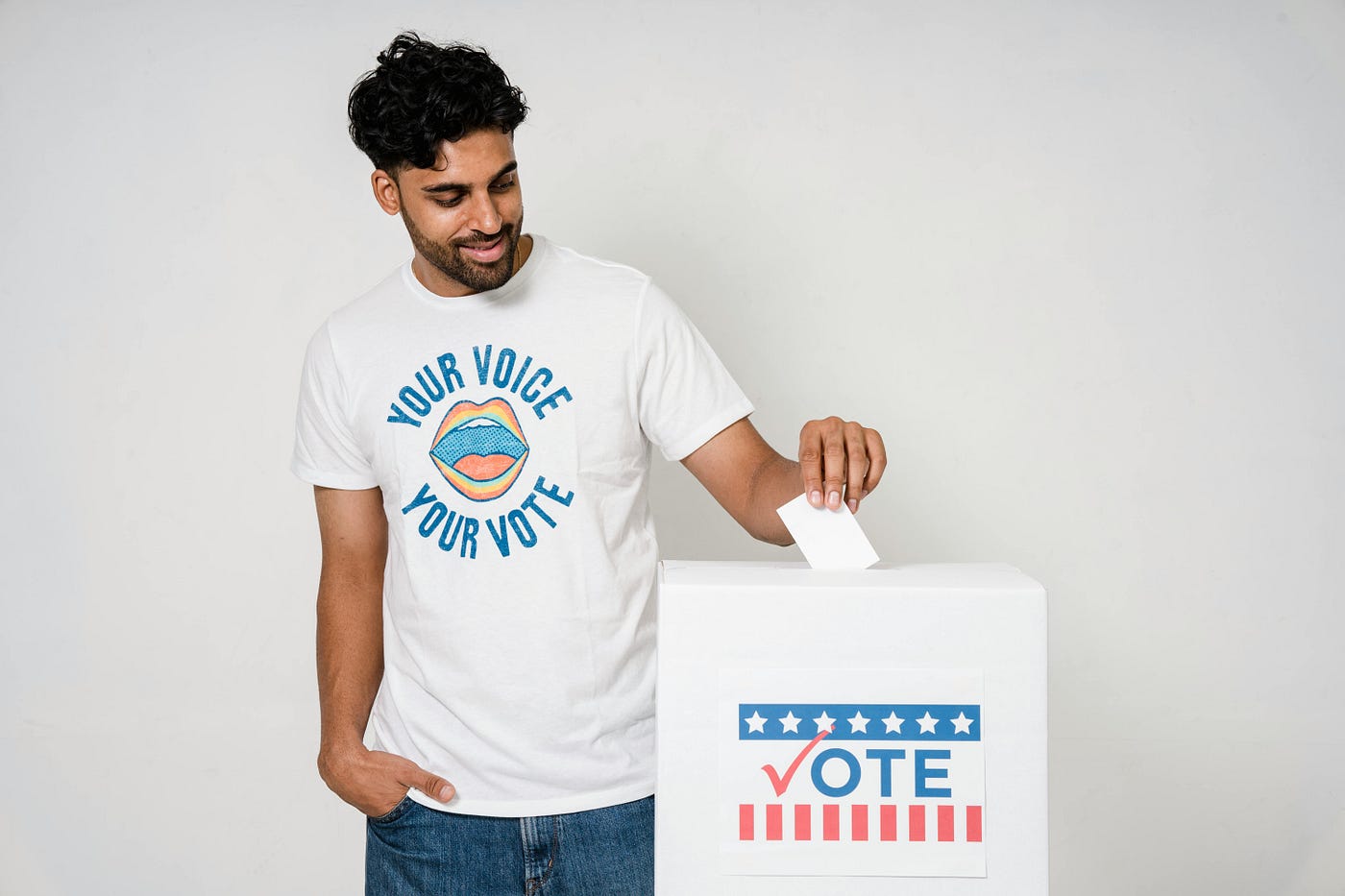
Photo by Emma Guliani
Not a member? Use my friend link to read this story.
In June 2022, when the United States Supreme Court handed down Dobbs v. Jackson Women’s Health Organisation and stripped away fifty years of constitutional protection for abortion, something strange happened on this side of the world. There was grief for American women, yes. But threading through Indian Twitter and WhatsApp groups and op-ed pages was something else entirely: a quiet satisfaction. Finally. India had just passed the MTP Amendment Act, 2021, expanding abortion access and removing the clause that had, for decades, made a marriage certificate a prerequisite for bodily autonomy. Our Supreme Court had, just months after Dobbs, ruled that all women, regardless of marital status,s have the right to terminate a pregnancy. The LinkedIn posts practically wrote themselves. Look at us. For once, we were on the right side of history while the world’s self-declared beacon of freedom burned its own laws down.
I get it. I felt it too, for about thirty seconds.
Then I went back to reading the actual numbers, and the feeling curdled.
I study law because I believe in what it can do. But I have also learned, slowly and sometimes reluctantly, to be suspicious of the distance between what a law says and what it actually does for the woman who needs it a11 pmpm in a town three hours from the nearest city. And that distance, in India, is a very long road.
What Dobbs actually did to women’s bodies
Let me tell you what Dobbs actually did, not as a legal event, but as something that happened to real women in real bodies.
A woman in Texas found out she was pregnant with a fetus that had a fatal anomaly. She had to travel out of state for care because Texas law gave her no options at home. A woman in Tennessee began miscarrying and was sent home from the emergency room because her doctors were afraid to intervene until her condition became critical enough to legally justify it. A woman in Idaho haemorrhaged while pregnant and was airlifted across state lines because the hospital couldn’t risk treating her under the new law. These are documented cases from peer-reviewed research, not worst-case projections from advocacy groups. This is what happened in the first three years after the ruling.
By late 2025, 23 states had enacted near-total bans or strict gestational limits. Twelve states have near-total bans. Six more restrict abortion to six weeks, which is, for anyone who needs to hear this said plainly, before most women even know they are pregnant. In Texas, maternal mortality rose 56% in the first year after its abortion ban, alongside a 50% spike in maternal sepsis. Maternal mortality rates in ban states are now twice as high as in states where abortion remains protected. 40% of OB/GYN doctors in ban states told researchers they now face legal barriers to treating miscarriages and ectopic pregnancies. Read that again: doctors are too scared of prosecution to treat women who are actively losing pregnancies.
Women are dying because their doctors are scared of the law. That is not a talking point. That is what the data says.
And it is worth naming which women specifically, because abortion bans have never been an equal-opportunity disaster. More than half of all Black women in America now live in states where abortion is banned or under threat. More than 14 million women of colour. The geography of restriction and the geography of racial poverty map onto each other almost perfectly, which is not a coincidence and has never been a coincidence. A wealthy woman in Texas flew to New York on a Friday morning and paid with a credit card. A Black woman in Mississippi without paid leave, without $800 for a plane ticket, without someone to watch her kids, did not. She stayed. She figured something else out. Or she didn’t figure anything out, and carried a pregnancy she could not afford or did not want, or that was dangerous to her health, and the state called it a moral victory.
Abortion restrictions are always, underneath the moral language, a class policy. The moral language is the part that gets quoted. The class policy is the part that quietly operates.
The India we chose to celebrate Instead
Our law looks good on paper. It has looked progressive since 1971, which is, for the record, actually longer than Roe v. Wade lasted. The 2021 amendment was a genuine step forward: it extended gestational limits, let unmarried women seek abortions on grounds of contraceptive failure, and raised the ceiling to 24 weeks for survivors, minors, and women carrying foetuses with anomalies. Then, en in September 2022, in X v. Principal Secretary, Health and Family Welfare Department, Govt. of NCT of Delhi, Justice Chandrachud’s bench held that reproductive autonomy flows from Article 21 of the Constitution, that marital status has no business determining whether a woman controls her own body, and that the pregnant woman’s consent is the only consent that is legally relevant. Not her husband’s. Not her family’s. Not her doctor’s personal feelings about the matter.
It was a genuinely good judgment. I read it in the library and felt something loosen in my chest.
Then I looked up from the page.
67% of abortions in India are classified as unsafe, not because the law prohibits them, but because the law exists in one reality and women exist in another entirely. In Madhya Pradesh, a state the size of Germany, only 32% of public health centres can actually perform an abortion. Doctors in the gynaecology ward of Government Medical College in Aurangabad told journalists that women regularly travel over 200 kilometres to access something that is, on paper, their legal right, because the facilities closer to home either lack the training or, more often, the willingness. Eight women die every single day in this country from unsafe abortions. Girls between 15 and 19 face the highest risk of dying from abortion-related complications of any age group. 56% of chemists report barriers to stocking abortion drugs. The drugs exist. The access does not.
The right exists. The road to exercising it is where the right dies.
There is also the doctor standing in the doorway of the clinic, which is where so much of this plays out in practice and receives so little attention. Even where the law is unambiguous, a doctor in India can simply decline to perform an abortion on personal or moral grounds, and a woman in that moment has almost no immediate recourse. Research has consistently shown that stigma and personal bias among healthcare providers remain major barriers to access, particularly for unmarried women. The Supreme Court noted in its 2022 judgment that doctors were imposing extra-legal conditions like requiring a husband’s or family’s consent before proceeding, conditions that have no basis in law. But noting something in a judgment and actually changing it in a clinic two hundred kilometres from Delhi are, it turns out, completely different activities. The stigma that makes a doctor feel entitled to gatekeep a woman’s legal right is not dissolved by a ruling. It lives in the clinic, in the conversation at the front desk, in the look across the room, in the question delivered in a low, studied voice: Does your husband know you are here?
The contradiction nobody wants to say out loud
There is a section of the 2022 Supreme Court judgment that barely made it into the headlines and that I keep returning to, because it contains one of the most honest and uncomfortable things Indian law has ever quietly admitted about itself.
The court said that for the MTP Act, rape under Rule 3B includes marital rape. Meaning a wife who becomes pregnant because her husband forced himself on her has legal grounds to seek an abortion. The court looked at that reality, acknowledged it exists, and built a legal pathway around it.
But here is the thing: India does not criminalise marital rape. Exception 2 to Section 375 of the Indian Penal Code still explicitly exempts a husband from rape charges involving his wife. The act itself is not a crime. The violence has no name in Indian criminal law. But the pregnancy produced? That, we have decided, she may end.
What the law is saying, in its careful, considered, legal language, is this: we will not protect you from what he did, but we will let you manage the consequence of it. We will not call it rape, but we will give you a referral. I do not know how to explain how enraging that is. The court can see the pregnancy. It has chosen, again, not to see the rape. And this woman, who exists and is not a hypothetical, has to navigate this alone. She has to find a registered medical practitioner willing to help. She had not crossed the gestational limit before she even knew she needed to act. She has to prove her circumstances to a system that has simultaneously acknowledged her suffering and declined to name it. The law made her beg, and it did not even have the decency to call what it was helping her escape by its correct name.
The court can see the pregnancy. It has chosen, again, not to see the rape.

Photo by Brett Sayles
The judgment
The same Supreme Court that handed down the landmark 2022 judgment walked back significantly in 2023, and almost no mainstream coverage in India engaged with what that actually meant.
A 27-year-old married woman, a mother of two, approached the Supreme Court to terminate a pregnancy she had only recently discovered because she was breastfeeding. Lactational amenorrhea, the suppression of menstruation caused by breastfeeding, had masked the pregnancy entirely. The moment she found out, she went immediately to seek help. AIIMS, one of the country’s most respected medical institutions, cleared the procedure. The Supreme Court said no. The bench held that her circumstances didn’t meet the threshold under the MTP Act for termination beyond 24 weeks, even though she could not, physically or biologically, have known sooner. A woman who had done everything right, who had moved the moment she found out, who had medical clearance from AIIMS, was told by the highest court in the country that it understood her body and her life better than she did.
The 2022 judgment had called the pregnant woman the “ultimate decision-maker” on matters of her own reproductive choices. The Supreme Court Observer documented how the 2023 bench had effectively replaced that language with a different question: not what does she want, but are her circumstances dire enough to deserve what she wants. The woman’s autonomy had become a threshold to clear, not a right to exercise.
This is the thing about rights that sounds abstract until you feel it: they are not permanent. They are not built into the walls. They are more like agreements between the state and its people, and agreements can be renegotiated when the people sitting across the table change. The 2022 judgment was extraordinary. It was also one bench’s interpretation. Another bench, reading the same statute, answered differently for a woman whose circumstances were by any measure more sympathetic than the 2022 petitioner’s. The law did not change. The people reading it did. And that was enough.
America watched Roe v. Wade stand for fifty years and assumed it was permanent. We watched one good judgment come down in 2022 and told ourselves the work was done.
This is bigger than India and America
Dobbs was not only a domestic American ruling. Scholars tracking global reproductive governance have documented it as a model, a proof of concept for a coordinated international movement working to push sovereign nations to set their own abortion laws without international oversight, to install conservative judges on domestic courts, and eventually to enshrine foetal personhood in law. Foetal personhood means the foetus carries legal rights that supersede those of the woman carrying it. She becomes, in the language of the law, not a person with rights but an environment with responsibilities.
Alabama moved sharply in this direction in 2024, when its Supreme Court classified frozen embryos as children, immediately shutting down IVF services across the state. When the legal personhood of an embryo becomes settled law, the personhood of the woman who contains it becomes conditional by definition. This is not an American obsession that will stay contained within American borders. It is a legal strategy, and it travels.
India is not immune. The MTP Act frames abortion as an exemption from criminal liability, not as a protected right. The Centre for Reproductive Rights has named this gap explicitly: abortion in India remains technically a crime with exceptions, not a fundamental entitlement. The distance between those two legal postures is enormous, the moment politics shifts direction. An exception can be narrowed by the same legislature that created it. A right requires a fundamentally different fight to dismantle. We have the first. We keep celebrating as though we have the second.
An exception can be narrowed by the same legislature that created it. A right requires a different fight to dismantle.
What I actually want people to take from this
I did not write this to make anyone feel hopeless. I wrote it because I think we celebrated too early and rested too soon, and I think that rest is going to cost women who cannot afford it.
Eight women die every single day in this country from unsafe abortions. A woman in 2023 had AIIMS clearance and was still sent home by the Supreme Court. The same MTP Act that currently protects abortion as an exemption can be narrowed by a legislature that decides those exemptions have grown too generous. A doctor who personally disapproves can make a woman’s legal right practically inaccessible without violating a single law. The gap between what is written and what a woman actually experiences in a clinic in rural Rajasthan is the gap where rights have always gone to slowly disappear, usually without anyone noticing until it is far too late to dig them back up.
What Dobbs broke in America took fifty years to build and one ruling, one changed court, to undo. What India has not yet built, the access infrastructure, the decriminalisation, the provider accountability, the straightforward acknowledgement that marital rape is rape and not simply an abortion ground, is everything that would make the right real for the women who actually need it most. Not the woman in South Delhi who knows how to navigate the system. The woman in rural Rajasthan who does not. The teenager was too frightened to go to a government facility because someone would ask where her parents were. The wife who cannot tell her husband why she needs to see a doctor today.
We watched America lose something fundamental and called it a lesson for them.
The lesson was always for us.
If you want to go deeper:
On the pharmacist barrier, the medical board problem, and the 2023 SC case. The ground-level companion to everything this piece argues.
The American woman behind the data: Nancy Davis, who was told she had to “carry her baby to bury her baby.” For when the numbers stop feeling like enough.
For anyone who thinks the fight is over in America. It isn’t. It just moved to a different courtroom.
For more stories about reproductive rights, bodily autonomy, gender justice, and the gap between what laws promise and what women actually experience, follow Fourth Wave. Also check out our Livestreams and sign up for our Newsletter. Let’s grow the community! Have you got a story or poem that focuses on women or other targeted groups? Submit to the Wave!
메타데이터
- post_id
- b7547faa2154
- slug
- we-watched-america-lose-abortion-rights-and-called-it-a-win-for-india-b7547faa2154
- url
- https://medium.com/fourth-wave/we-watched-america-lose-abortion-rights-and-called-it-a-win-for-india-b7547faa2154
- canonical_url
- https://medium.com/fourth-wave/we-watched-america-lose-abortion-rights-and-called-it-a-win-for-india-b7547faa2154
- author_url
- https://medium.com/@mylametales
- status
- ok
- fetched_at
- 2026-06-22 19:40:15