The Geometry of Resilience
The Geometry of Resilience: How the Holy Kaaba & the Art of Attire Speak to the Soul
The Geometry of Resilience
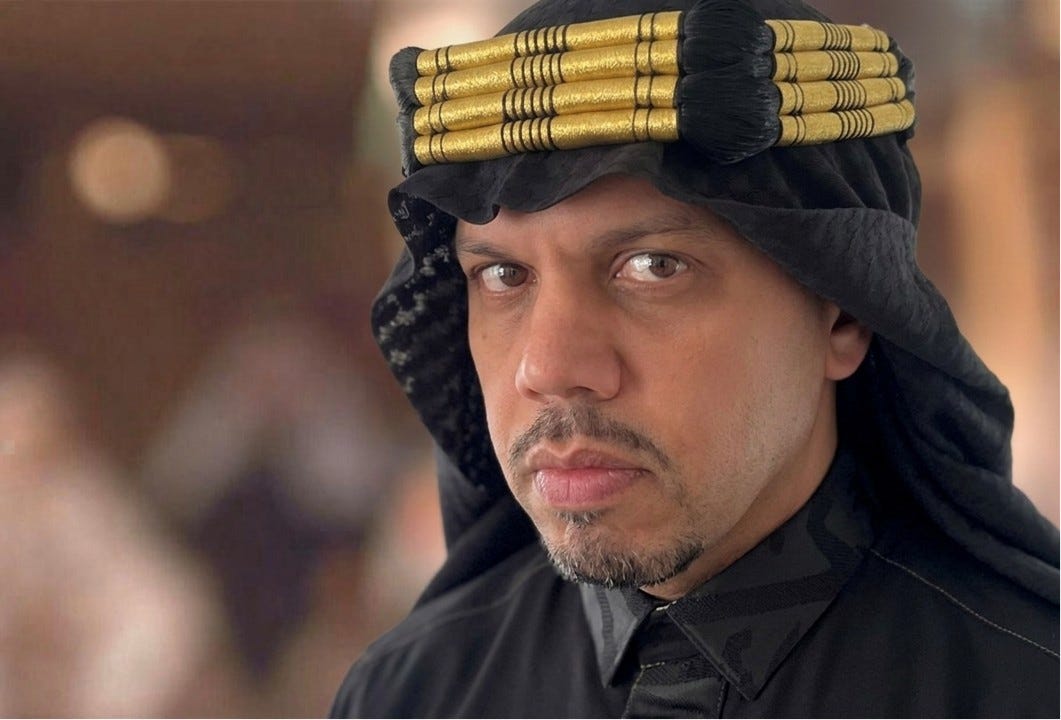
**The Geometry of Resilience: **How the Holy Kaaba & the Art of Attire Speak to the Soul
The Whisper in the Bend & Filling


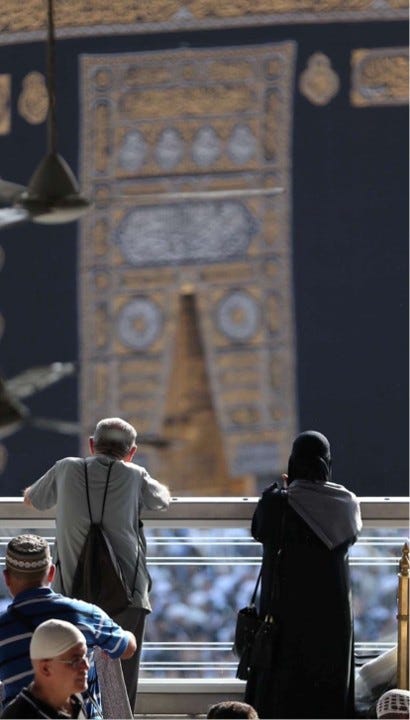
There is a moment known only to those who have stood in the crowded, echoing expanse of the Holy Mosque, Masjid AlHaram, where the world slows to a breathless heartbeat. You look across the sea of humanity at the Holy Kaaba. From a distance, it’s a magnificent monolith of solemn majesty; a stark, commanding silhouette of black and gold against the pale desert stone. But as you step closer, drawn by an invisible, spiritual gravity, the fabric begins to change.

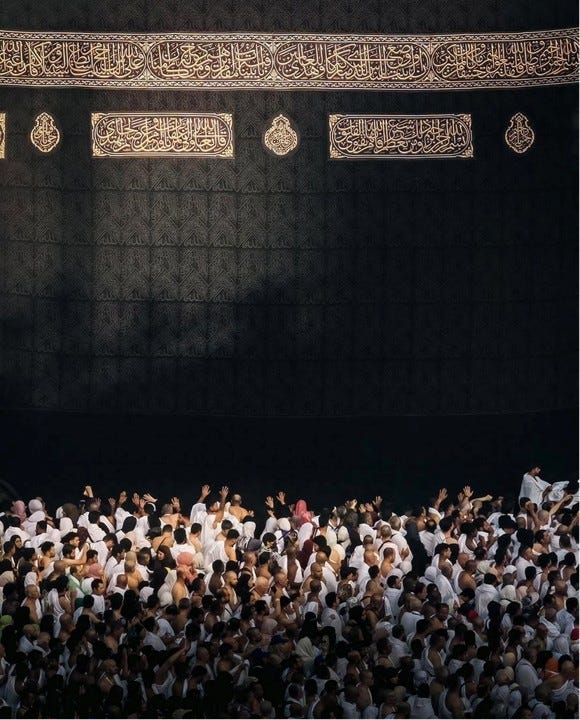

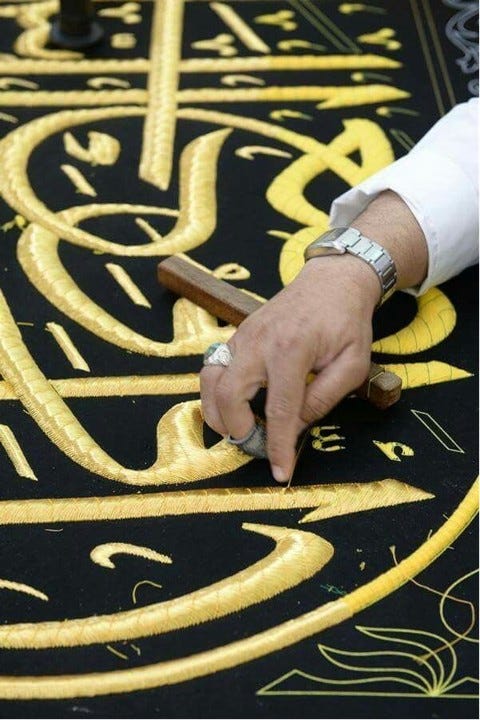
What seemed like a solid void of black silk begins to breathe. The sunlight catches the heavy threads of silver and gold, and suddenly, the hidden Arabic calligraphy illuminates. It rises from the background into the foreground, stepping out of the shadows to greet you. It’s a slow, miraculous revelation, a visual whisper meant only for those who dare to draw near. It was this exact, awe-inspiring transformation that sparked a realization within me: the Kaaba is not merely a destination of pilgrimage. It is the ultimate embodiment of endurance, grit, and grace; and its shroud, the Kiswa, holds a profound psychological blueprint for how we, as human beings, can navigate a fracturing world.


What follows is an exploration of this very alchemy, a journey through sacred history, contemporary design, and psychological expression. In the sections ahead, we will unpack how the Kaaba’s historic resilience mirrors our own human capacity to rise stronger from adversity, and how its dual realities can be translated into the physical architecture of fashion.


From the meticulous creation of two avant-garde Thoabs to the high-frequency design of 3D Printed metallic accessories, traditional headdresses, and rosaries, this article serves as both a design manifesto and a psychological blueprint. It’s a guide to understanding how the fabrics we manipulate and the garments we choose to wear can become a living canvas of our inner grit, an unspoken dialogue with the world, and a sovereign proclamation of our enduring grace.


The Antifragile Monolith: Built to Shatter, Destined to Rise


To truly appreciate the majesty of the Kaaba, one must understand that its beauty is not born from an uninterrupted, peaceful existence. It’s born from survival. Throughout history, this sacred masonry structure has been assaulted, flooded, besieged, and demolished by heartless conquerors, natural disasters, and envious aggressors. Yet, every single time the stone has crumbled, it has managed to stand up stronger. It does not merely recover; it becomes, in the truest sense of Nassim Nicholas Taleb’s concept, Antifragile. It benefits from shocks, growing more resilient and miraculously more beautiful with every rebuilding.

Even the Kiswa itself has evolved through a chrysalis of time. It was not always the iconic black and gold we know today; history records it draped in stripes of white, red, and even brilliant green. This evolution of color and design is a masterclass in adaptation; a proof that grace and identity can remain unyielding even as the exterior adapts to the eras.


The masonry of the Kaaba is a stark reminder of a harsh human truth: It’s inevitable that we will be attacked, shattered, or broken by the malice, envy, or hatred of those who do not understand our purpose. But like the sacred stone, our fractures are not our finale. They are the scaffolding for a stronger rebirth.


Fabricated Philosophy: Translating the Divine into Contemporary Attire


As a hobbyist designer driven by unconventional, contemporary aesthetics, I found myself consumed by the desire to manipulate fabric to articulate this spiritual frequency. If what we wear projects an unspoken dialogue with the world, how could I capture the grit and grace of the Kaaba in a garment?


The answer materialized in the creation of two distinct, conceptual Thoabs. The Kiswa Inspiration:
- Garment 1: The Monolithic Statement (All-Black & Dense Gold Embroidery)
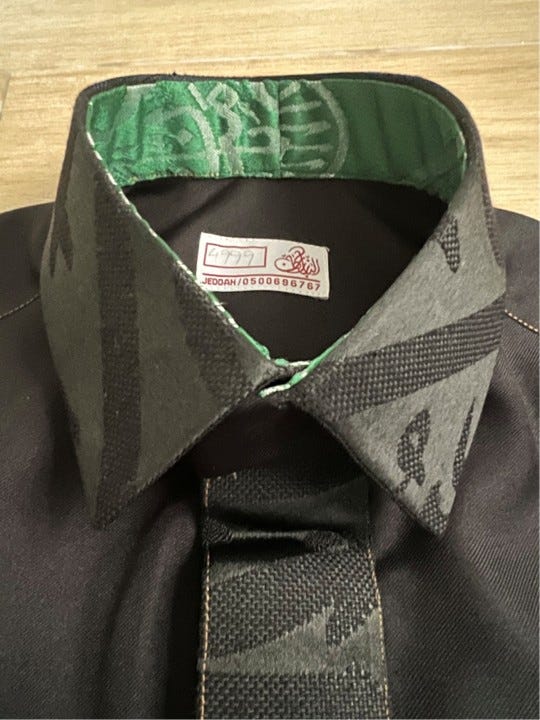
- Garment 2: The Dual Reality (Exterior Calligraphy / Emerald Inner Lining)
Garment One: The Bold Proclamation


The first design is a direct homage to the visible majesty of the structure. Crafted in a deep, midnight black, it features thick, meticulously arranged gold embroidery that mirrors the heavy, raised calligraphic panels (the Hizám) of the Kaaba. It’s a garment of presence; uncompromising, structural, and dignified.
Garment Two: The Intimate Sanctuary

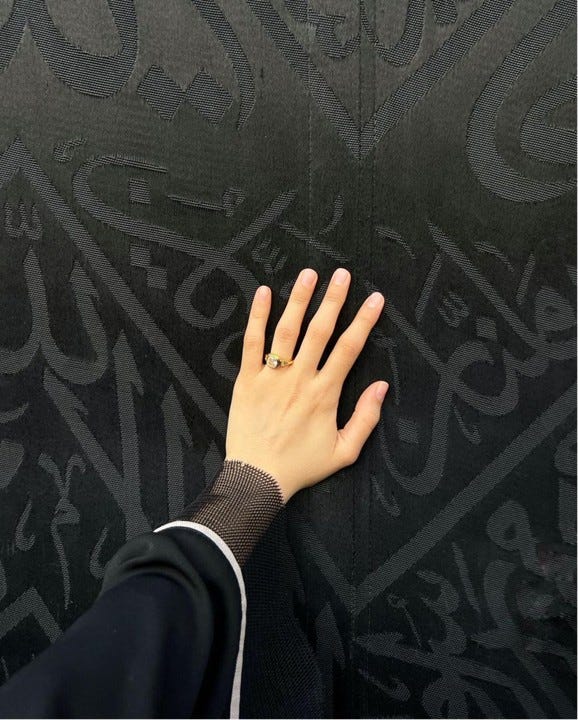

For the second garment, I went all out. I sourced two pieces of authentic Kiswa replicas, rich with woven sacred calligraphy. This garment was designed to draw a direct parallel between the architecture of the Kaaba and the architecture of the human soul:
- The Exterior (The Public Self): I used the black calligraphic Kiswa replica to subtly accent the collar, cuffs, and pocket linings. From afar, it looks like a sleek, modern black garment. But up close, the calligraphy illuminates, welcoming the observant eye.
- The Interior (The Private Sacred Space): I lined the entire inside of the garment with a rich, emerald-green Kiswa replica, mimicking the actual inner walls of the Kaaba. This hidden sanctuary of green silk and calligraphy is a secret kept between the garment and the wearer; a reminder of the beauty reserved only for the very few who are permitted into our innermost spaces.


The Crown, the Cadence, and the Anchorage: Sovereign Character through Headdress, Rosaries, and Cufflinks


If the Thoab is the architectural foundation of this ensemble, and the cufflinks are its structural cornerstones, then the traditional headdress and accompanying accouterments represent its ultimate crowning glory. In the realm of contemporary heritage wear, a garment truly achieves a distinct, sovereign character when it’s paired with a masterfully curated headdress, the Ghutra, Shemagh, or Umma (Turbin), bound by the Iqal, and balanced by the rhythmic, tactile presence of a matching rosary (Misbaha). These are not merely cultural relics; they are instruments of posture, dignity, and personal style.


The Sovereign Finish
- The Ghutra / Shemagh / Umma (Fluidity & Frame)
- The Iqal / Cane Iqal (Structure & Authority)
- The Misbaha / Rosary (Rhythm & Reflection)
- The Cufflinks (Cornerstone & Innovation)
The Ghutra, Shemagh, and Umma: Framing the Face with Fluid Grace


The choice of headdress immediately dictates the energy of the attire. For a look that mirrors the pristine, illuminating calligraphy of the Kiswa, one might opt for a crisp, flawless white Ghutra. Its lightweight, flowing drape brings a stark, angelic contrast against the deep black of the garment, mimicking the brilliant light that dances off the Kaaba’s gold embroidery. Alternatively, a deeply textured, crimson-patterned black Shemagh introduces a rich, historic gravity; a nod to the eras when the sacred structure was draped in red-striped textiles, grounding the modern silhouette in centuries of heritage.
The Iqal & Cane Iqal: The Architecture of Authority


To anchor the fluid grace of the fabric, the Iqal acts as a crown of pure structure. While a classic, dense black cord offers an unyielding, traditional boundary, opting for a contemporary Cane Iqal (Iqal AlMuqassab) elevates the outfit into a masterclass of design. The woven, metallic, or straw-like gold and silver threads running through a cane Iqal catch the light in perfect symmetry with the gold calligraphic embroidery of the Thoab. It provides a structural crown that demands a straight spine and a dignified gaze, communicating an aura of quiet authority before a single word is spoken.
The Matching Misbaha: A Tactile Rhythm of Reflection


Held loosely in the hand or draped intentionally from the pocket, is the rosary (Misbaha). To match the spiritual and aesthetic frequency of a Kiswa-inspired design, the rosary should be selected with meticulous care. Imagine a strand crafted from polished black obsidian or deep jet stone, mirroring the obsidian texture of the Holy Blackstone, interspersed with emerald-green jade or malachite dividers that whisper to the hidden inner lining of the garment.



One of the roseries that I’ve chosen to accent my outfit has an enticing story behind it. Rather than a mere accessory, the black Misbaha chosen for this ensemble carries a profound, historic narrative of its own: it is crafted entirely from the raw volcanic rock sediments found in the volcanic fields (Harra) surrounding the holy city of Madinah.


Unlike mass-produced, uniform beads, this volcanic material is incredibly unique due to its naturally irregular shapes, rich obsidian-like coloration, and surprisingly lightweight composition. This organic, porous texture acts as a perfect counterweight to the precision of the garment, accenting the outfit beautifully by grounding its avant-garde design in the literal earth of the holy lands.


As the beads slide through your fingers, the Misbaha adds a kinetic, rhythmic element to your presence. It’s a tool of mindfulness and a visual extension of your character, transforming the act of waiting or contemplating into a display of serene poise.
The Micro-Monoliths: Elevating the Weave with the 3D Printed Blackstone


While the rich, calligraphic fabrics of these two Thoabs undeniably steal the show, a masterpiece is never completed by the canvas alone. Just as the architectural majesty of the Holy Kaaba is anchored and punctuated by its most sacred cornerstone, an exceptional garment requires accessories that elevate the fabric in ways that defy imagination. To bridge the gap between the soft fluidity of textile and the unyielding permanence of sacred masonry, I engineered a bespoke detail designed to leave an unforgettable impression: a custom set of 3D Printed Holy Blackstone Cufflinks. The 3D Printed Blackstone cufflinks capture the fluid-yet-fractured sanctity of the AlHajar AlAswad, and serves as a metallic, high-frequency conversational anchor.


Crafted out of premium Rhodium-Plated Brass, these cufflinks were manufactured using cutting-edge 3D printing technology to capture the organic, fractured, and bound geometry of the AlHajar AlAswad (The Holy Blackstone). The silver-hued rhodium plating provides a brilliant, liquid-mirror finish that catches the light with every movement of the wrist, contrasting spectacularly against the deep midnight-black fabric of the sleeves.


These cufflinks are not mere fasteners; they are micro-monoliths. They carry a distinct spiritual and aesthetic frequency that instantly sparks curiosity, awe, and wonder in anyone who observes them. By rendering a relic of such ancient, cosmic significance through the lens of modern additive manufacturing, the cufflinks become a powerful conversation starter. They invite the observer to look closer, perfectly mirroring the hidden calligraphy of the Kiswa itself; proving that when grit, grace, and modern innovation collide, even the smallest detail can speak with a voice of thunder.


By integrating the headdress, the rosary, and the 3D Printed cufflinks, the ensemble transitions from a beautifully designed outfit into an entire visual ecosystem. It creates a complete look where every layer, from the crown on your head to the stones in your hand, is unified in a silent, powerful dialogue of resilience, grit, and absolute grace.


The Unspoken Invitation: The Psychology of What We Wear


We communicate long before we ever open our mouths. The colors we choose and the textures we drape over our skin project a silent frequency that acts as a filter for human connection.


Whether we realize it or not, our clothing is a manifesto. When you wear something crafted with intention, infused with history and spiritual geometry, you are issuing an unspoken invitation. You are broadcasting a psychological signal that draws the right crowd toward you. It repels the superficial and attracts like-minded souls; those capable of reading the “hidden calligraphy” of your character.

There is an immense, almost terrifying power in manipulating fabric in creative ways. A garment can hold empathetic frequencies. It can tell the world that you have been broken, like the masonry of the Kaaba, but that you have rebuilt yourself to be grander, more beautiful, and entirely unshakeable.


How Do You Translate Your Own Journey of Resilience into the Fabric of Daily Life?


To take the philosophy of the Kiswa and apply it to your own wardrobe is to treat getting dressed as an act of intentional storytelling. If your clothing is an unspoken invitation to the world, crafting a wardrobe that mirrors your personal resilience requires looking at your clothes through a structural, psychological lens.


When you sit down to map your own journey of grit and grace into what you wear, consider breaking the design process down into five distinct layers:
1. Colors: The Palette of Your Emotional Evolution
Colors project a psychological frequency long before anyone reads your silhouette. When choosing a palette to represent your resilience, look beyond mere aesthetics to the symbolism of your survival:
- The Armor (The Exterior): Heavy, grounding tones like midnight black, charcoal gray, or deep navy can represent your protective boundaries and unyielding strength.
- The Chrysalis (The Evolution): Consider incorporating rich jewel tones, like the hidden emerald green of the Kaaba’s interior, or deep burgundies and dark plums, to symbolize a rich, protected inner world that is thriving despite external chaos.
- The Triumph (The Accents): Metallic accents of gold, brass, or silver can mimic the illumination of sacred calligraphy, representing the wisdom and light you pulled out of dark times.
2. Fabric: The Textures of Endurance
The weight and feel of a textile communicate your emotional durability. To tell a story of resilience, look for fabrics that have character, structure, and the ability to withstand tension:
- For Grit and Structure: Heavyweight wools, structured cotton drills, raw silks, and dense linens hold their shape regardless of external pressure. They create a clean, commanding silhouette that feels like modern armor.
- For Grace and Fluidity: Pair those rigid structures with fluids like silk satin, modal, or fine cashmere linings. The contrast between a rugged exterior fabric and a soft, comforting interior lining tells a profound story: I am strong enough to face the world, but I have kept my heart soft.
3. Design: The Architecture of the Silhouette
The cut of your clothing outlines your relationship with the space around you. Think of your clothing as a masonry structure:
- Unconventional Geometry: Asymmetrical closures, high structured collars, or sharp, clean paneling can mirror a contemporary, antifragile mindset. It shows a willingness to step outside traditional boundaries to protect what matters.
- The Hidden Sanctuary: Design garments with dual realities. A jacket might feature a quiet, understated exterior, but boast a vibrant, patterned interior. This dual-layer design creates a beautiful psychological boundary, reminding you that your deepest beauty and history are reserved exclusively for those you choose to let close.
4. Details: The Illuminating Micro-Narratives
Just as the intricate Arabic calligraphy on the Kiswa only reveals itself upon close inspection, the details of your attire should reward the observant eye. This is where your personal “hidden calligraphy” lives:
- Intricate Topstitching: Use thick, contrasting thread, like heavy gold or silver stitching on a dark backdrop, along the seams to highlight the places where your garment (and your life) is joined together.
- Hidden Messages: Embroider a personal mantra, a meaningful date, or a symbol of strength on the inside of a cuff, the back of a collar, or the inner lining of a pocket. It acts as a private anchor, visible to you and a select few.
5. Accessories: The Visual Anchors
Accessories are the punctuation marks of an outfit. They should feel deliberate, heavy with meaning, and structurally sound:
- Raw and Refined Materials: Opt for accessories made from enduring materials; brushed metals, natural stone, or deeply textured leather. A solid, unpolished metallic ring or a heavy cuff bracelet can act as a physical talisman of your grit.
- Functional Hardware: Look for statement hardware like exposed industrial zippers, heavy metallic buttons, or intricate clasps that feel mechanical and intentional, reinforcing the idea of a beautifully engineered, unshakeable self.


By consciously selecting each piece with these dimensions in mind, your wardrobe ceases to be a passive choice. It becomes a living, breathing canvas; a contemporary shroud of resilience that silently negotiates with the world on your behalf.


Beyond Aesthetics: Why What You Wear Truly Matters


To view this exploration as merely a discourse on fashion is to miss the deeper current flowing beneath the surface. Dressing intentionally is not about vanity or adhering to shifting trends; it’s a profound, visceral form of non-verbal communication. It’s an act of sovereign self-authorship. Every time you step out into the world, your outfit serves as an unspoken dialogue that communicates multiple layered messages simultaneously, long before you ever utter a word.


The layers of intentional attire:
- The Shield (Psychological Armor)
- The Telegraph (Silent Communication)
- The Anchor (Internal Alignment)
1. The Shield: The Psychology of Enclothed Cognition
The garments we choose do not just change how others see us, they fundamentally alter how we see and perform as ourselves. The concept of enclothed cognition proves that clothes possess a measurable power over our psychological processes. When you wear a garment that embodies resilience, structure, and history, your brain internalizes those traits. A structured collar forces a straight spine; a heavy fabric provides a grounding weight akin to a psychological shield. You are quite literally wrapping yourself in the mental state you wish to project.
2. The Telegraph: The Telegraph of the Soul
Whether we like it or not, human beings are visually intuitive creatures. What you wear acts as a telegraph, broadcasting an empathetic and spiritual frequency to those around you.
- The Folds and Creases: Tell a story of lived experience, movement, and survival.
- The Unconventional Details: Signal a mind that thinks outside traditional constraints.
- The Organic Accessories: Like the volcanic rock Misbaha from Madinah or the 3D Printed Blackstone cufflinks, serve as physical manifestations of your deep respect for heritage, permanence, and micro-narratives.
By wearing these layered complexities, you are issuing an unspoken invitation. You are broadcasting a signal that filters out the superficial and naturally draws the right crowd toward you; those capable of reading the subtle, illuminated calligraphy of your true character.
3. The Anchor: An Act of Active Manifestation
Ultimately, managing fabric in creative, intentional ways is a method of manifesting what you want the world to see in you. Life will inevitably bring moments where your personal masonry is attacked or broken by malice, envy, or hardship. Choosing to dress with purpose each morning is your daily declaration that you have rebuilt yourself to be stronger, grander, and entirely antifragile!


Your wardrobe holds within its very folds, creases, and textures a sanctuary of your values. It’s a living canvas; a purposeful, high-frequency statement that declares you are not just surviving the world, but navigating it with unyielding grit and absolute grace.


The Armor of Grace


To wear a garment deliberately crafted in the image of the Kiswa is to drape yourself in the armor of resilience. It is an acknowledgment that your outer presentation is not a superficial shield, but a profound, outward extension of a beautifully engineered interior life. By synthesizing every layer of this visual ecosystem, the structural majesty of the Thoab, the hidden sanctuary of its emerald-green lining, the micro-monoliths of the 3D Printed Blackstone cufflinks, the sovereign framing of the Cane Iqal, and the rich, tectonic heritage of the volcanic Madinah Misbaha, you create an unshakeable alignment between who you are and how you step into the world. You establish a presence that does not need to shout to be understood, but instead speaks volumes through its quietest, highest frequencies.


This is where the architecture of attire meets the architecture of the human soul. The ultimate lesson of the Holy Kaaba is not found in its isolation, but in its survival. It stands as a timeless proof that beauty is not born from an uninterrupted, painless existence, but from an unyielding capacity to rise, adapt, and transform after the storm. Your life, too, will demand this alchemy. There will be seasons where your personal masonry is shaken, where aggressors, envy, or hardships chip away at your foundation. But when you look at the creases and folds of what you wear, let them remind you that fractures are merely the prelude to a grander rebuilding.


Step out into the world as a living monument to your own journey. Wrap yourself in your grit, embroider your boundaries with absolute grace, and trust the power of your silent dialogue. For your deepest splendor, the illuminated calligraphy of your character and the rare sanctuary of your inner world, is a sacred space, beautifully reserved for those who possess the depth to come close enough to truly see you!


The next time life breaks your masonry, remember the Holy Kaaba. Remember that the beauty is not in never falling; it’s in the magnificent, antifragile rise that follows. Wrap yourself in your grit, embroider your boundaries with grace, and remember that your deepest splendor is meant for those whom you’re trying to attract! So now, how do you envision translating your own personal journey of resilience into the textures or style of your daily wardrobe?


Takeaways


- Embrace an “Antifragile” Mindset: Do not just aim to survive hardships; look for ways to grow stronger because of them. When life breaks your masonry, use the rebuilding process to upgrade your character, boundaries, and wisdom.
- Build a Dual-Layered Persona: Like the Kaaba, maintain a composed, dignified exterior for the general public, but preserve a rich, beautiful inner world (your “emerald lining”) reserved exclusively for those who earn your trust.
- Let Your Wardrobe Speak Before You Do: Recognize that your clothing projects an unspoken dialogue. Dress intentionally every morning, selecting colors and cuts that project the exact confidence, grace, and boundaries you want the world to recognize.
- Cultivate “Hidden Calligraphy”: You do not need to reveal all your depth to everyone at first glance. Allow your intellect, talents, and history to be a rewarding discovery meant only for those who are willing to draw close to you.
- Anchor Your Outfits with Intentional Accessories: Use accessories as the punctuation marks of your personal story. Choose pieces with weight, history, or unique manufacturing, like a piece of custom hardware or a symbolic ring, to serve as anchors for your presence.
- Use Contrast to Show Complexity: Pair rigid, structured exterior garments (like heavy wools or structured collars) with soft, fluid inner textures (like cashmere). This visual contrast signals that you are strong enough to handle the world but have kept your heart soft.
- Wear Your Values as Subtle Anchors: Incorporate deeply personal details into your clothes that only you know are there; a mantra stitched inside a cuff, a meaningful color in a pocket lining, or a specific gemstone. Let these serve as private, grounding talismans throughout the day.
- Spark Curiosity, Don’t Demand Attention: Move away from loud, flashy logos and toward intriguing, high-quality textures and geometries. Design your style to spark awe, wonder, and conversation naturally rather than shouting for validation.
- Curate an Unspoken Invitation: Treat your style as a beacon for like-minded people. By wearing things infused with creative and spiritual intentionality, you emit a frequency that naturally filters out the superficial and attracts the right crowd.
- Treat Fabric Manipulation as an Art of Empathy: Remember that clothing is not just utilitarian; it holds psychological and emotional frequencies. Use the way you drape, structure, and accent your fabrics to articulate your identity and connect with others on a deeper, non-verbal level.


Disclaimer: Everything you’ve read here is my own original writing, with all necessary references and sources listed where they belong. The images and photographs throughout the article are either from my personal collection, generated using Gemini AI, or sourced from free-to-use online platforms. I don’t earn any money from my Medium publications; I write these pieces simply to share insights and ideas with the community for free. If you believe an image has been used without the right attribution, please let me know, and I’ll be happy to fix it right away.
The Mavrick
메타데이터
- post_id
- b75c640a879e
- slug
- the-geometry-of-resilience-b75c640a879e
- url
- https://medium.com/@hashim.alzain/the-geometry-of-resilience-b75c640a879e
- canonical_url
- https://medium.com/@hashim.alzain/the-geometry-of-resilience-b75c640a879e
- author_url
- https://medium.com/@hashim.alzain
- status
- ok
- fetched_at
- 2026-06-20 20:29:01