Different Types of Knee Pain and What They Indicate
knee pain, common symptoms, possible causes, and what pain above, below, or within the knee may indicate during daily activities.
Different Types of Knee Pain and What They May Indicate
Knee pain is one of the most common joint-related problems affecting people of different age groups. However, not all knee pain feels the same. Some individuals experience discomfort above the kneecap, while others notice pain during walking, bending, or physical activity. The location, timing, and type of pain can often provide useful clues about what may be affecting the knee joint.
Understanding the different types of knee pain may help people recognize early warning signs and determine when symptoms should not be ignored.
Why the Type of Knee Pain Matters
The knee is a complex joint made up of bones, cartilage, ligaments, tendons, and muscles that work together to support movement and stability. Pain can develop when any of these structures become irritated, inflamed, weak, or injured.
In many cases:
- Front knee pain may indicate kneecap-related stress.
- Pain above or below the knee may involve tendons or muscle strain.
- Pain during movement can suggest joint compression or instability.
- Persistent joint pain may sometimes point to inflammation or degenerative changes.
The exact cause depends on several factors, including age, activity level, posture, previous injuries, and overall joint health.
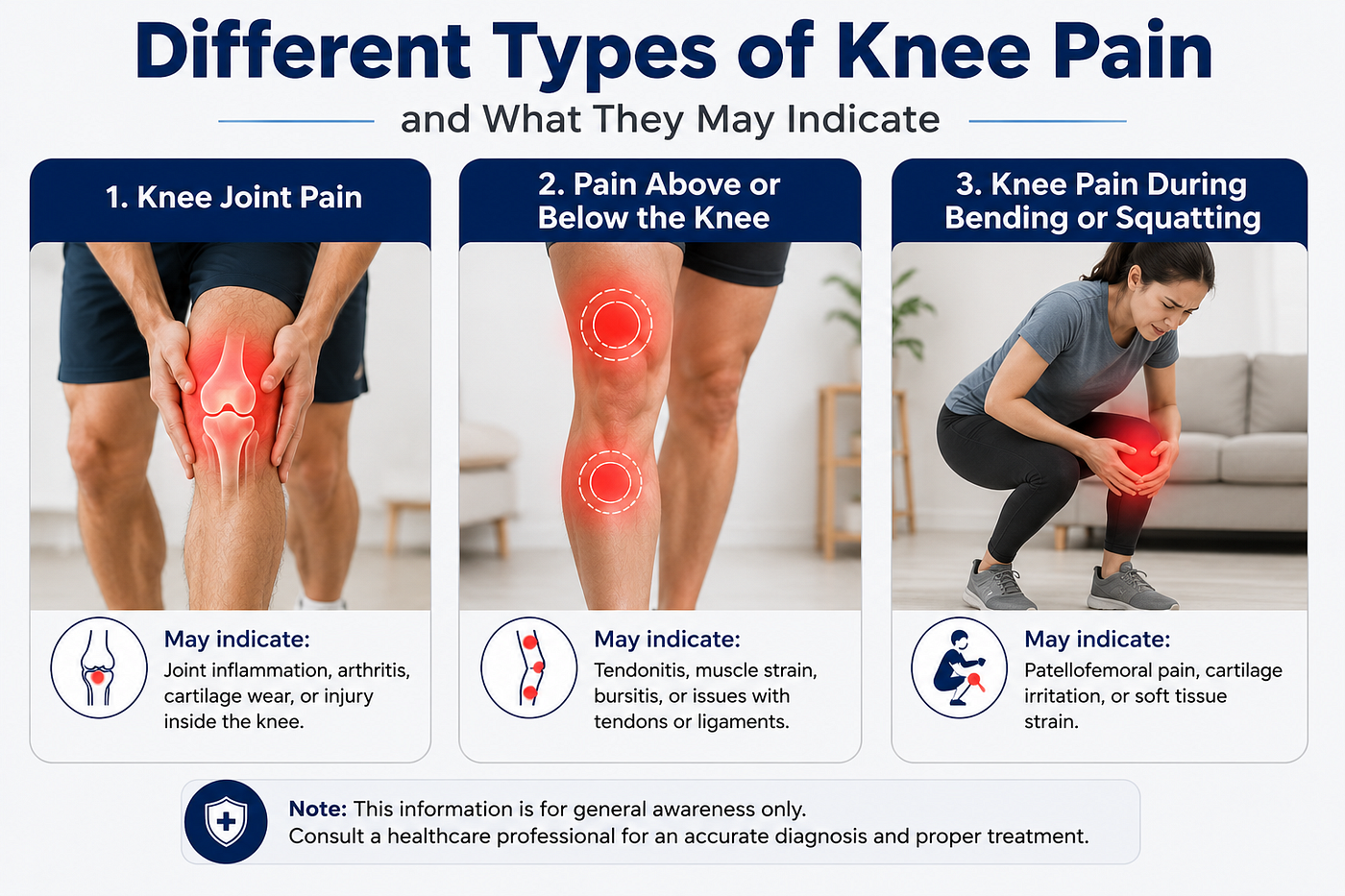
1. Knee Joint Pain
General knee joint pain is often described as aching, stiffness, or discomfort within the knee itself. Some people experience pain during movement, while others notice stiffness after sitting or resting for long periods.
Common Symptoms
- Stiffness in the knee joint
- Swelling or inflammation
- Reduced flexibility
- Pain during activity
- Difficulty standing or walking for long periods
Possible Causes
Knee joint pain may develop due to:
- Overuse
- Cartilage wear and tear
- Arthritis-related changes
- Ligament strain
- Muscle imbalance
- Previous knee injuries
Joint pain that continues for several weeks or worsens over time should not be ignored.
Several factors related to knee joint pain causes, symptoms, and treatment may affect mobility and daily movement if left unmanaged.
2. Pain Above or Below the Knee
Pain that develops above or below the knee is often associated with muscle strain, tendon irritation, or stress around the supporting structures of the joint.
Pain Above the Knee May Be Linked To:
- Quadriceps tendon strain
- Muscle tightness
- Overuse during physical activity
- Repetitive jumping or running
Pain Below the Knee May Be Linked To:
- Patellar tendon irritation
- Stress on the shin area
- Inflammation near the kneecap tendon
- Repetitive knee bending
Symptoms may become more noticeable during exercise, stair climbing, or prolonged movement.
Understanding the possible reasons behind pain above and below the knee can help identify whether muscle strain, tendon stress, or movement-related pressure may be contributing to the discomfort.
3. Knee Pain During Bending or Squatting
Pain that occurs while bending the knees is commonly associated with increased pressure inside the joint. Activities such as squatting, kneeling, sitting down, or standing up may trigger discomfort when the knee is already under stress.
Common Signs
- Sharp pain while bending
- Tightness around the kneecap
- Clicking or popping sensations
- Pain while standing up
- Stiffness after inactivity
Potential Reasons
Several conditions may contribute to bending-related knee pain, including:
- Cartilage irritation
- Patellofemoral stress
- Joint inflammation
- Weak leg muscles
- Tendon strain
People who spend long hours sitting or perform repetitive bending movements may experience symptoms more frequently.
Joint compression and muscle imbalance are among the factors that may contribute to knee pain when bending during daily activities.
Can the Location of Knee Pain Help Identify the Cause?
In many cases, yes. While an exact diagnosis requires proper medical evaluation, the location and timing of pain may provide useful clues.
Front Knee Pain
- May indicate kneecap stress or cartilage irritation
Pain Above the Knee
- May indicate muscle or tendon strain
Pain Below the Knee
- May indicate tendon inflammation or overuse stress
Knee Pain During Bending
- May indicate joint compression, stiffness, or cartilage stress
Diffuse Knee Joint Pain
- May indicate inflammation, arthritis, or degenerative changes
Pain patterns should always be evaluated alongside symptoms such as swelling, instability, reduced movement, or weakness.
Common Factors That Can Worsen Knee Pain
Several lifestyle and health-related factors may increase stress on the knee joint, including:
- Weak leg muscles
- Poor posture
- Excess body weight
- Sedentary lifestyle
- Repetitive movement
- High-impact sports
- Improper footwear
- Previous injuries
Ignoring mild symptoms for long periods may sometimes increase strain on the joint and surrounding tissues.
How to Support Better Knee Health
While treatment depends on the underlying cause, certain habits may help reduce unnecessary stress on the knees.
Strengthen Supporting Muscles
Exercises targeting the quadriceps, hamstrings, calves, and hips may improve knee stability.
Avoid Sudden Overuse
Increasing activity gradually may help reduce repetitive strain.
Improve Flexibility
Stretching and mobility exercises may help lower stiffness around the joint.
Maintain Proper Movement Mechanics
Using proper posture during exercise and daily movement may reduce pressure on the knees.
Use Supportive Footwear
Well-cushioned and supportive shoes may help absorb impact during walking or activity.
When Should Knee Pain Be Medically Evaluated?
Medical attention may be necessary if knee pain:
- Persists for several weeks
- Causes swelling or redness
- Makes walking difficult
- Feels unstable
- Develops after injury
- Worsens gradually over time
- Interferes with daily activities
Early assessment may help identify joint-related problems before symptoms become more severe.
Persistent swelling, instability, or worsening discomfort may require medical attention, especially when symptoms begin affecting daily movement, as noted in Mayo Clinic’s knee pain guidance.
Final Thoughts
Knee pain can develop in different ways depending on which part of the joint or surrounding structures are under stress. Pain above the knee, below the knee, during bending, or within the joint itself may all indicate different underlying problems.
Recognizing these pain patterns early and addressing contributing factors such as muscle weakness, posture, overuse, or joint strain may help support better long-term knee health and mobility.
FAQs
What does pain above the knee usually indicate?
Pain above the knee is often associated with muscle strain, quadriceps tendon stress, or overuse-related irritation.
Why does knee pain worsen during bending?
Bending increases pressure inside the knee joint, which may aggravate inflammation, cartilage stress, or muscle imbalance.
Can different types of knee pain have different causes?
Yes. The location and timing of pain often vary depending on whether the issue involves tendons, muscles, cartilage, or the joint itself.
Is knee pain always related to arthritis?
No. Knee pain can also result from muscle weakness, overuse, tendon irritation, ligament strain, or movement-related stress.
When should persistent knee pain be taken seriously?
Pain that worsens over time, limits movement, or causes swelling and instability should be medically evaluated.
메타데이터
- post_id
- b7604c458e1a
- slug
- different-types-of-knee-pain-and-what-they-indicate-b7604c458e1a
- url
- https://medium.com/@orthrem/different-types-of-knee-pain-and-what-they-indicate-b7604c458e1a
- canonical_url
- https://medium.com/@orthrem/different-types-of-knee-pain-and-what-they-indicate-b7604c458e1a
- author_url
- https://medium.com/@orthrem
- status
- ok
- fetched_at
- 2026-06-18 00:10:23