Quarantine The Kids, Keep The Poison
Banning under-16s admits the environment is toxic. Why protect the toxin?
Quarantine The Kids, Keep The Poison
Banning under-16s admits the environment is toxic. Why protect the toxin?
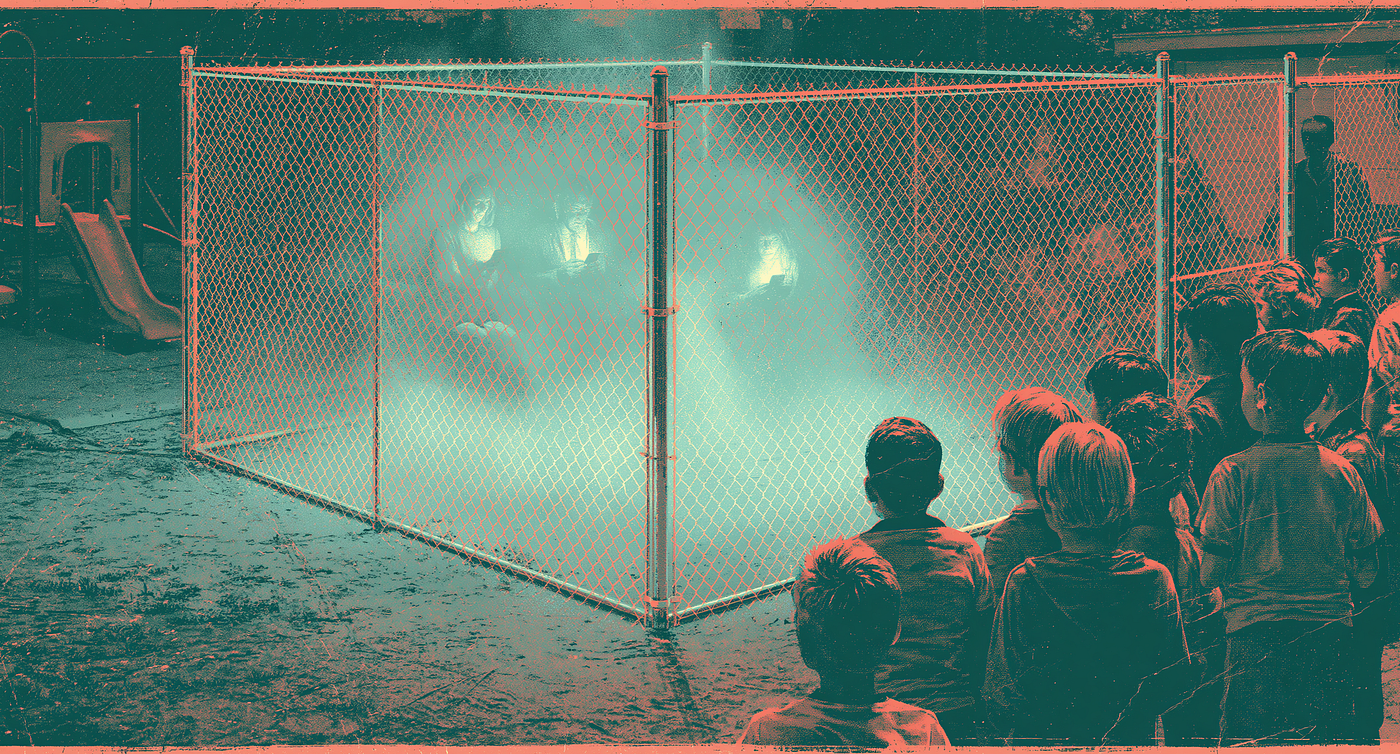
Image: Created by author with various AI tooling
A quarantine is a confession. You don’t quarantine what you think is fine.
You don’t restrict access to substances that are nourishing and safe. You restrict access to things that are toxic, which is why children cannot buy cigarettes, drink in pubs or take out high-interest credit cards.
In that context, it’s interesting to consider what happened across three governments in the space of eighteen months. Canada tabled Bill C-34 — the Safe Social Media Act—this past June, restricting under-16s from social media and laying down the country’s first binding rules on AI chatbots, in the aftermath of a school shooting whose victims’ families had already sued OpenAI over what the company allegedly knew. In October 2025 California’s Governor Newsom signed SB 243, mandating that any chatbot dealing with a known minor remind it, every three hours, that it is a machine. Australia, of course, had already moved. The Great Australian Pause, as I called it warmly at the time late last year, is law.
Three legislatures, the same fence, the same age demographic, the same window of time. It looked almost like consensus. And what’s interesting about consensus is what it agrees on without saying so. When these governments walled children off the same environment, they were making a collective admission: the environment is bad. The children must not enter it.
The admission was not: the environment is bad, let’s look at the environment.
I wrote “The Great Australian Pause” arguing that the under-16 social media ban was, at bottom, an act of restoration — handing children back a wilderness that had been quietly confiscated. I still believe this — the fence is right. But the argument needed to go further. Because the fence is an admission that what’s on the other side is rotting. But once you’ve admitted that, the conversation cannot stop at the fence, can it? It has to go a bit further.
The extension of the argument—this part I’m making now—goes like this: I argued for the fence from inside the environment I was arguing my daughter deserved to be protected from. I have been, for let’s call it fifteen years (the “social media” era, but probably thirty years if you consider the broader birth of the web, which I attended), an occupant of the machine, indexed and archived. The things I write go out on the same platforms and are ranked by the same recommendation algorithms. The same engagement economy that tells ‘X’ that outrage performs better than accuracy, that anxiety retains better than contentment, and that the human nervous system, stimulated at just the right angle, generates enormous revenue. I operate inside this. I have no plans to stop.
So that makes me the man standing in the burning building, pointing at the fire, explaining why children should not be brought in here. Pointing at the fire is not the same as putting it out. And I should be honest about the difference.
I haven’t been. Neither have you.
The history of protecting children from intoxicants is also a history of protecting intoxicants from reform.
The penny dreadful panics of the 1840s generated enormous moral energy about cheap serialised fiction corrupting working-class youth. The corrective was to worry about the children reading it. Adults continued purchasing it. The market thrived.
In 1954, Fredric Wertham published Seduction of the Innocent, arguing that comic books were responsible for juvenile delinquency, sexual deviance and general civilisational decline. The ensuing comic-book hearings in the United States Senate produced the Comics Code Authority, which sanitised the child-facing market while leaving the adult pulps intact.
In the 2000’s, school canteens in Australia became a stage set of nutritional virtue. On the main stage, a bureaucratic choreography of “green” and “amber” foods indicates we’ve taken ultra‑processed calories seriously. But backstage, the supermarket aisle still exists, dedicated to an industry that derives most of its profits from pastries, biscuits, confectionery, sugary drinks, and fast food, much of it aggressively consumed by (unhealthy) adults.
The pattern is obvious. Each time we’ve identified an intoxicant, we’ve resolved the problem by stopping the children from reaching it, and called the resolution complete. The adult market survived intact every time. The moral panic, looking closely, is less a campaign against the poison than a campaign to quarantine the people who can’t vote from the poison, after which everyone can go back to consuming it in peace. Nothing to see here, move on.
We are in yet another iteration of this argument. This time, the intoxicant is digital, and the digital mechanisms are more sophisticated. The economics are larger. But the pattern is identical.
Let’s look at who profits from the fence remaining a fence and not a demolition.
California’s SB 243 solution to the problem of children using AI chatbots as surrogate therapists, sleep companions, and primary emotional relationships—this is documented and is ongoing—was to require the chatbot to announce its own artificiality every three hours. The system optimised to create exactly the kind of compulsive engagement that makes a lonely adolescent feel, briefly, understood says “I am a machine” and then continues doing what the machine does. So… the addiction treatment is administered by the drug.
In the United Kingdom, the Online Safety Act tried harder. The measurable teenage response, according to a July 2025 BBC report, was a surge in VPN downloads. The children routed around the wall in an afternoon. This is not an argument against legislative intervention. The Australian ban has done real things. Confusing the intervention with the job is where it goes wrong. The minister announced the wall. The teenager was back on Reddit twelve hours later. The wall, in practice, served as a political object, a mechanism for generating the feeling of having acted like a parent without requiring the work of acting like one.
The cut-off age is not so much a moral line as it is a legal boundary for liability. An industry that can demonstrate compliance — the chatbot told them it was artificial, see, every three hours, here’s the log — has reclassified a structural crisis as a notification pop-ups failure, which is cheaper to fix and doesn’t require you to touch the architecture.
Follow the money. The money goes the same direction every time: away from modification, toward the fence.
I asked on X why anyone craves anonymity online when we accept being a registered entity in real life. A stranger replied in sixteen words:

She meant it as a defence for hiding. But it’s a description of what’s on the other side of the fence and an explanation of why the fence is right and insufficient at exactly the same time.
The architecture of social media is the problem. You know this. So do I. Neither of us is willing to say it in a way that requires anything from us.
Changing the environment means changing the machine—the recommendation systems that surface contempt and outrage because those states drive engagement, the AI products designed for compulsion rather than use, the algorithmic architecture that converts human attention into financial instruments and has been doing so, legally and at scale, for years. Changing those things means regulatory intervention in the profit model of some of the largest companies in the history of capital. It means governments confronting industries that fund the lobbyists who shape the regulations.
And it means the adults who use these systems conceding that the thing they use is doing to their own brains a version of what they’ve decided is unacceptable for their children’s.
You know that these environments are toxic for developing minds. You know the dopamine loop works on you the same way it works on your kid. You also know you’re not going to do anything about it. We’d have to show up to a conversation about systemic reform that is slow, expensive, and requires us to look at ourselves with something approaching honesty.
Instead we do the cheap, righteous thing. We quarantine the kids.
The fence is right. I argued for it; I argue for it still. But stopping at the fence is the cowardice—the modern cowardice of doing the easy half of an ugly job and calling it done, of protecting the children because we can, and leaving the poison because we won’t.
Keep scrolling, dear friend. It’s fine, no harm at all¹.
¹Probably.
About the author: Clayton Moulynox is a parent of two teenagers, has spent numerous decades as a senior leader in technology companies and now runs MX Growth, a consultancy helping growing businesses. He writes on Medium about business, leadership, parenting and the things we’d rather not look at.
메타데이터
- post_id
- b7c03ea968d6
- slug
- quarantine-the-kids-keep-the-poison-b7c03ea968d6
- url
- https://thequantasticjournal.com/quarantine-the-kids-keep-the-poison-b7c03ea968d6
- canonical_url
- https://thequantasticjournal.com/quarantine-the-kids-keep-the-poison-b7c03ea968d6
- author_url
- https://medium.com/@claytonmoulynox
- status
- ok
- fetched_at
- 2026-06-21 19:25:17