Does One Back-to-School Shopping Trip Really Get You Through the School Year?
It happens to almost every parent at least once a semester: your kid comes home and announces they need a poster board and a brand-new pack…
Does One Back-to-School Shopping Trip Really Get You Through the School Year?
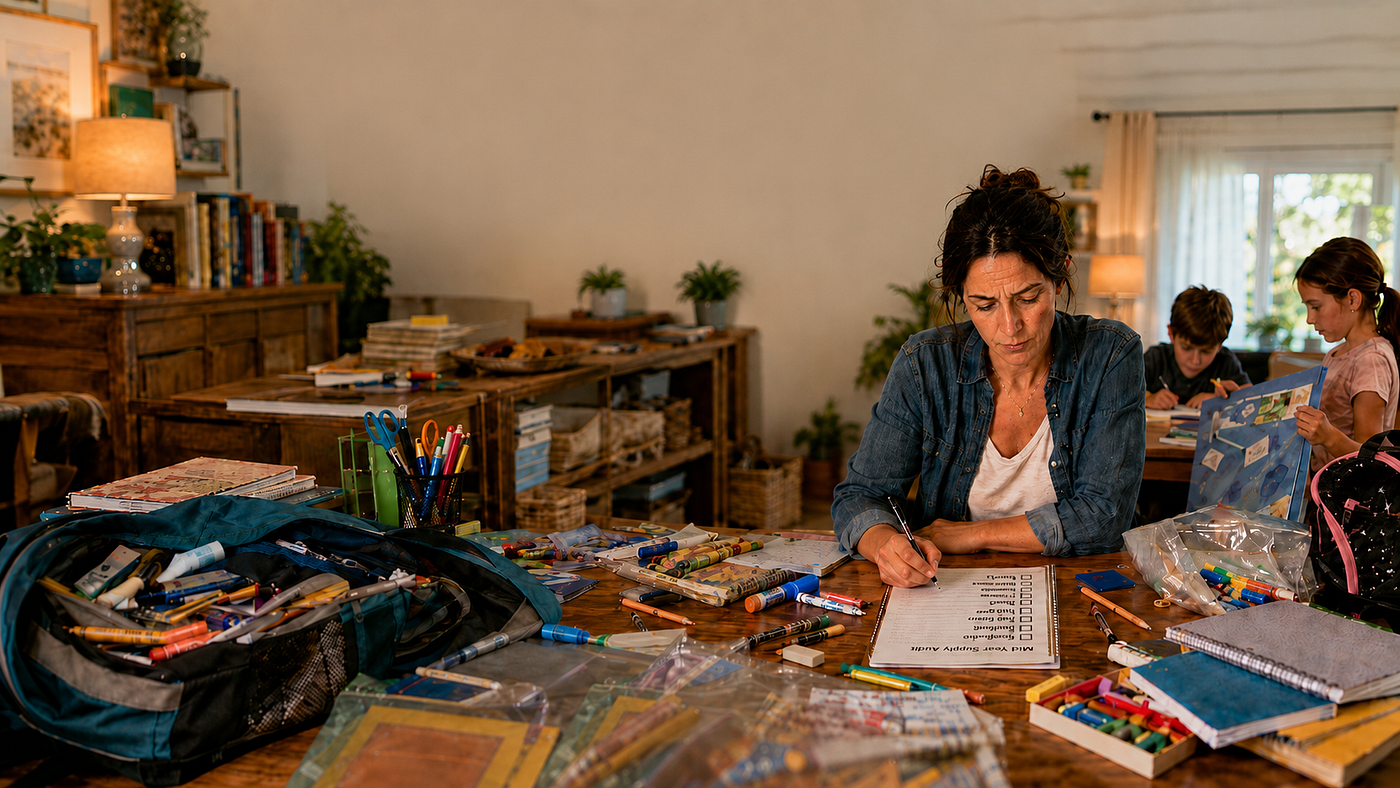
It happens to almost every parent at least once a semester: your kid comes home and announces they need a poster board and a brand-new pack of markers for a project due tomorrow. You are sure you bought it in August. It’s nowhere to be found. So you are in the school supply aisle at 8 p.m. on a Wednesday, frantically checking a text thread on your phone to make sure you’re buying the right one.
Welcome to the annual American school supply cycle, where August is chaos, October is depletion, and you never quite feel like you’re fully ahead of it.
The List Is Long. The Year Is Longer.
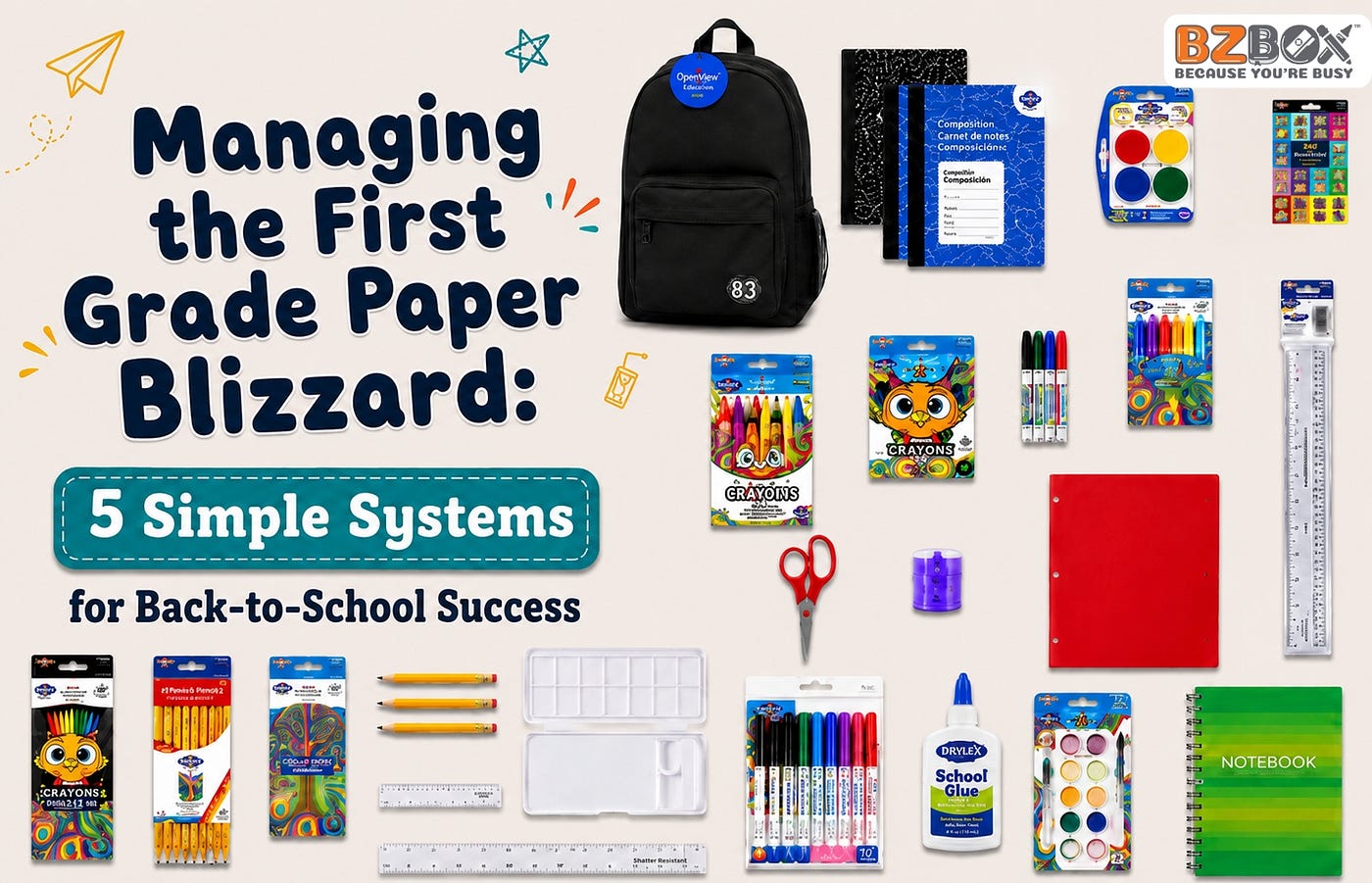
Every fall, schools across the country send home supply lists that can run twenty or thirty items deep: wide-ruled notebooks, specific folders, crayons, colored pencils, glue sticks, scissors, markers, pencils, erasers, highlighters, and more. Parents spend hours at retailers or online comparing identical-looking products, filling carts, and second-guessing themselves.
And then school starts. And the supplies start disappearing.
Pencils go missing by October. Glue sticks dry out. The one good blue marker runs out of ink because someone forgot to put the cap back on. A notebook fills up and needs replacing. A crayon pack that was full in September is a box of stubs by December. The back-to-school haul that felt comprehensive lasts maybe two months, and then you are buying again, reactively, one item at a time.
The average American family spends over $800 on back-to-school supplies each year, and that doesn’t count the mid-year restocking that almost every family ends up doing, often at full price in a rush.
Multiple Kids Makes It Exponentially Harder
If you have more than one child in school — say, a third-grader and a sixth-grader — you are managing two different supply lists, two different sets of project requirements, and supplies that inevitably migrate between backpacks with no explanation. Your older kid’s colored pencils somehow end up in your younger one’s art box. Nobody knows how. Nobody claims responsibility.
Then someone has a science fair project, someone else needs a poster board, and your youngest just remembered that tomorrow is the day their class makes greeting cards. Which means you need foam stickers, construction paper, and glitter glue.
The Screen Time Trap
Here’s a quieter problem underneath the logistics: when art supplies are scattered, depleted, or half-broken, kids default to screens. Not because they do not want to create, most kids genuinely enjoy drawing, crafting, and making things — but because the path of least resistance is always the TV or tablet.
Good, accessible creative supplies genuinely change that equation. When everything is there and ready to use, kids actually pick it up. But keeping those supplies stocked, organized, and age-appropriate is a real job. And for busy parents managing work schedules, after-school activities, sports practices, and homework help, it’s often the job that quietly falls through the cracks.
The Guilt Part Nobody Talks About
Most parents are not just stressed about the logistics. They are stressed about what it means when their child shows up to class without what they need. Kids notice when they are the only one without the right folder or have to borrow a pencil again.
Along with the child, parents also carry that weight. The whole point of all this shopping, restocking, and organizing is ensuring that your child walks into school feeling capable and ready.
Shifting from Reactive Shopping to Automated Systems
To break this cycle, families are moving away from reactive, last-minute purchasing and turning toward structural home systems. The goal is to stay ahead of the depletion curve instead of constantly chasing it.
One of the most effective shortcuts to solving this logistical headache is outsourcing the replenishment entirely. Subscription services like **BZBox **take the guesswork out of the mid-year slump by delivering curated, grade-specific supplies right to your front door on a regular schedule.
By utilizing curated kits from BZBox, tailored specifically for different age groups, from early learning workbooks to middle school project essentials, parents can transition from stressful retail runs to a working system in their home routine.
For parents who are tired of the constant cycle of missing markers and lost glue sticks, automating the replenishment process offers a meaningful change. It creates a home system that allows us to stop managing inventory and outsourcing the stress to BZBox — because you’re busy.
메타데이터
- post_id
- b7e5febffc9e
- slug
- does-one-back-to-school-shopping-trip-really-get-you-through-the-school-year-b7e5febffc9e
- url
- https://medium.com/@bzbox/does-one-back-to-school-shopping-trip-really-get-you-through-the-school-year-b7e5febffc9e
- canonical_url
- https://medium.com/@bzbox/does-one-back-to-school-shopping-trip-really-get-you-through-the-school-year-b7e5febffc9e
- author_url
- https://medium.com/@bzbox
- status
- ok
- fetched_at
- 2026-07-09 06:53:08