Why the Stock Market Is Selling Off Again Today and What the Iran Conflict Really Means for Your…
What the U.S.-Iran escalation means for oil prices, inflation, and your investments right now
Why the Stock Market Is Selling Off Again Today and What the Iran Conflict Really Means for Your Portfolio
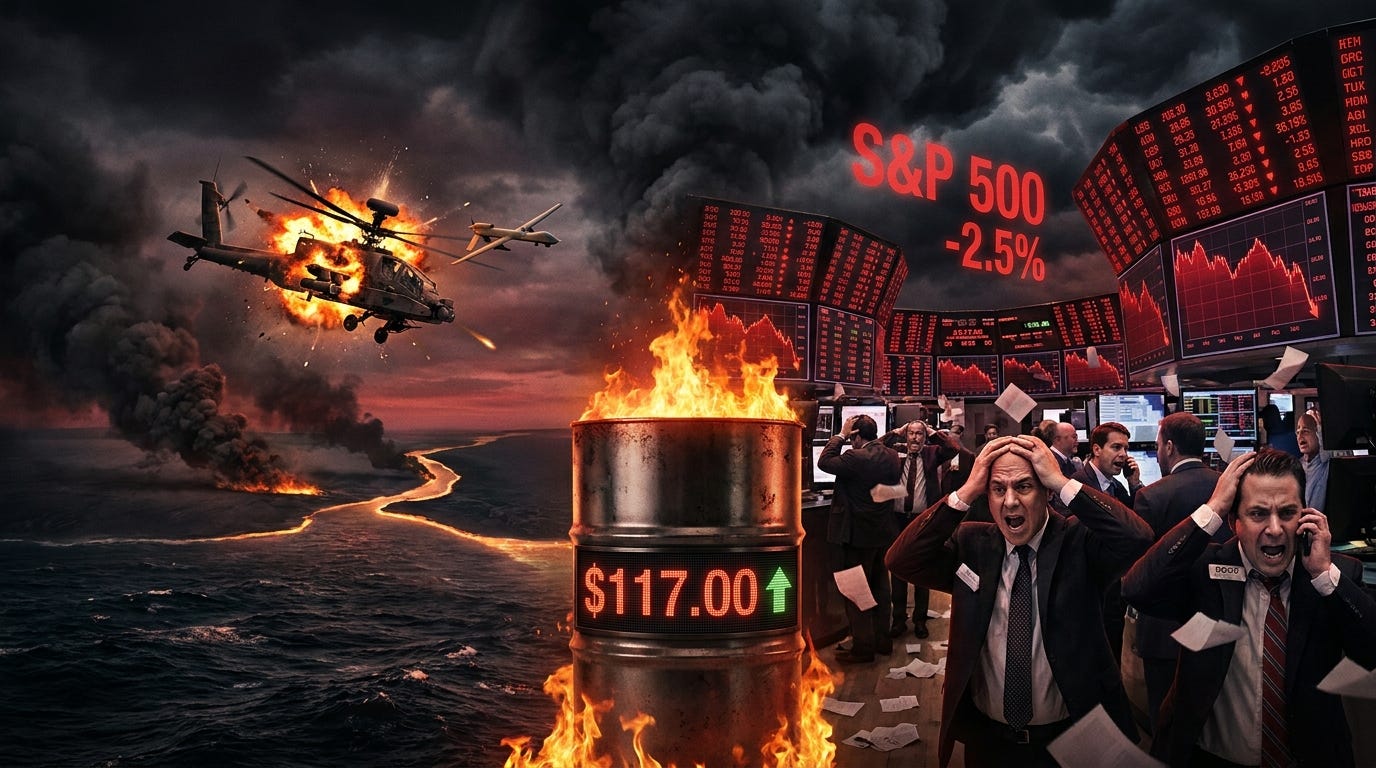
Markets woke up in a bad mood this Wednesday morning, and this time it is not about interest rates or AI valuations. The headline driving everything today is military. Stocks were lower and oil prices climbed after the United States and Iran traded military strikes, raising concerns about a broader conflict in the Middle East. The United States launched new attacks against Iran after President Trump said Tehran shot down an American military helicopter patrolling the Strait of Hormuz. Iran’s Revolutionary Guard said it retaliated with strikes on U.S. targets across the Middle East, including bases in Jordan, Bahrain, and Kuwait. This escalation is not a one-day news story. It is a conflict that has been building since February, and it is now the single biggest wild card sitting underneath every asset price in the global market. What Is Actually Happening With the U.S. and Iran To understand today’s stock market selloff, you need the full picture of how this conflict has unfolded, not just this morning’s headlines. U.S. and Israeli military operations against Iran began on February 28, 2026, representing the most consequential escalation in Gulf security dynamics in over a decade. The strikes targeted senior leadership and strategic military infrastructure, triggering Iranian retaliation across the Gulf region and sharply increasing the probability of disruption to maritime energy flows, particularly through the Strait of Hormuz. Beginning on March 4, 2026, Iranian forces declared the Strait closed, threatening and carrying out attacks on ships attempting to transit the waterway. The U.K. Maritime Trade Operations Centre reported 10 attacks on ships, which killed five crew members on two vessels. This is not a diplomatic dispute. Ships are being attacked. Crew members have died. And the waterway those ships are trying to use carries an enormous share of the world’s oil supply every single day. Why the Strait of Hormuz Makes Every Investor Nervous Most people have heard the name but do not fully appreciate what a closure of this waterway actually means. Roughly one-fifth of globally traded oil and more than one-third of seaborne liquefied natural gas pass through the Strait of Hormuz. Even temporary interference has outsized macroeconomic implications. To put that in plain terms: if this narrow stretch of water stops functioning normally, the world’s oil supply takes a serious hit almost immediately. That means energy prices spike. Higher energy prices feed into inflation across everything, from manufacturing to food to shipping costs. And higher inflation means the Federal Reserve has even less reason to cut interest rates. That chain reaction is exactly what the stock market is pricing in right now. It is not panic. It is logic. Today’s Market Numbers Tell the Story A selloff in the world’s largest technology companies sent stocks lower, with the market falling as oil climbed amid the flare-up in Middle East tensions that threatens the fragile ceasefire deal. The drop in equities wiped out this week’s advance, driving the S&P 500 down almost 1%. A closely watched gauge of chipmakers slipped more than 2% and all tech megacaps retreated. Global stock markets fell on Wednesday due to a combination of the selloff in artificial intelligence stocks, escalating military strikes between the United States and Iran, and growing fears over high inflation. Stock markets are remaining highly cautious before the release of the newest United States Consumer Price Index data. A high inflation reading could force the Federal Reserve to keep interest rates higher for longer. The CPI report landing today is particularly badly timed. Markets already feel fragile. An inflation number that comes in above expectations, combined with rising oil prices from a Middle East conflict, could create a genuinely ugly reaction. The Stocks Moving in Both Directions Today Not everything is falling. Some assets actually benefit from geopolitical instability, and today you can see that split happening clearly. Shares of Robinhood Markets climbed 8.1% in early trading, while KLA Corp gained 6.7% and Applied Materials rose 5.5%. On the downside, Super Micro Computer fell 12%, Generac Holdings lost 5.2%, and Old Dominion Freight Line dropped 4.9%. Defense contractors are moving higher. Energy companies are benefiting from rising oil prices. Meanwhile anything with heavy supply chain exposure to the Middle East or sensitive to inflation is getting hit. This is the classic geopolitical rotation. Money moves from growth and consumer stocks into defense, energy, and hard assets. It happens every time military conflict escalates to a level where the market cannot ignore it. Oil Prices Are the Key Number to Watch Right Now The U.S. and Iran have been locked in a stalemate over the Strait of Hormuz since agreeing to a fragile ceasefire in April. Secretary of State Marco Rubio said talks have made some progress and that President Trump prefers diplomacy and will give negotiations every chance to succeed. But this morning that ceasefire is under serious strain. Trump said Wednesday that Iran has taken too long to negotiate a peace deal and will now have to pay the price. Watch the Brent crude price closely today. Earlier in this conflict cycle, oil briefly hit $117 per barrel as Trump’s Strait of Hormuz deadline approached without resolution. If the current escalation pushes oil back toward those levels, the inflation math for the rest of 2026 changes significantly, and so does the Federal Reserve’s calculus on rates. What This Means Practically for Your Portfolio War is genuinely unpredictable. Anyone who tells you they know exactly how this resolves is guessing. But there are a few practical frameworks that help when geopolitical risk spikes like this. Energy exposure is not a bad thing right now. If you have been underweight energy stocks because they seemed boring, the current environment is a reminder of why they exist in a portfolio. Rising oil prices benefit energy producers directly. Defense stocks tend to hold value during conflict escalation. Companies that make missiles, drones, radar systems, and military aircraft see increased revenue expectations when conflicts expand. This is an uncomfortable reality, but it is how markets work. Hold cash if your risk tolerance is low. The CPI report today, the Iran situation, and continued AI valuation concerns create a genuinely uncertain near-term picture. There is no shame in reducing risk when multiple simultaneous threats are active at the same time. Do not make permanent decisions based on temporary chaos. Geopolitical crises feel permanent when you are inside them. Most of them resolve, or at least de-escalate enough for markets to recover. The investors who panicked and sold everything in March when the Strait first closed would have missed the partial recovery that followed. The conflict with Iran is the dominant story in markets today. Whether it escalates further or moves toward a deal in the next 48 hours will determine whether this week ends badly or stabilizes. Keep your eye on oil prices, the CPI print, and any news out of the ceasefire negotiations. Those three things will tell you more about where stocks are heading than anything else happening right now.
메타데이터
- post_id
- b7fcbae37dcb
- slug
- why-the-stock-market-is-selling-off-again-today-and-what-the-iran-conflict-really-means-for-your-b7fcbae37dcb
- url
- https://medium.com/@Fanigee/why-the-stock-market-is-selling-off-again-today-and-what-the-iran-conflict-really-means-for-your-b7fcbae37dcb
- canonical_url
- https://medium.com/@Fanigee/why-the-stock-market-is-selling-off-again-today-and-what-the-iran-conflict-really-means-for-your-b7fcbae37dcb
- author_url
- https://medium.com/@Fanigee
- status
- ok
- fetched_at
- 2026-06-12 18:14:10